
YouTube Creator Partnerships replaces BrandConnect in 7 markets
YouTube today unified BrandConnect and the Creator Partnerships Hub into a single platform available in 7 markets, with global expansion planned for 2026.

YouTube today unified BrandConnect and the Creator Partnerships Hub into a single platform available in 7 markets, with global expansion planned for 2026.
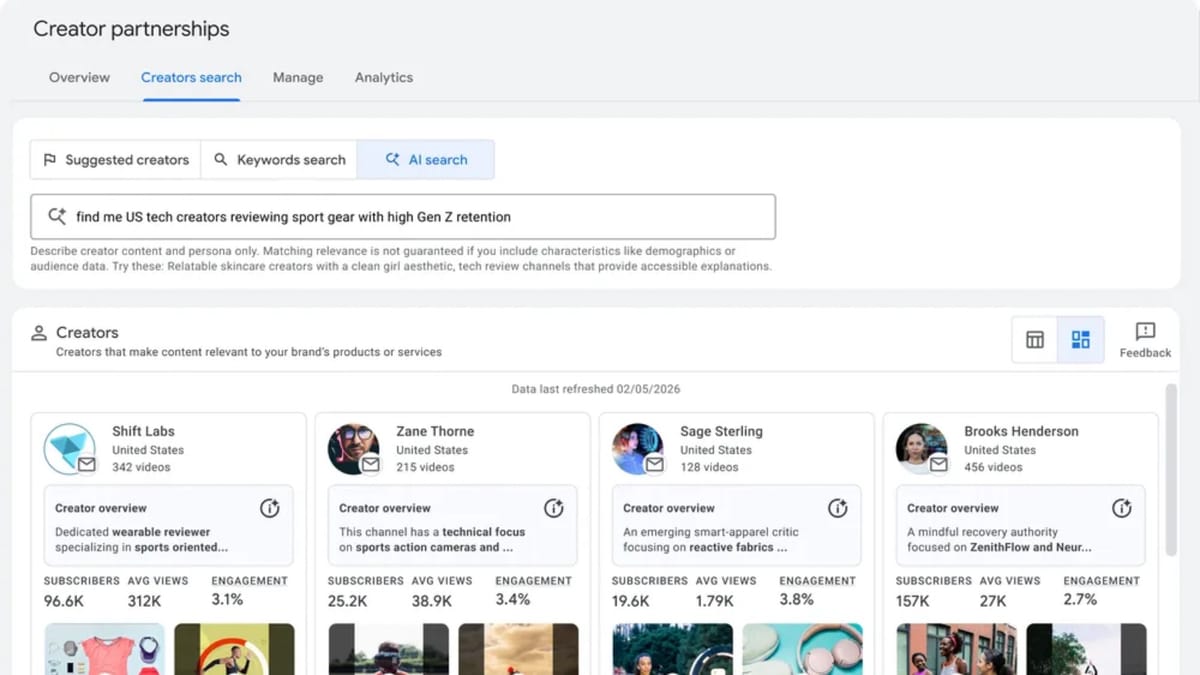
YouTube today unified two previously separate creator monetisation tools - BrandConnect and the Creator Partnerships Hub - into a single platform called YouTube Creator Partnerships, announcing its availability across seven markets simultaneously while signalling broader global expansion within the coming months.
The announcement, posted to the YouTube Help Center Community by Tammy Wi, a TeamYouTube Community Manager, marks one of the more substantive structural changes to YouTube's creator monetisation infrastructure in recent years. Rather than discontinuing any existing functionality, the platform is consolidating the branding and interface of tools that have operated in parallel, creating what it describes as a more unified identity for both creators and brands.
According to the announcement, no tools or features that creators previously knew as "BrandConnect" are being discontinued. The platform is changing how it refers to and surfaces these features, folding BrandConnect and the Creator Partnerships Hub together under the YouTube Creator Partnerships name. The shift is primarily one of presentation and access architecture rather than functional removal.
The seven markets where YouTube Creator Partnerships is currently available are the United States, India, Indonesia, the United Kingdom, Brazil, Australia, and Canada. Expansion to additional countries is described as coming "within the next few months," though no specific dates or additional market names were provided in the announcement. Creators interested in learning when eligibility requirements reach their country are directed to subscribe to the announcement post for updates.
This consolidation matters to the marketing community because the two tools previously served distinct but overlapping purposes. BrandConnect, which evolved from FameBit, focused on matching advertisers with creators for sponsored content campaigns. The Creator Partnerships Hub, first launched in late 2023, was designed to help brands discover videos where creators had already collaborated with a specific brand and then run those videos as part of ad campaigns. Combining these under one roof is intended to reduce friction in what has historically been a fragmented workflow.
Four distinct capability areas are being introduced or expanded alongside the rebrand.
The first is enhanced matching and outreach. According to the announcement, YouTube Partner Program (YPP) creators in more markets will be able to receive direct outreach from brands regarding potential partnership opportunities "within the next few months." The platform states it is improving the quality of its recommendations to ensure channels are surfaced to brands most likely to be relevant. The precise algorithmic changes behind this improvement were not detailed in the announcement.
The second is channel insight sharing. Creators will be able to share channel and audience insights with advertisers, brands, and third-party platforms directly through the tool. This is positioned as a discoverability mechanism: creators who opt into sharing insights and appear in Google's creator search tool results see, on average, twice the click-through or interaction rate on their profiles compared to creators who do not share insights. That 2x figure is cited by YouTube in the announcement and applies specifically to the creator search tool within Google's advertiser-facing products.
The third is built-in collaboration features. Tools including Media Kit and Open Calls are now formally part of YouTube Creator Partnerships. Media Kit allows creators to present channel data and deal concepts to potential brand partners. Open Calls enables brands to post open partnership opportunities that creators can apply to. According to the announcement, Open Calls is currently only available in the United States but will expand to additional countries during 2026. Both features were previously available to creators but are now positioned within the unified platform rather than as separate standalone tools.
The fourth is a new onboarding flow. When YouTube Creator Partnerships becomes available in a creator's region, all eligible creators will see a new onboarding sequence through which they can add contact information and agency or manager details to their channel. The stated purpose is to make it easier for brands to reach creators directly, reducing the reliance on external intermediaries or manual outreach.
This announcement does not arrive in isolation. YouTube has spent much of the past two years methodically expanding the tools available to creators for brand monetisation, and the Creator Partnerships launch is best understood as a consolidation of that work rather than a standalone product introduction.
In May 2025, during YouTube's annual NewFront presentation, the platform unveiled the "Creator Essentials" package, which included an expanded Insights Finder Tool for advertisers, an updated Creator Partnerships Hub, and new combined organic-and-paid reporting capabilities. Kate Alessi, Global Product Solutions lead at YouTube, noted at the time that with over 3 million channels in the YouTube Partner Program, finding the right creator match for a brand remained a real challenge.
The collaboration feature launched in August 2025 allowed creators to formally tag partners on individual videos, triggering recommendations across all tagged creators' audiences - an architectural change with direct implications for how brands could structure multi-creator campaigns. That same month, BrandConnect received video tagging capabilities, enabling creators to associate specific videos with brand partners during upload or editing, giving advertisers more granular campaign tracking.
In October 2025, YouTube formalised a separate but related structure by launching the YouTube Activation Partners program, which enrolled Channel Factory, MiQ Digital, Pixability, and Zefr as vetted activation partners for advertisers seeking managed campaign support. That program operates on the advertiser side of the equation, while Creator Partnerships operates on the creator side. The two are distinct programs serving different parts of the same commercial relationship.
Measurement has also been advancing alongside infrastructure. In January 2026, Spotter and Comscore announced a partnership bringing broadcast-calibre audience measurement to YouTube creator content, with Spotter's creator portfolio generating more than 88 billion monthly watch-time minutes - 71% of which occurs on connected television devices. That development addressed one of the persistent gaps advertisers cite when comparing YouTube creator buys to traditional television: the absence of independent, standardised measurement.
The financial scale of the creator economy on YouTube is substantial. The platform has paid $70 billion to creators, media companies, and music partners over the three years through 2024, with 3 million channels earning revenue through the YouTube Partner Program. Against that backdrop, the infrastructure supporting brand deals - which sit alongside but outside the standard ad revenue share - represents a meaningful portion of creator income for larger channels.
Brand partnership deals on YouTube have historically required significant manual effort. Brands or agencies identify potential creators through research, negotiate terms bilaterally, agree on content deliverables, and then manage the process largely through direct communication. YouTube's pitch with Creator Partnerships is that centralising discovery, outreach, and basic negotiation infrastructure within the platform itself reduces this overhead and increases the volume of successful matches.
The channel insight sharing feature is particularly relevant for performance-focused advertisers. Audience demographic data shared by creators through the platform can inform campaign targeting decisions, and the 2x interaction rate figure cited by YouTube suggests that the data exchange has measurable impact on how visible creators are to brands actively searching for partners. What it does not address is how brands independently verify the accuracy of shared insights - a question that may become more material as the feature expands globally.
Open Calls, once it expands beyond the United States in 2026, would represent a structural shift in how some brand campaigns are staffed. Rather than brands approaching specific creators, or agencies maintaining rosters, the feature allows brands to publish opportunities and receive inbound applications from interested creators. For smaller creators in particular, this could lower the barrier to securing brand partnerships without established agency relationships.
The seven current markets - the US, India, Indonesia, the UK, Brazil, Australia, and Canada - cover a substantial portion of YouTube's most commercially active creator base. Indonesia's inclusion is notable; the announcement was posted in Indonesian, with the TeamYouTube community manager posting in the Indonesian-language YouTube Help community, and the country represents one of YouTube's fastest-growing creator markets in the Asia-Pacific region.
Eligibility requirements beyond YPP membership were not explicitly detailed in the announcement. The onboarding flow, which will be shown to all creators in eligible regions when the platform becomes available to them, will allow the addition of contact details and agency or manager information. Whether specific subscriber thresholds or engagement minimums apply to access certain features - such as direct brand outreach - was not specified.
Who: YouTube, through Community Manager Tammy Wi of TeamYouTube, made the announcement targeting YouTube Partner Program creators and brand advertisers across seven markets.
What: YouTube unified BrandConnect and the Creator Partnerships Hub into a single platform called YouTube Creator Partnerships, adding four new or expanded feature areas: enhanced brand matching and outreach, channel insight sharing, built-in collaboration tools (Media Kit and Open Calls), and a new onboarding flow for creator contact details.
When: The announcement was made today, March 24, 2026, with the platform live immediately in the seven launch markets and global expansion described as coming within the next few months.
Where: Currently available to creators in the United States, India, Indonesia, the United Kingdom, Brazil, Australia, and Canada. Open Calls remains US-only until 2026 expansion.
Why: YouTube is consolidating previously fragmented creator-brand partnership infrastructure to reduce friction in the brand deal process, improve creator discoverability through insight sharing, and increase the volume of effective brand-creator collaborations on the platform.