YouTube's home feed quietly kills long-form video discovery
Platform data shows browse recommendations dropped from six long-form videos per row to just two, redirecting 80% of available slots toward Shorts content.


Platform data shows browse recommendations dropped from six long-form videos per row to just two, redirecting 80% of available slots toward Shorts content.
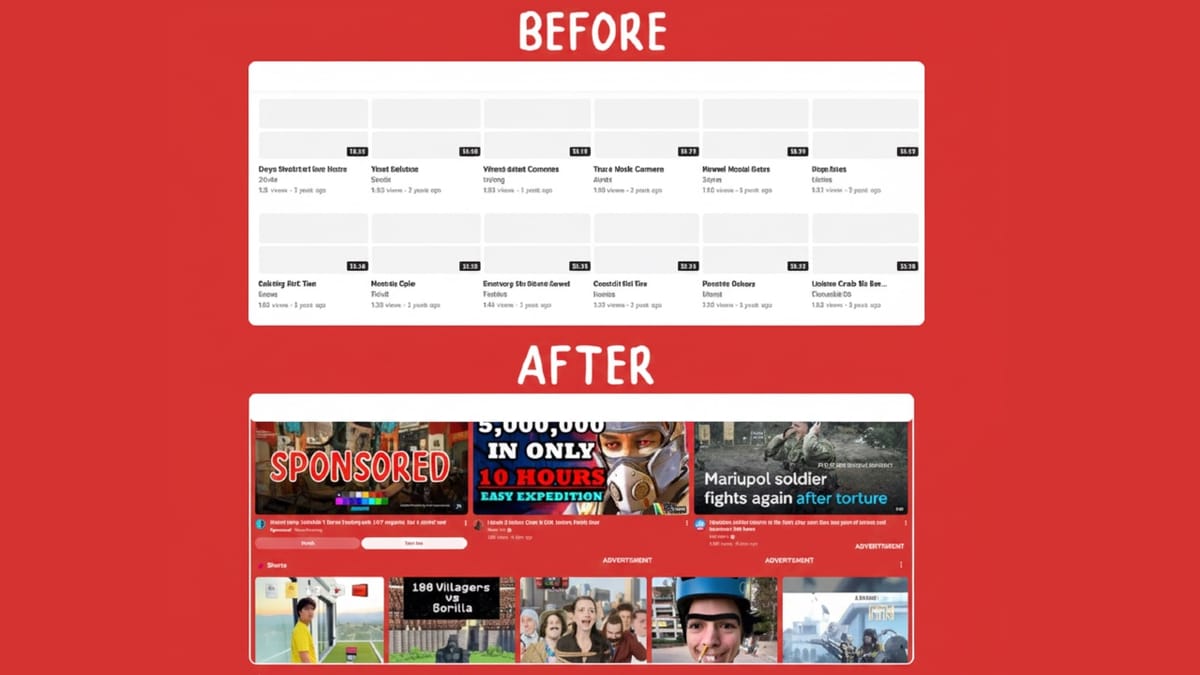
YouTube implemented significant user interface changes throughout 2025 that dramatically reduced long-form video recommendations on the platform's home feed, according to data shared by Mario Joos, a retention director working with channels exceeding 100 million subscribers including MrBeast. The modifications, which appear to have rolled out gradually over the year, altered the ratio of long-form to short-form content displayed to users on desktop and other devices.
The platform previously displayed upwards of six long-form video recommendations per row across two rows on the home page. Current implementations show only two long-form recommendations in many cases, with the second row already allocating slots for short-form content. "This means that we're seeing a choice reduction of up to 80% long-form recommendation compared to previous home feeds," Joos wrote in a December 21, 2025 post documenting the changes.
Subscribe PPC Land newsletter ✉️ for similar stories like this one
The home feed adjustments create a ratio skewing toward two long-form videos against five short-form recommendations on PC, according to Joos. Variations exist between non-premium and premium accounts, differences between device types, and between accounts that predominantly consume long-form versus short-form content. Sponsored posts that appear as the first recommendation don't qualify as organic long-form suggestions, further limiting actual recommendation availability.
Data collected from over 1,000 channels revealed that traffic for Shorts surged aggressively through browse features following the interface changes. "Those views, and that time spent, have to come from somewhere," Joos noted. While YouTube doesn't operate as a zero-sum game, the data suggests browse UI modifications impact long-form performance for creators, though drops might not appear noticeable over shorter periods.
The information came from close associates of Joos who requested anonymity. The most extreme example demonstrated a creator experiencing noticeable Shorts views increases from Browse without making significant content modifications. "We do believe this signal indicates that the browse UI changes are having an impact somewhere else," Joos explained. The data points to UI changes slowly affecting long-form performance even when creators maintain consistent content strategies.
YouTube has engaged with creator concerns about these modifications. Joos confirmed discussions with the YouTube team, stating they've been open to conversation. "That said, I believe in the importance of public awareness around these changes," he wrote. The platform has not publicly disclosed the full roll-out timeline for browse feed adjustments, though creators believe implementation occurred gradually throughout the year.
The home feed changes arrive amid YouTube's documented push toward short-form content prioritization. Shorts achieved revenue parity with traditional long-form video on a per-watch-hour basis in the United States during Q3 2025, according to Alphabet earnings statements. Platform executives emphasized AI-powered recommendation systems driving "robust watch time growth" in key monetization areas including Shorts and living room viewing.
Creator sustainability concerns emerge prominently in discussions about the interface modifications. "Creator sustainability often relies on resources created by content (income) and Short often does not generate enough resources to continue to create high-quality content," Joos wrote. Revenue models between formats differ substantially, with long-form videos operating on a 55% creator revenue share while Shorts maintain a 45% share after accounting for music licensing costs.
Many Shorts creators seek pathways to long-form content specifically for sustainability and resource generation to produce better content. "That's why a lot of Shorts creators try to get into long-form. They are seeking that pathway to sustainability and resources to create better content," Joos explained. Updates reducing long-form discovery opportunities close that option for many creators, potentially impacting overall creator economy health.
The December revelations follow documented algorithm modifications throughout 2025. YouTube creators reported significant Shorts viewership declines beginning September 7, 2025, with seven major channels experiencing sustained performance degradation through late November. Earlier in 2025, creators documented approximately 30% viewership drops and dramatic traffic shifts from desktop to mobile consumption starting August 13.
The desktop-to-mobile ratio shifted from 56% desktop preference in July to 39.3% after August 13, representing a 16.7% swing toward mobile consumption. These changes occurred without content modifications, suggesting platform-level algorithmic adjustments rather than creator behavior changes. Multiple creators across different niches reported identical timing and patterns during this period.
Marketing professionals utilizing YouTube for campaign planning face increasing complexity around content format strategy. The platform's push toward Shorts through interface modifications affects how brands allocate production resources and partnership investments. Long-form content traditionally offered stronger brand integration opportunities through sustained storytelling formats, while Shorts prioritize rapid consumption patterns.
Buy ads on PPC Land. PPC Land has standard and native ad formats via major DSPs and ad platforms like Google Ads. Via an auction CPM, you can reach industry professionals.
Programmatic advertising strategies must account for shifting content discovery mechanisms. The reduced prominence of long-form recommendations in browse feeds affects media planning assumptions about content visibility and audience reach. Advertisers developing YouTube-specific creative need clarity on format performance implications as platform interface changes redistribute viewer attention.
YouTube's broader technical developments throughout 2024 and 2025 demonstrate systematic investment in short-form infrastructure. The platform extended Shorts maximum duration from 60 seconds to three minutes in October 2024, introduced AI-powered editing tools converting raw footage into polished content, and modified view counting methodologies starting March 31, 2025 by removing minimum watch time requirements.
These technical modifications aligned with Google's earnings disclosures about Shorts performance. Sundar Pichai, CEO of Alphabet and Google, stated during the October 29, 2025 earnings call that "in the U.S., Shorts now earn more revenue per watch hour than traditional in-stream on YouTube." Philipp Schindler, Senior Vice President and Chief Business Officer, noted that "our recommendation systems are driving robust watch time growth in our key monetization areas like Shorts and Living Room."
The recommendation algorithm modifications extend beyond home feed interface changes. YouTube closed its trending page after a decade of operation in July 2025, replacing it with category-specific charts through YouTube Charts. The platform cited significant decline in trending page usage over five years and fundamental changes in content discovery patterns toward personalized recommendations.
Content discovery mechanisms received continuous refinement through AI integration throughout the year. Enhanced viewer analytics introduced in July 2025 provided creators with refined metrics distinguishing casual viewers from regular engaged audiences. These measurement improvements occurred alongside infrastructure changes affecting how content reaches viewers through algorithmic distribution.
Platform communication around algorithm modifications remains limited. Joos emphasized the importance of creator feedback despite ongoing dialogue with YouTube representatives. "It's important that we don't turn this into a subjective 'drama circle,' especially now that they're actively showing interest in our concerns," he wrote. The call for measured response reflects concerns about maintaining productive communication channels while raising awareness about impacts on creator business models.
Creator responses to home feed changes demonstrate recognition of limited options. "Honestly, for you, as a creator, the only feasible option is to understand where the platform is at and create content accordingly," Joos advised. Following platform incentives becomes necessary as algorithmic modifications redistribute traffic patterns. The practical approach acknowledges power dynamics between individual creators and platform-level technical decisions.
The emphasis on public awareness stems from concerns about creator economy sustainability. "I do believe that letting YouTube know about your concerns is important. Writing about it matters," Joos stated. The push for visibility around browse feed changes reflects broader patterns of platform algorithm opacity affecting content creator business planning.
YouTube maintains that algorithmic improvements serve viewer experience optimization. Platform executives frame AI-enhanced recommendation systems as delivering relevant content to appropriate audiences. CEO Neal Mohan defended AI systems in December 2025, stating capabilities improve "literally every week" to "detect and enforce on violative content better, more precise, able to cope with scale."
The disconnect between platform optimization goals and creator sustainability concerns illustrates tensions inherent in algorithmic content distribution. YouTube's business model depends on maximizing viewer engagement and advertising inventory across all content formats. Creators depend on predictable discovery mechanisms supporting sustainable revenue generation through specific content types.
Historical precedents exist for major platform interface changes affecting content creator business models. Google discontinued its Search Liaison role on August 1, 2025, after serving as the primary communication channel between Google and web publishers regarding algorithm updates. That conclusion coincided with expanded AI-powered features across search results that significantly affected publisher traffic patterns.
The browse feed modifications don't operate in isolation from broader YouTube infrastructure developments. Collaboration features launched in August 2025 enable multiple creators to share credit and audience distribution across channels. These technical changes occurred alongside algorithmic adjustments affecting recommendation systems and content discovery mechanisms throughout the year.
YouTube Partner Program encompasses 3 million monetized channels generating substantial economic infrastructure for content creators globally. The platform paid $70 billion to creators, artists, and media companies over the past three years according to March 2025 disclosures. Partner Program eligibility maintains distinct pathways for long-form content requiring 4,000 watch hours versus Shorts requiring 10 million views.
Revenue diversification strategies gain importance as algorithmic changes affect primary income sources. YouTube offers ten monetization methods including advertising revenue sharing, fan funding, merchandise integration, and brand partnership tools. However, advertising revenue remains the dominant income source for most channels, making traffic distribution changes particularly consequential for creator sustainability.
The technical architecture supporting browse feed changes involves multiple interconnected systems. User interface modifications interact with recommendation algorithms, content classification systems, and engagement prediction models. These components collectively determine which videos populate feeds and in what proportions across content formats.
Joos called for creator responses amplifying awareness about browse feed impacts. "My only ask is this: don't be silent if this concerns you," he wrote. The appeal for measured engagement rather than dramatic responses reflects understanding that productive platform dialogue requires balancing concern communication with maintaining communication channels.
The December 21 post generated 145,400 views within hours, demonstrating significant creator community interest in algorithmic transparency. Responses can address whether changes benefit or harm creators, document specific performance impacts, or simply share content to increase visibility. The engagement strategy emphasizes raising awareness without creating antagonistic dynamics with platform representatives.
YouTube's willingness to engage with creator concerns represents a departure from historical platform communication patterns. Previous algorithm modifications occurred with limited advance notice or comprehensive explanation. The current dialogue, while imperfect, provides creators with more direct access to platform decision-makers than typical in major social media environments.
The broader implications extend to digital advertising ecosystem dynamics. As YouTube redistributes viewer attention through interface modifications, brands must reassess content format strategies and partnership structures. Long-form content integration traditionally offered deeper brand storytelling opportunities compared to brief Shorts formats optimized for rapid consumption.
Connected TV consumption patterns add complexity to content discovery dynamics. Nielsen data confirms YouTube maintained position as the number one streaming platform by watch time on TV screens for 17 consecutive months through Q2 2024. Connected TV viewership increased more than 130% over three years, fundamentally altering how audiences consume video content and interact with recommendation systems.
The home feed modifications reflect platform-level strategic decisions about content format prioritization. Short-form video consumption patterns align with mobile-first viewing behaviors and attention economy dynamics favoring brief, serialized content over sustained engagement formats. YouTube's technical infrastructure increasingly supports these consumption preferences through interface design and algorithmic distribution.
Creator adaptation strategies require understanding platform incentive structures. Following recommended content formats becomes necessary for maintaining visibility within algorithmic distribution systems. This dynamic creates feedback loops where creator behavior responds to platform incentives, potentially accelerating shifts away from formats receiving reduced algorithmic support.
The documentation of home feed changes through creator data collection demonstrates community-driven transparency efforts. Without official platform disclosure of interface modification timelines or rationale, creators develop their own measurement methodologies and information sharing networks. This grassroots approach to platform accountability reflects limited formal transparency mechanisms.
Long-term implications for content diversity remain uncertain. Reduced long-form recommendations in browse feeds could diminish format variety available to viewers if creator production shifts follow algorithmic incentives. Conversely, strong creator preference for long-form sustainability might maintain production levels despite discovery challenges.
YouTube's position as dominant video platform creates substantial market power in content distribution decisions. Interface modifications affecting hundreds of millions of users worldwide occur without external oversight or accountability mechanisms beyond creator advocacy and public attention. This centralized control over content discovery mechanisms influences entire sectors of digital media economy.
The December revelations about browse feed changes contribute to ongoing discussions about platform transparency and creator rights. As algorithmic systems become more sophisticated and influential in content distribution, questions about disclosure requirements and creator input into platform decisions gain prominence across digital media policy discussions.
Subscribe PPC Land newsletter ✉️ for similar stories like this one
Subscribe PPC Land newsletter ✉️ for similar stories like this one
Who: Mario Joos, retention director for channels exceeding 100 million subscribers including MrBeast, documented home feed modifications affecting long-form content creators across YouTube's platform.
What: YouTube implemented user interface changes reducing long-form video recommendations from approximately six per row to just two in many cases, creating up to 80% reduction in long-form recommendation slots while redirecting available positions toward Shorts content. Data from over 1,000 channels showed corresponding aggressive Shorts traffic increases through browse features.
When: The modifications appear to have rolled out gradually throughout 2025, with Joos publishing documentation on December 21, 2025. YouTube has not disclosed specific implementation dates, though creators believe changes occurred incrementally across the year alongside other algorithmic adjustments documented in August and September.
Where: Changes affect YouTube's home feed across desktop and mobile devices, with variations between non-premium and premium accounts and between users who predominantly watch long-form versus short-form content. The modifications occur within browse features that serve as primary content discovery mechanisms for platform users globally.
Why: Creator sustainability concerns drive documentation efforts, as Shorts often fail to generate sufficient resources for high-quality content production compared to long-form formats. The interface changes close pathways for Shorts creators seeking transitions to sustainable long-form content creation, potentially impacting overall creator economy health. YouTube's business priorities favor Shorts performance following revenue parity achievement with long-form content on per-watch-hour basis in United States market.