Adobe forecasts four creative trends shaping 2026 advertising campaigns
Adobe's 2026 Creative Trends report identifies four visual strategies—multisensory experiences, emotional connection, surreal design, and local authenticity.


Adobe's 2026 Creative Trends report identifies four visual strategies—multisensory experiences, emotional connection, surreal design, and local authenticity.
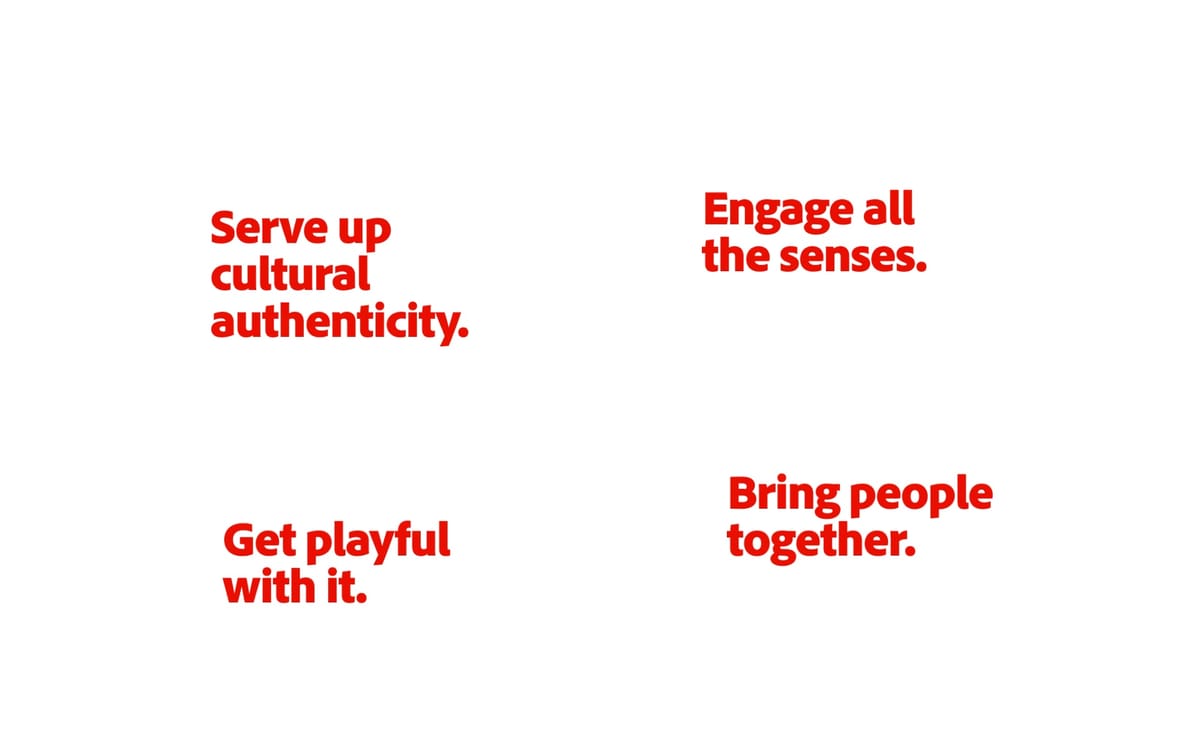
Adobe released its 2026 Creative Trends report in late 2025, identifying four distinct visual and strategic approaches expected to dominate creative advertising throughout the coming year. The forecast arrives as content leaders face escalating demands—95.2% consider visual content critical for business communications, according to Adobe research cited in the report. Content needs are growing between five and twenty times current levels.
The report synthesized extensive internal and external research alongside feedback from Adobe Creative Cloud communities. According to Deepa Subramaniam, Vice President of Product Marketing for Creative Professionals at Adobe, creativity now faces a "perfect storm" of soaring content demands, reduced resources, and transformative AI capabilities. "The most forward-thinking teams aren't just adding new tools," Subramaniam stated in the report. "They're building systems that bring people, ideas, and workflows together in a more connected, collaborative way."
Four trends emerged from Adobe's analysis. Each addresses different aspects of visual communication, from sensory engagement to cultural authenticity.
Subscribe PPC Land newsletter ✉️ for similar stories like this one
The first trend emphasizes creating content that engages multiple senses simultaneously through texture, motion, sound, and implied sensory qualities. Research cited by The Drum showed 82% of global consumers expect their senses engaged when experiencing new content.
Brenda Mills, Principal of Consumer and Creative Insights at Adobe, explained the shift in the report. "Our lives are so screen-focused that, since the Covid shutdown, people have had an insatiable desire to have all their senses engaged," Mills stated. "We are living in a crowded visual landscape, so people expect images to deliver more than ever before."
WGSN research referenced in Adobe's report indicated 68% of customers want brands to create remarkable out-of-the-box campaigns. An additional 78% demonstrate higher likelihood to purchase from brands making them feel joy.
The technical implementation requires designing AI prompts describing more than visual appearance. Prompts must suggest how content might feel, sound, or smell. Audio elements become essential components rather than supplementary additions.
Corporate Reputation Review published research finding that engaging multiple senses significantly enhanced brand experience and customer satisfaction among Chinese consumers. The study suggested this pattern extends globally.
Adobe's GenStudio platform received significant expansions in October 2025, introducing proprietary AI model customization through Adobe Firefly Foundry. The platform integrated with major advertising systems including Amazon Ads, Google Marketing Platform, Innovid, LinkedIn, and TikTok.
Adobe's second trend focuses on deliberately crafting moments that evoke shared human emotions. The approach, termed "Connectioneering" in the report, emphasizes authentic emotional resonance over promotional messaging.
Mills explained the fundamental motivation in the report. "People really want to feel what connects us all to the special, valuable things that make us human," she stated.
Gallup research cited in Adobe's document indicated 95% of consumer decisions stem from emotional factors. Greenbook research found 70% of purchase decisions are shaped by an average of ten emotional needs.
The implementation requires setting up moments bridging regions and industries through universal emotional takeaways. Video content particularly benefits from music selection that captures and amplifies the intended mood. Every element reinforces the core spirit of the work.
The approach contrasts with purely informational advertising. Viewers stop noticing branding elements and instead experience the message directly through emotional engagement with shared joy, inspiration, or connection.
Research from multiple advertising studies throughout 2025 demonstrated consumer preferences for personalized content addressing emotional needs. Adobe's May 2025 study of over 1,000 Americans revealed specific preferences for brand engagement frequency and content personalization.
Buy ads on PPC Land. PPC Land has standard and native ad formats via major DSPs and ad platforms like Google Ads. Via an auction CPM, you can reach industry professionals.
Adobe's third trend encourages deliberately strange, humorous visual approaches that intrigue and entertain audiences. The surreal design strategy leverages generative AI capabilities to create imagery that stretches logic and bends physics.
VICE research cited in the report showed 68% of global youth actively search for humorous content providing escapism from reality.
Mills characterized the approach in the report. "These are strange times, and if you can pivot and present strangeness in a humorous way, it's outrageously engaging and entertaining," she stated. "It's an extremely clever approach I truly admire."
Kantar research referenced in Adobe's forecast indicated brands described as fun and playful demonstrate significantly better performance in building future demand. Nutter Butter's TikTok series earned Social Campaign of the Year at the 2025 AdAge Creativity Awards by captivating Generation Z audiences through unexpected creative execution.
The technical enabler involves allowing generative AI tools like Adobe Firefly to operate without constraints forcing mimicry of existing visual conventions. Brands can discover entirely new aesthetic territories when AI systems imagine what doesn't currently exist rather than reproducing familiar patterns.
Industry research on creative trends throughout 2025 identified shifts toward dense, layered content particularly appealing to younger demographics. YouTube's September 2025 Culture & Trends report revealed "Creative Maximalism" as a dominant format incorporating multiple visual and audio information layers.

Adobe's fourth trend emphasizes partnering with local creators and spotlighting regional craftsmanship to achieve authentic representation. The approach positions locally rooted stories on global stages.
The trend emerges as Generation Z increasingly embraces "appstinence"—conscious breaks from constant connectivity. This shift makes discovery of local cultures and communities more appealing than generic global content.
Mills explained the personalization aspect in the report. "I work with a lot of enterprise customers for Adobe, and they're constantly asking for more authentic regional and local imagery so they can appeal to specific regions where their customers live," she stated. "When people see themselves or their communities represented, it humanizes the company."
Implementation requires stories belonging to communities rather than simply being about them. Collaboration with local talent both behind and in front of cameras becomes essential. Authentic cultural voices should remain unfiltered by translation or external interpretation.
Nike launched women's footwear in partnership with Delhi-based brand NorBlack NorWhite, according to CNN coverage cited in Adobe's report. The campaign used ancient tie-dyeing techniques and documented the work with Indian photographer Bharat Sikka.
Corona's "Impossible Plants" campaign in Japan addressed widespread vitamin D deficiency by encouraging sun exposure through imagery of plants sprouting through concrete, according to Muse by Clios coverage referenced in the forecast.
Visual discovery platforms like Pinterest introduced tools throughout 2025 enabling localized creative production. Pinterest announced AI-powered auto-collages in June 2025, transforming product catalogs into culturally relevant visual content.
The report positioned artificial intelligence as an enabler rather than replacement for human creativity. Tor Myhren, Vice President of Marketing Communications at Apple, stated in Adobe's forecast: "While AI is the most exciting creative tool we have seen in our lifetime, the human touch is our superpower and the path to long-term brand love."
Adobe emphasized commercially safe AI foundations trained on proprietary brand content. The approach addresses intellectual property concerns affecting some generative AI implementations.
Research from WPP Media in September 2025 found 71% of industry experts view AI-produced creative content as likely by 2030, with 29% considering it highly likely. The shift represents the largest positive movement from baseline measurements across any scenario examined.
Adobe's research cited in the trends report indicated 99% of Fortune 100 companies have used AI in Adobe applications. Nearly 90% of the company's top 50 enterprise accounts adopted AI-first innovations including GenStudio offerings.
Brands including The Coca-Cola Company, dentsu, The Estée Lauder Companies, Henkel, IBM, IPG Health, Lumen Technologies, Monks, The National Football League, Newell Brands, PepsiCo/Gatorade, Prudential Financial, Publicis Groupe, Qualcomm, Stagwell, and Tapestry have implemented Adobe's AI-powered systems, according to the report.
Adobe research indicated 62% of marketers surveyed experienced increased content production volume during the past year. Nearly two-thirds believe content demand will grow by at least five times between now and 2026.
Adobe's forecast provided practical guidance for applying each trend. The multisensory approach requires customizing brand colors, fonts, and textures while incorporating audio elements that complement visual content.
Emotional connection execution involves using collaborative AI-powered moodboards to spark new ideas within teams. Quick design tools can transform rough concepts into polished deliverables within minutes.
Surreal design implementation leverages diverse ecosystems of Adobe Firefly and partner models, providing choice and flexibility. Advertisers can maintain brand consistency while exploring imaginative creative territories through customized look-and-feel kits.
Local authenticity requires content localization to accommodate language and visual preferences regionally. Template customization enables adaptation while preserving core brand identity.
The report emphasized that successful implementation requires understanding authentic local voices rather than imposing external interpretations. When brands cannot physically access specific locations, collaboration with local talent becomes essential.
Marketing technology developments throughout 2025 demonstrated AI's transformation of customer engagement. Smartly's November 2025 research showed 92% of surveyed marketers reporting AI fundamentally redefines consumer connections.
Adobe's trends report arrives during significant advertising industry transformation. Global advertising spending reached $1.14 trillion in 2025, with commerce advertising surpassing television for the first time at $178.2 billion, according to WPP Media projections.
The creative production challenge intensifies as platforms demand increasing content variations. Facebook's advertising algorithms require minimum ten versions of ad images to optimize performance for specific users, demonstrating the scale of creative variation needed.
Brazilian agency GALERIA.ag announced in July 2025 a partnership committing R$10 million to Adobe GenStudio implementation. Adobe data cited in that announcement indicated GenStudio optimization delivers up to 70% reduction in go-to-market time for campaigns while centralizing asset management.
Industry research on AI adoption revealed cautious optimism among media professionals. Integral Ad Science's December 2025 report showed 61% of surveyed media experts expressed excitement about AI developments while 53% simultaneously cited unsuitable adjacencies as a top 2026 challenge.
The convergence of increasing content demands with expanding AI capabilities creates both opportunities and challenges. Adobe positioned its trends forecast as guidance for navigating this complexity while maintaining authentic human creativity.
Platform consolidation continues reshaping competitive dynamics. Google's advertising innovations and Meta's AI optimization systems demonstrate major platforms' commitment to automated creative production and optimization capabilities.
The four trends identified by Adobe reflect broader shifts in consumer expectations and technological capabilities. Each trend addresses specific audience needs while leveraging AI tools to achieve scale impossible through manual production alone.
The multisensory approach responds to screen fatigue and desire for richer experiences. Emotional connection addresses automation anxiety by emphasizing human-centered storytelling. Surreal design provides entertainment value in attention-saturated environments. Local authenticity counters homogenization by celebrating cultural specificity.
Implementation requires balancing efficiency gains from AI automation with authentic human creativity that builds long-term brand relationships. The report emphasized that tools enable rather than replace creative talent.
Adobe provided curated collections, AI-powered moodboards, and customizable templates supporting each trend. These resources aim to accelerate adoption while maintaining creative quality standards.
The forecast aligns with broader industry predictions for 2026, which identified agentic AI, privacy-first identity infrastructure, and owned channel transformation as dominant themes reshaping marketing operations.
NewsNation's implementation of Adobe Express demonstrated practical applications of creative automation. The broadcaster reduced production time from hours to minutes using Adobe's tools, according to case study materials referenced in the trends report.
The creative trends forecast positions 2026 as a year where innovation and authenticity coexist rather than compete. Adobe emphasized that successful execution requires understanding both technological capabilities and enduring human creative principles.
Subscribe PPC Land newsletter ✉️ for similar stories like this one
Subscribe PPC Land newsletter ✉️ for similar stories like this one
Who: Adobe released the research through Deepa Subramaniam, Vice President of Product Marketing for Creative Professionals, with insights from Brenda Mills, Principal of Consumer and Creative Insights. The forecast targets creative professionals, marketing teams, and advertising agencies managing visual content production across industries.
What: The 2026 Creative Trends report identified four distinct visual and strategic approaches expected to dominate creative advertising: multisensory experiences engaging texture, motion, and sound; emotional connection through intentional craft termed "Connectioneering"; surreal and playful design execution leveraging AI capabilities; and local cultural authenticity spotlighting regional craftsmanship. Each trend includes curated collections, AI-powered moodboards, and customizable templates.
When: Adobe released the forecast in late 2025, projecting trends for 2026. The research synthesized data from extensive internal analysis, external market research, and Adobe Creative Cloud community feedback collected throughout 2025.
Where: The trends apply globally across digital advertising channels, social media platforms, video content, and creative production workflows. Implementation spans Adobe Creative Cloud applications, GenStudio platform, and integrated advertising systems including Amazon Ads, Google Marketing Platform, Innovid, LinkedIn, and TikTok.
Why: Content demands are growing five to twenty times current levels while 95.2% of content leaders consider visual content critical for business communications. Creative teams face escalating expectations with reduced resources, requiring strategic frameworks for balancing AI efficiency with authentic human creativity that builds long-term brand relationships and addresses diverse audience needs across cultural contexts.