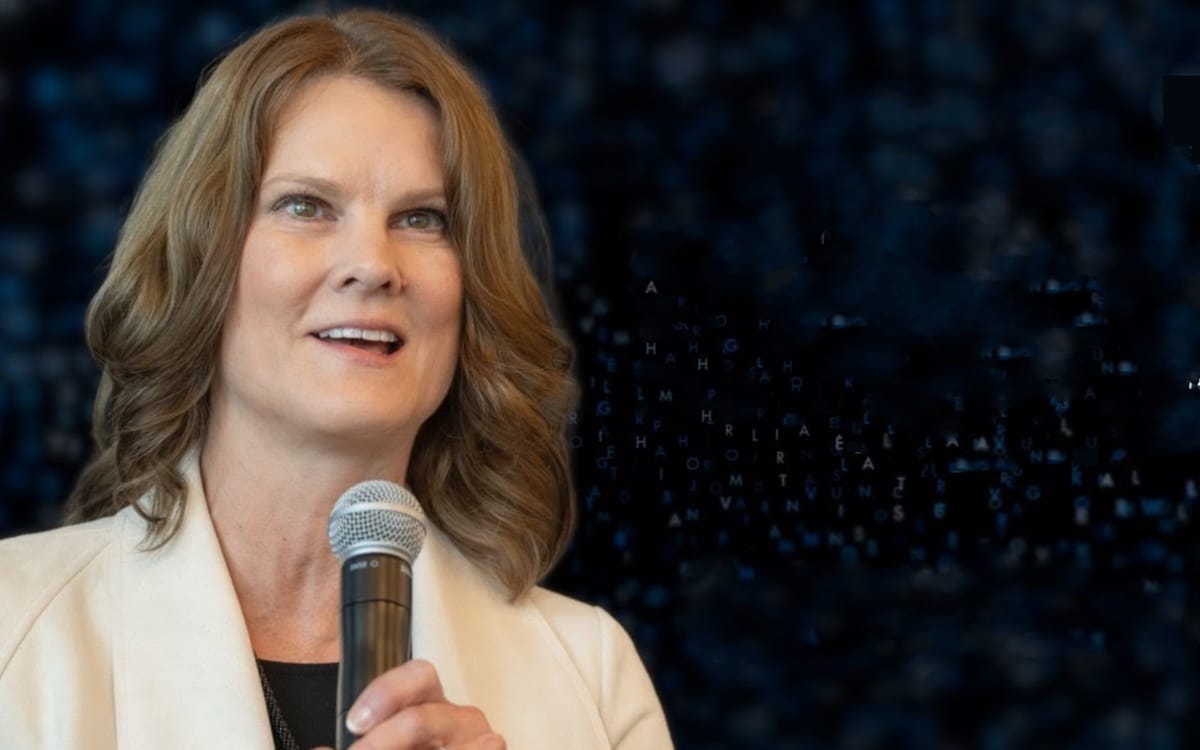
Artificial intelligence platforms are growing faster than social networks ever did, and 2026 will mark the year when AI media emerges alongside social and retail media as a significant advertising destination, according to Debra Aho Williamson, the analyst who published one of the first projections for social media advertising spending in 2007.
Williamson, now Chief Analyst at Sonata Insights, released her analysis on December 12, 2025. She forecasts that ChatGPT will reach 1 billion weekly users worldwide by the end of 2025, just three years after its November 2022 launch. Facebook, by comparison, took more than eight years to reach 1 billion monthly users.
Subscribe PPC Land newsletter ✉️ for similar stories like this one
Subscribe
The research firm Sonata Insights helps businesses understand consumer AI behavior and its impact on marketing. Williamson's career trajectory includes founding the social media coverage area at eMarketer in 2006, producing more than 120 full-length reports that helped establish platforms like Facebook, Instagram and TikTok as integral parts of the marketing mix.
Her new predictions center on three developments with direct consequences for paid advertising strategies in 2026. First, AI platform usage follows a faster growth trajectory than social media adoption. Second, AI platforms will become major paid advertising destinations. Third, AI search will function as a primary discovery channel requiring brands to optimize across five different fronts.
Williamson estimates that 45% of U.S. internet users will visit AI platforms monthly in 2026. Social networks reached 42% monthly usage in 2007, a similar point in their development cycle, according to historical forecasts she produced.
The comparison reveals the accelerated pace of AI platform adoption. ChatGPT's path to 1 billion weekly users in three years demonstrates growth velocity that surpasses social media's earlier expansion. Global social media user identities reached 5.66 billion in October 2025, representing 68.7% of the world's population after years of gradual expansion.
Williamson's analysis draws on her experience identifying the social media trend before most industry observers recognized its advertising potential. At eMarketer, she developed one of the earliest forecasts for social media ad revenues and Facebook ad revenues starting in 2007.
OpenAI CEO Sam Altman reported in early October 2025 that ChatGPT alone had reached 800 million weekly users. This figure suggests the platform may have already surpassed the 1 billion weekly user threshold Williamson predicted for year-end 2025.
The research indicates AI platforms attract users at rates exceeding social media's historical growth patterns. Social networks required years to achieve mass adoption across demographic segments. AI platforms compress that timeline substantially, reaching broad audiences within months rather than years.
Buy ads on PPC Land. PPC Land has standard and native ad formats via major DSPs and ad platforms like Google Ads. Via an auction CPM, you can reach industry professionals.
Learn more
ChatGPT advertising launch expected in 2026
Williamson predicts ChatGPT will begin displaying advertisements in 2026. She also expects new ad formats to launch on AI-driven platforms including Google AI Overviews/AI Mode, Microsoft Copilot and Amazon's Rufus.
"These ads will provide paid placement within purchase-oriented conversations and will also appear embedded in other types of interactions, such as learning, research or inspiration, effectively turning AI chats into a new media channel," according to the email announcement from Sonata Insights.
OpenAI issued an internal directive on December 2, 2025, instructing all company resources to focus on improving ChatGPT's core functionality while delaying advertising implementation and other revenue initiatives. CEO Sam Altman told employees that newer projects, including advertising, AI agents for health and shopping, and a personal assistant called Pulse, would be postponed.
The delay represents a tactical response to competitive pressure. Google released a new version of its Gemini AI model in November that surpassed OpenAI on industry benchmark tests. Anthropic has also gained traction among business customers.
Despite the postponement, OpenAI has been building internal advertising infrastructure. The company posted a job listing on September 24, 2025, seeking a Growth Paid Marketing Platform Engineer to construct foundational marketing technology systems. OpenAI also appointed Omnicom Media Group's PHD as its global media agency of record.
Perplexity AI launched advertising in November 2024, introducing sponsored follow-up questions alongside AI-generated answers. The platform maintains that brand spending does not influence its AI-generated responses. Perplexity processes over 230 million queries monthly and targets CPM rates exceeding $50, significantly higher than typical display advertising.
However, Perplexity's head of advertising and shopping departed in August 2025 after nine months in the role. Taz Patel had joined in December 2024 to develop the startup's emerging advertising business.
Five optimization fronts for AI search visibility
AI search is already reshaping consumer discovery patterns, and the impact will accelerate rapidly in 2026, according to Williamson. Brands need to optimize across five fronts to ensure visibility when consumers search on AI platforms: content marketing, websites, listing platforms, social channels and community/review sites.
This framework differs substantially from traditional search engine optimization. ChatGPT referrals to news publishers increased 25x year-over-year while zero-click searches on Google grew from 56% to nearly 69% since AI Overviews launched in May 2024, according to Similarweb data announced July 2, 2025.
The shift affects how publishers and brands approach content distribution. AI platforms provide synthesized answers directly within conversational interfaces, reducing click-through behavior. Traditional SEO approaches focused on click generation require adaptation toward visibility and authority metrics.
A MediaLink study conducted between August and September 2025 found that 84% of surveyed marketers observed shifts in consumer behavior away from conventional search and web browsing. The research included 27 in-depth interviews with senior decision-makers and a survey of 69 clients across North America, EMEA, and APAC.
Williamson's five-front optimization framework acknowledges that AI search pulls information from multiple sources simultaneously. Content marketing efforts, owned website properties, third-party listing platforms, social media presence and community reviews all contribute to whether brands appear in AI-generated responses.
The optimization challenge extends beyond keyword targeting. AI platforms analyze context, quality signals, authority indicators and cross-platform consistency when generating responses. Brands must maintain coherent messaging across all five fronts to maximize AI search visibility.
Amazon launched a closed beta for its Model Context Protocol Server on November 13, 2025, enabling AI agents to access the advertising platform through standardized protocols. The server connects AI models and agents with Amazon's advertising infrastructure, transforming complex API operations into conversational queries.
Amazon reported that Rufus, its AI shopping assistant, reached 250 million users in 2024. The e-commerce platform announced on November 18, 2025, comprehensive AI shopping features including Buy for Me, Lens Live, and personalized recommendations across mobile apps. The company's advertising revenue reached $15.7 billion in Q2 2025, representing 22% year-over-year growth.
Google has been integrating AI features throughout 2025. The company began testing seamless AI Mode integration through AI Overviews on mobile devices globally on December 1, expanding conversational search capabilities beyond separate interfaces.
Microsoft's Copilot launched the Merchant Program on April 18, 2025, creating an avenue for retailers to integrate product catalogs with its AI assistant platform. The competitive landscape shows major technology companies racing to establish AI advertising infrastructure before rivals capture market share.
A startup called Kontext raised $10 million in seed funding on April 1, 2025, to expand its contextual advertising platform for generative AI applications. The company specializes in creating advertisements dynamically using large language models tailored to individual user sessions. Kontext processes tens of millions of daily ad impressions and serves brands including Amazon, Uber, and Canva.
The company reports average revenue per user improvements from $0.24 to $0.40 among GenAI applications implementing its advertising layer, representing a 66% increase through ad-supported monetization.
Technical accuracy challenges emerge
A WordStream study published July 10, 2025, tested five AI platforms for PPC advertising accuracy. The research revealed a 20% error rate across 225 AI responses to 45 PPC questions. Google AI Overviews showed the highest inaccuracy at 26%, while Google Gemini demonstrated the best performance with a 6% error rate.
The study tested ChatGPT, Google AI Overviews, Google Gemini, Perplexity, and Meta AI. Several tools failed completely on advanced PPC tasks. When asked to write a Google Ads script for automatically pausing high-cost keywords, both Google Gemini and AI Overviews declined the request.
Meta AI achieved perfect accuracy on Facebook Ads questions while struggling with Google Ads information. This platform-specific expertise suggests advertisers must match AI tools to their specific advertising platforms rather than relying on general-purpose solutions.
ChatGPT uniquely promoted itself as a PPC support option when asked about Google Ads assistance. The response included "ChatGPT (Me!)" alongside legitimate marketing agencies and platforms, demonstrating potential conflicts between AI tool providers and objective guidance.
Marketer readiness lags AI adoption
A survey of 3,169 marketers published in November 2025 found that 72% plan AI adoption growth while only 45% feel confident applying it. The research, which spanned advertising technology vendors, agencies, and brands, revealed major readiness challenges.
Among marketers reporting low confidence, 40% cite their organization's insufficient understanding of AI or large language models. This knowledge deficit stems from inadequate training and understanding that pushes marketers toward simplified, general AI tools rather than powerful bespoke solutions designed for specific advertising applications.
The research identifies three primary factors constraining marketer confidence. First, 38% cite lack of training on AI tools. Second, 42% mention limitations on sharing data with their chosen tools. Third, 44% list inability to track results against appropriate goals as a significant barrier.
Marketers currently apply AI most comfortably to social media management at 40%, marketing automation at 39%, and customer engagement at 38%, according to the survey. These areas align with tasks where generative AI tools like ChatGPT prove most useful.
The 27-percentage-point gap between usage and readiness represents what the research characterizes as "pure opportunity" requiring investment in tools and training.
Historical perspective on digital advertising shifts
Williamson's predictions carry weight because of her track record identifying transformative advertising trends. Her 2006-2007 work at eMarketer established social media as a legitimate advertising category years before most industry observers recognized its commercial potential.
She produced one of the first projections for social media ad spending when Facebook had fewer than 100 million users globally. Those early forecasts helped advertisers, agencies and platforms understand the business opportunity social media represented.
Facebook and Instagram commanded $192 billion in global advertising spend in 2025, according to DoubleVerify research released November 18, 2025. TikTok followed with $34 billion in global advertising expenditure. These figures demonstrate how social media evolved from experimental advertising channel to dominant force in digital marketing.
The advertising industry witnessed similar skepticism about social media's commercial viability in 2006-2007 as it currently expresses about AI platforms. Early social media adopters faced questions about measurement, brand safety, and return on investment that later resolved as platforms matured their advertising products.
Williamson's current predictions about AI media suggest history may repeat itself with compressed timelines. The three-year path from ChatGPT's launch to potential 1 billion weekly users represents acceleration beyond social media's growth patterns.
Implications for advertising budgets
The emergence of AI media as an advertising destination creates allocation challenges for marketing professionals. Budgets historically divided between search, social, display, video, and retail media now face claims from AI platforms positioning themselves as essential channels.
Williamson's framework suggests AI platforms will not replace existing channels but rather add complexity to media planning. AI search visibility requires optimization across content marketing, websites, listings, social channels and community sites. AI advertising placements will appear within conversational interfaces where users seek information, make purchase decisions, or engage in research activities.
The economics differ from established digital advertising models. Perplexity's CPM rates exceeding $50 substantially exceed typical display advertising. AI platforms argue that higher CPMs reflect engaged, high-intent users and premium targeting capabilities based on conversational context.
However, measurement standards remain undeveloped. Traditional metrics like click-through rates, viewability and attribution do not directly translate to conversational AI advertising environments. The industry requires new frameworks for evaluating AI media effectiveness.
IAB Australia published a comprehensive guide on November 19, 2025, designed to help marketing professionals improve their interactions with large language models. The guide provides practical prompting techniques with vendor-agnostic instructions applicable across multiple AI platforms.
The guide's release acknowledges that marketers are conducting competitor research, mapping market positioning, brainstorming media plans, summarizing performance data, drafting creative content, and building audiences using AI tools. These use cases suggest AI platforms already influence advertising strategy even before formal advertising products launch.
Privacy and data considerations
AI platforms require extensive data to function effectively. The systems analyze user queries, conversation context, behavioral patterns and historical interactions to generate relevant responses. This data collection enables personalized experiences and, eventually, targeted advertising.
Perplexity CEO Aravind Srinivas discussed data collection strategies during a May 2025 podcast interview. He explained plans to use browsing context to build user profiles for "hyper personalized" advertising similar to established technology companies.
The approach mirrors Google's business model, which has relied on tracking users across the internet to build comprehensive advertising profiles. Perplexity launched its Comet browser in July 2025 for $200-per-month Max subscribers, later releasing it to the public at no cost on October 2, 2025.
Privacy implications accompany this transformation. Comprehensive data collection becomes essential for effective AI personalization and monetization strategies. Regulatory frameworks developed for traditional digital advertising may not adequately address AI-specific data practices.
The advertising industry has witnessed platform power plays reshape the competitive landscape throughout 2025. Amazon sued Perplexity on November 4, 2025, alleging the AI company deployed agents to access the e-commerce platform's marketplace without authorization. The lawsuit raises fundamental questions about how autonomous AI systems will interact with advertising-supported platforms.
Industry expert credentials
Williamson holds a degree in oboe performance from Northwestern University alongside her English literature studies. Before founding Sonata Insights in 2024, she worked as Principal Analyst at Insider Intelligence (formerly eMarketer) from 2011 to 2023, where she served as Desk Lead for Social Media.
Her landmark body of work at eMarketer amounted to more than 120 full-length reports that enabled the advertising industry to recognize social media's power and potential. The research helped make platforms such as Facebook, Instagram and TikTok integral to the marketing mix.
Williamson's opinions and research have been featured in thousands of news articles. She has made more than 45 television appearances, including on NBC, BBC, Bloomberg Television and CNBC. Her media presence established her as a recognized authority on digital advertising trends and platform evolution.
She describes her analytical approach as identifying significant shifts in consumer behavior that lead to substantial changes in marketing strategy. At Sonata Insights, she applies this methodology to AI marketing, AI advertising, AI search and AI consumer behavior through white papers, expert guidance and professional speaking appearances.
The research firm's name references the musical composition for solo instrument with piano accompaniment. Williamson studied under oboe professor Ray Still at Northwestern University. She approaches client projects through deep collaboration, active listening and close partnership, mirroring the interplay between instruments in a sonata performance.
Market context and competition
The AI advertising market emerges amid intense competition between established technology companies and well-funded startups. ChatGPT weekly active users expanded eight-fold from October 2023 to April 2025, reaching over 800 million users. Google simultaneously expanded AI Overviews deployment and launched experimental AI Mode for select users.
Social media platforms continue evolving their advertising capabilities. Meta introduced Advantage+ catalog ads and carousel formats to Threads in September 2025, expanding creative options for the platform's 400 million users. The company posted 22% advertising revenue growth to $46.6 billion in Q2 2025, driven by AI-powered recommendation systems serving 3.48 billion daily active users.
The convergence of AI capabilities and advertising infrastructure creates opportunities for platforms that successfully integrate both elements. Traditional social networks add AI features while AI platforms develop advertising products. The boundaries between categories blur as all major platforms incorporate AI throughout their products.
Williamson's predictions suggest 2026 will mark an inflection point where AI media achieves recognition as a distinct advertising category. The platforms, the users, the ad formats, and the targeting capabilities exist in various stages of development. The missing element is widespread advertiser adoption and budget allocation.
Subscribe PPC Land newsletter ✉️ for similar stories like this one
Subscribe
Timeline
- 2006 - Debra Aho Williamson begins social media research at eMarketer, becoming one of first analysts to pinpoint the trend
- 2007 - Williamson publishes one of first projections for social media ad spending
- November 2022 - ChatGPT launches
- August 2024 - Perplexity AI announces plans to launch advertising in Q4 2024
- September 24, 2025 - OpenAI posts job listing seeking Growth Paid Marketing Platform Engineer to build advertising infrastructure
- October 2, 2025 - Perplexity releases Comet browser globally at no cost after three-month limited rollout
- October 15, 2025 - Meltwater and We Are Social release Digital 2026 report showing AI adoption exceeds 1 billion monthly users
- November 4, 2025 - Amazon sues Perplexity over AI agent access to marketplace
- November 13, 2025 - Amazon launches closed beta for AI agent advertising integration through Model Context Protocol Server
- November 18, 2025 - Amazon announces comprehensive AI shopping features including Rufus reaching 250 million users
- November 19, 2025 - IAB Australia publishes LLM prompting guide for marketing professionals
- December 2, 2025 - OpenAI issues internal directive delaying advertising to focus on improving ChatGPT
- December 12, 2025 - Debra Aho Williamson releases AI media predictions for 2026
Subscribe PPC Land newsletter ✉️ for similar stories like this one
Subscribe
Summary
Who: Debra Aho Williamson, Chief Analyst at Sonata Insights, who published one of the first projections for social media advertising spending in 2007 while working at eMarketer. Williamson produced more than 120 full-length reports during her career helping establish Facebook, Instagram and TikTok as integral parts of the marketing mix.
What: Williamson predicts that 2026 will be the year when AI media, including platforms like ChatGPT, Perplexity and Meta AI, emerges alongside social and retail media as an important destination for paid advertising. She forecasts ChatGPT will reach 1 billion weekly users worldwide by the end of 2025, predicts ChatGPT will begin displaying ads in 2026, expects new ad formats to launch on Google AI Overviews/AI Mode, Microsoft Copilot and Amazon's Rufus, and states that AI search is already reshaping consumer discovery with brands needing to optimize across five fronts: content marketing, websites, listing platforms, social channels and community/review sites.
When: The predictions were released on December 12, 2025. Williamson estimates that by the end of 2025, ChatGPT will reach 1 billion weekly users worldwide, three years after its November 2022 launch. In 2026, she expects 45% of U.S. internet users will visit AI platforms monthly, compared to 42% who used social networks in 2007 at a similar point in their development.
Where: The predictions apply globally to AI platforms including ChatGPT, Perplexity, Meta AI, Google AI Overviews/AI Mode, Microsoft Copilot, and Amazon's Rufus. Usage patterns in the United States show AI platforms climbing at a faster rate than the adoption curve once seen with social networks, with implications for advertising markets worldwide.
Why: AI platforms are growing faster than social networks ever did, with ChatGPT taking three years to reach 1 billion weekly users compared to Facebook's eight-plus years to reach 1 billion monthly users. The faster growth trajectory, combined with high user engagement and purchase intent within conversational interfaces, positions AI platforms as viable advertising destinations. Brands face pressure to maintain visibility as consumer discovery shifts from traditional search engines to AI-powered answer engines, requiring optimization across multiple fronts to ensure they appear in AI-generated responses.
Share this article
The link has been copied!