
AudienceProject simplifies cross-media reporting with single-page builder
AudienceProject redesigned its report creation interface, eliminating multi-tab workflows and reducing manual configuration errors across measurement campaigns.

AudienceProject redesigned its report creation interface, eliminating multi-tab workflows and reducing manual configuration errors across measurement campaigns.
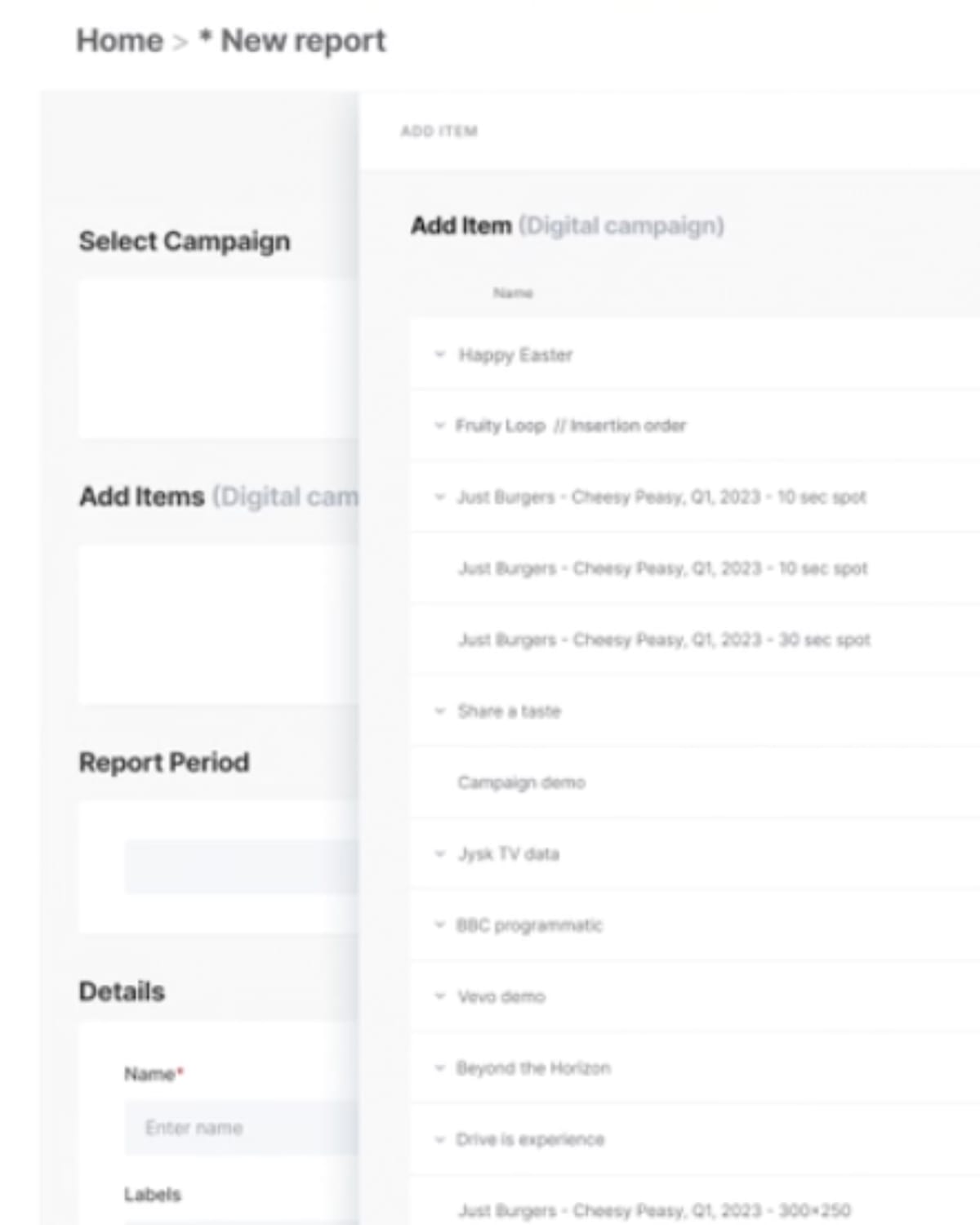
AudienceProject today introduced a redesigned report builder in AudienceReport that consolidates previously scattered report creation functions into a unified interface. The cross-media measurement company announced the change on February 3, 2026, positioning the update as part of ongoing efforts to simplify complex reporting workflows.
The new interface replaces a multi-tab configuration system with a single vertically structured page. According to the company's announcement, all required fields now appear simultaneously, supported by a live validation panel that identifies incomplete sections in real time. The change aims to reduce the manual effort required to configure measurement reports across television, connected TV, digital, and social media channels.
Aske Østergård, writing on behalf of AudienceProject, stated that the redesigned experience "removes unnecessary complexity from report creation and makes it easier to set up reports correctly from the start."
The modification addresses persistent challenges in cross-media measurement, where advertisers combine data from disparate platforms to understand deduplicated reach and frequency. Traditional measurement approaches often require advertisers to navigate fragmented interfaces, increasing the time spent on administrative tasks rather than campaign analysis.
The primary architectural change involves collapsing multiple configuration screens into one continuous interface. Previously, users navigated between separate tabs to input campaign parameters, select measurement periods, and define reporting dimensions. The new system presents these options simultaneously within a single scrollable view.
A companion validation panel monitors configuration status throughout the setup process. According to the announcement, this panel highlights completed sections and identifies missing required inputs. The real-time feedback mechanism intends to prevent common configuration errors that historically delayed report generation.
The interface change reflects broader industry movement toward simplified analytics tools. Google Analytics released a comprehensive reporting playbook in October 2025 addressing widespread confusion about the platform's five distinct reporting surfaces, while Google Ad Manager committed to replacing its legacy reports tool with an interactive reporting interface by early 2026.
AudienceProject incorporated automated reporting period functionality into the new builder. When activated, the system automatically determines start and end dates based on selected campaign items rather than requiring manual date entry.
The automation logic selects the earliest item start date from platform-provided data as the report beginning. For campaigns lacking platform-provided start dates, the system substitutes the first impression ingestion date. The end date uses the latest item end date, with fallback maximums applied when specific end dates remain unavailable.
According to the announcement, this automation "ensures more accurate reporting periods without manual adjustments." The functionality addresses discrepancies that emerge when measuring campaigns across platforms with different data availability windows.
Cross-media measurement implementations require synchronizing data from sources with varying time granularity and reporting delays. Television data often arrives on different schedules than digital platform metrics. AudienceProject's YouTube measurement integration, expanded to seven European markets in April 2025, demonstrates the technical complexity of aligning data from Google's Ads Data Hub with traditional broadcast measurement systems.
The automated period selection mechanism attempts to reconcile these timing differences by inferring appropriate boundaries from available metadata rather than forcing users to estimate appropriate date ranges manually.
The transition from multi-tab to single-page configuration represents AudienceProject's response to observed user behavior patterns. Multi-step interfaces often obscure dependencies between configuration options. Users selecting specific measurement dimensions in one tab may unknowingly invalidate choices made in previous tabs, creating circular revision cycles.
The unified interface exposes these relationships immediately. When users modify targeting parameters, dependent fields update visibly within the same view. This design pattern has become standard in modern software interfaces but remained less common in enterprise measurement platforms where legacy architectures often constrain interface design choices.
The company characterized the change as raising "the bar for usability in AudienceReport." The statement positions the update within competitive dynamics among measurement providers. Comscore expanded its cross-platform reporting suite to include streaming audio measurement and Meta campaign metrics on December 15, 2025, while maintaining its existing interface paradigms.
Interface simplification has emerged as a competitive factor in analytics platforms. Google Analytics enhanced ecommerce data functionality on August 25, 2025, by making item-scoped dimensions available in secondary dimensions, filters, comparisons, and customization tools. The change addressed "longstanding limitations" that created barriers for comprehensive analysis.
Similar usability improvements appeared across advertising technology platforms throughout 2025. Google Analytics launched lead acquisition and loss tracking reports on July 21, 2025, with pre-configured audience templates designed to reduce the technical knowledge required for implementing conversion funnel tracking.
The technical challenges inherent in cross-media measurement create natural complexity in reporting interfaces. Advertisers measuring campaigns across linear TV, connected TV, YouTube, Netflix, Meta platforms, and open web inventory must configure deduplication logic, household composition models, co-viewing assumptions, and platform-specific attribution windows.
Each measurement dimension introduces configuration requirements. Demographic targeting necessitates age and gender selections. Geographic analysis requires market definitions. Frequency capping demands temporal granularity specifications. Report builders historically presented these options across multiple interface sections to avoid overwhelming users with simultaneous choices.
The single-page approach inverts this design philosophy. Rather than hiding complexity through progressive disclosure, the unified interface makes all configuration decisions visible simultaneously. The validation panel serves as cognitive scaffolding, helping users track completion status without requiring them to remember which sections remain unfinished.
Research from agencies implementing automation technologies demonstrated that fragmented workflows significantly impact operational efficiency. A September 2025 study found agencies spend an average of 46 hours monthly making campaign changes across multiple platforms. Workflow automation reduced budget pacing tasks by 90% and campaign setup times by 80% in documented case studies.
AudienceProject's interface redesign addresses similar friction in the measurement workflow. By consolidating configuration into a unified flow, the company attempts to reduce the cognitive load associated with navigating between disconnected interface sections while maintaining access to granular configuration options that sophisticated users require.
The measurement industry has experienced significant infrastructure development throughout 2024 and 2025. Médiamétrie partnered with AudienceProject in September 2025 to develop cross-media video advertising measurement targeting Q1 2026 launch in France. The collaboration addresses technical challenges in video advertising measurement where traditional approaches force marketers to choose between reach maximization and media quality.
Cross-platform deduplication requires sophisticated technical infrastructure capable of identifying unique viewers across devices, formats, and platforms without compromising privacy. Google Ads introduced Cross-Media Reach measurementin June 2024, providing deduplicated reach and frequency insights across YouTube and traditional television.
The proliferation of measurement capabilities has created interface challenges as platforms incorporate additional data sources and analytical dimensions. Meta tested Google Analytics 4 integration in October 2025, allowing advertisers to connect Meta Ads accounts directly to GA4 for cross-platform attribution. The integration added configuration requirements at the ad level, enabling granular tracking configurations for different campaigns.
Interface complexity compounds as measurement capabilities expand. Google added policy insight tools to AdSense reporting on June 27, 2025, introducing three new reporting dimensions: policy ad serving status breakdown, Confirmed Click status breakdown, and traffic source breakdown. Publishers gained additional filtering capabilities but faced increased interface complexity.
The real-time validation panel represents the report builder's most significant usability enhancement. Configuration errors in measurement reports produce compounding problems. Invalid date ranges exclude relevant data. Incorrect dimension selections generate misleading metrics. Platform incompatibilities prevent report generation entirely.
Traditional validation occurred after configuration completion, forcing users to navigate back through multi-tab interfaces to locate and correct errors. The new validation panel identifies issues immediately as users make selections, allowing corrections before completing the workflow.
Similar validation approaches have appeared in advertising workflow automation platforms. Basis and Mediaocean announced an integration partnership designed to automate the complete media campaign lifecycle through coordinated workflows. The integration includes automated two-way synchronization that aligns contracted and delivered spend, reducing discrepancies through continuous validation rather than post-campaign reconciliation.
Validation becomes particularly important in cross-media measurement where platform-specific constraints affect configuration validity. YouTube measurement through Google's Ads Data Hub requires specific setup parameters that differ from Netflix measurement configurations. Social platform measurement necessitates different targeting specifications than connected TV campaigns.
The validation panel's role extends beyond error prevention to education. By highlighting incomplete sections and explaining requirements, the interface guides users toward correct configurations rather than simply blocking invalid inputs.
The redesigned report builder affects how marketing teams allocate analytical resources. Simplified configuration reduces the specialized knowledge required to generate cross-media measurement reports. Team members without extensive platform expertise can now configure reports that previously required analyst involvement.
This democratization of measurement aligns with broader industry patterns. Google Analytics launched data access monitoring tools in November 2024 providing improved visibility into platform usage while maintaining administrator-level security controls. The enhancement enabled organizations to track API quota consumption and data access patterns without requiring technical expertise from all stakeholders.
Research on cross-media measurement effectiveness demonstrates substantial operational value. Heineken increased digital investment to 42% following an AudienceProject measurement study revealing digital channels delivered 19.4 times more efficient reach compared to television advertising. The study documented a 22 percentage point lift in brand awareness when campaigns combined exposure across TV and Meta platforms.
These insights depend on accurate measurement configuration. Configuration errors could have masked the efficiency differences between digital and television channels, potentially leading to suboptimal budget allocation decisions. The new report builder's validation mechanisms aim to prevent such errors from distorting strategic decisions.
The interface change also affects team collaboration dynamics. When multiple stakeholders need to review or modify measurement configurations, a unified interface reduces miscommunication about incomplete sections or unclear requirements. The validation panel serves as shared documentation of configuration status, enabling asynchronous collaboration without requiring detailed status communications.
The single-page interface requires different technical architecture than multi-tab designs. All configuration logic must load simultaneously rather than progressively as users navigate between tabs. This approach increases initial page load requirements but eliminates subsequent navigation delays.
The validation panel operates through continuous state monitoring. As users modify configuration inputs, the system evaluates completeness and validity across all interdependent settings. This real-time processing demands client-side computational resources that multi-tab interfaces could distribute across separate page loads.
Modern web application frameworks enable such architectures through reactive programming patterns where interface elements automatically update in response to state changes. These patterns have become standard in consumer web applications but adoption in enterprise measurement platforms has lagged due to integration requirements with legacy data processing systems.
AudienceProject's implementation suggests the company has modernized its technical infrastructure to support contemporary interface paradigms. The transition from multi-tab to single-page configuration typically requires substantial backend refactoring to expose necessary data and validation logic through unified application programming interfaces.
Similar architectural transitions have occurred across advertising technology platforms. Smartly introduced Creative Predictive Potential and Creative Insights on November 18, 2025, integrating AI-powered creative intelligence across social, Google, and connected TV within a unified platform infrastructure. The integration required coordination across previously separate creative production, media activation, and performance optimization systems.
Cross-media measurement operates under strict privacy constraints following GDPR implementation and ongoing regulatory development. The automated reporting period feature interacts with data retention requirements. By automatically selecting dates based on available data rather than requiring manual specification, the system must respect platform-specific retention windows.
Different platforms maintain user-level data for varying durations based on privacy regulations and contractual terms. Television measurement data typically aggregates more quickly than digital platform data. The automated date selection logic must account for these differences to avoid requesting data that platforms have already purged from accessible systems.
The single-page configuration also affects audit capabilities. When organizations face regulatory inquiries about measurement methodologies, unified configuration interfaces provide clearer documentation of report parameters than multi-tab systems where settings might be scattered across multiple interface sections.
Privacy-compliant measurement has become foundational to measurement provider competitiveness. The industry has developed clean room technologies and differential privacy techniques to enable cross-platform analysis while protecting individual privacy. Interface simplification must maintain these protections while reducing configuration complexity.
AudienceProject operates in a competitive measurement landscape alongside established providers including Nielsen, Comscore, and platform-provided measurement tools. The interface redesign represents incremental differentiation rather than fundamental capability expansion.
The company's emphasis on "raising the bar" for cross-media measurement usability positions the update as competitive response to measurement complexity complaints. Advertisers frequently cite fragmented measurement tools as barriers to comprehensive cross-platform campaign optimization.
The announcement notably avoids capability comparisons with competing measurement providers. Instead, the messaging focuses on removing friction from existing workflows rather than introducing novel analytical dimensions or data sources. This positioning suggests the company views operational efficiency as a competitive differentiator comparable to measurement breadth or accuracy.
Interface improvements have emerged as competitive factors across analytics platforms throughout 2025. The emphasis on user experience reflects recognition that technical capabilities matter less than adoption when sophisticated features remain inaccessible to typical users.
AudienceProject's focus on automated configuration and real-time validation addresses adoption barriers without requiring users to develop specialized expertise in cross-media measurement methodology. This approach differs from providers emphasizing analytical sophistication or comprehensive data coverage as primary value propositions.
The redesigned report builder became available immediately upon announcement. AudienceProject did not describe the update as a beta release or gradual rollout, suggesting the company completed internal testing before public launch.
The announcement directs users to explore the new builder directly within AudienceReport or consult the company's Help Center for detailed documentation. This immediate availability contrasts with platforms that introduce features through extended preview periods before general deployment.
The company did not specify whether the previous multi-tab interface remains accessible as a legacy option. Immediate replacement of existing interfaces typically indicates confidence in the new design's superiority and desire to avoid maintaining parallel systems with duplicated functionality.
Organizations using AudienceReport for ongoing measurement campaigns face immediate interface changes without transition periods. The single-page configuration differs substantially from the multi-tab predecessor, potentially requiring users to adjust established workflows.
AudienceProject characterized the launch as "another step" in ongoing ambitions to improve cross-media measurement usability, suggesting additional interface or functionality changes may follow. The incremental positioning frames the report builder redesign as part of continuous product development rather than a definitive interface transformation.
Who: AudienceProject, a cross-media measurement and audience analytics company providing Software-as-a-Service solutions for advertisers, announced updates to its AudienceReport platform.
What: The company introduced a redesigned report builder featuring a single-page configuration interface replacing the previous multi-tab system, accompanied by automated reporting period functionality and real-time validation panel. The interface consolidates all required configuration fields into one vertically structured page with live oversight showing completion status and missing inputs. Automated reporting periods select start and end dates based on campaign item metadata, using earliest item start dates and latest end dates with fallback logic for missing platform data.
When: AudienceProject announced the new report builder on February 3, 2026, with immediate availability to all AudienceReport users without preview periods or gradual rollouts.
Where: The redesigned report builder operates within AudienceReport, AudienceProject's cross-media measurement platform serving European and North American markets. The update affects all users creating measurement reports across television, connected TV, digital publishers, social platforms, and streaming services.
Why: The redesign addresses complexity in cross-media measurement report creation where advertisers navigate fragmented interfaces and manual configuration processes. By simplifying workflows and reducing manual effort, AudienceProject aims to enable users to focus on campaign analysis rather than administrative setup tasks. The update responds to competitive dynamics in measurement platforms where interface usability has emerged as a differentiating factor alongside measurement capabilities and data coverage. The company positions the change as part of ongoing efforts to raise standards for cross-media measurement accessibility and operational efficiency.