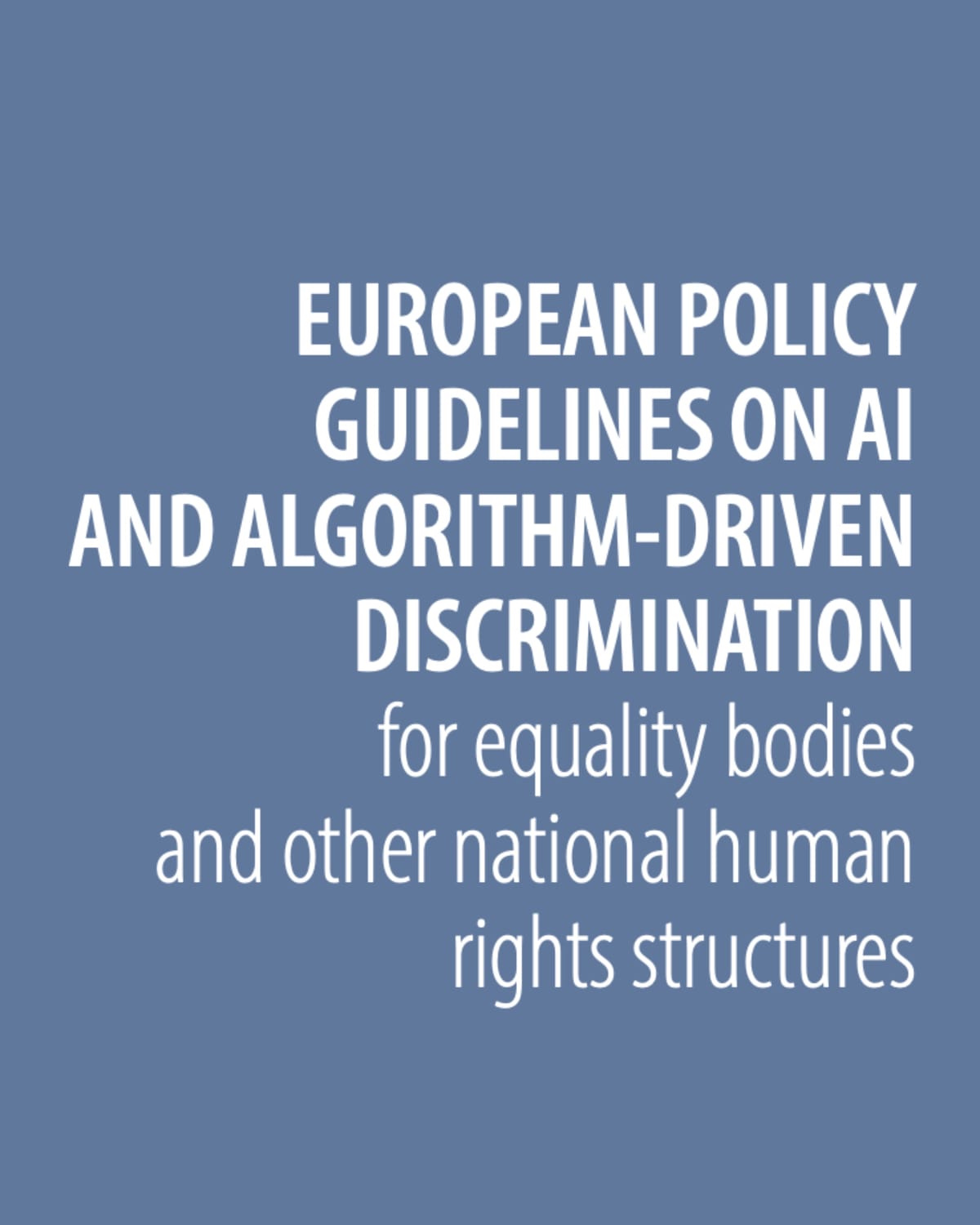
The Council of Europe released comprehensive policy guidelines addressing how equality bodies and national human rights structures can leverage the EU AI Act to combat algorithmic discrimination. The framework, published in recent weeks, targets AI systems deployed across public administration domains including welfare distribution, employment screening, migration processing, education placement, and law enforcement operations.
According to analysis shared by Dr. Théo Antunes, a legal expert specializing in artificial intelligence and law, the guidelines clarify how regulators can monitor prohibited AI practices including social scoring, biometric categorization, and emotion recognition systems. The document emerged as AI deployment accelerates across European public services, creating discrimination risks that traditional oversight mechanisms struggle to address. While the EU AI Act entered into force on August 1, 2024, the Council of Europe guidelines provide practical implementation tools for organizations responsible for protecting fundamental rights.
The guidelines demonstrate how enforcement bodies can engage with high-risk classifications established under the AI Act framework. They explain procedures for conducting fundamental rights impact assessments and accessing new EU-level databases designed to strengthen regulatory oversight. This practical orientation distinguishes the guidelines from earlier regulatory documents focused primarily on technical compliance requirements. Marketing technology providers using AI for audience targeting, content personalization, or automated decision-making face intensifying scrutiny under these frameworks.
Prohibited practices and enforcement mechanisms
The Council of Europe framework emphasizes three categories of banned AI applications that carry immediate enforcement consequences. Social scoring systems that evaluate individuals based on social behavior or personal characteristics face absolute prohibitions when such assessments lead to detrimental treatment. Biometric categorization tools that infer sensitive attributes including race, political opinions, or sexual orientation from physical characteristics are similarly banned in most contexts. Emotion recognition systems deployed in workplace or educational settings represent the third prohibited category.
The guidelines provide equality bodies with specific monitoring mechanisms for detecting these banned applications in operational environments. They outline how regulators can access documentation requirements mandated under Article 53 of the AI Act, which compel providers to maintain technical information about model capabilities and limitations. This documentation enables equality bodies to assess whether deployed systems violate prohibitions without requiring deep technical expertise.
For advertising platforms, the prohibitions create significant compliance boundaries. Emotion recognition systems used to optimize ad creative based on inferred emotional states could violate the workplace and education bans if deployed in those contexts. Biometric categorization for demographic targeting faces restrictions when systems infer protected characteristics rather than relying on user-provided information. The enforcement framework gives equality bodies authority to investigate these applications and impose remedies.
High-risk systems and fundamental rights assessments
The guidelines establish how equality bodies engage with high-risk AI systems defined under EU AI Act provisions. These systems include AI applications used for employment screening, creditworthiness assessment, essential service access, law enforcement support, and border control processing. Providers of high-risk systems must conduct fundamental rights impact assessments before deployment, creating intervention points for equality bodies.
According to Antunes's analysis, the fundamental rights impact assessment process enables equality bodies to evaluate AI systems for discrimination risks before they affect real individuals. The assessments must identify potential impacts on protected groups, document mitigation measures, and establish monitoring procedures for detecting discriminatory outcomes. Equality bodies can review these assessments and demand modifications when discrimination risks appear inadequately addressed.
The framework provides specific guidance on data governance requirements for high-risk systems. Training datasets must be examined for representation gaps that could produce discriminatory outputs. Validation procedures must test system performance across demographic subgroups to detect disparate accuracy rates. Human oversight mechanisms must enable intervention when systems produce questionable decisions affecting individuals' fundamental rights.
Marketing applications increasingly incorporate AI systems that could trigger high-risk classifications. Automated employment screening tools used by recruiters qualify as high-risk under the AI Act framework. Credit scoring models that incorporate alternative data sources for advertising targeting may face similar classification. Platforms deploying these systems must implement the fundamental rights assessment procedures that equality bodies can audit.
Transparency obligations and accountability mechanisms
The Council of Europe guidelines detail how transparency requirements under Article 50 of the AI Act create accountability mechanisms for equality bodies to enforce. AI systems that interact with individuals must disclose their automated nature at the first point of interaction. Systems generating synthetic content must mark outputs as AI-generated. These disclosure requirements enable individuals to recognize when automated systems affect their treatment.
Transparency extends beyond user-facing disclosures to encompass documentation requirements for regulators. Providers must maintain records of training data sources, model architecture decisions, and testing procedures. These records enable equality bodies to investigate discrimination complaints by examining the technical foundations of contested decisions. Without such documentation, proving algorithmic discrimination becomes nearly impossible.
The guidelines emphasize that transparency alone cannot guarantee fairness. According to Dutch Data Protection Authority research cited in related regulatory documents, transparency safeguards must combine with substantive fairness requirements to limit discriminatory outcomes. Equality bodies need authority to examine not just whether systems disclose their operations but whether those operations produce discriminatory results.
For advertising technology, the transparency requirements create new compliance obligations. Interactive AI systems used for customer service must disclose their automated nature. Generative AI tools creating advertising content must mark outputs appropriately. Platforms using AI for ad targeting decisions must maintain documentation enabling regulators to audit those systems for discriminatory patterns.
Coordination with European regulatory frameworks
The Council of Europe guidelines connect AI governance with broader European human rights frameworks including the organization's Framework Convention on Artificial Intelligence. This coordination reflects recognition that AI regulation intersects with existing data protection, consumer protection, and anti-discrimination laws. Equality bodies must navigate these overlapping frameworks to enforce rights effectively.
The framework advocates for strong institutional mandates, operational independence, adequate resources, and cooperation with other regulators. Coordination becomes essential as multiple authorities develop jurisdiction over AI systems. Data protection authorities enforce GDPR compliance for AI training and deployment. Consumer protection bodies address deceptive AI applications. Competition authorities examine algorithmic collusion and market manipulation.
For marketing organizations operating across European markets, this regulatory coordination creates complexity. A single AI system used for programmatic advertising might trigger oversight from data protection authorities regarding personal data processing, consumer protection bodies regarding deceptive practices, and equality bodies regarding discriminatory targeting. Compliance requires understanding how these frameworks intersect.
The guidelines acknowledge that effective enforcement requires equality bodies to develop technical capacity for auditing algorithmic systems. Many equality bodies traditionally focused on discrimination cases arising from human decisions lack expertise for examining machine learning models. The framework recommends building internal technical teams or establishing partnerships with academic institutions and civil society organizations.
Strategic implications for AI providers
The Council of Europe framework reduces compliance ambiguity for AI providers developing or deploying systems in regulated sectors. The guidelines clarify which practices face absolute prohibition, which systems trigger high-risk classification, and what transparency obligations apply across different deployment contexts. This clarity enables providers to anticipate regulatory expectations during development rather than discovering violations after deployment.
According to Antunes's analysis, providers integrating fundamental rights considerations into product design gain strategic advantages. Robust risk management processes, comprehensive data governance frameworks, and meaningful fundamental rights impact assessments become competitive differentiators rather than mere compliance exercises. Organizations demonstrating proactive rights protection build trust with public authorities, business partners, and end users.
The guidelines make clear that compliance with the AI Act will become a decisive factor in public procurement and cross-border markets. Government agencies procuring AI systems will increasingly demand evidence of fundamental rights assessments and discrimination testing. Private sector buyers in regulated industries will face similar requirements. Providers unable to demonstrate compliance risk exclusion from valuable market segments.
For advertising technology providers, the strategic implications extend beyond avoiding enforcement. The guidelines signal that discrimination risks in AI systems will face sustained regulatory attention. Organizations that build fairness testing, bias mitigation, and demographic impact monitoring into their development processes position themselves advantageously as regulatory scrutiny intensifies.
Practical challenges and implementation gaps
Despite the guidelines' comprehensive scope, significant implementation challenges remain. Equality bodies must develop technical capacity for auditing complex algorithmic systems whose operations may not be fully transparent even to their developers. According to Antunes's commentary, the gap between regulatory text and operational reality remains vast based on direct experience deploying AI systems in sensitive sectors.
The question of whether equality bodies possess adequate technical capacity to audit these systems presents ongoing concerns. Many organizations tasked with enforcing the guidelines lack staff with machine learning expertise or access to tools for examining model behavior. Building this capacity requires sustained investment and potential partnerships with technical experts from academic or private sectors.
The guidelines also face challenges from AI systems' opacity. Even when providers supply required documentation, understanding why a particular model produces specific outputs for individual cases can prove difficult. This opacity complicates discrimination investigations that depend on establishing causal connections between system design and discriminatory outcomes. Equality bodies may struggle to prove violations without access to proprietary algorithms and training data.
For marketing platforms deploying AI systems, these implementation challenges create both risks and opportunities. The current enforcement capacity limitations may produce inconsistent oversight in the near term. However, organizations that proactively engage with equality bodies and demonstrate willingness to address discrimination risks may benefit from regulatory goodwill as enforcement mechanisms mature.
Broader context of European AI regulation
The Council of Europe guidelines arrive amid accelerating European AI regulation. The EU AI Act's most stringent obligations entered into application on August 2, 2025, with graduated enforcement extending through 2027. The Commission has released multiple implementation guidelines addressing general-purpose AI model obligations, transparency requirements, and prohibited practices.
National authorities across EU member states are establishing competent authorities and enforcement procedures. Denmark became the first member state to complete national implementation in May 2025, designating three authorities to handle different aspects of AI Act enforcement. Other jurisdictions are following with varied approaches that could create compliance complexity for cross-border operations.
The regulatory landscape also includes ongoing debates about GDPR modifications to accommodate AI development. The European Commission has proposed amendments that would establish legitimate interest as a legal basis for AI training using personal data. Privacy advocates have criticized these proposals as undermining fundamental rights protections that the AI Act ostensibly strengthens.
Marketing technology providers must navigate this evolving regulatory environment while maintaining operational flexibility. The intersection of AI Act requirements, GDPR obligations, and sector-specific rules creates compliance challenges that require ongoing monitoring. Organizations that invest in understanding regulatory developments and building adaptive compliance processes will navigate transitions more effectively than those treating regulation as a static checklist.
Timeline
Summary
Who: The Council of Europe released the guidelines targeting equality bodies and national human rights structures across European jurisdictions. Dr. Théo Antunes, a legal expert in artificial intelligence and law, provided analysis of the framework's implications.
What: Comprehensive policy guidelines explaining how equality bodies can use the EU AI Act and related European standards to protect fundamental rights. The document addresses prohibited AI practices, high-risk system oversight, transparency obligations, and enforcement mechanisms for combating algorithmic discrimination.
When: The guidelines were released in recent weeks, building on the EU AI Act which entered into force on August 1, 2024, with the most stringent obligations taking effect on August 2, 2025.
Where: The framework applies across European Union member states and Council of Europe jurisdictions, affecting AI systems deployed in public administration including welfare, employment, migration, education, and law enforcement contexts.
Why: The guidelines address growing discrimination risks from AI systems deployed across public services. They provide practical tools for equality bodies to monitor prohibited practices, assess high-risk systems, and remedy algorithmic discrimination. For AI providers, the framework reduces compliance ambiguity and enables integration of fundamental rights considerations into product development, positioning organizations for competitive advantage in regulated markets where AI Act compliance becomes a decisive procurement factor.
Share this article
The link has been copied!