Google seeks approval for $68 million voice assistant privacy settlement
Google seeks court approval for $68M settlement resolving claims Assistant devices recorded private conversations without consent since 2016.


Google seeks court approval for $68M settlement resolving claims Assistant devices recorded private conversations without consent since 2016.
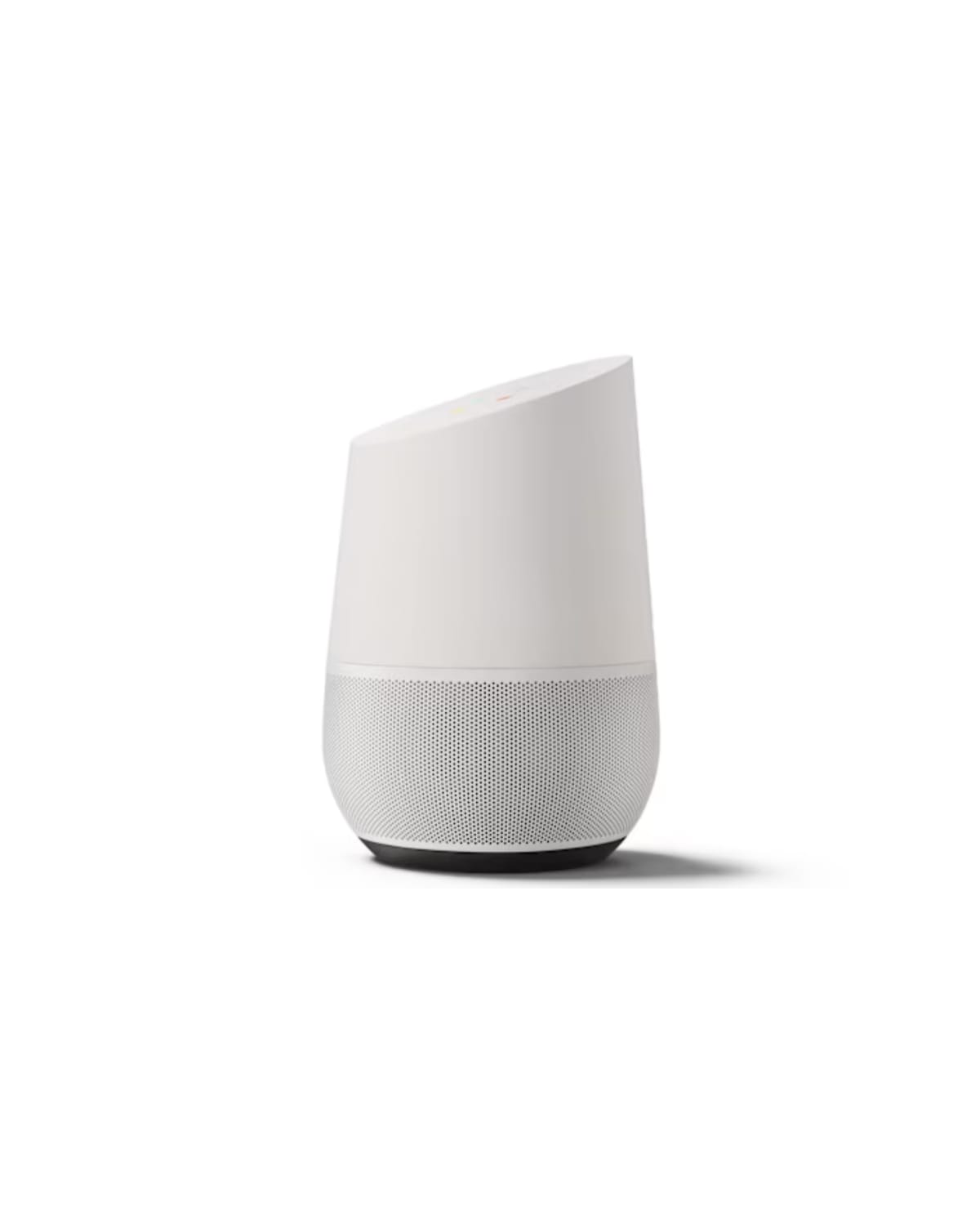
Plaintiffs filed a motion for preliminary approval of a $68 million settlement with Google LLC and Alphabet Inc. this month in the United States District Court for the Northern District of California, seeking to resolve allegations that Google Assistant devices recorded private conversations without user consent dating back to May 2016.
The proposed settlement, filed January 23, 2026, establishes two settlement classes covering purchasers of Google-made devices and individuals whose communications were recorded by Google Assistant following false activations or were disclosed to third-party review vendors. According to court documents, the settlement fund will provide compensation to an estimated class of millions of users affected by Google's voice recording practices between May 18, 2016, and the date of preliminary approval.
Plaintiffs Asif Kumandan, Melissa Spurr, and Lourdes Galvan originally filed the class action lawsuit on July 25, 2019, claiming Google violated California's Invasion of Privacy Act by recording confidential communications when users did not utter activation phrases like "Hey Google" or "Okay Google." The complaint alleged that Google Assistant Enabled Devices transmitted audio recordings to Google for human review without obtaining proper consent from all parties to the conversations, including minors.
"Google Assistant Enabled Devices are only supposed to record conversations preceded by the utterance 'Okay, Google' or 'Hey, Google' or the pressing of a button on the device," according to the original complaint filed in July 2019. The lawsuit centered on allegations that devices recorded millions of individuals, including children, when no activation phrase had been spoken.
Belgian news outlet VRT NWS reported on July 10, 2019, that Google was using Google Assistant Enabled Devices to record individuals without their consent, according to the complaint. The investigation found that "thousands of employees" were systematically listening to audio files recorded by Google Home smart speakers and the Google Assistant smartphone app, including recordings that did not contain activation phrases. VRT NWS identified 153 conversations "that should never have been recorded and during which the command 'Okay Google' was clearly not given" from more than a thousand audio recordings they reviewed.
The litigation has proceeded through nearly six years of extensive discovery, multiple amended complaints, class certification battles, and summary judgment proceedings. Judge Beth Labson Freeman certified a purchaser class on December 16, 2022, allowing claims to proceed on behalf of users who purchased Google-made devices during the relevant period. The court denied certification of privacy-related classes earlier in the litigation, reducing the scope of claims that could proceed on a classwide basis at trial.
The proposed settlement establishes two distinct settlement classes with different compensation structures. The Purchaser Settlement Class includes all users who purchased Google-made devices during the settlement class period, which now extends from May 18, 2016, through the date of preliminary approval. The Privacy Settlement Class encompasses all users of Google Assistant and members of their households whose communications were recorded as a result of false accepts or were disclosed to third-party review vendors.
Google-made devices covered by the settlement include Google Home smart speakers, Google Home Mini, Google Home Max, Google Nest Hub displays, Nest Hub Max, and Pixel smartphones manufactured and sold by Google either directly or through third-party retailers. The settlement applies to approximately 2.3 billion Google Assistant Enabled devices worldwide, including at least 51 million Google Home voice-activated speakers and more than 2 billion smartphones running Google's Android operating system.
The plan of allocation assigns different point values to claims based on the relative strength of the settlement classes' respective legal positions. Members of the Purchaser Settlement Class can submit claims for up to three Google-made devices and will receive four points per eligible device, for a maximum of 12 points. Members of the Privacy Settlement Class will receive one point per claim. Class members who qualify for both settlement classes can receive up to 13 points total.
Settlement administrator A.B. Data, Ltd. estimates claims rates between 1-2% based on experience administering consumer data breach and data privacy settlements. The company projects that authorized claimants in the Purchaser Class may receive between $18-$56 per claim, assuming ownership of one Google-made device, while Privacy Class members may receive between $2-$10. These estimates assume a notice population of approximately 60 million Purchaser Settlement Class members and 266 million individuals eligible for the Privacy Settlement Class.
The settlement requires Google to pay the entire $68 million into a non-reversionary common fund that will cover all approved claims, notice and administration expenses, taxes, escrow fees, court-approved service awards, and attorneys' fees. Class counsel plans to seek up to one-third of the settlement fund for attorneys' fees plus reasonable litigation expenses. The unaudited lodestar invested by plaintiffs' counsel as of January 16, 2026, exceeds $22 million. Service awards of $10,000 per plaintiff, totaling $40,000, will be requested to compensate the named representatives for their time and effort throughout the litigation.
Claims administration and notice dissemination costs are estimated at approximately $1,700,000, representing 2.5% of the settlement amount. A.B. Data previously served as notice administrator after the court certified the Purchaser Class in December 2022, sending more than 29 million emails and implementing supplemental notice methods. The proposed settlement notice plan includes direct email notice to potential class members using contact information provided by Google, targeted digital and social media advertising, and maintenance of a settlement website hosting key documents.
The settlement provides specific claims procedures requiring claimants to provide basic contact information, applicable device model type and serial numbers available in their Google accounts, and proof of purchase. Claimants must attest to several requirements of class membership. The claims administrator will validate submissions and calculate pro rata distributions based on the point allocation system.
Google maintained throughout the litigation that it disputed the allegations and denied any wrongdoing. The company argued in summary judgment briefing that Plaintiff Kumandan and the Purchaser Class could not prove most elements of their claims, including the existence of actionable promises, any breach of those promises, and viable damages methodologies. Google also consistently disputed class counsel's estimates of class size, the number of devices sold, and recoverable damages amounts.
The settlement arrives as Google confronts multiple privacy-related enforcement actions and litigation matters. A federal jury in San Francisco delivered a $425.7 million verdict against Google on September 3, 2025, finding that the company violated privacy rights of nearly 100 million users who explicitly disabled data tracking through their Web & App Activity settings. That case centered on Google's Firebase software development kit technology that automatically collected user data from mobile applications regardless of privacy settings.
Texas Attorney General Ken Paxton secured a $1.375 billion settlement from Google on October 31, 2025, for allegations that Google unlawfully tracked users' locations, monitored incognito browsing activity, and collected biometric data without proper consent. The settlement represented the highest recovery obtained by any state attorney general for privacy law enforcement against Google, surpassing a forty-state coalition settlement of $391 million for similar violations.
Privacy concerns around voice assistant technology extend beyond Google's products. Apple agreed to pay $95 million on January 3, 2025, to settle a class action lawsuit alleging that Siri-enabled devices recorded users' private conversations without consent between September 2014 and December 2024. The settlement addressed claims that Apple's voice assistant recorded confidential communications without users' knowledge or permission across iPhones, iPads, Apple Watches, MacBooks, iMacs, HomePods, iPod touches, and Apple TVs equipped with Siri functionality.
The marketing community faces growing implications from voice assistant privacy litigation and enforcement actions. Voice-activated devices have become integrated into advertising technology ecosystems, with companies collecting voice data to improve targeting capabilities and user behavior analysis. Google announced in July 2025 that its Gemini app automatically gained access to Android phone functions, messaging, WhatsApp, and system utilities, with user data subject to human review for AI training purposes under updated privacy policies.
The automatic permission activation affected millions of Android users globally who had the Gemini app installed. According to German privacy lawyer Steffen Gross, "Starting today (07.07.2025), Google Gemini App automatically gains access to the following services on your Android phone: phone, messages, WhatsApp and system utilities." The expansion occurred despite users having previously disabled "Gemini Apps Activity" before July 7, 2025, requiring manual deactivation through app settings.
Google announced on October 1, 2025, that Gemini will replace Google Assistant on smart home speakers and displays, marking what Senior Engineering Director Matt Van Der Staay called "a pivotal moment for the smart home." The transition affects more than 800 million devices already connected through the Works with Google Home program. The timing followed a series of Gemini integrations across Google's product ecosystem, including personalization features and temporary chats introduced in August 2025 that enabled the AI assistant to reference past conversations while offering enhanced privacy controls.
California's Attorney General has intensified privacy enforcement actions against technology companies collecting consumer data for advertising purposes. California announced a $1.55 million settlement with Healthline Media LLC on July 1, 2025, marking the largest monetary penalty under the California Consumer Privacy Act to date. The enforcement action addressed allegations that Healthline violated CCPA by sharing personal data with third parties despite user opt-outs and transmitting article titles revealing potential medical diagnoses.
California secured a $1.4 million settlement with mobile gaming company Jam City on November 21, 2025, for failing to provide CCPA-compliant opt-out mechanisms in any of its 21 mobile applications. The investigation revealed the company failed to implement in-app methods for consumers to opt out of data sharing despite collecting and sharing consumer personal information almost exclusively through mobile platforms.
The Google Assistant settlement negotiations proceeded through multiple mediations before different mediators, most recently Magistrate Judge Westmore, according to court documents. The parties reached agreement in May 2025 after nearly six years of vigorous litigation. Class counsel characterized the settlement as an excellent result representing between 15.15% and 56.67% of estimated recoverable damages, though Google vehemently disputed these estimates and the assumptions on which they were based.
The settlement requires preliminary approval by the court before notice can be disseminated to class members. A final approval hearing is scheduled for March 19, 2026, at 9:00 a.m. Pacific Time before Judge Beth Labson Freeman in the United States District Court for the Northern District of California. Class members will have 112 days from the notice date to file claims, object to the settlement, or opt out of the settlement classes.
Google and Alphabet Inc. are headquartered at 1600 Amphitheatre Parkway in Mountain View, California. The companies reorganized in 2015, with Alphabet becoming the parent holding company of Google LLC and owning all equity interests in the subsidiary. Christian Levis of Lowey Dannenberg, P.C. and Erin Green Comite of Scott+Scott Attorneys at Law LLP serve as class counsel representing the plaintiffs.
The settlement addresses claims under California's Invasion of Privacy Act, California Unfair Competition Law, and California Consumers Legal Remedies Act. Released claims cover all causes of action "arising from or related to the facts and circumstances alleged in any of the complaints filed in the Action, including all claims and causes of action that were asserted or that could have been asserted in the Action based on the conduct or omissions alleged."
Voice assistant technology continues expanding across consumer devices and advertising platforms despite mounting privacy litigation. Google enhanced smart home devices with Gemini AI technology in August 2024, integrating advanced AI capabilities into Nest cameras, Google Home automation, and Google Assistant on Nest speakers and displays. The multimodal approach allows Nest cameras to process video, images, and text simultaneously, providing users with more detailed information about events in and around their homes.
The proposed settlement comes as federal courts impose significant restrictions on Google's business practices across multiple markets. US District Judge Amit Mehta delivered a comprehensive 230-page ruling on September 2, 2025, barring Google from maintaining exclusive distribution agreements for its search, Chrome, Assistant, and Gemini products while requiring data sharing with qualified competitors. The court rejected government demands for Chrome divestiture but implemented behavioral restrictions designed to restore competitive conditions in search markets.
Privacy advocates have filed enforcement actions targeting voice recording practices across multiple platforms. Otter.ai faced a class action lawsuit filed on August 15, 2025, alleging the company violated federal and California privacy laws through its AI-powered meeting assistant. The complaint centered on Otter Notetaker's practice of recording virtual meeting participants without obtaining consent from all parties involved in conversations during Google Meet, Zoom, and Microsoft Teams meetings.
Voice cloning technology has generated additional privacy concerns and enforcement actions in jurisdictions worldwide. A Berlin court ruled on August 20, 2025, that using AI-generated voice clones without permission violates personality rights under German law, ordering a YouTuber to pay €4,000 in damages to a professional voice actor whose voice was replicated for commercial videos. The Berlin Regional Court established that AI-generated voice imitations carry the same legal liability as human voice impersonators.
The Google Assistant settlement represents one component of broader privacy litigation affecting the digital advertising ecosystem. Oracle settled a class action lawsuit for $115 million in July 2024 over allegations the company created unauthorized digital dossiers on consumers without obtaining proper consent. The settlement impacted an estimated 220 million U.S. residents whose personal information may have been collected by Oracle's advertising technologies.
Settlement class members who do not opt out of the settlement will release all claims against Google and Alphabet Inc. arising from the alleged unauthorized recording practices. The release covers known and unknown claims "whether known or unknown, arising from or related to the facts and circumstances alleged in any of the complaints filed in the Action." Class members who wish to preserve their individual claims must submit written requests for exclusion by the deadline established in the preliminary approval order.
Any portion of the settlement fund remaining after payment of all approved claims, notice and administration expenses, service awards, and attorneys' fees will be distributed through a cy pres mechanism. If administratively feasible, class counsel will authorize a second distribution to authorized claimants who have claimed their settlement payments. Otherwise, remaining funds will be distributed to one or more cy pres recipients to be agreed upon by the parties and submitted to the court for approval.
The litigation exposed detailed information about Google's internal voice recording and review processes. According to VRT NWS reporting cited in the original complaint, Google employees and subcontractors analyzed whether Google Assistant had accurately interpreted individuals' speech by reviewing audio files and corresponding transcripts. The reviewers checked that "every cough and every audible comma" was reflected in transcripts, with "3 sources confirming that this is the way Google works."
VRT NWS tracked down one couple after reviewing recordings and played the audio from their Google Assistant Enabled Device. The couple immediately identified the voices as those "of their son and their grandchild," demonstrating the level of detail in recordings that enabled identification of individuals without any of their information. The investigation revealed that Google kept and analyzed recordings even after discovering that devices had wrongly recorded conversations.
Google confirmed in response to VRT NWS's report that language reviewers listen to recorded and stored conversations, claiming that only "0.2 percent" of all audio snippets are subject to human review. The company acknowledged that "devices that have the Google Assistant built in may experience what we call a 'false accept.' This means that there was some noise or words in the background that our software interpreted to be the hot word (like 'Ok Google')."
The settlement addresses recordings of minors who could not consent to being recorded by Google Assistant Enabled Devices. Google Assistant makes no distinction between the voices of adults and children, meaning devices recorded children and transmitted that information to Google whenever they said words that remotely sounded like activation phrases. The complaint emphasized that "children cannot consent to being recorded by the Google Assistant Enabled Device" and that "Google could not have obtained consent from Plaintiff B.S., a minor without a Google account."
Marketing professionals must monitor how expanded data collection from voice assistants affects advertising targeting capabilities and user behavior analysis. The additional context from phone and messaging access may enhance audience segmentation and campaign personalization features, though privacy litigation continues challenging the legal boundaries of such data collection practices. Companies developing voice-activated advertising technologies face increasing scrutiny from regulators and class action plaintiffs alleging inadequate consent mechanisms and excessive data collection.
The evolution of voice assistant technology has fundamentally changed how consumers interact with digital devices and how companies collect behavioral data for advertising purposes. What began as simple voice recognition systems have transformed into comprehensive AI platforms that process continuous audio streams, analyze speech patterns, and integrate with multiple data sources across device ecosystems. This transformation has created new capabilities for advertisers while simultaneously generating privacy concerns that have spawned extensive litigation and regulatory enforcement.
Who: Plaintiffs Asif Kumandan, Melissa Spurr, Lourdes Galvan, and class members representing millions of Google Assistant users filed the motion for preliminary approval of the $68 million settlement with defendants Google LLC and Alphabet Inc. in the United States District Court for the Northern District of California.
What: The proposed settlement resolves allegations that Google Assistant devices recorded private conversations without user consent between May 18, 2016, and the date of preliminary approval, creating two settlement classes - one for purchasers of Google-made devices and another for individuals whose communications were recorded following false activations or disclosed to third-party review vendors.
When: The original class action lawsuit was filed on July 25, 2019, following July 10, 2019 reporting by Belgian news outlet VRT NWS exposing Google's unauthorized recording practices. The preliminary approval motion was filed on January 23, 2026, after nearly six years of litigation including extensive discovery, class certification proceedings, and summary judgment briefing, with a final approval hearing scheduled for March 19, 2026.
Where: The litigation proceeded in the United States District Court for the Northern District of California, San Jose Division, before Judge Beth Labson Freeman. Google and Alphabet Inc. are headquartered at 1600 Amphitheatre Parkway in Mountain View, California, within the court's jurisdiction.
Why: The settlement addresses claims under California's Invasion of Privacy Act, Unfair Competition Law, and Consumers Legal Remedies Act arising from allegations that Google Assistant Enabled Devices recorded millions of individuals, including minors, when no activation phrases like "Hey Google" or "Okay Google" were spoken, and that Google used these recordings for human review and product improvement without obtaining proper consent from all parties to the conversations.