
IAB CEO reveals how 30 years transformed $260M into $300B industry
Interactive Advertising Bureau's Cohen says AI agents rewrite every rule after three decades of explosive digital advertising expansion.

Interactive Advertising Bureau's Cohen says AI agents rewrite every rule after three decades of explosive digital advertising expansion.
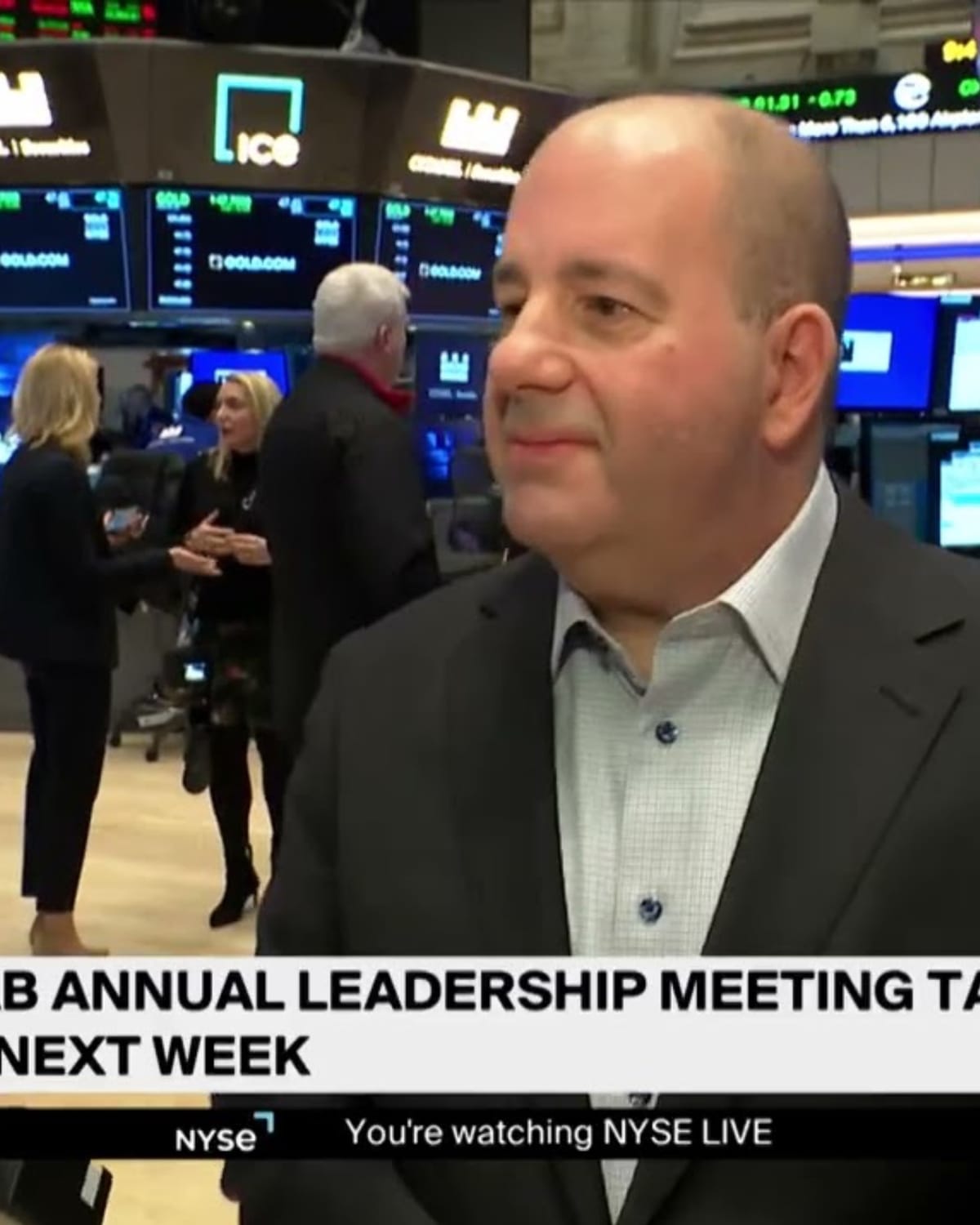
David Cohen stood before trading floor cameras at the New York Stock Exchange on January 27, discussing an industry that barely existed when his organization launched. The Interactive Advertising Bureau celebrated its 30th anniversary this year, marking three decades during which digital advertising evolved from $260 million in annual spending to nearly $300 billion in the United States alone.
The transformation represents more than simple mathematics. Digital advertising now accounts for $258.6 billion in US revenue according to IAB's latest data, fundamentally reshaping how businesses reach consumers and measure campaign effectiveness. The sector's growth trajectory mirrors broader economic shifts, with digital advertising now representing between 0.6% and 1.1% of U.S. GDP.
Cohen, serving as CEO of IAB, characterized artificial intelligence as the primary force currently rewriting industry standards established over 30 years. "AI is calling into question everything that we've done for 30 years," Cohen stated during the NYSE interview. "So it's really rewriting the rules, which is very exciting."
The comparison to IAB's early days highlights the magnitude of change. Internet advertising in 1996 consisted primarily of static banner advertisements delivered through rudimentary targeting mechanisms. Standards did not exist. "There was anything that you can imagine you can actually do," Cohen recalled, describing the chaos that prompted IAB's founding.
Cohen distinguished three categories of artificial intelligence transforming advertising operations: predictive AI, generative AI, and agentic AI. The distinctions matter because each category addresses different operational challenges across the advertising workflow.
Predictive artificial intelligence analyzes historical patterns to forecast future outcomes. Generative systems create content including text, images, and video advertisements. Agentic AI systems execute campaigns autonomously, making decisions about budget allocation, audience targeting, and creative optimization without constant human intervention.
"There is no facet of the business that is not touched," Cohen emphasized. "Every conversation is around AI." The technologies influence insight generation, media planning, buying execution, measurement, creative ideation, and creative personalization, according to Cohen's analysis.
IAB research released in January 2026 revealed that two-thirds of advertisers now concentrate on agentic AI for ad buying and campaign execution. The shift from experimentation to implementation marks a fundamental transformation in how campaigns operate, with systems now capable of autonomous troubleshooting, budget pacing, and audience optimization.
The technology's impact extends beyond campaign execution. IAB's AI Transparency and Disclosure Framework, released in January 2026, established requirements for disclosing AI use in advertising as research revealed a 37-point gap between advertiser perceptions and actual consumer sentiment toward AI advertising.
Cohen identified post-pandemic commerce changes as another area where artificial intelligence agents are reshaping consumer behavior. "Post pandemic commerce changed forever," Cohen stated. "The commerce landscape is now being changed by AI agents."
The technology enables consumers to delegate purchasing research to autonomous systems. "You can tell your AI agent to go out and find you an item that you want to buy, a travel trip that you want to take, and it'll actually go find it and bring it back to you," Cohen explained.
This capability creates new challenges for advertisers whose products must be discovered and recommended by AI systems rather than encountered through traditional search or browsing behavior. The shift affects how brands optimize product information, pricing strategies, and promotional messaging to ensure visibility when autonomous agents evaluate purchasing options.
Commerce media advertising, which includes retail media networks, achieved 12.1% projected growth for 2026 according to IAB's outlook study. The channel evolved from experimental tactic to core marketing strategy as brands recognized the performance measurement advantages of advertising within commerce environments.
The creator economy emerged as another major transformation during IAB's three decades of operation. Cohen cited $44 billion in advertising spend through creator channels during the current year, positioning creators as "the next generation of studios."
"Creators are the next generation of studios, and AI is kind of supercharging that," Cohen stated, connecting two major industry trends. The technologies enable individual content creators to produce professional-quality output at scales previously requiring studio infrastructure.
Newsletter advertising adoption reached 64% of marketers in 2025, with spending surging 40% as brands sought alternatives to platform-controlled environments. Podcast advertising spending surged 26%, while the creator economy shifted toward in-person experiences with 41% of social media users attending influencer events.
The creator economy's growth reflects structural changes in content consumption and trust patterns. Consumers increasingly rely on recommendations from people and communities they trust rather than traditional advertising messages, creating opportunities for brands to appear where trust already exists.
IAB released comprehensive research in December 2023 finding that 89% of advertisers felt positive about creator content marketing, with 92% considering it a high-quality option. The report documented that 44% of advertisers planned to increase creator content investment, with average increases of 25%.
IAB's Annual Leadership Meeting, scheduled for February 1-3 in Palm Desert, California, will bring together 1,200 industry leaders to discuss regulation, privacy, responsible AI use, commerce, measurement, and creator economy developments. The gathering serves as what Cohen described as "our kind of dipstick in the year to get a pulse on what the industry is looking to talk about and change."
The conference agenda reflects current industry tensions. A founding IAB member criticized the 2026 agenda on January 15 for containing zero sessions addressing publisher revenue generation despite what he characterized as an industry crisis. The critique highlighted ongoing debates about IAB's priorities as the organization balances competing interests across publishers, platforms, brands, and agencies.
Measurement emerged as a critical focus area for IAB's 2026 initiatives. "If you can't measure it, you're not going to be able to grow the business," Cohen stated. "So measurement is another area that we're very focused on this year."
The emphasis reflects mounting pressure for accountability as advertising spend grows and automated decisioning systems proliferate across platforms. Cross-platform measurement has risen to 72% priority status among advertisers, up from 64% year-over-year, according to IAB research.
IAB established standard metrics for gaming advertising in June 2025, providing advertisers transparency when investing in gaming environments with over 80% of U.S. internet users identifying as gamers. The organization continues developing frameworks addressing measurement challenges across emerging channels.
IAB's NewFronts conference, scheduled for March 23-26, will showcase content, data, and technology offerings from digital platforms. The event features presentations from platforms including TikTok, Samsung, and YouTube, alongside an IAB stage hosting approximately 20 presenters.
"Buyers can actually take a look at that and actually buy advertising in that space," Cohen explained, describing the event's commercial function connecting content creators with advertising buyers.
Cohen emphasized the expanding range of options available to advertisers. "The breadth and depth of options from content to data to measurement and technology is unlike anything that we've seen before," he stated. "There are players that are in the game now that are in the content business that were not in the content business 5 or 10 years ago."
The conference moved from May to March this year, positioning it ahead of traditional television upfronts. The timing adjustment reflects digital platforms' desire to secure advertising commitments before television networks begin their annual sales presentations.
IAB projects 9.5% growth in U.S. advertising spend for 2026, according to research released on January 28. The forecast incorporates major cyclical events including the Winter Olympics, FIFA World Cup, and U.S. midterm elections that generate concentrated advertising demand.
The projection represents moderation from 2024's 14.9% growth rate, which pushed digital advertising revenue to $258.6 billion. The strong 2024 performance reflected recovery from economic disruptions alongside structural shifts toward digital channels.
Social media advertising is projected to grow 14.6% in 2026, while connected TV shows 13.8% expected growth. Linear television faces continued decline, with spending expected to drop 1.7% despite temporary viewership spikes from major events.
IAB lowered its 2025 forecast from 7.3% to 5.7% growth in September 2025 as advertisers grappled with tariff impacts on automotive, retail, and consumer electronics sectors. The downward revision reflected mounting concerns about macroeconomic pressures that reshaped spending expectations.
Cohen characterized the environment as one of significant uncertainty. "The marketplace reacts poorly to uncertainty," Cohen stated in September 2025. "With tariff impacts starting to roll through the supply chain, there is a lot of hesitance as to where the economy and consumer sentiment will go over the coming months."
Global advertising revenue reached $1.14 trillion in 2025 according to WPP Media projections, with commerce surpassing television for the first time at $178.2 billion. The milestone reflected commerce media's evolution from niche tactic to substantial market category.
IAB Tech Lab, the organization's technical standards division, continues developing infrastructure for emerging advertising technologies. The organization released its Agentic RTB Framework in November 2025, standardizing containerized agent deployment in real-time bidding infrastructure.
The framework defines requirements for implementing agent services that operate within host platforms, addressing integration challenges that have limited programmatic advertising innovation. Service providers can package offerings once and deploy to any standard-compliant platform.
IAB Tech Lab's comprehensive agentic AI roadmap, announced in January 2026, attempts to prevent ecosystem fragmentation before competing protocols splinter the industry. The organization scheduled monthly Agentic AI Boot Camps and workshops beginning February 12, 2026 at the IAB Ad Lab.
Technical standards work extends beyond artificial intelligence. IAB Europe unveiled a framework for AI publisher compensation in September 2025, requiring artificial intelligence platforms to compensate publishers for content ingestion. The standards address documented traffic disruptions affecting digital publishers as AI platforms increased referrals 357% year-over-year.
Mid-tier publishers gained market share in 2024, with companies ranked 11-25 increasing their share by 3.1 percentage points to reach 11% of total digital advertising revenue. The shift represented departure from historical patterns where the largest platforms dominated growth.
"The biggest shift in market share came from the mid-tier companies, growing at a greater rate than both the largest and the smallest players," Cohen stated in April 2025. "These midsized companies are adopting new business models, encouraging creator engagement, and leveraging AI and data-driven insights to offer more personalized, cost-effective advertising solutions."
Digital advertising revenue concentration among the top 10 technology companies reaches 80.8%, with companies ranked 11-25 holding 11.0%. The concentration squeezes independent publishers while AI companies valued at billions profit from using publisher content without compensation.
IAB's evolution from publisher-exclusive organization to multi-constituency trade association reflects these market dynamics. The organization launched in 1996 to serve digital publishers before expanding membership to include brands, agencies, and technology platforms. The shift created tensions when specific constituencies face existential challenges requiring advocacy rather than neutral convening.
European digital advertising achieved €118.9 billion with 16% growth in 2024, demonstrating global market expansion beyond U.S. boundaries. Digital advertising now commands 67.2% of total advertising expenditure across Europe, representing continued migration from traditional media channels.
IAB's AI Transparency and Disclosure Framework established disclosure requirements for synthetic humans, digital twins, AI-generated voices in false scenarios, and AI chatbots. The framework arrived as research revealed widening gaps between advertiser assumptions and consumer sentiment.
According to research conducted by IAB in partnership with Sonata Insights, 82% of advertising executives believe Gen Z and Millennial consumers feel positively about AI-generated ads. Only 45% of these consumers actually feel that way. The perception gap expanded from 32 points in 2024 to 37 points in 2026.
Caroline Giegerich, VP of AI at IAB, explained the framework's rationale: "AI is reshaping how advertising is created and scaled, but trust is what will determine its longevity. Our research reflects a clear misperception between how advertisers think consumers feel about AI-generated advertising and how consumers actually experience it."
The disclosure framework employs a two-tier system combining consumer-facing labels with machine-readable metadata. Consumer-facing disclosures use standardized text labels or visual cues including watermarks, badges, standardized icons, and interactive information elements.
Privacy regulations continue expanding globally, forcing brands to build identity graphs powered by consented first-party information. Third-party cookies fade from the advertising ecosystem while platform changes compound measurement difficulties.
Advertising supports 29 million U.S. jobs and powered more than 20% of total U.S. economic output in 2024, according to research released in August 2025 by S&P Global Market Intelligence. The analysis found that advertising was responsible for $10.4 trillion in total U.S. sales activity.
Companies spent $491.1 billion on advertising their products and services in 2024, which directly stimulated $3.5 trillion in sales activity. The study projects advertising's impact will increase to $12.7 trillion in sales activity by 2029, supporting 32.1 million American jobs.
The data demonstrates advertising's vital role as an economic catalyst across all sectors and regions. As digital platforms continue evolving and artificial intelligence technologies reshape creative production and targeting capabilities, advertising's economic impact is positioned for sustained growth.
Bob Liodice, CEO of the Association of National Advertisers, characterized advertising as "a driving force behind our nation's progress, prosperity, and growth for more than a century." The statement reflects broader industry recognition of advertising's role beyond individual company impacts.
Cohen emphasized that artificial intelligence will continue dominating industry discussions throughout 2026. "Not to keep on citing AI, but it's part of every conversation as you know," Cohen stated. "I think AI is really going to change the way that the market operates."
The challenge involves implementing these technologies responsibly without falling into hype cycles. "How do we not have a hype cycle? How do we do it kind of thoughtfully?" Cohen asked, outlining IAB's approach to managing rapid technological change.
IAB released comprehensive AI use case mapping in September 2025, organizing 84 AI applications across six categories including Audience Insights, Media Strategy & Planning, Creative & Personalization, Media Buying & Activation, Owned & Earned Media, and Measurement & Analytics.
The framework enables organizations to benchmark current AI adoption against industry standards, identify relevant capabilities for experimentation or deployment, and inform strategic planning. The structured approach enables systematic evaluation of AI opportunities aligned with organizational objectives.
Cohen's characterization of IAB's 30-year journey from chaos to standardization to AI-driven transformation captures an industry continuously adapting to technological disruption. From static banner advertisements delivered through rudimentary targeting to autonomous systems executing complex multi-channel campaigns, digital advertising evolved into infrastructure supporting substantial portions of economic activity.
The next 30 years remain uncertain. AI agents may fundamentally alter how consumers discover products and services. Creator economy dynamics could continue shifting power away from traditional media companies. Privacy regulations will likely expand, requiring additional technical innovation. Measurement standards must evolve to address increasingly complex attribution challenges across fragmented media landscapes.
What remains constant is the industry's need for organizations like IAB to convene stakeholders, develop technical standards, conduct research, and advocate for policies enabling sustainable growth. Cohen's emphasis on thoughtful implementation rather than hype cycles suggests recognition that lasting transformation requires careful attention to consumer trust, measurement accuracy, and equitable value distribution across the ecosystem.
The $260 million industry that existed when IAB launched bears little resemblance to today's $300 billion sector. Whether the next three decades bring similar transformation or accelerated disruption that renders current practices obsolete, advertising's central role connecting businesses with consumers seems likely to persist even as the mechanisms continuously evolve.
Who: David Cohen, CEO of the Interactive Advertising Bureau, discussed the organization's 30-year evolution during a January 27, 2026 interview at the New York Stock Exchange. The IAB represents 700 member companies including Disney and Home Depot across the digital advertising ecosystem.
What: Cohen outlined how digital advertising expanded from $260 million in 1996 to nearly $300 billion in annual U.S. spending, while emphasizing that artificial intelligence - particularly agentic AI - is rewriting every rule the industry established over three decades. He identified three AI categories transforming operations: predictive AI, generative AI, and agentic AI. Cohen highlighted the creator economy's growth to $44 billion in advertising spend and discussed AI agents reshaping post-pandemic commerce. IAB's 2026 outlook projects 9.5% U.S. advertising spend growth driven by major events and AI adoption.
When: The interview occurred on January 27, 2026, as IAB celebrates its 30th anniversary year. The organization's Annual Leadership Meeting is scheduled for February 1-3, 2026 in Palm Desert, California, bringing together 1,200 industry leaders. NewFronts will take place March 23-26, 2026.
Where: The interview was conducted at the New York Stock Exchange trading floor. IAB operates globally with member companies across the digital advertising ecosystem, though Cohen's discussion focused primarily on U.S. market developments and the organization's activities centered in North America.
Why: The anniversary provides an opportunity to assess how digital advertising evolved from chaotic early days lacking standards to a nearly $300 billion U.S. industry facing new disruption from artificial intelligence. Cohen emphasized that AI is calling into question everything accomplished over 30 years, creating both challenges and opportunities. The conversation matters for marketing professionals navigating rapid technological transformation, measurement complexity, and shifting consumer behaviors including AI agent adoption for commerce, creator economy expansion, and privacy regulation intensification. IAB's role developing standards, conducting research, and convening stakeholders becomes increasingly critical as autonomous systems execute campaigns and platforms compete for advertiser budgets across fragmented digital environments.