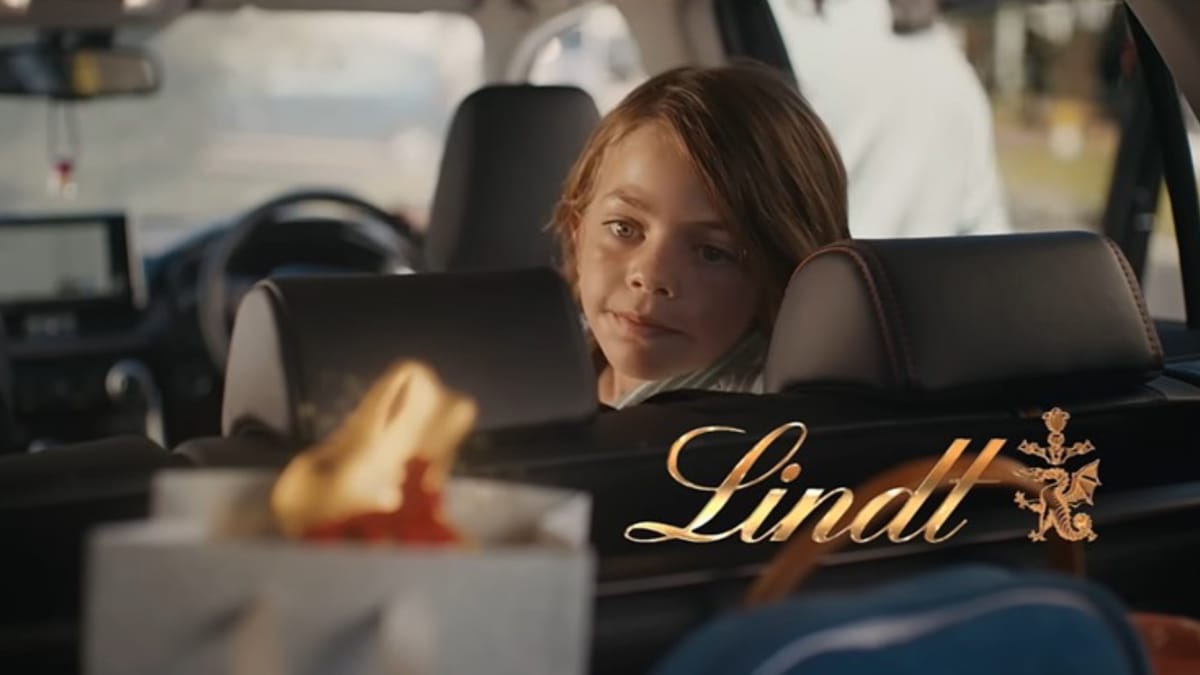
Lindt tops UK Easter ad rankings as HFSS rules reshape food advertising
System1 ranked UK 2026 Easter ads on 30 March, with Lindt scoring 5.9 Stars - highest emotional response as HFSS rules reshape food creative strategy.

Lindt topped System1's 2026 UK Easter ad rankings on 30 March 2026, scoring 5.9 Stars on the creative effectiveness platform's emotional response scale - the highest mark in this year's field. Marks & Spencer followed at 5.7 Stars and Cadbury at 5.6 Stars, with the top three each achieving what System1 describes as strong performance on both emotional engagement and brand recognition speed. The rankings arrive as the first major seasonal test under new UK restrictions on foods high in fat, sugar, or salt (HFSS), which came into force on 5 January 2026.
The results offer the advertising industry a concrete early read on which creative strategies are holding up after the regulatory shift - and which are not.
System1 operates what it calls a creative effectiveness platform, testing advertisements against two core metrics. The first is the Star Rating, which quantifies emotional response on a scale intended to predict long-term brand growth. The second is Fluency, which captures how quickly and accurately viewers associate an ad with its brand.
Both matter because they address different problems. An ad can generate strong positive feeling but weak attribution - viewers enjoy it but cannot say who made it. Conversely, an ad can score high on brand recognition while producing little emotional engagement, which limits its power to build lasting consumer preference. The top three Easter ads this year excelled on both dimensions simultaneously, according to System1's analysis released on 30 March 2026.
System1 maintains a database of over 100,000 ads and tests creative effectiveness across 81 markets globally. The company has operations in the UK, Europe, North America, Brazil, Singapore, and Australia. Its Test Your Ad (TYA) product, which generated the Easter rankings, is designed to predict both short-term sales activation and long-term brand contribution from a single creative evaluation.
The complete ranking published by System1 on 30 March 2026 covers ten ads from seven advertisers:
The gap between the top three and the rest is notable. Tesco's highest-ranked ad sits 1.1 Stars below Cadbury's third-place result. Lidl places three ads in the bottom half of the table. Asda finishes last among the ten with 3.2 Stars - more than 2.7 Stars behind Lindt.
According to System1, most advertisers in the Easter category continue to centre their creative work on product and food imagery. That approach, while intuitive, does not appear to produce the highest emotional response scores. The top-performing ads went further, combining strong feeling with distinctive brand signals that viewers could rapidly attribute to a specific brand.
Lindt's winning ad leans heavily on the Gold Bunny - a foil-wrapped chocolate figure that has been part of the brand's Easter positioning for decades. According to System1's analysis, that seasonal asset functions as a shortcut to recognition, generating both warmth and immediate attribution without requiring the viewer to work to connect the ad to its brand.
M&S took a different route. Its ad for the Luxury Fruited Hot Cross Bun deploys what System1 describes as a "sultry, ASMR-style voiceover" - a sensorial technique the retailer has used consistently enough that it has become recognisable as a distinctly M&S creative approach. The technique elevates product communication beyond appetite appeal into something closer to an experience, according to System1's characterisation.
Cadbury's "Better the Hide, Better the Hunt" is the most structurally unusual ad in the top three. According to System1, it is the only campaign in this year's ranking to move entirely away from traditional food cues. Instead of showing chocolate directly, the ad uses storytelling: a mischievous egg timer rendered in Cadbury's signature purple colour hides itself for children to find, building on the Easter hunt platform the brand has been developing over multiple years. Cadbury's Fluency score of 95% is joint-highest in the ranking - meaning nearly all viewers who saw the ad correctly attributed it to Cadbury despite the absence of conventional product imagery. That figure ties with Lindt for the fastest brand recognition in the field.
Andrew Tindall, Chief Growth Officer at System1, said: "Easter is one of those rare moments where the category does a lot of the work for you. People want chocolate. They want hot cross buns. So simply showing the product isn't enough to stand out."
He added: "The winners are the brands that go beyond appetite appeal and lean into what makes them distinctive. M&S uses its signature sultry, ASMR-style voiceover to elevate the product into something more sensorial and indulgent. Lindt leans on the GOLD BUNNY, one of the most recognisable seasonal assets in the category. And Cadbury continues to compound the strength of its Easter hunt platform, building memory year after year."
These rankings carry particular significance for marketing teams working in UK food and beverage categories because they represent the first major seasonal data point collected after the HFSS advertising restrictions came into full effect.
The UK introduced comprehensive restrictions on HFSS food marketing on 5 January 2026, following years of regulatory development. As PPC Land reported in January 2026, the regulations prohibit volume price promotions and restrict the placement of HFSS products in prominent store locations and prominent digital placements. The legislation defines HFSS foods using the 2004-2005 nutrient profiling model developed by the Food Standards Agency. Products scoring 4 or more points for food, or 1 or more point for drinks, fall under the restrictions. Confectionery and baked goods - the core of any Easter advertising push - sit squarely within the affected categories.
UK advertising trade bodies including IAB UK, the Advertising Association, ISBA, and the IPA coordinated a cross-industry awareness campaign ahead of the October 2025 voluntary implementation date, which preceded the statutory enforcement date of 5 January 2026.
The HFSS rules do not ban advertising HFSS products outright. Rather, they restrict certain placement contexts and promotional mechanics. Brand-level advertising, including the kind of emotionally resonant storytelling that characterises the top three Easter ads, was explicitly exempted from the statutory restrictions following government clarification. That exemption creates a structural incentive for food brands to invest in distinctive brand assets rather than price-led promotional messaging - which is precisely the pattern System1's 2026 rankings appear to confirm.
Tindall articulated this directly: "As HFSS rules continue to reshape the category, the brands that stand the test of time will be those that move beyond temptation and invest in the assets that make them memorable."
The ads occupying positions four through ten in System1's ranking share a heavier reliance on product presentation and, in at least one case, price-value messaging. Aldi, Lidl, and Tesco each appear in the lower half of the table with Star Ratings ranging from 3.7 to 4.8. Those scores are not failures in absolute terms - a Star Rating above 3 indicates above-average emotional response relative to System1's wider database - but they trail the top performers by a significant margin.
Lidl in particular placed three separate ads in the bottom four positions. Its lowest-scoring Easter entry, "Deluxe Hot Cross Buns," achieved 3.7 Stars, compared to 3.9 Stars for its highest-ranked Easter ad. The small spread across Lidl's three entries suggests consistent positioning that generates moderate but not exceptional emotional engagement.
Asda's "Big Easter Energy" finishing last at 3.2 Stars is notable given the energy and distinctiveness implied by the title. A high-energy creative concept that does not translate into strong Star Rating performance suggests a disconnect between creative ambition and audience emotional response - precisely the kind of gap System1's methodology is designed to identify before significant media spend is committed.
Cadbury's approach illustrates a broader principle that connects to marketing effectiveness research beyond System1's specific framework. The brand has been building its Easter hunt platform across multiple campaigns. Rather than creating a new creative concept for each season, Cadbury has invested in an idea - the hunt, the purple egg timer, the playful tension of hiding and finding - that accumulates meaning with each iteration.
This compounding effect is consistent with findings published by Google and industry partners in March 2025, which found that marketing returns during months 5-24 match those of the first four months of a campaign. The research suggested brands routinely undervalue the carryover effects of sustained investment in consistent creative platforms.
Similarly, research from TransUnion and MMA Global, published in October 2025 and covered by PPC Land, found that traditional measurement tools may undervalue brand marketing's contribution to sales by as much as 83%. Cadbury's 95% Fluency score on a campaign that shows no product directly suggests that years of consistent distinctive asset investment can produce recognition rates that performance-first creative rarely achieves.
For marketing professionals, the debate over whether brand investment pays off in measurable terms has been contentious. A January 2026 paper from Omnicom Media Group UK introduced the concept of advertising "secular stagnation," arguing that structural environmental factors cap advertising returns regardless of execution quality - a thesis that generated significant industry debate when published. System1's Easter data points in a different direction: the brands scoring highest are precisely those that have made consistent long-term investments in distinctive assets, not those optimising for immediate conversion signals.
The Easter rankings arrive within a broader UK advertising market that is growing but navigating significant structural complexity. UK digital advertising expenditure reached £18.7 billion in the first half of 2025 alone, according to the IAB UK HY 2025 Digital Adspend Report covered by PPC Land, with the full-year market forecast to reach £45 billion by 2026. Confectionery brands occupy a particular position in this landscape: they are major television and digital advertisers whose product categories are directly affected by HFSS restrictions, forcing creative departments to develop approaches that can function effectively within tightening placement and promotional rules.
The brand fluency data from System1's Easter ranking has specific relevance for paid digital campaigns. In digital environments, brand assets - logos, colours, characters, sonic signatures - must perform recognition work faster than in any other medium, because attention windows are shorter and contextual signals compete more aggressively for processing resources. A Fluency score of 95% for Cadbury and Lindt suggests those brands' distinctive assets are operating with high efficiency in that environment. Lower Fluency scores, even with reasonable Star Ratings, imply that the creative work is generating positive feeling that cannot always be efficiently attributed to the correct brand - a more significant problem in a digital placement context where brand confusion is not easily corrected.
The pattern emerging from System1's data is not that HFSS restrictions have hurt Easter advertising quality. The opposite appears to be true for brands that were already investing in distinctive assets before the rules changed. The restrictions may be functioning, at least partly, as a sorting mechanism - separating advertisers that have built recognisable brand identities from those that have relied on promotional mechanics and appetite imagery to drive seasonal sales.
Who: System1, a creative effectiveness platform headquartered in London with operations across 81 markets globally, published the ranking. The ten ads assessed represent seven UK advertisers: Lindt, Marks & Spencer, Cadbury, Tesco, Aldi, Lidl, and Asda.
What: System1's annual UK Easter ad ranking, scored using the platform's Star Rating (emotional response predictive of long-term brand growth) and Fluency (speed and accuracy of brand attribution). Lindt scored 5.9 Stars, M&S 5.7 Stars, and Cadbury 5.6 Stars. Cadbury's Fluency score of 95% - joint-highest in the ranking alongside Lindt - was achieved without showing food product imagery directly.
When: System1 released the rankings on 30 March 2026. The ads evaluated were running during the Easter 2026 season. These are the first System1 Easter rankings collected and published since UK HFSS advertising restrictions took statutory effect on 5 January 2026.
Where: The ranking covers UK television and video advertising. System1 conducts testing in the UK and globally through its Test Your Ad product, drawing on a database of over 100,000 ads.
Why: The results matter because they provide the first empirical creative effectiveness data from a major seasonal category - confectionery and baked goods - operating under the new HFSS restrictions. The data suggests brands with long-established distinctive assets outperform those relying on product imagery and price-led messaging, with implications for how food and beverage advertisers allocate creative investment in regulated advertising environments.