MTN's smart antenna gamble pays off in Ghana with 30x efficiency surge
MTN Ghana deployed Huawei's self-adjusting Alpha Antenna on February 14, boosting traffic 6.8% and cutting maintenance costs by 97% as China deepens Africa tech foothold.


MTN Ghana deployed Huawei's self-adjusting Alpha Antenna on February 14, boosting traffic 6.8% and cutting maintenance costs by 97% as China deepens Africa tech foothold.
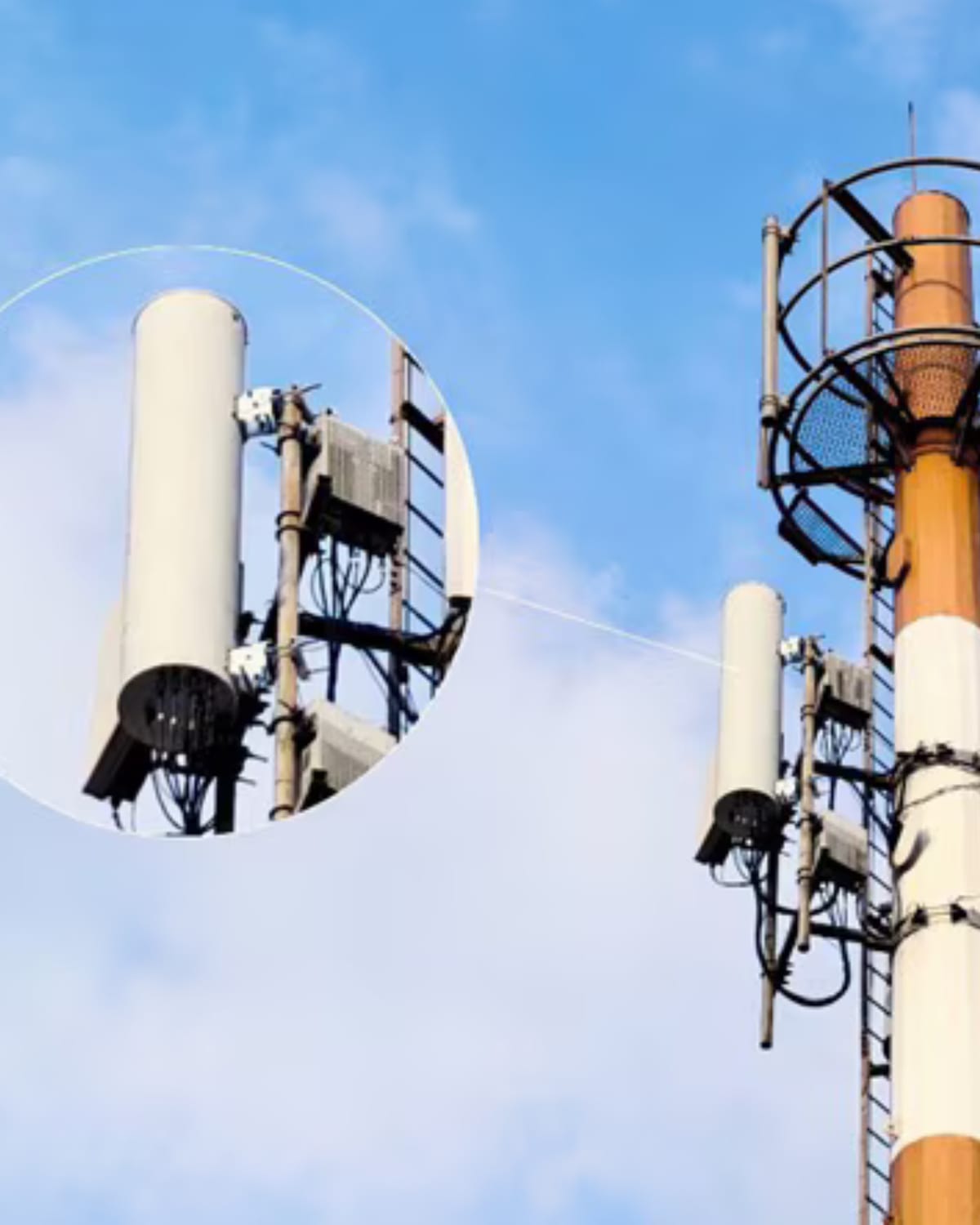
MTN Ghana and Chinese telecommunications giant Huawei this week completed what they call the world's first large-scale deployment of intelligent antenna technology that adjusts itself automatically. The rollout in Ghana increased mobile network traffic by 6.8 percent while making network maintenance 30 times more efficient, according to the telecommunications partners.
Think of it like upgrading from manual car transmissions to automatic ones, except for mobile phone towers. Instead of sending technicians to climb towers and manually adjust antennas whenever problems arise, the new system handles everything remotely and automatically.
The Alpha Antenna represents a fundamentally different type of cell tower antenna. Traditional antennas are static - they point in fixed directions with fixed settings until a technician physically climbs the tower to adjust them. An Alpha Antenna contains built-in sensors and intelligence that allow it to monitor itself and adjust its settings automatically based on real-time network conditions.
The name "Alpha" suggests this is a first-generation implementation of self-managing antenna technology. Unlike conventional antennas that broadcast signals in predetermined patterns, Alpha Antennas can dynamically reshape their coverage areas, redirect signal strength, and optimize performance without human intervention.
Inside each Alpha Antenna sits specialized hardware that traditional antennas lack. The Antenna Information Sensor Unit acts as the antenna's sensory system, continuously monitoring performance metrics, signal quality, and network load. The Array Information Mapping Unit functions as the processing brain, analyzing data from the sensors and automatically adjusting the antenna's beam patterns, direction, and power levels.
This integration transforms a passive piece of hardware into an active network element that participates in its own optimization. Where traditional antennas require external monitoring systems and human decision-making, Alpha Antennas incorporate monitoring, analysis, and adjustment capabilities directly into the hardware itself.
The breakthrough addresses a problem that has plagued mobile networks since their inception. When your phone struggles to get signal, or when internet slows down during peak hours, it's often because antennas on cell towers are pointing in fixed directions with fixed settings. Adjusting them traditionally required technicians to physically visit each tower, a process that could take weeks to complete across an entire network.
The Alpha Antenna changes this equation entirely. It contains two key innovations that work together. The first component, which Huawei calls an Antenna Information Sensor Unit, acts like the antenna's eyes and ears. It constantly monitors what's happening without anyone needing to visit the tower. The second component, the Array Information Mapping Unit, functions like the antenna's brain. It creates a real-time map of how the network is performing and where problems exist.
Together, these components allow the antenna to adjust itself automatically. When a concert lets out and thousands of people suddenly need service in one area, the antenna can redirect its signal toward that crowd within minutes. When everyone goes home, it readjusts. What once took weeks of planning, site visits, and manual changes now happens automatically.
The MTN Ghana deployment represents another chapter in China's expanding role across Africa's telecommunications infrastructure. Huawei alone has built 70 percent of Africa's 4G network, according to research on China's digital presence on the continent. Chinese companies Huawei and ZTE have established more than 30 national mobile networks across Africa.
This dominance didn't happen by accident. Chinese telecommunications companies can offer prices roughly 30 percent cheaper than Western competitors like Ericsson, Alcatel, and Cisco. They achieve these lower costs through generous financing from Chinese state banks - the China Development Bank and the Export-Import Bank of China - which provide low-interest loans and long credit lines that commercial banks cannot match.
African governments face a straightforward calculation. Many countries still lack basic telecommunications infrastructure or need urgent upgrades to improve connectivity. When Chinese companies offer high-quality equipment at significantly lower prices with favorable financing terms, the decision becomes obvious - especially when security concerns that worry Western governments don't resonate as strongly in Africa.
The scale of Chinese technology investment in sub-Saharan Africa totaled $7.19 billion between 2005 and 2020, according to the China Global Investment Tracker. Chinese companies have built national fiber-optic communications networks and e-government platforms for more than 20 African countries. MTN itself has partnered with China Telecom and Huawei to develop AI technology, cloud computing, and 5G across its operations.
This creates what researchers describe as a dependency situation. Africa's digital systems now largely use Chinese hardware standards, financed by Chinese banks. As one executive from French-American telecommunications firm Alcatel-Lucent put it: "We won't die at the hands of Huawei; if we die, it will be at the hands of China Development Bank."
South Africa provides a striking example. The country sources more than 70 percent of its telecommunications infrastructure from China, which generates $10 billion from South African tech hubs. South Africa has made a political decision, based on its BRICS commitments, to further embed its telecommunications systems in Chinese technologies.
The arrangement brings clear benefits. African nations get modern telecommunications infrastructure they desperately need at prices they can afford. China gains strategic positioning, market access, and the ability to set technology standards across an entire continent. The question that remains unanswered is what happens when short-term economic benefits meet long-term strategic dependencies.
The deployment timing coincides with broader movement toward artificial intelligence systems that run themselves across various industries. Digital advertising platforms have recently deployed similar self-managing systems for campaign management and optimization. The parallel isn't accidental.
Both telecommunications networks and advertising platforms that use machine learning face similar challenges. They must manage enormous numbers of configurations, balance multiple goals simultaneously, and optimize performance in real-time. The solution in both cases involves letting artificial intelligence handle the complexity that overwhelms human operators.
Here's what network management looked like before this technology. Engineers would collect data showing where service quality was poor. They'd analyze that data, which could take days. Then they'd plan which towers needed antenna adjustments. Finally, they'd dispatch technicians to physically climb each tower and manually reposition antennas or change settings.
By the time this process finished - often several weeks later - demand patterns had already shifted. The adjustments optimized for problems that no longer existed. It's like adjusting your home thermostat based on yesterday's weather.
This created three critical problems. First, constant delays meant the network always operated sub-optimally. Second, human errors in manual configuration created inconsistencies - tower 47 might be configured differently from tower 48 even though they served similar areas. Third, the sheer labor required made frequent optimization economically impossible.
The Alpha Antenna solves all three problems through automation. Information gathering happens continuously without human involvement. Configuration stays consistent because software manages it according to programmed rules. Optimization costs drop dramatically because no one needs to visit towers or manually adjust settings.
MTN Ghana describes the solution as a pivotal step toward fully transforming their network infrastructure. The deployment significantly reduces both complexity and costs while giving the network ability to respond to changing conditions in real-time.
The 30-fold efficiency improvement deserves closer examination. If maintaining the network previously required 30 hours of technician time per week, the same work now requires one hour. That's a 97 percent reduction in labor costs for network maintenance. This represents the kind of dramatic transformation that happens when you eliminate human bottlenecks from repetitive processes.
The 6.8 percent traffic growth tells a different story. Traditional antennas optimize for average conditions or peak demand, leaving performance suboptimal during the transitions between those states. Self-adjusting antennas optimize constantly, capturing demand that static configurations miss. When an area suddenly needs more capacity - perhaps because of a traffic accident that creates congestion - the system responds immediately rather than waiting for someone to notice the problem, analyze it, and dispatch technicians.
The autonomous network concept builds on principles similar to those deployed in advertising technology platforms. Both monitor outputs continuously, compare results against goals, and adjust inputs automatically without human intervention. This transforms passive infrastructure that requires constant manual attention into adaptive systems that manage themselves.
MTN Group operates as one of Africa's largest mobile network operators, serving over 300 million customers across 16 countries in Africa and the Middle East as of October 2025. Managing antenna configurations manually across thousands of tower sites in multiple countries requires substantial engineering resources while limiting how often optimization can happen.
The Ghana deployment provides real-world validation for concepts that have remained largely theoretical in telecommunications. Laboratory testing and small pilots can demonstrate that technology works in controlled environments. Large-scale deployments reveal whether it functions reliably under messy real-world conditions - varying weather, diverse geography, unexpected demand patterns, equipment failures, power fluctuations, and all the other chaos that characterizes actual operations.
Ghana serves as the testing ground because it represents a substantial telecommunications market with sufficient scale to prove the technology works at production levels. The country's geographic diversity, from coastal regions to inland areas, creates varied conditions that stress-test whether the antenna optimization actually functions as advertised across different environments.
The announcement connects the telecommunications deployment to broader economic development objectives. The positioning suggests that advanced digital infrastructure enables new business models and services throughout the economy - mobile banking, digital education, telemedicine, e-commerce, and countless applications that require reliable, fast connectivity.
Africa's telecommunications infrastructure has historically lagged developed markets in adopting advanced technologies. The Ghana deployment positions an African operator at the forefront of self-managing network capabilities, reversing traditional patterns where African markets implement technologies years after initial deployments in wealthier countries.
The shift toward automated telecommunications infrastructure parallels transformations occurring across digital platforms. Standards organizations developed frameworks to coordinate how AI systems operate across different platforms. Telecommunications operators face similar coordination requirements as self-managing capabilities spread across network infrastructure.
The antenna system eliminates the delay between network conditions changing and operators recognizing those changes. Traditional monitoring systems collect data over time periods ranging from minutes to hours, hiding rapid changes that affect user experience. Continuous real-time monitoring captures fleeting conditions that batch processing systems miss entirely.
Automated control enables targeted adjustments that affect specific coverage areas without disrupting the broader network. Manual optimization typically applies changes across wide areas due to the overhead of making fine-grained adjustments. Automated systems can implement localized changes with minimal overhead, enabling optimization precision impossible under manual operation.
Huawei's announcement emphasizes that the Ghana deployment establishes a new benchmark for self-managing network development in Africa and globally. This global framing positions the Ghana deployment as relevant beyond African telecommunications markets. If the technology proves effective in Ghana's operating conditions, it becomes deployable worldwide.
The 30-fold efficiency improvement suggests that automation's primary value lies in cost reduction rather than revenue increases. While the 6.8 percent traffic growth generates incremental revenue, the efficiency gains reduce ongoing operational expenses substantially. This economic equation makes automation attractive even in markets where revenue growth opportunities are limited.
Network operators worldwide face similar operational challenges around manual dependency, slow adaptation to changing conditions, and inconsistent accuracy in configuration management. These challenges intensify as networks grow more complex through 5G deployment, network densification, and proliferation of connected devices. Automation becomes increasingly necessary as manual management approaches reach their limits.
The antenna deployment addresses one specific infrastructure layer within telecommunications networks. Self-managing capabilities could extend to additional layers including core network management, spectrum allocation, and capacity planning. The antenna-level deployment demonstrates feasibility while leaving substantial automation opportunities unexplored.
MTN Ghana didn't disclose how many antenna sites received the new technology or the geographic coverage area affected. These details would clarify whether the 6.8 percent traffic improvement applies across MTN Ghana's entire network or only specific regions where the technology deployed.
The announcement also doesn't specify whether the deployment replaces existing antenna infrastructure entirely or supplements it selectively. Understanding the implementation approach would clarify whether the technology requires complete infrastructure replacement or integrates with existing systems.
Financial details of the collaboration between MTN Ghana and Huawei remain undisclosed. Infrastructure deployments of this nature typically involve substantial upfront investment in equipment, implementation, and integration. The economic viability depends on whether operational savings and revenue gains justify those costs.
The February 14, 2026 completion date positions the deployment early in the year, potentially indicating plans for broader expansion across MTN Group's operations. If results meet expectations, the technology could roll out to MTN's other 15 operating countries, creating automation initiative across the company's entire footprint.
Competitive dynamics in African telecommunications markets may accelerate adoption of self-managing networks. If MTN Ghana achieves sustained operational advantages through automation, competing operators face pressure to deploy similar capabilities to maintain competitiveness. This dynamic could drive industry-wide transformation beyond early adopters.
The announcement arrives as artificial intelligence capabilities mature across multiple sectors. Advertising platforms deploy self-managing systems for campaign management. Software development tools use AI for code generation. The convergence suggests that automated operation becomes standard practice across industries rather than remaining confined to specific applications.
Telecommunications infrastructure represents particularly valuable territory for automation due to massive operational scale and continuous optimization requirements. Networks operate around the clock, serve millions of users simultaneously, and must adapt to constantly shifting demand patterns. These characteristics create ideal conditions for AI-driven automation to deliver substantial value.
The Ghana deployment demonstrates that self-managing network concepts translate from theory into operational reality. Whether the approach scales globally depends on technology reliability under diverse conditions, economic viability across different market structures, and operator willingness to allow automated systems to manage critical infrastructure.
MTN Ghana's collaboration with Huawei reflects established technology partnerships between telecommunications operators and equipment vendors. Huawei supplies network infrastructure to operators worldwide, creating relationships that enable joint development of advanced capabilities. These partnerships grow increasingly important as technologies become more complex and require close integration between infrastructure and operational systems.
The announcement positions self-managing networks as central to Africa's digital transformation rather than merely a telecommunications technology upgrade. This framing connects infrastructure capabilities to broader economic development, suggesting that advanced telecommunications enable new digital services and business models throughout the economy.
Whether automated telecommunications infrastructure actually accelerates economic development depends on factors beyond network capabilities, including digital literacy, device availability, and development of local digital services that leverage improved connectivity. The deployment nonetheless represents tangible progress in telecommunications infrastructure capabilities, backed by measured performance improvements rather than speculative projections about future possibilities.
As telecommunications operators worldwide confront operational complexity from network densification, 5G deployments, and proliferating connected devices, automation transitions from optional enhancement to operational necessity. The Ghana deployment demonstrates that self-managing network capabilities now function reliably enough for production deployment at scale.
Who: MTN Ghana, one of Africa's leading mobile network operators and part of MTN Group serving over 300 million customers across 16 countries, collaborated with telecommunications equipment provider Huawei to deploy the Alpha Antenna technology. The deployment affects MTN Ghana's network operations and the customers served by the infrastructure.
What: The world's first large-scale deployment of Alpha Antenna technology featuring integrated AISU (Antenna Information Sensor Unit) and AIMU (Array Information Mapping Unit) components that enable fully automated, real-time antenna parameter retrieval, network topology visualization, and dynamic beam adjustment. The system delivers closed-loop capabilities for real-time retrieval, precise control, and dynamic optimization, transforming network operations from manual intervention to autonomous AI-powered management.
When: The deployment completed on February 14, 2026, following implementation and testing processes. Post-deployment validation testing confirmed performance improvements including 6.8 percent regional traffic growth and 30-fold operations and maintenance efficiency gains.
Where: The deployment occurred across MTN Ghana's network infrastructure in Ghana, West Africa. Ghana serves as the initial testing ground for the technology before potential expansion to other MTN Group operating countries across Africa and the Middle East.
Why: The deployment addresses persistent network operations and maintenance challenges including manual dependency, slow adaptation to changing conditions, and inconsistent accuracy in configuration management. Traditional optimization cycles spanning weeks become unsustainable as networks grow more complex through 5G deployment and device proliferation. The Alpha Antenna provides the digital foundation for building autonomous driving networks that self-optimize without human intervention, reducing operational costs while improving network performance. The collaboration positions MTN Ghana at the forefront of telecommunications automation while injecting momentum into Africa's broader digital transformation objectives.