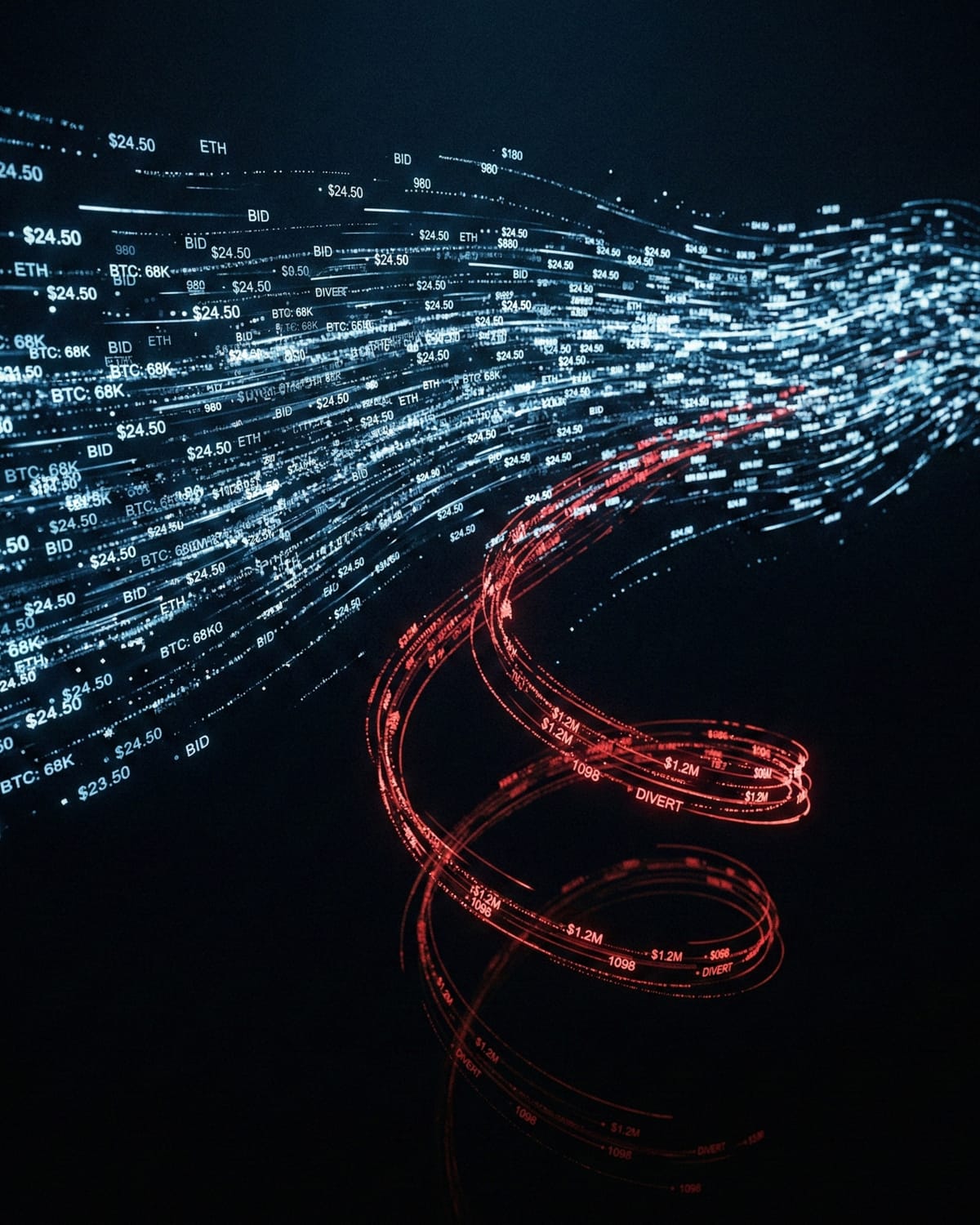
ODDITY Tech Ltd. (NASDAQ: ODD) reported record full-year revenue of $810 million on February 25, 2026, a 25% increase over 2024, capping what co-founder and CEO Oran Holtzman described as a strong year for the company. Yet the headline numbers were almost immediately overshadowed by a disclosure that shook the performance marketing world: a severe and previously undisclosed dislocation in user acquisition costs caused by what the company believes are algorithm changes at its largest advertising partner.
The stock fell 43.49% in pre-market trading on February 25, dropping to $16.40 per share from a previous close of around $29. It did not recover. By February 27, shares closed at $11.77, down a further 14.49% that session alone, with volume of 5,539,671 - more than three times the average daily volume of 1,608,760. In after-hours trading that evening, the stock fell an additional 1.69% to $11.57. The one-month chart tells the full story: ODD has lost 66.10% of its value since late January. From its 52-week high of $79.18, the stock has declined over 85%. Market capitalization stood at approximately $676 million intraday on February 28, down from values above $4 billion earlier in the company's public life. The PE ratio (TTM) sits at 6.54, and the consensus 1-year target estimate among analysts is $18.22 - still above the current price, but a figure that carries little weight given the suspension of forward guidance. The next earnings date is estimated for April 28, 2026.
The contrast between financial achievement and operational crisis could hardly be sharper. Fourth-quarter net revenue came in at $153 million, up 24% year-over-year and above the company's own guidance range of $149 million to $152 million. Full-year adjusted EBITDA reached $163 million, representing a 20.2% margin, precisely in line with the company's stated long-term earnings target of 20%. Adjusted diluted earnings per share for the full year landed at $2.21, well above the guidance range of $2.10 to $2.12. These are not the numbers of a business in structural distress. But the guidance - or rather, the absence of it - told a different story entirely.
According to the company's prepared remarks, ODDITY has suspended its full-year 2026 financial outlook. Global CFO Lindsay Drucker Mann stated the company expects first-quarter 2026 revenue to decline approximately 30% year-over-year due to reduced acquisition revenue. Second-quarter sales are also likely to decline, though the magnitude remains unknown. Full-year guidance will only be issued "in the next few months when we have more visibility," according to Drucker Mann.
The algorithm problem
The technical roots of the problem are specific and unusual. According to Holtzman, the company uses a Try Before You Buy (TBYB) model - a consumer-friendly purchase mechanism that allows customers to trial products before being charged, closely replicating the in-store experience at retailers like Sephora. The company believes this model, rare in beauty e-commerce due to its operational complexity, interacts poorly with recent changes in its advertising platform's auction algorithm.
"We believe the algorithm update impacts how this platform interprets and weights the signals associated with Try Before You Buy model, primarily due to its inherent higher return rates, and diverted us to lower quality auctions at abnormally high costs, disconnected from the market," Holtzman said in his prepared remarks on February 25. The problem was first observed in the second half of 2025 but accelerated sharply as the company began scaling acquisition activity entering 2026. The root cause was only identified in late January.
Both IL MAKIAGE and SpoiledChild appear to have been affected, though the impact on IL MAKIAGE was more severe, presumably because of its larger scale. According to Drucker Mann, orders directly attributed to this advertising partner represent just under a quarter of ODDITY's revenue using the company's internal attribution system - but the knock-on effect extends further. The company's cost-per-acquisition (CPA) in some cases ran more than 2x above normal market levels. At those rates, the company said it was not profitable on a first-order basis. It remained profitable on a 12-month direct contribution margin basis because of its strong repeat revenue rates, but the near-term EBITDA pressure is material.
The problem is compounding across time. Q1 and Q2 are historically ODDITY's largest periods of user acquisition. From that acquisition, the company typically generates significant repeat revenue over the rest of the year. Disrupted acquisition in the first half therefore compresses repeat revenue in the second half, even if the CPA normalizes on schedule. Approximately 70% of ODDITY's 2025 revenue came from repeat sales, and 12-month net revenue repeat rates for the 2024 cohort of first purchasers remained over 100% - both figures that demonstrate the health of the business under normal conditions, and both figures that make the acquisition disruption more consequential, not less.
Remediation actions are underway. According to the prepared remarks, the company has implemented changes across model infrastructure, offer adjustments, signal auditing, funnel UI and UX modifications, and new audience strategies. Holtzman was explicit that the company is running all of this in-house: "Those point of time, when you need to make multiple changes, we do everything in-house. We are not dependent on third parties, data scientists, developers, media buyers, so we can run dozens of variants at the same time."
The company is not abandoning the Try Before You Buy model. Remediation is designed to reduce the model's down-weighting by the algorithm while preserving the ability for customers to purchase on a trial basis. Holtzman added that the company could pivot entirely to standard purchase flows if needed, since the overwhelming majority of beauty e-commerce operates that way. But the preference is to fix the problem while keeping the model intact. Meaningful progress is expected in Q2, with normalization anticipated in Q3 or Q4 of 2026.
The market reaction
The speed and scale of the stock's collapse reflects how severely investors penalized the combination of a guidance suspension and a problem without a clear resolution timeline. Prior to the earnings announcement, according to Investing.com data referenced in the attached transcript, 75% of the 12 analysts covering ODD had buy ratings on the stock, with no sell recommendations. The divergence between analyst positioning and the eventual market reaction underscores how little visibility the investment community had into the operational problem developing inside the business.
Five analysts revised their earnings estimates downward following the disclosure. Analyst price targets range from $40 to $80, figures that bear limited relationship to where the stock is now trading. At a price of $11.77 at close on February 27, ODD was trading at a PE ratio of 6.54 - low relative to growth-stage consumer technology companies. The bid-ask spread of $10.08 to $15.06 (each side 200 shares) as of the screenshot taken on February 28 indicates thin market depth and elevated uncertainty. The day's trading range on February 27 ran from $11.61 to $14.05, a spread of nearly $2.50 within a single session on a stock priced under $15.
The company itself has signaled confidence in its current valuation. According to the press release, $103 million remains on a previously announced $150 million share repurchase authorization, which expires June 30, 2027. Drucker Mann stated explicitly that the company believes repurchasing its stock is attractive at recent prices and intends to opportunistically return cash to shareholders through buybacks. That authorization, combined with $776 million in total cash, short-term deposits, and marketable securities on the balance sheet, gives the company significant financial flexibility through the disruption.
Industry context and the Mallazzo signal
The public discussion around this failure has been intense. On LinkedIn, Mike Mallazzo, who works in ads and agentic commerce at PayPal, described the situation on February 25 as "absolutely wild story in media / ads that is flying under the radar," calling ODDITY "one of the most sophisticated marketers in the game." His post attracted significant commentary from senior industry observers. Mike Ryan, Head of Ecommerce Insights at Smarter Ecommerce, wrote that the incident "has Meta written all over it," adding that the platform is "ridiculously buggy and has a history of grave overspend incidents." In a follow-up comment, Ryan stated directly: "I am happy to be presumptuous lol. It was Meta."
ODDITY did not publicly identify its largest advertising partner by name. The company's description of an auction-based platform where algorithm changes led to abnormal CPA inflation, combined with analyst commentary during the Q&A session, points strongly toward one of the two dominant platforms. During the call, a Bank of America analyst referenced Google's Andromeda system directly when questioning the timing. Drucker Mann declined to name the platform.
Matthew Eitel, a VP of Growth Marketing with documented DTC experience, added a sharper observation on LinkedIn: "There's still a story here that's not being addressed. Oddity had some of the best performance marketers in DTC, and they couldn't even figure out what went wrong for weeks. The auction is quickly sliding from human vs human to AI vs AI." Rolf Djernaes, a freelance digital marketing manager, added the sharpest summary of all: "pMax and Advantage+. RIP."
The broader debate about AI-driven automation in ad platforms has been building for months. As PPC Land has covered, Meta's Advantage+ and Google's Performance Max both operate as largely opaque systems where algorithmic decision-making replaces manual bidding controls. Meta's AI automation has drawn sustained skepticism from advertisers despite the company's performance claims - one incrementality study found that Advantage+ generated only 17% of the conversions Meta's own attribution reported. Meta's Andromeda retrieval system, unveiled in December 2024, employs a neural network capable of processing tens of millions of ad candidates in real time with a 10,000x increase in model capacity. Systems of this scale introduce unpredictable edge-case behaviors - exactly the problem ODDITY says it encountered.
Meta's deprecation of legacy campaign APIs in favor of Advantage+ structures - a transition that reached a significant milestone with Marketing API v24.0 in October 2025, and will complete in Q1 2026 with v25.0 - reduces the granular control signals advertisers previously relied upon to detect anomalies early. When something goes wrong inside an AI-optimized auction at scale, the signals are harder to read. The industry has been grappling with exactly this type of black-box problem across programmatic channels. Transparency remains a persistent unresolved issue as AI eats more of the media-buying process, and as year-end 2025 algorithm volatility demonstrated, the consequences of opaque systems are not abstract.
The financials in detail
Setting aside the forward-looking disruption, ODDITY's 2025 results were strong across every core metric. IL MAKIAGE grew revenue low double digits to approximately $560 million. Within that brand, the IL MAKIAGE SKIN sub-line - launched in 2022 - expanded from approximately 30% of brand revenue in 2024 to approximately 40% by year-end 2025. SpoiledChild increased revenue double digits to approximately $250 million - a notable achievement for an online-only brand that launched four years ago. METHODIQ, the third brand and a medical telehealth platform focused on dermatology conditions including acne, hyperpigmentation, and eczema, launched during Q4 2025 with what the company described as strong early signs.
International revenue, the majority of which comes from IL MAKIAGE, grew 42% for the year. International markets represented 17.5% of total ODDITY net revenue for 2025 - a figure the company acknowledged remains low compared to competitors that generate more than 65% of net sales internationally.
Gross margin for the full year was 72.7%, expanding 30 basis points year-over-year driven by cost efficiencies, despite a 50% increase in advertising costs. Selling, general and administrative expenses for the full year reached $469.9 million, up from $352.7 million in 2024. Full-year net income was $110.7 million compared to $101.5 million in 2024. Operating income for the year was $118.8 million versus $115.6 million in 2024.
On the balance sheet, cash and cash equivalents stood at $402.2 million as of December 31, 2025, up from $50.3 million at end of 2024. Total assets reached $1.137 billion, compared to $438.9 million a year earlier. A significant portion of that growth reflects the successful exchangeable note offering that generated $582.5 million in net proceeds during 2025 - the associated liability appears as an Exchangeable Note of $584.4 million in long-term liabilities. The company spent $63.4 million on capped call transactions related to that offering. Total liabilities rose to $741.3 million from $156.6 million, though shareholders' equity remained positive at $396.5 million.
Free cash flow for the full year was $83.6 million, down from $134.5 million in 2024. Fourth-quarter free cash flow was negative $5.9 million, impacted by approximately $19 million of increased inventory tied in part to METHODIQ stock builds ahead of the Q1 selling period. Inventories on the balance sheet grew to $135.2 million from $99.8 million.
Online direct-to-consumer revenue accounted for 97% of full-year net revenue at $782.1 million, up from 95% of a smaller base in 2024. ODDITY does not sell through resellers or distributors. All online DTC revenues are generated through ILMAKIAGE.com, SpoiledChild.com, and METHODIQ.com directly.
Separate from the advertising crisis, ODDITY continued investing in its proprietary ODDITY Labs molecule discovery platform, operating from a biotechnology lab in Boston. The labs use AI agents to map biological targets and structures and have recently expanded into peptide research to complement small molecule foundations. Work in translational biology - combining in silico and in vitro research with traditional biological methods - is intended to improve the predictive accuracy and speed of new molecule identification.
The company is working on biological targets including pathways for reducing melanin production and boosting collagen and elastin, addressing commercial opportunities in acne, hyperpigmentation, and aging. According to the prepared remarks, ODDITY expects to have 8 products in market during 2026 made with ODDITY Labs molecules. The METHODIQ pipeline is described as especially active, covering acne, eczema, and hyperpigmentation. Holtzman drew a direct link between the scientific platform and the company's long-term competitive positioning, arguing that ingredient innovation provides defensible product differentiation regardless of advertising platform dynamics.
For performance marketers, the ODDITY case is not simply a company-specific story. It is one of the clearest public examples yet of how algorithmic auction changes at a dominant ad platform can create catastrophic, non-obvious, and slow-to-diagnose damage for even the most technically sophisticated advertisers.
ODDITY is not a small company learning digital advertising. With 68 million users, over $800 million in revenue, more than 2 billion data points, and a self-described in-house team running dozens of testing variants simultaneously, the company represents the upper tier of DTC advertising sophistication. Yet an edge-case interaction between a novel purchase mechanic, an algorithm update, and auction dynamics took months to identify and has resulted in a 30% revenue decline projection for Q1 2026 and a stock price that has collapsed over 85% from its annual high.
Holtzman framed the fundamental challenge plainly: "In a world of complex online auctions, understanding the problem is always the hardest part." The company grew from $25 million to $800 million in revenue over eight years while navigating multiple algorithm disruptions, including iOS 14. Whether this disruption follows that pattern - a hard adjustment followed by recovery - or marks a more permanent shift in the cost structure of DTC beauty advertising is the question the market is now pricing in, at a stock price that reflects deep uncertainty.
Timeline
- 2022 - IL MAKIAGE SKIN launches; SpoiledChild brand debuts
- February 25, 2025 - ODDITY files Annual Report on Form 20-F with the SEC
- April 2025 - ODDITY issues first FY 2025 guidance: revenue growth 22-23%, net revenue $790-798 million
- August 2025 - ODDITY raises FY 2025 guidance to 23-24% growth; algorithm volatility across ad platforms intensifies through year-end
- Second half 2025 - ODDITY first observes unusual increases in IL MAKIAGE user acquisition costs
- October 2025 - Meta deprecates legacy Advantage Shopping Campaign APIs, accelerating transition to fully automated Advantage+ structures; Meta's AI automation draws advertiser skepticism
- November 19, 2025 - ODDITY raises full-year outlook to 24-25%, net revenue $806-809 million; discloses emerging H2 user acquisition cost challenges
- Q4 2025 - METHODIQ launches as ODDITY's third brand; acquisition cost problems worsen as company scales into Q1 2026
- Late January 2026 - ODDITY identifies root cause of the acquisition cost dislocation; begins remediation across model infrastructure, signal adjustments, and offer strategy
- January 2026 - ODDITY amends credit facilities to expand borrowing capacity to $350 million (undrawn)
- February 25, 2026 - ODDITY reports Q4 and full-year 2025 results beating all guidance metrics; simultaneously discloses Q1 2026 revenue expected to decline approximately 30%; suspends full-year 2026 guidance; stock crashes 43.49% in pre-market to $16.40, intraday low $13.09, 52-week high $79.18
- February 27, 2026 - ODD closes at $11.77, down a further 14.49% on volume of 5.5 million shares (3.4x average); after-hours at $11.57; one-month decline reaches 66.10%; market cap approximately $676 million; PE ratio 6.54; 1-year analyst target estimate $18.22; next earnings estimated April 28, 2026
Summary
Who: ODDITY Tech Ltd. (NASDAQ: ODD), a consumer technology company operating IL MAKIAGE, SpoiledChild, and METHODIQ, serving approximately 68 million users. Key figures include co-founder and CEO Oran Holtzman and Global CFO Lindsay Drucker Mann. Industry observers including PayPal's Mike Mallazzo and analysts from Bank of America, Jefferies, Truist, KeyBanc, Barclays, Evercore ISI, and Citizens Bank participated in or commented on the events.
What: ODDITY reported record full-year 2025 results - $810 million in revenue, $163 million adjusted EBITDA, $2.21 adjusted diluted EPS - while disclosing a severe and ongoing disruption in user acquisition costs caused by algorithm changes at its largest advertising platform partner. The company suspended full-year 2026 guidance and projected a 30% revenue decline in Q1 2026. The stock fell 43.49% on February 25, continued declining to $11.77 by February 27 close, and has lost 66.10% of its value over one month and over 85% from its 52-week high of $79.18. The case has become a widely discussed signal in the performance marketing industry about the risks of opaque AI-driven auction systems.
When: Full-year results were announced on February 25, 2026, covering fiscal year ended December 31, 2025. The acquisition cost problem first appeared in the second half of 2025, significantly worsened entering Q1 2026, and the root cause was identified in late January 2026. The stock continued declining through February 27, 2026.
Where: ODDITY operates with headquarters in New York City, an R&D center in Tel Aviv, Israel, and a biotechnology lab in Boston. The advertising disruption occurred across digital direct-to-consumer channels, which accounted for 97% of full-year 2025 net revenue via ILMAKIAGE.com, SpoiledChild.com, and METHODIQ.com.
Why: ODDITY's Try Before You Buy acquisition model - rare in beauty e-commerce - appears to have become an edge case within its largest advertising platform's updated auction algorithm. The algorithm's interpretation of the model's inherently higher return rates appears to have diverted campaigns to lower-quality inventory at abnormally high costs, in some cases more than 2x above market benchmarks. The failure illustrates a structural transparency problem in AI-automated advertising: when opaque systems change their auction dynamics, even the most sophisticated advertisers can take months to diagnose the root cause, by which point significant financial damage has accumulated.
Share this article
The link has been copied!