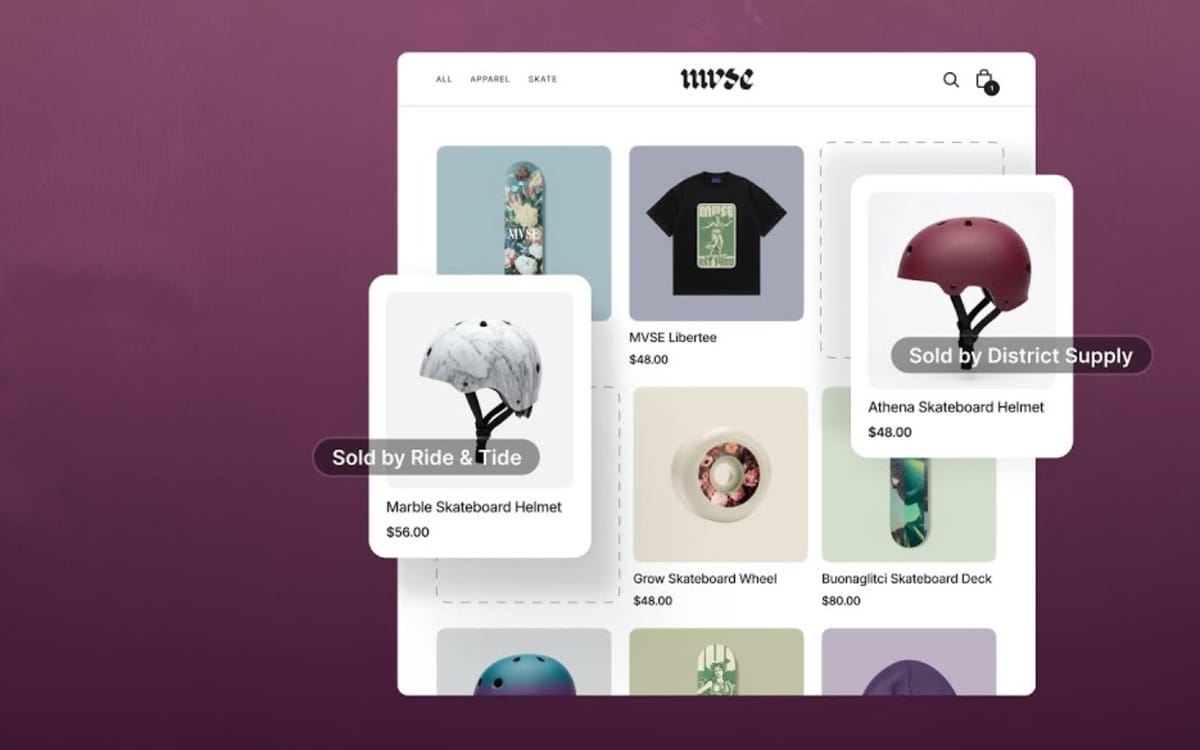
Shopify announced the Shopify Product Network on December 10, 2025, introducing a system that displays products from participating merchants across multiple storefronts, enabling shoppers to purchase items from different sellers in a single transaction. The company released a video showing how the feature dynamically sources products to fill customer demand gaps when stores lack specific inventory.
The network represents Shopify's latest expansion into advertising technology, positioning the e-commerce platform alongside Google Performance Max, Meta Advantage+ Shopping, and Amazon Performance+ in automated campaign optimization. However, the company frames the product as merchandising infrastructure rather than traditional advertising, with placements appearing only when contextually relevant to shopper queries.
PPC Land Newsletter
Subscribe PPC Land newsletter ✉️ for similar stories like this one
"This is really unique by the way. This is not something other people in the industry are able to provide. It's Shopify's checkout but built across multiple stores and again with a single click," Engelman stated in the video. The multi-merchant checkout capability differentiates Product Network from traditional affiliate networks or marketplace models where transactions redirect to seller storefronts.
According to Shopify documentation released on December 10, merchants using the Product Network can display their items on other Shopify stores where those products match customer searches or browsing patterns. The feature launched as part of "Shopify Winter '26: The Renaissance Edition," which included over 150 platform updates.
Available placement types include collections pages, search results, and post-purchase recommendations. When a shopper searches for organic cleaning supplies on a store that does not carry them, the Product Network can surface alternatives from participating merchants. These items may appear in search results or natively on homepage displays, blending with the host store's own inventory.
The announcement came through Shopify Help Center documentation, a YouTube video posted December 10 with 908 views, and a LinkedIn post by Amanda Engelman, Director of Product for Advertising at Shopify. The video presented a skateboard retailer scenario where customers searching for helmets receive relevant recommendations from Product Network participants when the original store does not stock protective equipment. The launch occurred as one of over 150 updates in Shopify's Winter '26 product release, though the Product Network received dedicated promotional attention through the video and Help Center documentation.
Merchants can purchase in one cart across multiple sellers through multi-store checkout functionality. According to the demonstration video, Shopify's checkout system operates "across multiple stores" with "a single click," creating unified purchase experiences that span different merchant inventories.
The system displays products organized by store and links to each merchant's policies. Taxes and shipping calculate separately for each seller, with payment processing handled independently for the host store and Product Network participants. While the checkout clearly identifies which products come from different merchants, the native integration into search results and product displays minimizes visual distinction during the browsing experience.
According to Shopify documentation released on December 10, merchants set a maximum CAC, representing the price paid when customers convert through either offer redemption or purchase after viewing campaign advertisements. Shopify documentation states merchants are "never charged more than this amount for a conversion." The minimum and recommended CAC values derive from each store's average order value.
"Once they transact, this is now your customer. Your customer to continue to remarket to, to build a relationship with," Engelman explained in the demonstration video. "We compensate you for that customer too. So this is a commission that you earned. It is revenue made."
The customer acquisition model differs from traditional affiliate relationships. When shoppers add Product Network items to their cart alongside the host merchant's products, the host merchant retains that customer relationship even though products ship from different sellers.
Higher acquisition costs create more compelling offers, resulting in Product Network items ranking higher in displayed offers, according to Shopify guidance. The company emphasized that merchants pay the same CAC whether customers redeem specific offers or purchase after clicking advertisements.
Merchants participating in the Product Network earn commissions on third-party products sold through their storefronts. Payouts can be received as cash or converted directly to Shopify advertising credits, effectively funding off-platform campaign budgets.
Advertise on ppc land
Buy ads on PPC Land. PPC Land has standard and native ad formats via major DSPs and ad platforms like Google Ads. Via an auction CPM, you can reach industry professionals.
The Product Network app within Shopify Admin provides multiple placement controls. "You can decide what placements work best for your store, whether that's collections or search or even our post-purchase placements," Engelman demonstrated in the video. "And you can select and decide which brands or categories that you don't want to show."
Merchants can exclude specific brands or product categories from appearing through Product Network recommendations. The control framework aims to maintain consistency with each store's brand identity and merchandising strategy.
"You should feel in control of the types of recommendations that we're providing to your buyers," Engelman emphasized in the demonstration. The ability to exclude categories or brands enables merchants to prevent competitor products or off-brand items from appearing on their storefronts, addressing potential concerns about loss of merchandising control.
According to AdExchanger coverage published December 10, Engelman characterized Shopify's approach as distinct from competitors. "It's just a different approach to the world," she stated in the interview. The platform emphasizes merchandising decisions over advertising placement, with Product Network displays running only when strong contextual fits exist for shoppers or product searches.
"You can think of Product Network as an app that allows you to dynamically source products and instantly fill the demand of your customers," Engelman explained in the demonstration video. The system analyzes search queries and browsing behavior to determine when Product Network recommendations would enhance the shopping experience rather than displaying items indiscriminately across all merchant storefronts.
This differs from traditional advertising networks that maintain designated ad placements requiring constant inventory fill. Shopify's system will not display Product Network items without relevant contextual alignment, regardless of available placement opportunities.
Shopify Product Network
The skateboard helmet example from the demonstration video illustrates this contextual approach. "The Product Network is going to provide back recommendations that are not just relevant to your buyer but also relevant to your store," Engelman explained. The system considers both the shopper's search intent and the host merchant's brand positioning when determining which Product Network items to surface.
Engelman acknowledged the ambiguity around whether Product Network placements constitute advertisements. "It's a great question. But I probably wouldn't say so," she told AdExchanger. The minimal disclosure framework reflects this positioning, with placements appearing as native product displays rather than clearly marked sponsored content.
The commission-based model creates scenarios where shoppers purchase products from Product Network merchants through host storefronts. The checkout process identifies which products come from different sellers through store labels and separate policy links, though the native integration during product browsing minimizes visual distinction between host inventory and Product Network items.
A customer shopping on a skateboard store who adds a helmet from a Product Network participant would see both items in a unified cart with clear indication of which merchant supplies each product. The multi-store checkout displays products organized by store, enabling customers to review policies and shipping details for each merchant before completing the transaction.
Shopify's advertising business maintains distance from traditional ad revenue models. The company's Audiences program builds customer segments for activation across Google, Meta, Pinterest, TikTok, Snapchat, and Criteo without taking media budget percentages. The premium subscription benefit provides sophisticated prospecting capabilities while avoiding direct advertising monetization.
Product Network follows this pattern. Early implementation prioritizes contextual relevance over aggressive monetization, according to Engelman's statements to AdExchanger. The platform currently avoids advanced personalization that might display grills to clothing shoppers even when individual purchase propensity data suggests interest.
Optimization models will eventually incorporate commission opportunities alongside purchase likelihood. Some merchants might prioritize Product Network items offering higher commissions, while Shopify's algorithms would emphasize conversion probability. These real-time judgments will improve as the system gains scale and experience.
Technical placement decisions account for merchant brand alignment when determining Product Network fit. The system evaluates whether third-party products match the host store's aesthetic and customer expectations before surfacing items.
Eligibility requirements restrict Product Network participation to established merchants. Stores must operate in the United States or Canada with Shopify Payments accounts accepting USD or CAD. Shop Pay activation is mandatory. Merchants must comply with Shop's merchant eligibility requirements and Shop Campaigns Merchant Terms.
Additional requirements include three months minimum tenure on Shopify, 100 or more completed orders, and Shop app ratings above 4.0 from customers. Stores targeting customers outside their primary market need international sales tools configured to display prices in local currency. A United States-based store advertising to Canadian customers requires Canada added as a market with appropriate pricing tools.
Compliance extends to third-party advertising partner standards. Content permitted on Shop but prohibited by advertising partners could disqualify stores from Shop Campaigns or restrict specific product promotion capabilities.
Order fulfillment operates independently across participating merchants. When customers purchase Product Network items alongside host store products, multi-store checkout creates separate orders in each merchant's Shopify admin. Host merchants fulfill only their own products, with Product Network sellers handling their items independently.
Customers receive order confirmation emails from each participating merchant and track shipments separately. Host store order pages display banners confirming items purchased from Product Network sellers, providing limited post-purchase transparency.
Revenue metrics differ from traditional advertising platforms. Shopify measures success through average order value and storefront visits rather than advertising revenue growth. The company optimizes for merchant success across all marketing channels rather than concentrating on proprietary advertising income.
Engelman told AdExchanger that Shopify approaches growth by examining merchant performance holistically. "We just are flipping that over to look at it a little bit differently," she stated, contrasting with platforms that measure growth exclusively through ad revenue expansion.
The launch positions Shopify against expanding retail media competition. The sector reached $52.44 billion in the United States during 2024, with retail media networks numbering over 200 platforms. Performance data shows retail media networks deliver 1.8 times better results than digital advertisements, with nearly 3 times improved purchase intent outcomes.
The proliferation reflects a broader trend where virtually every platform with user engagement has launched advertising capabilities. HP introduced laptop-based advertising targeting 160 million monthly users in July 2025. Mastercard launched its commerce media network leveraging payment transaction data in October 2025. Payment networks, device manufacturers, e-commerce platforms, and traditional retailers have all entered the advertising technology sector as companies seek to monetize first-party data and user relationships.
Amazon pioneered retail media monetization, but traditional retailers including Walmart, Target, Kroger, and Albertsons have launched competing networks leveraging first-party purchase data for advertising targeting. These platforms allow consumer goods brands to buy advertisements on retailer websites and applications.
Shopify's infrastructure serves a fundamentally different merchant base. While Amazon and traditional retailers operate retail media networks promoting third-party brands on owned properties, Shopify enables independent merchants to cross-promote products across a distributed network of stores. The distinction creates unique competitive dynamics in the commerce media landscape.
The Product Network builds on Shopify's existing Shop Campaigns advertising product and Shopify Collective merchant-to-merchant marketplace. A LinkedIn post by Joe Rinaldi Johnson, Senior Staff Product Manager at Shopify, announced "instant import on Shopify Collective" four months prior to the Product Network launch.
The instant import feature enables retailers to "browse quality brands, see clear margins upfront, and add products in one click—no approval delays, no back-and-forth," according to Johnson's post. Merchants can select preferred categories for tailored product recommendations from participating suppliers.
"Instant import gives retailers a faster way to grow and suppliers new channels to reach customers. Retailers sell. Suppliers ship. We handle the rest," Johnson explained. This underlying infrastructure appears to power the Product Network's ability to source and display products from participating merchants across different storefronts.
Shop Campaigns allow merchants to run advertisements within the Shop app, targeting customers based on browsing and purchase behavior. The Product Network extends this capability by enabling product visibility across participating merchant storefronts rather than limiting exposure to the centralized Shop app environment.
The partnership addressed fragmentation challenges hindering retail media growth by providing standardized access to sponsored product inventory. Shopify's Product Network approaches the same fragmentation problem from a different angle, creating native product distribution rather than programmatic advertising standardization.
Retail media and connected television are converging according to IAB Europe analysis published November 6, 2025. Retail media networks position themselves as infrastructure powering all media formats rather than functioning solely as single channels. This infrastructure approach enables partnerships with content creators and platforms.
Shopify's positioning as merchandising infrastructure rather than advertising platform aligns with this broader industry trend. The company frames Product Network as product discovery enhancement rather than media inventory monetization.
Google announced agentic checkout capabilities on November 13, 2025, confirming Wayfair, Chewy, Quince, and select Shopify merchants as initial participants. The feature automatically purchases price-tracked items when they reach target budgets using Google Pay, representing autonomous commerce implementations emerging across platforms during 2025.
The Shopify Product Network announcement received limited coverage despite its significant implications for merchant business models. AdExchanger and Search Engine Land published initial reports on December 10, with industry discussion focusing on the minimal disclosure framework and potential consumer confusion around multi-merchant transactions.
Shopify's advertising business operates under the leadership of Engelman, who joined the company in July 2025 as Director of Product for Channel Expansion. Her previous experience includes roles as Principal Product Manager for IoT Platform at Target and Global Product Lead for Google Analytics 360 Attribution at Google, according to her LinkedIn profile.
The timing coincides with Shopify's broader strategic emphasis on artificial intelligence integration. CEO Tobias Lütke mandated AI usage across all departments on April 7, 2025, establishing AI proficiency as a fundamental job expectation for all employees. The directive indicated Shopify views AI adoption as essential for maintaining competitive performance.
Product Network implementation reflects this AI-first strategy through automated product matching, contextual relevance determination, and real-time optimization across participating merchant inventories. The system processes product feeds, search queries, and browsing patterns to surface relevant items from the broader network.
Shopify recently announced ScriptTag deprecation for checkout pages starting February 1, 2025, requiring apps to transition to Web Pixels or UI Extensions. The technical infrastructure changes support platform modernization initiatives that enable features like Product Network multi-store checkout.
The announcement arrives during peak holiday shopping season when consumer spending reaches annual highs. Shopify merchants generated $2.9 billion in sales on Black Friday 2021, representing 21% growth over the previous year. Mobile devices accounted for 72% of transactions versus 28% on desktop, with average cart prices reaching $101.20 USD.
Product Network success depends on merchant adoption and customer acceptance of cross-merchant shopping experiences. The sparse launch suggests Shopify prioritized testing with existing merchant base over broad consumer marketing, allowing the company to refine the product based on real transaction data before wider promotion.
Competitive pressure from Mastercard's commerce media network launch on October 1, 2025, demonstrates expanding interest in commerce-linked advertising opportunities. Mastercard leverages permissioned transaction data from more than 160 billion annual payments processed in 2024, reaching 500 million enrolled consumers across owned channels, bank outlets, and publishing partners worldwide.
The payments network operates with 25,000 advertisers and delivers up to 22 times return on ad spend across retail, travel, entertainment, dining, and everyday spending categories. Card-linking technology connects advertising exposure to purchase behavior regardless of transaction channel, providing unified attribution capability.
Shopify's Product Network operates within a different technical framework. Rather than linking payment data to advertising exposure, the platform distributes product inventory across merchant storefronts and measures direct conversion within Shopify's closed ecosystem.
HP launched its advertising business targeting laptop users on July 16, 2025, claiming access to 160 million monthly U.S. users across 19 million devices. The tech manufacturer's entry demonstrates how hardware and platform providers are monetizing user relationships through integrated advertising solutions.
Device manufacturers Samsung and LG have similarly built advertising businesses around their smart television products. The trend reflects broader industry convergence between technology infrastructure and advertising monetization.
Shopify's merchant-centric model distinguishes it from device-based or payment-linked advertising approaches. The company enables small and medium-sized businesses to participate in sophisticated commerce media capabilities previously accessible only to large retailers with dedicated advertising teams and technology infrastructure.
Measurement capabilities remain undisclosed in initial Shopify documentation, though the demonstration video revealed analytics features within the Product Network app. "You can see performance across placements," Engelman explained. "And you can also get a pretty good understanding of which categories are actually working for your buyers."
The analytics dashboard shows which product categories generate customer interest, potentially revealing merchandising opportunities merchants had not previously considered. "Maybe there's something you never considered that your buyers wanted or needed. Well, now we're giving you the insight to see what it is that they're actually looking for. And that should power your next move," according to the video demonstration.
Traditional retail media networks emphasize closed-loop attribution connecting advertising activity to precise sales outcomes. Product Network effectiveness depends on Shopify's ability to demonstrate clear return on investment to participating merchants through commission revenue and incremental sales revealed through category performance data.
The Shop app provides existing measurement infrastructure that could extend to Product Network performance tracking. Shop Campaigns currently offer detailed analytics on customer acquisition costs, return on ad spend, and conversion metrics. Similar reporting frameworks would enable merchants to evaluate Product Network commission opportunities against direct advertising investments.
Privacy considerations remain minimal in Shopify's initial documentation. The platform operates within its own ecosystem, avoiding the third-party data sharing concerns that complicate retail media partnerships with external advertising platforms. All transactions occur within Shopify-managed systems with existing merchant relationships and Shop app user consent frameworks.
First-party data sophistication varies significantly across Shopify's merchant base. While large enterprises may operate advanced customer segmentation and predictive modeling, smaller merchants often lack resources for complex data strategies. Product Network democratizes access to sophisticated product recommendation capabilities by embedding them at the platform level.
International expansion potential remains unexplored in the December 10 announcement. Current eligibility restricts participation to United States and Canada-based merchants with Shopify Payments accounts accepting USD or CAD. The framework could extend to additional markets where Shopify maintains significant merchant presence and Shop app adoption.
European retail media growth reached €11.1 billion in 2024, representing 22.2% expansion from €9.1 billion in 2023 according to IAB Europe research. This market expansion demonstrates international appetite for retail media solutions that Shopify could address through geographic Product Network expansion.
The minimal consumer-facing disclosure raises questions about shopping transparency and merchant competition. When products from third-party sellers appear natively on competitor storefronts without clear differentiation, customers may make purchase decisions without understanding the actual merchant relationship or product source.
Traditional e-commerce maintains clear merchant identity throughout the purchase journey. Amazon marketplace listings identify third-party sellers alongside Amazon-fulfilled products. eBay displays seller information prominently. Even Google Shopping distinguishes between different retailers offering identical products.
Product Network blurs these boundaries intentionally. The "sold by" label provides technical disclosure, but the native integration into product grids and search results minimizes visual distinction between host merchant inventory and Product Network items.
Consumer protection implications remain unclear. When customers purchase items believing they are buying from a specific merchant they trust, only to receive products from an unknown third party, traditional expectations around brand accountability and return policies become complicated.
Multi-store checkout attempts to address this through clear policy links for each merchant. However, the shopping experience emphasizes convenience and unified transactions over transparent merchant disclosure.
Shopify's retail media strategy reflects the company's unique position in the e-commerce ecosystem. Unlike Amazon, which operates both a marketplace and advertising platform serving external brands, Shopify enables independent merchants to operate their own branded storefronts while accessing shared infrastructure and advertising capabilities.
The Platform's approach resembles cooperative advertising models where independent retailers pool resources for shared marketing initiatives. Product Network extends this concept to product distribution, creating a virtual marketplace that maintains individual merchant identity while enabling cross-promotion.
Technical implementation details remain undisclosed. Shopify has not published information about the algorithms determining Product Network placement, the weighting factors in relevance calculations, or the infrastructure managing multi-store checkout across distributed merchant systems.
The company's developer documentation lacks Product Network API specifications or integration guidance. This suggests initial implementation operates primarily through Shopify's managed services rather than merchant-controlled customization.
Future product development could introduce advertiser controls similar to those available in Google Performance Max or Meta Advantage+ Shopping campaigns. Merchants might eventually access granular settings for Product Network participation, including category exclusions, competitor blocking, and commission bid adjustments.
Competition from Macy's integration with Amazon Retail Ad Service announced in early November 2025 demonstrates alternative approaches to retail media infrastructure. The partnership allows advertisers to create sponsored product campaigns appearing on Macys.com and the Macy's mobile application through Amazon's campaign management tools.
Amazon Retail Ad Service provides white-label advertising technology to retailers, enabling sponsored product implementation without developing proprietary advertising platforms. The cloud-based service runs on Amazon Web Services infrastructure while maintaining separation between retailer business data and Amazon's core operations.
Shopify's Product Network represents an inverse strategy. Rather than licensing advertising technology to power individual retailer platforms, Shopify creates a distributed network where merchants simultaneously act as publishers and advertisers across each other's properties.
The announcement timing during December holiday shopping season maximizes initial transaction volume while minimizing consumer disruption. Shoppers accustomed to holiday deal hunting across multiple websites may accept cross-merchant purchase experiences more readily during peak season when product availability and competitive pricing take priority over merchant loyalty.
Early 2026 performance data will reveal whether Product Network gains merchant adoption and consumer acceptance beyond the holiday test period. "We've heard great things from merchants so far. Actual audible gasps when they've actually seen the recommendations," Engelman stated in the demonstration video. "They look and feel like something that they would've selected, and they can see a future where they continue to use Product Network to expand their categories and make better merchandizing decisions."
Installation requires finding the app in the Shopify App Store and activating Product Network. The simplified setup process suggests Shopify designed the feature for rapid merchant adoption without technical implementation barriers.
Industry analysts have questioned the commercial viability of autonomous purchasing systems as platforms rush to implement agentic commerce features. Similar skepticism may apply to Product Network's automated cross-merchant product distribution, particularly around consumer understanding and acceptance of the multi-merchant shopping model.
Platform consolidation continues across digital advertising with Google completing its transition to OpenRTB protocol on February 15, 2025, sunsetting proprietary Authorized Buyers RTB protocol in favor of industry standards. This standardization enables interoperability across platforms and reduces technical fragmentation.
Shopify's Product Network operates within a proprietary ecosystem, maintaining control over merchant relationships and transaction data. The closed platform approach provides data advantages and user experience consistency while limiting interoperability with external retail media infrastructure.
The December 10 announcement positions Shopify as a significant player in the expanding commerce media landscape. Whether merchants embrace cross-promotion through Product Network or resist potential cannibalization of their own customer relationships will determine the platform's long-term impact on independent e-commerce.
PPC Land Newsletter
Subscribe PPC Land newsletter ✉️ for similar stories like this one
December 10, 2025: Shopify announces Product Network as part of Winter '26: The Renaissance Edition with over 150 platform updates, enabling cross-merchant product distribution
PPC Land Newsletter
Subscribe PPC Land newsletter ✉️ for similar stories like this one
Who: Shopify launched the Product Network affecting millions of independent merchants using the e-commerce platform, with Amanda Engelman serving as Director of Product for Channel Expansion overseeing the initiative. The system impacts shoppers purchasing across participating Shopify stores in the United States and Canada.
What: The Shopify Product Network displays products from third-party merchants on other Shopify stores where those items match customer searches or browsing patterns. Merchants set customer acquisition costs and earn commissions on cross-merchant sales paid as cash or advertising credits. Multi-store checkout enables customers to purchase items from multiple merchants in single transactions with separate order processing and fulfillment.
When: Shopify announced the Product Network on December 10, 2025, through Help Center documentation and LinkedIn post by Amanda Engelman. The launch occurred during peak holiday shopping season when consumer spending and transaction volumes reach annual highs.
Where: The Product Network operates across Shopify merchant storefronts in the United States and Canada, restricted to stores with Shopify Payments accounts accepting USD or CAD. Placements appear in search results and homepage displays on participating merchant websites and mobile applications.
Why: Shopify aims to increase merchant sales by showing relevant products when stores lack specific items shoppers are searching for, reducing customer abandonment when products are unavailable. The system positions Shopify in the expanding retail media sector while maintaining its merchant-centric approach rather than direct advertising monetization. The network addresses product discovery limitations for independent merchants competing against large marketplaces with vast inventory selection.
Share this article
The link has been copied!
Your link has expired. Please request a new one.
Your link has expired. Please request a new one.
Your link has expired. Please request a new one.
Great! You've successfully signed up.
Great! You've successfully signed up.
Welcome back! You've successfully signed in.
Success! You now have access to additional content.