Snapchat's new in-app editing tool lets users skip the learning curve
Snapchat announced Quick Cut on December 17, a lens-powered video creation tool that eliminates traditional editing workflows for iOS users.


Snapchat announced Quick Cut on December 17, a lens-powered video creation tool that eliminates traditional editing workflows for iOS users.
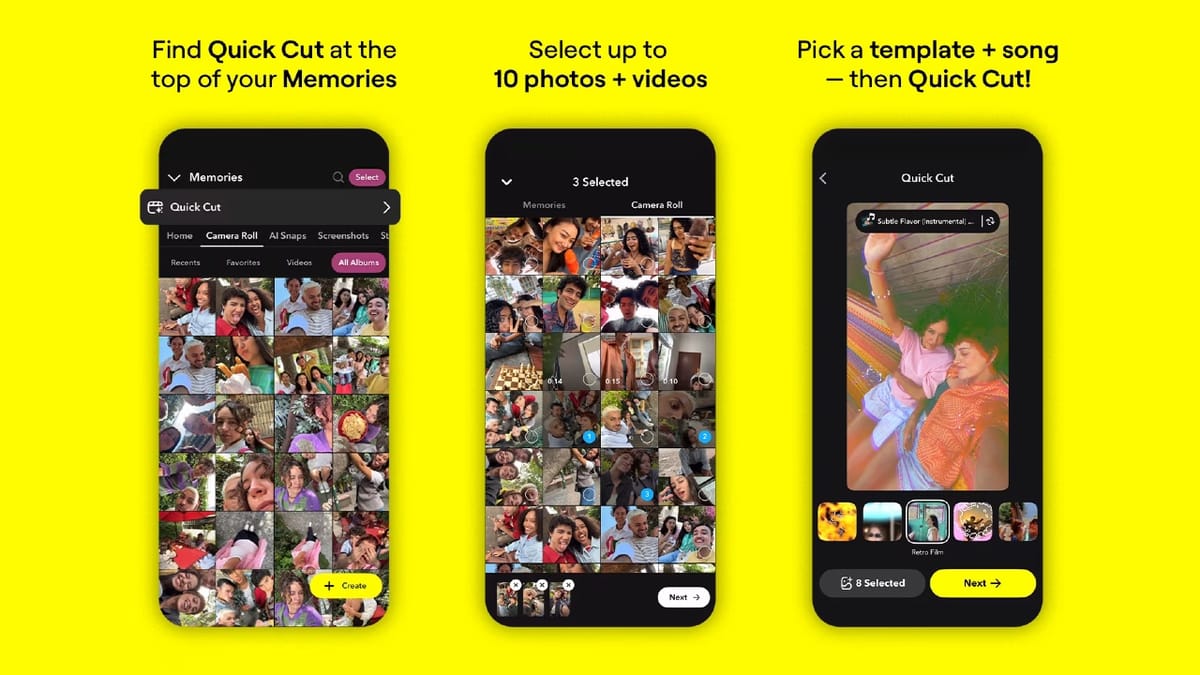
Snapchat introduced Quick Cut on December 17, 2025, implementing a lens-powered video creation tool designed to reduce the technical barriers associated with video production. The feature converts multiple photos or video clips into synchronized, shareable content within seconds, fundamentally changing how Snapchatters approach content creation on the platform.
Traditional video editing requires users to navigate multi-step processes involving clip selection, trimming, arrangement, audio synchronization, and export formatting. Quick Cut condenses these operations into a single automated workflow. According to the company's announcement, Snapchatters can select multiple photos or clips and immediately preview a rendered video without engaging with traditional editing interfaces.
The implementation represents a significant technical departure from previous Snapchat editing tools. Users no longer progress through sequential editing steps that characterize conventional video production software. The platform automatically renders complete videos from selected media, eliminating the manual assembly process that typically consumes substantial time and requires specific technical knowledge.
Quick Cut launches initially on iOS devices, with Snapchat planning expansion to additional surfaces and Android devices. The company did not provide specific timeline details for Android availability or define which additional surfaces will receive the feature.
The technical architecture underlying Quick Cut relies on Snapchat's Lens technology, which the platform has developed extensively for augmented reality applications over the past decade. This foundation enables the system to process visual content, apply effects, and synchronize audio automatically without requiring user intervention beyond initial media selection.
Access points for the feature span multiple locations within the Snapchat application. Users can initiate Quick Cut creation directly from Memories, the application's internal media storage system, or from their device's Camera Roll. This multi-entry approach addresses different content creation scenarios, allowing users to work with both previously captured Snapchat content and external photos or videos stored on their devices.
The platform introduced a collaborative creation mechanism alongside the core Quick Cut functionality. When Snapchatters encounter Quick Cut content shared by other users, they can unlock the same Quick Cut template and insert their own media into the established structure. This template-sharing capability creates opportunities for content format replication without requiring users to understand the underlying composition mechanics.
Audio integration forms another automated component of the Quick Cut system. According to the announcement, the platform automatically applies a track from Snapchat's Sounds library and synchronizes the selected audio to the chosen clips. The synchronization occurs algorithmically, matching visual cuts to audio beats or rhythm patterns without manual timing adjustments.
Buy ads on PPC Land. PPC Land has standard and native ad formats via major DSPs and ad platforms like Google Ads. Via an auction CPM, you can reach industry professionals.
Users retain customization options despite the automated workflow. After automatic audio application, Snapchatters can explore the Lens carousel to modify visual effects or tap the Sounds interface element to browse alternative audio tracks. This two-tier approach balances automated convenience with creative control, allowing quick creation while preserving personalization opportunities.
The Sounds library integration connects Quick Cut to Snapchat's broader audio ecosystem. The platform has expanded its music catalog significantly throughout 2024 and 2025, licensing content from major record labels and independent artists. Automatic track application and beat synchronization capabilities suggest sophisticated audio analysis infrastructure operating in the background.
Lens carousel integration provides access to Snapchat's extensive augmented reality effects catalog. The platform processes more than 8 billion daily lens engagements through its camera system, according to previous reporting on Snapchat's AI image generation capabilities. Quick Cut leverages this existing infrastructure, allowing users to apply AR effects to automatically assembled video content.
Snapchat positioned Quick Cut as an addition to existing creator tools rather than a standalone feature. The company referenced Timeline Editor, introduced earlier in 2025 and now available in Director Mode, as a complementary precision editing tool. Director Mode serves users requiring detailed control over clip timing, transitions, and effects, while Quick Cut targets rapid creation scenarios where speed supersedes granular customization.
Timeline Editor availability in Director Mode indicates Snapchat's dual-track approach to video creation tools. Advanced users seeking frame-level editing control can access Timeline Editor, while those prioritizing speed and simplicity can utilize Quick Cut. This segmentation mirrors broader industry patterns, where platforms increasingly provide both automated and manual editing pathways to accommodate users with varying skill levels and time constraints.
The technical implementation of automatic video rendering suggests substantial backend processing capabilities. Converting multiple photos or video clips into synchronized content requires frame rate conversion, resolution normalization, audio mixing, beat detection, and export encoding. Quick Cut executes these operations without visible processing delays, indicating optimized rendering pipelines capable of handling computationally intensive tasks efficiently.

Social media platforms have accelerated video creation tool development throughout 2025 as competition for creator engagement intensifies. Instagram announced its Edits application on January 25, 2025, targeting iOS users with AI-powered animation tools and automated caption generation scheduled for March 13, 2025 release. Meta's approach differs from Snapchat's by creating a standalone application rather than integrating features directly into the primary platform interface.
The strategic difference between standalone editing applications and integrated tools reflects divergent philosophies regarding content creation workflows. Standalone applications like Instagram's Edits enable sophisticated feature sets without cluttering primary application interfaces, potentially attracting professional creators seeking advanced capabilities. Integrated tools like Quick Cut reduce friction by eliminating application switching, prioritizing convenience over comprehensive feature sets.
Video creation barrier reduction has become a central focus for major social platforms as content volume directly correlates with advertising inventory availability. Platforms generating higher volumes of user-created video content can serve more advertisements while maintaining acceptable ad load ratios. Simplifying video production potentially increases content supply, creating additional opportunities for sponsored content placement.
Snapchat has pursued various strategies to enhance video creation capabilities over the past year. The platform launched Lens+ subscription tier on June 11, 2025, providing subscribers access to exclusive augmented reality experiences including AI video lenses. The subscription model generates direct revenue while testing advanced features with engaged user segments before potential broader rollout.
AI video generation capabilities introduced through Lens+ represented one approach to content creation simplification, enabling users to generate video content from text prompts. Quick Cut takes a different approach, focusing on assembling existing media rather than generating new visual content algorithmically. The complementary strategies address different creator needs: AI generation serves users lacking source material, while Quick Cut optimizes workflows for users with accumulated photos and videos.
The distinction between generative and assembly-based creation tools becomes particularly relevant when considering content authenticity and copyright considerations. Assembly-based tools like Quick Cut work exclusively with user-owned media, avoiding questions around AI-generated content ownership or attribution. Generative tools create novel visual content, introducing complexities around intellectual property rights and synthetic media disclosure.
Snapchat's emphasis on in-app creation aligns with platform retention strategies increasingly common across social media applications. Keeping users within the primary application throughout the entire content creation and sharing process reduces opportunities for platform switching and maintains engagement metrics. Users who complete creation workflows entirely within Snapchat spend more time in the application, generating more data for algorithmic recommendation systems and creating more opportunities for sponsored content exposure.
The competitive landscape for simplified video creation tools extends beyond social media platforms into dedicated content creation applications and operating system features. Apple's iOS includes native video editing capabilities through the Photos application, providing basic trimming, filtering, and adjustment tools without requiring third-party applications. Google's Android ecosystem offers similar native functionality through Google Photos, incorporating automatic video creation features like highlight reels and collages.
Platform-specific video creation tools offer advantages over operating system features through deeper integration with social sharing mechanisms and platform-specific content formats. Quick Cut content created within Snapchat can leverage Snapchat-specific features like lenses, sounds, and Spotlight integration more seamlessly than content created in external applications and imported for sharing.
Spotlight, Snapchat's short-form video feature competing with TikTok and Instagram Reels, represents the primary distribution channel for Quick Cut content targeting broader audiences beyond direct connections. The announcement specifically mentioned creating content for Spotlight posts, indicating the platform's intention to populate Spotlight with Quick Cut-generated videos. Simplified creation tools potentially increase Spotlight content volume, enhancing the feature's viability as a TikTok alternative.
TikTok's dominance in short-form video has pressured competing platforms to enhance creation capabilities while maintaining distinctive features. Content creation discussions reveal that creators face persistent challenges determining appropriate content topics and formats. Automated tools that reduce technical barriers potentially address these challenges by allowing creators to focus on conceptual aspects rather than technical execution.
The music synchronization component of Quick Cut addresses a specific pain point in video creation workflows. Beat-matching video cuts to audio tracks typically requires either sophisticated editing software knowledge or trial-and-error manual timing adjustments. Automatic synchronization removes this technical barrier, potentially improving content quality for users lacking music editing expertise.
Snapchat's Sounds library has grown substantially since the platform introduced music features, though specific catalog size details were not disclosed in the announcement. Music licensing agreements with record labels enable the platform to offer extensive track selections for content creation. These agreements typically involve complex royalty structures and usage restrictions that platforms must navigate while providing creator-friendly features.
The collaborative creation mechanism enabling users to insert their own media into Quick Cut templates shared by others introduces viral potential to the feature. Template-based content creation has driven significant engagement on platforms like TikTok, where audio clips and effect combinations spread through user communities as creators replicate and personalize popular formats. Quick Cut's implementation of this model could facilitate similar trend propagation within Snapchat.
Privacy and content moderation considerations arise whenever platforms implement automated content creation tools. Quick Cut operates on user-provided media stored locally or in Memories, avoiding some complexities associated with generative AI tools that might produce inappropriate content. However, the collaborative aspect enabling users to adopt templates from other creators introduces potential for problematic content formats to spread rapidly.
The five-minute replay window mentioned for Snapchat+ subscribers in separate platform updates contrasts with Snapchat's original ephemeral messaging concept. Quick Cut supports both ephemeral and persistent content strategies, allowing users to create content for temporary Stories or permanent Spotlight posts. This flexibility acknowledges that different content types serve different purposes within the platform ecosystem.
Platform measurement partnerships provide validation mechanisms for advertising effectiveness across Snapchat's video formats. According to previous reporting, Integral Ad Science partnered with Snap for brand safety measurement on June 19, 2024, expanding viewability and invalid traffic measurement to AR Lenses and Filters as well as Discover Feed Story Ads Tiles. These measurement capabilities become increasingly important as platforms introduce new content formats requiring advertiser confidence.
Video content creation tools affect advertising ecosystem dynamics through multiple mechanisms. Higher content volumes create more advertising inventory, automated creation tools potentially improve content quality by reducing technical errors, and platform-specific tools strengthen user retention reducing cross-platform content portability. Quick Cut influences all three dynamics by increasing creation speed, automatically handling technical synchronization, and integrating deeply with Snapchat-specific features.
The announcement timing preceding the December holiday period positions Quick Cut for potential adoption during a season characterized by high photo and video capture volumes. Family gatherings, travel, and celebrations generate substantial visual content that users might want to assemble into shareable videos. Launching immediately before this period maximizes the feature's exposure to situations where users possess multiple clips suitable for Quick Cut assembly.
Technical specifications regarding video output quality, resolution, frame rate, and file format were not included in the announcement. These details affect content usability for creators who might want to export Quick Cut videos for use on other platforms or download for archival purposes. Platform-specific creation tools sometimes impose limitations on export quality or compatibility to discourage content portability.
The lens-powered implementation underlying Quick Cut suggests computational photography and computer vision technologies operating beyond simple media concatenation. Lens technology on Snapchat handles complex visual processing tasks including face detection, object recognition, scene understanding, and real-time rendering. Applying this infrastructure to video assembly enables sophisticated automated decisions about clip sequencing, transition timing, and effect application.
Director Mode integration with Timeline Editor mentioned in the announcement indicates Snapchat's continued investment in creator-focused features beyond casual user tools. Director Mode launched previously as a dedicated interface for content creators requiring advanced controls unavailable in standard Snapchat camera modes. Timeline Editor addition to Director Mode specifically targets users producing content for Spotlight or external distribution who need precise editing capabilities.
The distinction between Quick Cut and Timeline Editor reflects a broader industry pattern of providing tiered functionality based on creator sophistication and requirements. Platforms increasingly recognize that a single editing interface cannot optimally serve both casual users wanting rapid creation and advanced users requiring granular control. Parallel tool development enables platforms to address both segments without compromising either experience.
Content creation barriers extend beyond technical complexity to include creative confidence and decision fatigue. Automated tools that make compositional decisions reduce the cognitive load associated with video creation, potentially encouraging creation among users who possess suitable source material but lack confidence in their editing abilities. Quick Cut's automatic sequencing, synchronization, and effect application address these psychological barriers alongside technical ones.
The platform's emphasis on accessibility throughout the announcement language suggests deliberate positioning of Quick Cut as a democratizing tool. Making video creation "fast, fun, and accessible to everyone" according to the company's phrasing indicates awareness that existing editing tools exclude users lacking technical expertise or time for complex workflows. This accessibility focus aligns with broader technology industry movements toward reducing skill requirements for sophisticated outputs.
Social media platform evolution increasingly centers on reducing friction throughout content creation and sharing workflows. Each additional step between creative intent and published content creates opportunities for users to abandon the process or switch to competing platforms offering streamlined alternatives. Quick Cut eliminates multiple traditional editing steps, potentially capturing creation opportunities that would otherwise remain unrealized due to workflow complexity.
The announcement's emphasis on creating content "right inside Snapchat" highlights the platform's desire to keep users within its ecosystem throughout the entire creation process. Cross-platform content workflows, where users create in one application and share in another, reduce platform engagement metrics and create opportunities for competitive platforms to intercept content distribution. Integrated creation tools combat this fragmentation by providing complete workflows within single applications.
Snapchat's historical focus on camera-first experiences positions Quick Cut as a natural evolution rather than a strategic departure. The platform launched in 2011 emphasizing visual communication over text-based messaging, establishing camera functionality as the primary user interface. Quick Cut extends this philosophy by making video creation as immediate as photo capture, requiring minimal user input beyond media selection.
The competitive implications of simplified video creation tools extend beyond direct platform rivalry to broader questions about content creation democratization and creator economy evolution. As platforms reduce technical barriers to content production, the competitive landscape shifts from technical execution capability toward creative conceptualization and audience development. This transition potentially redistributes creator success metrics, favoring creative vision over technical proficiency.
Platform-specific content formats create network effects that reinforce user retention. Content created using Quick Cut with Snapchat-specific lenses and sounds from the Snapchat library performs optimally within Snapchat's ecosystem but may lose functionality or appear degraded when shared to external platforms. These compatibility asymmetries, while potentially frustrating for users, strategically benefit platforms by encouraging content to remain within original creation environments.
Subscribe PPC Land newsletter ✉️ for similar stories like this one
Subscribe PPC Land newsletter ✉️ for similar stories like this one
Who: Snapchat announced the feature for its user base, initially targeting iOS device owners with plans for Android expansion.
What: Quick Cut is a lens-powered video creation tool that automatically converts multiple photos or video clips into synchronized, shareable videos with automatic audio tracks and lens effects without requiring traditional editing workflows.
When: Snapchat announced Quick Cut on December 17, 2025, with immediate availability on iOS and planned future expansion to Android devices and additional surfaces.
Where: The feature operates directly within the Snapchat application, accessible from Memories and Camera Roll, with output content shareable on Spotlight, Stories, or external platforms.
Why: The tool addresses video creation barriers by eliminating multi-step editing processes, automatically synchronizing content with music tracks, and reducing technical knowledge requirements, potentially increasing content volume and platform engagement.