
Super Bowl ads drove 31% QSR foot traffic spike, but will brands return?
Azira foot traffic data shows Dunkin', Little Caesars, and Taco Bell saw 31% store visit increases after 2025 Super Bowl ads, with peak impact hitting 48% on Thursday.

Azira foot traffic data shows Dunkin', Little Caesars, and Taco Bell saw 31% store visit increases after 2025 Super Bowl ads, with peak impact hitting 48% on Thursday.
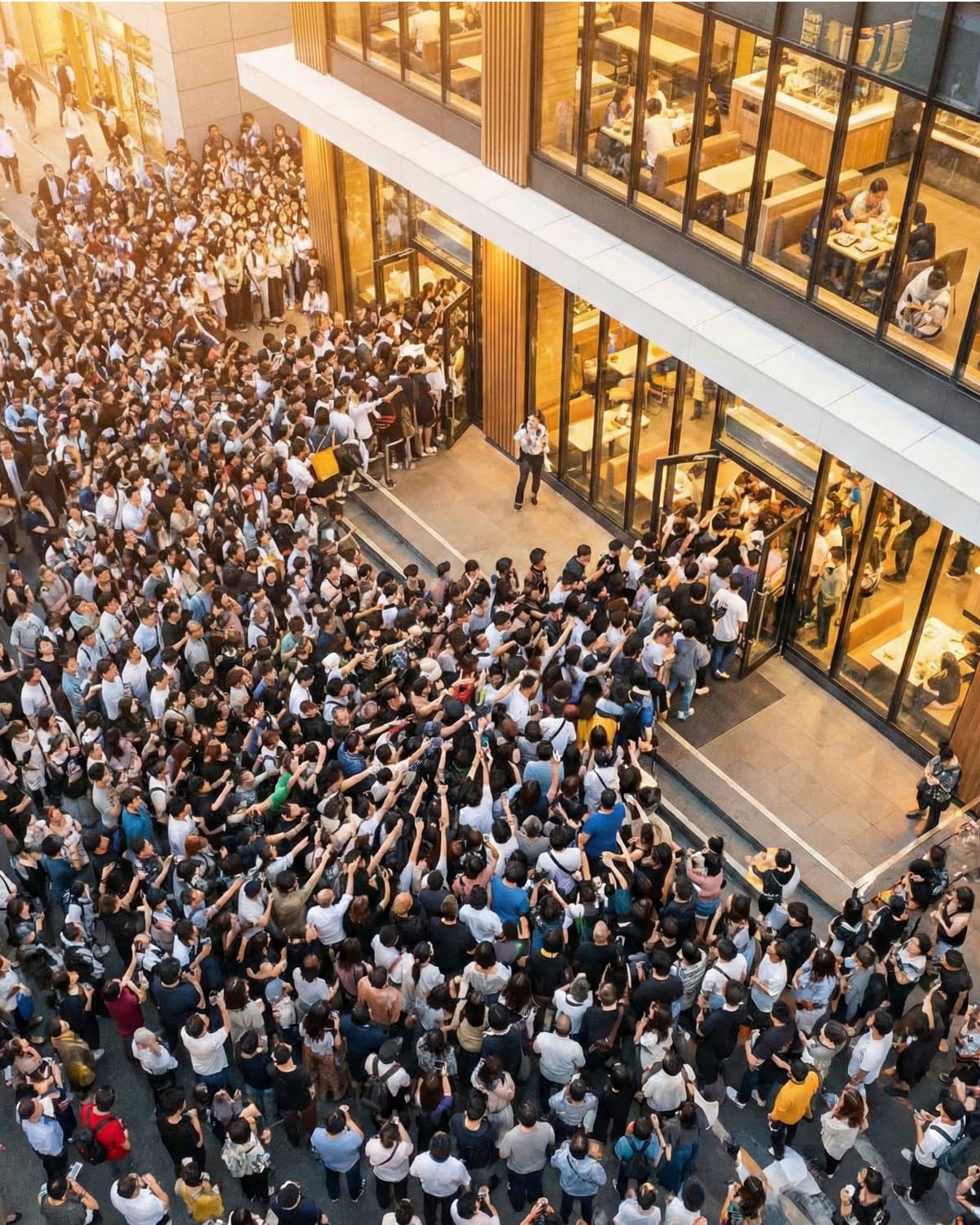
Consumer insights platform Azira analyzed foot traffic patterns for the major quick-service restaurant brands that advertised during Super Bowl 2025, comparing in-store visitation one week before and after the February 9 game to determine whether the multimillion-dollar broadcast exposure translated into measurable store visits. The findings reveal substantial short-term impact but raise questions about sustained effectiveness and return on investment for the 2026 game.
Super Bowl advertising represents one of the most expensive media purchases available to marketers. Spots sold for $7 million per 30 seconds during the 2025 broadcast, with prices increasing to $8 million for the 2026 game scheduled for February 9 at Caesars Superdome in New Orleans. Against this cost backdrop, Dunkin', Little Caesars, and Taco Bell invested heavily to reach the game's massive television audience. More than 127 million viewers watched Super Bowl LIX, establishing the game as advertising's largest single-day audience opportunity.
The measurement question for QSR brands centers on whether broadcast visibility during this premium event drives consumers from their screens into physical store locations. Traditional advertising metrics capture reach and frequency but struggle to connect television exposure with actual purchasing behavior. Location intelligence platforms address this gap by tracking real-world movement patterns before and after major advertising events.
Azira's U.S. foot traffic data revealed clear post-Super Bowl shifts in QSR store visitation when comparing the week prior to the game with traffic levels for the week following the February 9 broadcast. All three QSR brands that advertised during the game experienced a combined 31% increase in foot traffic. Dunkin' achieved a 31% increase, matching the category average. Little Caesars led the group with a 35% increase. Taco Bell recorded a 30% increase in store visits during the measurement period.
The data identified February 13 as the peak day for Super Bowl advertising impact across the QSR category. That Thursday saw a 48% increase in foot traffic compared to the average day in the prior week. This concentrated surge four days after the game suggests that advertising effects build gradually rather than materializing immediately on game day itself.
Regional analysis revealed geographic variations in the advertising impact. Dunkin' operates particularly dense store networks across Connecticut, Massachusetts, Maine, New Hampshire, Rhode Island, and Vermont, collectively known as "Dunkin' Country." The brand achieved a 22% increase in foot traffic regionally for the week after the game, below the 31% national increase. Within this region, Connecticut led with a 30% increase, outperforming the regional average but still trailing the national figure.
Competitive dynamics emerged in the data when examining foot traffic patterns in areas associated with the competing teams. Chiefs Country, defined as Kansas and Missouri, experienced a 36% increase in foot traffic for the week after the game. Birdland, covering New Jersey and Pennsylvania where Eagles fans concentrate, saw a 28% increase in foot traffic for the week after the game. The eight-percentage-point difference suggests that winning-team markets may experience stronger advertising effects, though multiple factors beyond game outcomes influence these patterns.
The timing coincides with broader Super Bowl advertising trends. Integral Ad Science previously documented that contextual targeting campaigns during Super Bowl LVIII achieved 102% increased return on investment compared to overall averages, alongside a 136% increase in success rate measured through clicks and conversions. Consumer spending around last year's Super Bowl reached $18.6 billion across food, drinks, apparel, décor, and related items, according to National Retail Federation figures.
The 2026 Super Bowl presents specific challenges for QSR advertisers considering whether to maintain their game-day presence. As of January 22, no QSR brands have been announced for the 2026 broadcast, marking a notable departure from the prior year when Dunkin', Little Caesars, and Taco Bell secured prominent positions. The absence of early commitments raises questions about how brands evaluate the value proposition of Super Bowl advertising against alternative media investments.
"The Super Bowl is a huge branding opportunity, but the biggest impact comes when brands scale campaigns across channels like social media and CTV to extend engagement and drive purchase behavior," Gladys Kong, CEO at Azira, stated in the company's announcement. "Even as economic pressures influence marketing and acquisition strategies, QSRs and retailers that look beyond game-day performance and take a deeper view of data, insights, and attribution can uncover what truly drives results year-round. With the right data strategy, those insights translate directly into higher return on ad spend and stronger business performance."
The measurement challenge extends beyond simple before-and-after comparisons. Attribution analysis must account for external factors including weather patterns, competitive promotions, and seasonal demand fluctuations that could influence store traffic independent of advertising exposure. The 31% lift represents an average across all three brands, but individual restaurant locations likely experienced substantial variation based on local market conditions and execution factors.
"The 31% lift in footfall shows the Super Bowl can deliver real short-term revenue impact for QSRs," Jay Snyder, Director of QSR Vertical at Azira, stated in the announcement. "But the post-campaign drop-off is a reminder that brands need sustained, always-on strategies, not just tentpole moments, to create lasting results. Operators that build disciplined, marketing data strategies can take a longer-term view and translate performance into sustainable growth. As well, the regional Azira data tells QSR brands where they could really up their game or double-down with insights to extend the value of their investment."
The foot traffic impact duration represents a critical component of return on investment calculations. While the data shows peak effects on Thursday February 13, the analysis period extends only one week post-game. Longer-term measurement would reveal whether the 31% lift sustains beyond the immediate post-Super Bowl period or whether traffic patterns revert to baseline levels as the advertising exposure fades from consumer awareness.
Location intelligence platforms have expanded measurement capabilities substantially over recent years. Adsquare extended store visit tracking to Austria and Switzerland on January 30, 2025, providing advertisers with tools to quantify the impact of digital advertising on physical store visits. The measurement solutions operate by processing mobile location data collected through software development kits, delivering daily footfall data directly to advertisers' demand-side platforms.
StackAdapt and Adsquare launched integrated footfall attribution capabilities in September 2024, enabling advertisers worldwide to measure customer visits to physical locations after viewing digital ads. These technical advances provide the infrastructure for connecting broadcast advertising exposure to real-world behavioral outcomes with increasing precision.
The measurement infrastructure supports broader industry efforts to establish standardized attribution methodologies. IAB released a comprehensive measurement framework for commerce media campaigns on November 3, 2025, addressing fragmentation challenges that have complicated budget allocation decisions. The guidelines define incrementality as the causal impact of marketing by identifying additional business outcomes directly driven by campaigns compared to what would have occurred in the absence of marketing activity.
Retail media measurement challenges persist despite industry growth, with experts emphasizing the complexity of omnichannel attribution during an IAB Australia Commerce & Retail Media Summit panel discussion on July 29, 2025. The closed-loop nature of retail media provides advantages over traditional advertising channels, but significant implementation challenges remain across different measurement methodologies and sophistication levels.
The cost-benefit analysis for QSR brands must weigh the $7-8 million per-spot investment against the incremental revenue generated by the 31% foot traffic increase. Restaurant unit economics vary significantly based on ticket size, margin structures, and operating models. A 31% weekly traffic increase translates to different financial outcomes for drive-through-focused concepts versus dine-in establishments, and for value-oriented menus versus premium positioning.
Campaign integration across multiple channels amplifies Super Bowl advertising effectiveness. Brands that coordinate television exposure with complementary digital media, social engagement, and promotional offers typically achieve stronger results than broadcast-only approaches. The $7-8 million spot cost represents only the media placement; production costs, talent fees, and supporting campaign elements add substantial additional investment requirements.
Adsquare launched Q1 seasonal audiences on January 5, 2026, including Super Bowl-specific targeting segments designed for the 2026 game. The Berlin-based location intelligence company released datasets covering major Q1 spending events, with Super Bowl spending alone reaching $18.6 billion in 2025. Pre-game merchandise sales, hospitality bookings, and watch party preparation drive spending throughout the week preceding the game.
The regional variations in Dunkin' performance highlight the importance of market-specific analysis. The brand's stronghold markets in the Northeast saw lower lift percentages than national averages, potentially indicating market saturation effects where incremental advertising produces diminishing returns in areas with already-dense store networks and high brand awareness. Conversely, markets with lower Dunkin' presence might experience larger percentage increases from the same advertising investment.
Consumer behavior patterns during major sporting events create specific challenges for attribution analysis. Super Bowl Sunday itself features distinctive consumption patterns with watch parties, group gatherings, and advance purchasing that differ from typical weekday restaurant visits. The Thursday peak suggests that the advertising impact manifests most strongly when consumers return to normal weekly routines rather than during the event itself.
The competitive landscape influences how individual brands capture value from category-level advertising exposure. When multiple QSR brands advertise during the same broadcast, cross-brand awareness effects may dilute individual campaign effectiveness. Consumers exposed to advertisements from Dunkin', Little Caesars, and Taco Bell must choose which brand to visit, potentially spreading the traffic lift across all three rather than concentrating benefits for any single advertiser.
Economic conditions affect both advertising investment decisions and consumer spending patterns. QSR brands face margin pressures from food costs, labor expenses, and operational complexity. Marketing budget allocation increasingly demands demonstrable return on investment with clear connections to incremental sales rather than brand-building metrics that take longer to materialize into financial outcomes.
Yahoo returned to Super Bowl advertising during the 2025 game after a 22-year hiatus, featuring actor Bill Murray in an interactive campaign centered around email engagement. The 15-second spot directed viewers to email Murray at a dedicated Yahoo Mail address, demonstrating how brands adapt Super Bowl advertising formats beyond traditional 30-second broadcast-only approaches.
Technology platforms continue advancing attribution capabilities that enable more sophisticated measurement of advertising effectiveness. The integration of location intelligence data with campaign management platforms allows real-time optimization based on actual store visit performance rather than proxy metrics. This technical evolution supports more precise evaluation of high-cost media investments like Super Bowl advertising.
The absence of announced QSR advertisers for the 2026 Super Bowl as of late January creates unusual uncertainty compared to typical timelines. Major advertisers typically secure spots months in advance, suggesting that brands may be reassessing the value proposition or negotiating terms that differ from standard rate cards. The $1 million increase in spot costs from $7 million to $8 million represents a 14% year-over-year increase that compounds the return on investment calculation challenges.
Retail media projected to capture 20% of global ad revenue by 2030, with Omdia research showing retail media networks will exceed $300 billion by 2030. This growth trajectory reflects advertisers' prioritization of channels offering closed-loop attribution connecting advertising exposure directly to purchase behavior, creating competitive pressure on traditional broadcast advertising formats.
The measurement data from Azira provides quantifiable evidence about Super Bowl advertising effectiveness for QSR brands, but the business decision about participation depends on factors extending beyond foot traffic increases. Brand perception effects, competitive positioning, and long-term customer acquisition dynamics all contribute to the strategic calculus. The 31% weekly lift represents substantial short-term impact, yet sustained growth requires integrated marketing strategies beyond single-event activations.
Timeline
Who: Azira, a consumer insights platform, analyzed foot traffic data for three QSR brands (Dunkin', Little Caesars, and Taco Bell) that advertised during Super Bowl 2025. Azira CEO Gladys Kong and Director of QSR Vertical Jay Snyder provided commentary on the findings.
What: The analysis revealed a 31% combined increase in foot traffic across all three QSR brands in the week following Super Bowl 2025 compared to the week prior. Little Caesars achieved the highest lift at 35%, followed by Dunkin' at 31% and Taco Bell at 30%. Thursday February 13 marked the peak impact day with a 48% increase across the QSR category. Regional variations showed Chiefs Country (Kansas and Missouri) experiencing 36% increases while Birdland (New Jersey and Pennsylvania) saw 28% increases. Dunkin' Country (Connecticut, Massachusetts, Maine, New Hampshire, Rhode Island, and Vermont) achieved 22% regional increases, with Connecticut leading at 30%.
When: The measurement compared foot traffic patterns from the week before Super Bowl 2025 (which took place on February 9, 2025) with traffic levels in the week following the game. The peak impact occurred on Thursday, February 13, 2025. Azira released the findings on January 22, 2026, as marketers prepare for Super Bowl LIX scheduled for February 9, 2026.
Where: The analysis covered U.S. foot traffic data across all Dunkin', Little Caesars, and Taco Bell locations nationwide, with regional breakdowns for specific markets including the Northeast ("Dunkin' Country"), Kansas and Missouri ("Chiefs Country"), and New Jersey and Pennsylvania ("Birdland").
Why: The analysis addresses whether Super Bowl advertising justifies its cost for QSR brands. With 2025 spots selling for $7 million per 30 seconds and 2026 prices reaching $8 million, brands require measurable evidence that broadcast exposure drives customers into physical stores. The 31% foot traffic increase demonstrates short-term impact, but the absence of announced QSR advertisers for the 2026 game raises questions about whether brands view the return on investment as sufficient. The findings matter for marketing professionals evaluating high-cost media placements and measuring the effectiveness of tentpole advertising events against sustained, always-on marketing strategies.