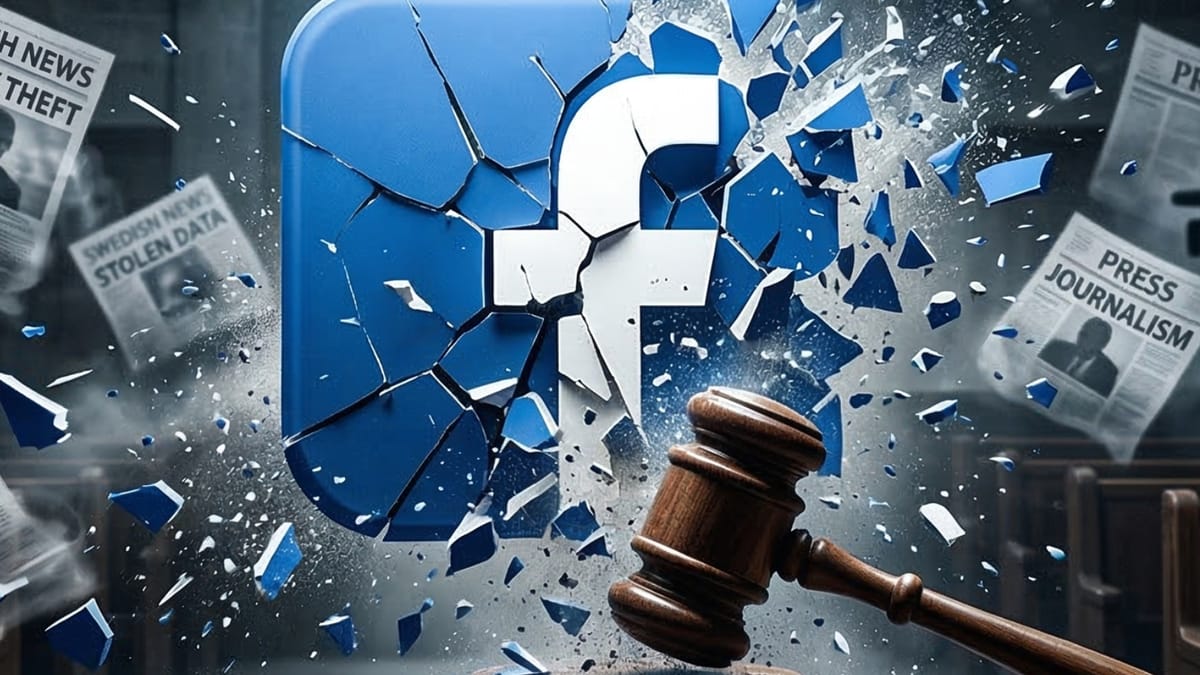
Three of Sweden's largest media groups on March 12, 2026, publicly endorsed IAB Sweden's decision to expel Meta from its membership, calling the move necessary and long overdue. Aller Media, Bonnier News, and Schibsted - publishers whose combined portfolio dominates Swedish print, digital, and broadcast news - issued statements welcoming the board's action, which was formalised at an emergency meeting on March 11, 2026. The three companies had not merely watched the proceedings unfold. Bonnier News and Schibsted initiated the exclusion case against Meta. Aller Media supported it.
The central charge is straightforward, and the numbers behind it are not small. According to Joakim Flodin, CEO of Schibsted Marketing Services, Meta earns an estimated SEK 136 billion from fraudulent advertisements and advertising for prohibited products. "We cannot be part of an organisation that allows a company like Meta to be a member, while the company earns an estimated SEK 136 billion from fraudulent ads and advertising for prohibited products," says Flodin. "This is a matter of fundamental principles and responsibility towards our readers, users, and customers."
That figure finds partial corroboration in internal Meta documents reviewed by Reuters in November 2025, which indicated the company projected earning approximately 10% of its 2024 annual revenue - roughly $16 billion - from advertisements promoting scams and banned goods. The same documents described a so-called penalty bid system: rather than blocking suspected fraudsters outright, Meta charged them higher prices, effectively monetising its own enforcement restraint. The company set a 95% certainty threshold before banning advertisers entirely.
IAB Sweden's membership and what it represents
IAB Sweden has nearly 300 member companies, bringing together agencies, advertisers, publishers, technology providers, telecom operators, and research companies across the digital marketing industry. Meta had been a member until now. The expulsion - confirmed by a corrected vote taken on March 11, after a first vote on March 10 was declared invalid due to a procedural error - represents a rare instance of a major trade body taking formal disciplinary action against one of the world's largest advertising platforms. Meta has until April 15, 2026, to appeal the decision at IAB Sweden's annual general meeting.
The Swedish digital advertising market provides important context. Programmatic advertising in Sweden reached 4.7 billion kronor in 2024, a 12% increase from the prior year, according to a report produced by IRM and commissioned by IAB Sweden. The broader Swedish digital advertising market totalled 38.1 billion kronor in 2024, representing 75% of all advertising spending in the country. Brand safety holds particular weight in this market: among Swedish programmatic buyers surveyed for the same report, brand-safe advertising environments received the highest priority rating at 4.7 out of 5. IAB certification - specifically the kind of membership Meta now lacks - scored 3.3.
The publishers' case
The grounds for the exclusion case rest on two overlapping problems. The first is consumer harm: six out of ten Swedes were exposed to fake ads last year, mostly on Facebook, according to the statements issued on March 12. Swedish publishing companies have jointly reported Meta to the police for fraud and aiding and abetting fraud. The organisation Utgivarna has also reported Meta for violating the EU's Digital Services Act.
The second is reputational damage to media brands themselves. According to Flodin, "many of these scams abuse the brands of established news media, the credibility of our publishers, and the identities of journalists and other public figures. Every day, our editorial teams see how their names and content are exploited in ads on Meta's platforms in order to legitimise scams." The statement describes a specific and recurring operational problem for news publishers: their journalists become unwilling instruments of fraud.
Alexander Lydecker, COO at Bonnier News, was direct about the institutional logic. "Trust and cooperation are the foundation of our business, which is why we are members of several industry organisations. However, we could not in good conscience remain in an organisation that allows a member company to profit from fraudulent advertisements - at the expense of both consumers and the credibility of the media industry," says Lydecker. He added a broader ambition: "We hope that the entire global IAB network of national organisations will be inspired by IAB Sweden's lead in taking a stand against fraudulent ads."
Sara Forssberg, Nordic SVP Business at Aller Media, addressed Meta's recent signals of improvement directly. The IAB had been in dialogue with Meta, which had indicated a willingness to take greater responsibility. That, according to Forssberg, was insufficient. "Meta has had plenty of time and has not only buried its head in the sand, but also made a lot of money from criminal activity on its platforms. For Aller Media to accept them as members, clear and powerful measures are required - and we are not there yet," says Forssberg.
On the question of transparency, her assessment was equally unambiguous. "The evidence underlying the complaints clearly shows that Meta does not take responsibility or transparency seriously enough. This is not compatible with membership in an industry organisation such as IAB, where responsibility and transparency are central issues," says Forssberg.
Meta's response to the fraud problem has not been passive. At the Global Anti-Scam Summit in Washington, DC on December 3, 2025, the company announced the removal of more than 134 million scam advertisements across its platforms throughout 2025 and disclosed that user reports about scam ads had declined by more than 50% over the preceding 15 months. Facial recognition technology, deployed to catch celebrity impersonation scams, more than doubled the volume of fraudulent ads detected and removed during testing phases. In February 2026, Meta filed multiple lawsuits against deceptive advertisers in Brazil, China, and Vietnam, and issued cease-and-desist letters to eight former Meta Business Partners accused of selling services designed to evade its enforcement systems.
None of it was enough for the IAB Sweden board. Daniel Weilar, chairman of IAB Sweden, stated that Meta's work against deceptive ads was insufficient, and that the company would need to produce evidence of meaningful improvement before any return to membership.
The contrast with other platforms is notable. Google suspended over 39.2 million advertiser accounts in 2024, a 208% increase compared to 12.7 million suspensions in 2023, with the increase attributed to AI-powered fraud detection systems. Microsoft Advertising removed or restricted over one billion advertisements that violated policies during 2024, suspending more than 475,000 accounts. These are the benchmarks against which Meta's enforcement record was being measured. Whether the comparison is entirely fair - given differences in platform scale, user behaviour patterns, and enforcement architecture - is a separate question. The board made its assessment.
A pattern of regulatory pressure
The IAB Sweden expulsion does not arrive in isolation. Meta has faced a series of legal and regulatory setbacks across European jurisdictions in recent months. A Madrid court ordered Meta to pay €479 million to 87 Spanish digital news publishers on November 19, 2025, for competitive advantages gained through GDPR violations between 2018 and 2023. The European Commission found Meta in preliminary breach of Digital Services Act transparency requirements on October 24, 2025, exposing the company to potential fines of up to 6% of worldwide annual turnover. German courts have awarded individual users between €750 and €5,000 in damages for data protection violations involving Meta's Business Tools tracking infrastructure.
Across the Atlantic, a San Francisco court entered a final $50 million judgment against Meta on March 3, 2026, over Facebook user data shared with third-party developers, imposing compliance obligations lasting three years. A Delaware court filing in November 2025 revealed a $190 million shareholder settlement over board failures during the Cambridge Analytica and FTC privacy enforcement cycle.
The DSA complaint filed by Utgivarna connects directly to the European Commission's October 2025 preliminary findings. The DSA imposes obligations on Very Large Online Platforms regarding illegal content mechanisms, researcher data access, and advertising transparency. Meta's systems were found to use dark patterns in their Notice and Action mechanisms, making it harder for users to report illegal content.
For the marketing community, the expulsion matters on several levels. IAB membership carries weight in the programmatic supply chain: it signals adherence to standards around brand safety, transparency, and advertiser protection. When Swedish programmatic buyers rate brand-safe environments at 4.7 out of 5, and IAB certification at 3.3, the loss of that certification is not merely symbolic. It changes how Meta's inventory sits within an industry framework that buyers use to make decisions.
The broader question - whether other IAB national chapters will follow Sweden's lead - is one that Lydecker himself raised in his March 12 public statement. Industry consultant Justin Lebbon named IAB UK and IAB Thinkbox directly as organisations that might take inspiration from the Swedish action, with his post on LinkedIn drawing 50 reactions when he shared the IAB Sverige announcement on March 12, according to PPC Land's analysis.
Meta has until April 15, 2026, to appeal. The company has signalled a willingness to take greater responsibility - but according to all three Swedish media groups, willingness is not the same as action. The board's correction of its own March 10 procedural error, and its determination to take a clean unconditional vote on March 11, suggests the decision was arrived at deliberately and is unlikely to be easily reversed.
Timeline
- November 6, 2025 - Reuters publishes investigation based on internal Meta documents revealing Meta projected approximately $16 billion in 2024 revenue from scam and banned-goods advertisements, describing the penalty bid system
- November 19, 2025 - Madrid Commercial Court orders Meta to pay €479 million to 87 Spanish digital publishersfor GDPR-related unfair competition between 2018 and 2023
- October 24, 2025 - European Commission finds Meta and TikTok in preliminary breach of DSA transparency obligations, with fines of up to 6% of global annual turnover at stake
- December 3, 2025 - Meta announces removal of 134 million scam advertisements in 2025 at Global Anti-Scam Summit in Washington, DC, with user scam reports down 50% over 15 months
- February 26, 2026 - Meta files lawsuits against deceptive advertisers in Brazil, China, and Vietnam over celeb-bait and cloaking tactics
- March 3, 2026 - California court enters $50 million judgment against Meta over Facebook data shared with third-party developers
- March 10, 2026 - IAB Sweden board holds first vote; decision invalidated due to procedural error (formaliafel)
- March 11, 2026 - IAB Sweden board convenes emergency meeting and votes to expel Meta; expulsion confirmed
- March 12, 2026 - Aller Media, Bonnier News, and Schibsted issue public statements welcoming the expulsion; industry reaction analysed by PPC Land
- April 15, 2026 - Deadline for Meta to appeal the expulsion at IAB Sweden's annual general meeting
Summary
Who: Aller Media, Bonnier News, and Schibsted - three of Sweden's largest media groups - together with IAB Sweden's board, which includes publishers who initiated the exclusion case. Meta is the expelled party. Key named executives are Alexander Lydecker (COO, Bonnier News), Joakim Flodin (CEO, Schibsted Marketing Services), and Sara Forssberg (Nordic SVP Business, Aller Media).
What: IAB Sweden's board voted on March 11, 2026, to expel Meta from its nearly 300-member organisation following an exclusion case initiated by Bonnier News and Schibsted and supported by Aller Media. On March 12, the three media groups publicly endorsed the decision, citing Meta's estimated SEK 136 billion in revenue from fraudulent advertisements, widespread misuse of publisher brands and journalists' identities in fake ads, and insufficient remedial action. Meta has until April 15, 2026, to appeal.
When: The exclusion case was initiated by Bonnier News and Schibsted before the March 11, 2026 vote. A first vote on March 10 was invalidated due to procedural error. The three media groups' public endorsements were issued on March 12, 2026.
Where: Sweden. IAB Sweden is the national chapter of the Interactive Advertising Bureau. The fake ads problem is concentrated on Facebook and Instagram, Meta's principal consumer platforms. Broader regulatory context spans the EU, Spain, Germany, Austria, and the United States.
Why: According to the three media groups, Meta's platforms have generated substantial revenue from fraudulent advertising while consistently failing to protect consumers, media brands, and public figures whose identities were misused in scam campaigns. Six in ten Swedes were exposed to fake ads in the past year, predominantly on Facebook. Swedish publishing companies have filed police reports against Meta for fraud and aiding and abetting fraud. The organisations maintain that Meta's recent steps - including lawsuit filings and the removal of 134 million scam ads in 2025 - fall short of the standard required for membership in an industry body where responsibility and transparency are foundational principles.
Share this article
The link has been copied!