Takeshi Sano takes the helm at dentsu after a turbulent year
Takeshi Sano confirmed his role as dentsu's new President and Global CEO on April 1, 2026, following a formal transition rooted in a $2.18 billion loss and failed sale talks.


Takeshi Sano confirmed his role as dentsu's new President and Global CEO on April 1, 2026, following a formal transition rooted in a $2.18 billion loss and failed sale talks.
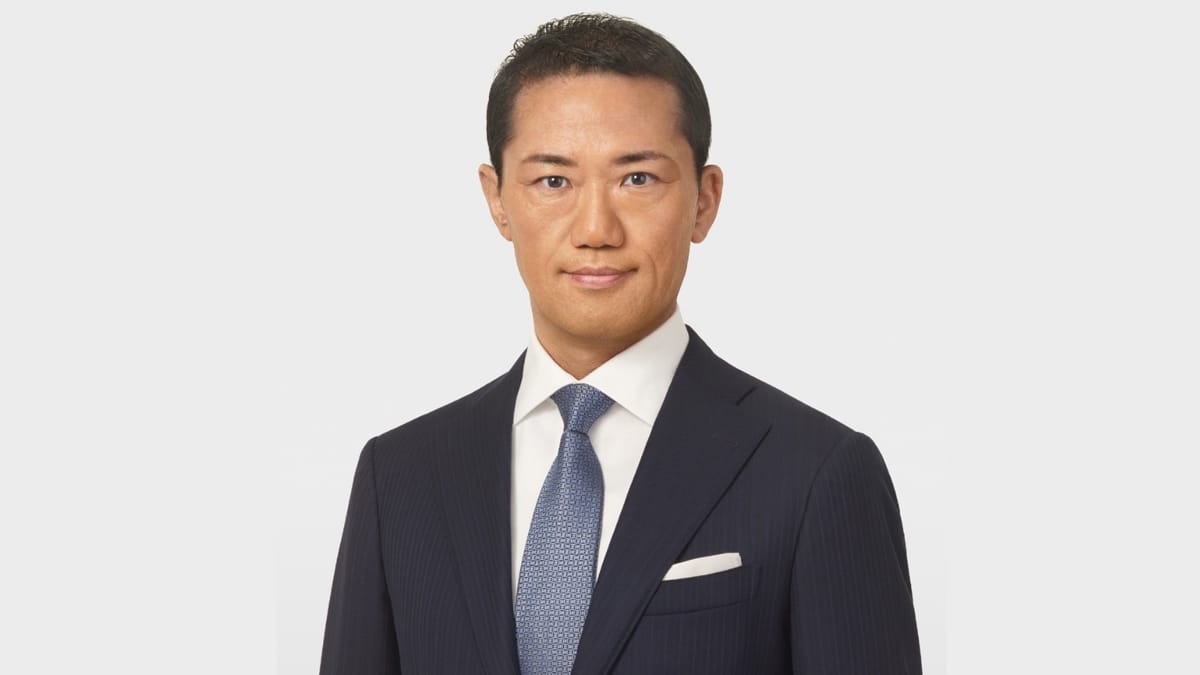
Takeshi Sano today confirmed on LinkedIn that he has assumed the role of President and Global Chief Executive Officer at dentsu, marking the formal start of a new leadership chapter at the Tokyo-based advertising group following one of the most difficult periods in the company's recent history. The post, shared from Sano's personal LinkedIn account and amplified by dentsu's official company page - which has 1,745,694 followers - offered a brief but pointed statement of intent, signalling priorities that will resonate across the global marketing industry.
"I'm honoured to step into the role of President & Global CEO at dentsu," Sano wrote, according to the LinkedIn post. "After more than 30 years at dentsu, I've seen firsthand the power of our people, our culture, and our ability to continuously evolve in a changing world."
The announcement formalises a transition that was set in motion on February 13, 2026, when dentsu disclosed the leadership change alongside the decision to abandon the planned sale of its international operations. The Japanese advertising giant named Sano - then CEO of dentsu Japan and deputy global COO - to replace Hiroshi Igarashi effective March 27, 2026, following the company's 177th Ordinary General Meeting of Shareholders.
Sano joined dentsu in April 1992, spending more than three decades within a single organisation - an unusual trajectory even by the standards of Japanese corporate culture. He became CEO of dentsu Japan in January 2024 and assumed the role of deputy global COO in January 2025. His domestic record is the foundation upon which this appointment rests. Japan accounts for roughly 40% of group net revenue and more than half of underlying operating profit, making it dentsu's financial backbone. The domestic business posted net revenue of ¥504.6 billion ($3.36 billion) for fiscal 2025 with organic growth of 0.5%, significantly outperforming international regions.
That domestic strength, sustained across multiple consecutive quarters, distinguishes Sano from the executives who preceded him at the global level. The core question - whether a leader who built his record in Japan's relatively sheltered, relationship-driven advertising market can reset performance in competitive international markets - will likely define his tenure.
In the LinkedIn post, Sano identified three priorities: strengthening client-centricity, fostering innovation at scale, and delivering "work that drives meaningful impact for businesses and society." He also wrote the post in Japanese, addressing domestic stakeholders directly, a signal of where the centre of gravity lies within the organisation.
The context behind this appointment is stark. Earlier in February 2026, dentsu reported a ¥327.6 billion ($2.18 billion) net loss for fiscal 2025, driven primarily by a ¥310.1 billion ($2.03 billion) goodwill impairment tied to its international operations. The impairment - attached to assets accumulated through decades of overseas acquisitions - represents a formal acknowledgment that the value dentsu once attributed to those businesses has not materialised.
The problems did not arrive without warning. In August 2025, dentsu announced it would cut approximately 3,400 positions across its international operations, representing 8% of its overseas workforce. That decision followed the posting of a net loss of ¥79.9 billion ($541.9 million) for the three months ended June 2025. At the time, then-CEO Igarashi was explicit about where the fault lines ran: "Our Japan business achieved record-high net revenue and underlying operating profit, marking sustained growth for the ninth quarter in a row. However, our international business continues to face negative growth across all regions," according to the earnings call.
By September 2025, dentsu had hired Mitsubishi UFJ Morgan Stanley and Nomura Securities to evaluate strategic options for its international operations, including a potential sale of creative and media units outside Japan. The process was structured around the recognition that overseas operations - which produced over $4.5 billion in net revenues during 2024 but failed to deliver sustainable profits - needed either a buyer or a fundamental fix.
The buyer did not materialise. Dentsu this week installed Takeshi Sano as its new president and global CEO while abandoning efforts to sell its struggling international business, marking a dramatic shift in strategy following months of negotiations with potential buyers that ultimately collapsed.
The financial programme running alongside the leadership change is substantial. Dentsu plans to invest another ¥26 billion ($173 million) in restructuring during fiscal 2026, targeting total annual cost savings of ¥42 billion ($280 million). The company aims to realise approximately ¥50 billion ($333 million) of recurring savings by fiscal 2027. Headcount reductions continue: 2,100 roles were cut during fiscal 2025, and a further 1,300 eliminations are planned.
The restructuring eliminates the global COO and global president positions entirely, creating a flatter organisational structure with regional CEOs and practice leaders reporting directly to Sano. The decision to remove two senior layers of management is significant. It concentrates decision-making authority in a single executive - a bet on speed and coherence over the distributed leadership that characterised the previous structure.
For fiscal 2026, dentsu's guidance points to modest improvement. The company forecasts group organic growth of 0% to 1%, with revenue of ¥1,491.5 billion ($9.94 billion) and net revenue of ¥1,230.2 billion ($8.2 billion), representing 2.7% year-over-year growth. The figures suggest management expects stabilisation, not a rapid recovery.
The regional picture is granular and sobering. Japan achieved net revenue organic growth of 5.3% in the first half of 2025, while the Americas saw a net revenue organic growth rate of negative 3.4% and EMEA posted a net revenue organic growth rate of negative 2.4%. Those numbers set the baseline from which Sano will need to demonstrate progress.
The international portfolio includes Merkle, the US-based digital marketing consultancy specialising in data-driven customer relationship management. Merkle was central to dentsu's ambitions as a performance marketing group and attracted interest from potential acquirers during the strategic review. With the sale process abandoned, Merkle remains inside the group - both a liability to be managed and an asset to be leveraged.
The agency's Criteo partnership, struck in June 2025, illustrated one of the more concrete recent steps toward constructing a coherent international offering. That deal - the first time a major holding company deployed Criteo's complete Commerce Media Platform stack - combined dentsu.Audiences with Criteo's Commerce Audiences to enable cross-platform audience activation. Sano will need more such partnerships if the international recovery is to gain momentum.
It is worth noting the channel Sano chose for his first public statement as global CEO: LinkedIn, not a formal press release or earnings call. The post attracted comments from executives across the industry - from Dominic Powers, identified as CEO, CGO, NED, Investor and Advisor; to Preeti Kumar, Global Client President at Dentsu Solutions; to Jarmila Yu, a Fellow of the Chartered Institute of Marketing. The dentsu company page reposted the announcement, describing it as "a big day" and adding, "Excited for this new chapter under Takeshi's leadership!"
The choice of platform matters for marketing professionals. LinkedIn has increasingly become the primary venue for holding company leadership transitions, product announcements, and client signalling. By opening with a personal post rather than a polished corporate statement, Sano presented himself as an individual with a history rather than a brand asset. Whether that distinction carries weight in pitched competitive situations against WPP, Publicis, Interpublic, or Omnicom is a separate question - but the register is deliberate.
For marketing professionals, the transition at dentsu is not merely a governance story. The holding company structure shapes how media budgets are managed, how technology partnerships are structured, and how client teams are resourced across markets. A CEO installed specifically to stabilise an organisation that recently posted a $2.18 billion loss will make decisions differently from one entering a position of financial strength.
The programmatic and performance marketing community has particular reason to watch dentsu's trajectory closely. The group's investments in commerce media, its partnership with Criteo, and its stated focus on AI-powered solutions across what it calls the "Algorithmic Era" position it as a significant buyer and integrator of advertising technology. As PPC Land has tracked, the organisation's choices about platform partnerships and technology investment will ripple outward through media buying desks globally.
Sano acknowledged the organisation's scale directly: "We are a global business with deep expertise and exceptional talent - and I'm excited about what we will build next," he wrote, according to the LinkedIn post. The statement is measured. It makes no specific promises. It offers no timeline. That caution may itself be informative: a CEO stepping into an organisation with an ongoing restructuring, a flattened management structure, and continued international underperformance has limited room for confident prediction.
The appointment of someone with 33 years inside a single organisation also raises structural questions about the depth of external perspective being brought to bear on problems that have persisted through multiple leadership generations. Dentsu's international difficulties predate Igarashi; they predate the 2022 departure of Wendy Clark; they trace back at least to the challenges that emerged after the £3.2 billion acquisition of Aegis Group in 2012. Whether internal promotion is the right instrument to resolve externally-rooted competitive deficits is a question dentsu's board has chosen to answer in the affirmative - at least for now.
Who: Takeshi Sano, a 33-year dentsu veteran who most recently served as CEO of dentsu Japan and deputy global COO, has assumed the role of President and Global CEO of dentsu Group Inc. His predecessor, Hiroshi Igarashi, resigned as part of the leadership transition.
What: Sano confirmed his assumption of the global CEO role via LinkedIn, citing priorities of client-centricity, innovation, and societal impact. The appointment follows a deep restructuring of dentsu's leadership structure - eliminating the global COO and global president positions - alongside an ongoing financial recovery programme that includes ¥26 billion in restructuring investment for fiscal 2026 and a target of ¥50 billion in recurring annual savings by fiscal 2027.
When: The LinkedIn post was published on April 1, 2026. The formal effective date for the appointment was March 27, 2026, coinciding with dentsu's 177th Ordinary General Meeting of Shareholders. The appointment was announced on February 13, 2026.
Where: Dentsu is headquartered in Tokyo, Japan. The restructuring and leadership change affect the group's global operations across the Americas, EMEA, and APAC regions, with the Japanese domestic business continuing to outperform international operations.
Why: Persistent underperformance in dentsu's international business - which posted organic revenue declines across all major regions during fiscal 2025 - culminated in a ¥327.6 billion net loss and the collapse of talks to sell the overseas operations. With no buyer identified, dentsu's board appointed Sano, whose record leading profitable Japanese operations through 11 consecutive quarters of growth represents the group's chosen path toward international recovery.