Texas sues Hisense over smart TV surveillance affecting 1.27 million residents
Texas Attorney General files lawsuit against Hisense for collecting viewing data through ACR technology from 470,000 households without proper consent or disclosure.


Texas Attorney General files lawsuit against Hisense for collecting viewing data through ACR technology from 470,000 households without proper consent or disclosure.
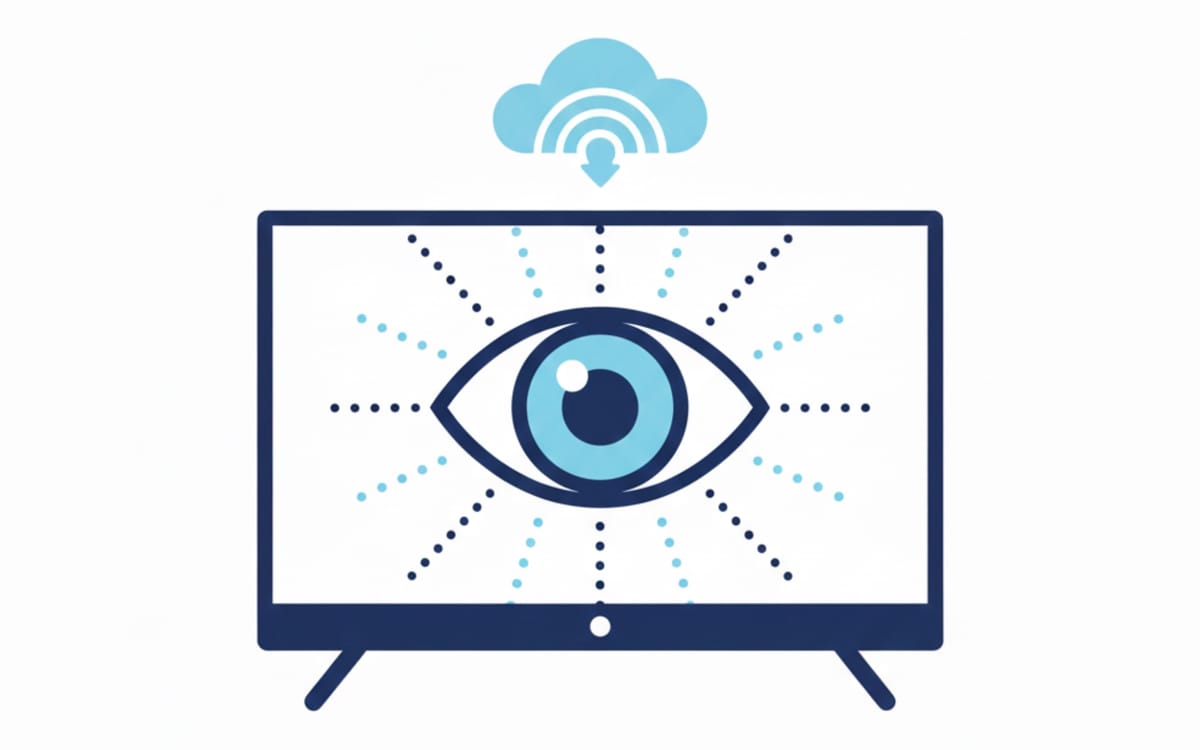
Texas Attorney General Ken Paxton filed a lawsuit against Hisense USA Corporation on December 15, 2025, alleging the television manufacturer secretly surveilled approximately 1.27 million Texans through Automatic Content Recognition technology embedded in smart TVs. The civil complaint, filed in Comal County District Court, represents the first legal action specifically targeting ACR surveillance practices under state consumer protection laws.
According to the petition, Hisense Smart TVs capture audio and video from screens every 500 milliseconds—7,200 images per hour—without adequate consumer knowledge or informed consent. The Chinese state-owned company holds roughly 6% of the U.S. Smart TV installed base, translating to approximately 470,000 Texas households affected by the data collection practices. With an average of 2.7 persons per household, nearly one in twenty Texans lives in a home monitored by Hisense Smart TVs, according to census calculations included in court documents.
The Texas Deceptive Trade Practices Act violations alleged in the lawsuit focus on Hisense's failure to adequately disclose ACR technology presence, misleading labeling of surveillance features as "Enhanced Viewing Services," and insufficient notification that collected data may be transferred to the Peoples Republic of China upon government request. Paxton's office characterizes the devices as "mass surveillance systems sitting in millions of American living rooms" that track everything displayed on screens, including streaming apps, cable content, gaming console activity, and even connected laptop displays.
Subscribe PPC Land newsletter ✉️ for similar stories like this one
ACR technology emerged in 2011 when Shazam demonstrated it could identify TV clips using the same audio fingerprinting algorithm that recognizes music. The technology captures audio and visual data in hundredths of milliseconds to build content "fingerprints" that match against databases of known programming. This identification occurs continuously, creating detailed logs of household media consumption across all inputs and applications.
According to the lawsuit, Hisense's ACR system monitors not just native streaming apps or built-in channels, but also external inputs including cable boxes, satellite receivers, gaming consoles, Blu-ray players, and any device connected via HDMI. The technology captures information even when TVs disconnect from internet service, storing collected data until the device reconnects for firmware updates or other online services.
Nearly three-fourths of U.S. households now own Smart TVs with ACR capabilities, according to industry data cited in court filings. The technology has become a multi-billion-dollar global business since gaining national attention in 2017 when the FTC and New Jersey Attorney General fined Vizio $2.2 million for collecting ACR data on 11 million consumers without proper notice or consent. By 2021, Vizio reported earning more profit from customer data sales than from television sales themselves.
The economic incentives driving ACR adoption explain why Smart TVs have become increasingly affordable over the past decade. Court documents note that "the ACR data collected about consumers is worth as much, or more, than the Smart TVs themselves," transforming television hardware into data collection infrastructure subsidized by advertising revenue.
Texas alleges Hisense employed deceptive consent architecture that manipulates consumer decision-making during television setup. The company labels its ACR system "Enhanced Viewing Service" during initial configuration, only revealing the term "Automatic Content Recognition" after users navigate through twenty-plus clicks of dense legal terminology. This mislabeling fails to put consumers on notice about continuous real-time capturing of every sound and image on their screens.
The petition includes screenshots showing Hisense's forced initial setup process. After thousands of clicks and upwards of 20 minutes navigating through technical, convoluted terms, consumers face only one prominently displayed choice: Accept. Nearly all consumers click Accept simply to finish setup and start watching their new television, according to behavioral patterns described in the lawsuit.
Paxton's office characterizes this as surveillance-by-default design philosophy. Consumers cannot opt out of ACR tracking during initial startup. After accepting the technology with no alternative, users must later navigate through multiple hidden menus—Settings → Privacy → Ads → Delete advertising ID—to disable data collection. The opt-out instructions available online differ from those presented during initial TV setup, creating additional confusion for consumers attempting to exercise privacy choices.
This juxtaposition between one-click enrollment and multi-step opt-out procedures represents what federal regulators term "dark patterns"—interface designs that trick users into sharing more private information than intended. The lawsuit specifically cites "Privacy Zuckering" (tricking consumers into sharing more data than they knowingly agreed to) and "Roach Motel" (making opt-in easy while opt-out becomes extremely difficult) as examples of Hisense's unlawful practices.
The petition argues Hisense's data collection practices far exceed what's reasonably necessary for stated purposes of providing "personalized content" or "targeted advertisements." Personalizing a homepage or recommending shows requires only simple, high-level indicators such as which apps were opened, what genres viewers prefer, and what shows were recently watched within streaming apps that already collect this data.
Capturing ACR fingerprints every 500 milliseconds creates unnecessary surveillance that serves primarily to increase advertising revenue rather than improve consumer experience. The lawsuit notes that minimal ad-supported systems could show non-targeted advertisements without requiring granular behavioral tracking. Alternative approaches exist that are both functional and privacy-preserving, demonstrating Hisense's data collection practices are excessive.
Beyond television viewing itself, Hisense builds detailed consumer profiles that infer highly personal attributes including political leanings, sexual orientation, health interests, marital status, family composition, age demographics, and religious beliefs. These profiles incorporate cross-device linkage, correlating Smart TV data with other online activity and smart devices to facilitate comprehensive behavioral tracking.
The intrusiveness, granularity, continuity, and cross-device nature of Hisense's ACR tracking system enables what court documents describe as "powerful tool for profiling, targeting, and behavioral tracking, often without informed consent." When combined with identifiers, metadata, and network information, ACR data captures or infers highly personal attributes falling under sensitive personal data categories protected by Texas state privacy law and nearly every other privacy regime nationally and internationally.
Buy ads on PPC Land. PPC Land has standard and native ad formats via major DSPs and ad platforms like Google Ads. Via an auction CPM, you can reach industry professionals.
Hisense operates as a Chinese state-owned enterprise controlled by the Qingdao municipal government, according to allegations in the lawsuit. The company was founded in 1969 in Qingdao, China as a radio manufacturer and has since expanded into a technology conglomerate selling electronics in over 130 countries under multiple brand names including Sharp and Toshiba. In 2024, Hisense shipped more than 29.14 million TVs worldwide—a 14% global market share—with stated ambitions to become the number one TV company in the U.S. by 2026.
Chinese law obligates Hisense to share user data with the Chinese Communist Party whenever requested, regardless of purpose. The People's Republic of China National Intelligence Law requires cooperation with state intelligence work. However, Hisense's End User Terms and Conditions state only that the company "may transfer" personal information to the Peoples Republic of China, without disclosing the mandatory nature of such transfers under Chinese security laws.
Paxton's petition emphasizes that nowhere does Hisense inform Texas consumers that every image and sound on their Smart TV will be collected, stored, and shared with the CCP upon request. This omission represents failure to disclose material information that would influence consumer purchasing decisions. The lawsuit argues reasonable consumers would not have purchased Hisense televisions had they known the devices function as "Chinese-sponsored surveillance devices, recording the viewing habits of Texans at every turn without their knowledge or consent."
The potential national security implications extend beyond individual privacy concerns. According to court filings, the CCP may use ACR data to influence or compromise public figures in Texas, including judges, elected officials, and law enforcement personnel, or for corporate espionage by surveilling employees in critical infrastructure roles. These risks form part of what the FBI has characterized as China's long-term strategy to destabilize and undermine American democracy through comprehensive data collection on U.S. residents.
The lawsuit seeks civil penalties of up to $10,000 per violation of the DTPA, with enhanced penalties of up to $250,000 per violation if conduct was calculated to acquire or deprive money or property from consumers aged 65 or older. Given the scale of alleged violations affecting hundreds of thousands of Texas households, potential penalties could reach substantial amounts depending on how courts calculate per-violation damages.
Texas also secured a first-of-its-kind temporary restraining order on December 15, 2025 preventing Hisense from collecting ACR data and from using, selling, sharing, disclosing, or transferring previously collected data about Texans as the case proceeds through courts. Paxton simultaneously filed lawsuits against four other major technology companies operating smart TV platforms, though specific defendants were not disclosed in available court documents.
The Hisense enforcement action occurs amid Texas Attorney General Ken Paxton's broader privacy enforcement initiative, which his office describes as "the largest data privacy and security initiative of any State AG office." Major recent actions include a lawsuit against General Motors for illegally surveilling drivers and sharing data with insurance companies, investigations into Character.AI and Meta for deceptive mental health claims and privacy violations affecting minors, and a historic $1.4 billion settlement with Meta for unlawfully collecting facial recognition data.
The connected TV advertising ecosystem has experienced rapid growth as streaming consumption eclipsed traditional broadcast and cable viewing. Nielsen data from July 2025 showed streaming represented 44.8% of TV viewership while broadcast and cable combined totaled 44.2%—marking the first time streaming surpassed traditional television. This audience shift has intensified advertiser demand for sophisticated targeting capabilities across CTV platforms.
ACR data has become increasingly valuable for advertising as the industry seeks alternatives to third-party cookies and device-level tracking. Multiple partnerships announced throughout 2025 expanded ACR data availability, including Nexxen's integration with The Trade Desk providing self-service access to ACR data segments across United States, United Kingdom, Canada, and Australia markets. LG Ad Solutions has emphasized its ACR technology captures content and ad exposure through privacy-compliant mechanisms, providing second-by-second tracking with household-level accuracy.
However, privacy compliance around ACR technology remains contentious. Industry initiatives focus on consent-based approaches, with partnerships like Utiq and Visoon introducing telco-powered identifiers for HbbTV and CTV platforms that require active user approval before data conversion and identifier creation. The Texas lawsuit suggests existing consent mechanisms fall short of legal requirements when companies fail to adequately disclose surveillance capabilities or bury privacy choices behind complex interface designs.
The Hisense litigation establishes potential precedent for how state consumer protection laws apply to ACR technology and smart TV data collection practices. While federal agencies have pursued limited enforcement against privacy violations—exemplified by the 2017 Vizio settlement and recent $15.3 million Avast refunds—state-level actions may prove more aggressive in addressing surveillance technologies embedded in consumer devices.
Hisense began incorporating ACR into devices in 2019 through Alphonse, Inc., the company that later became LG Ad Solutions. VIDAA, Hisense's proprietary smart TV operating system, powers tens of millions of connected TVs from Hisense, Toshiba, and other brands globally across over 180 countries. Nexxen secured exclusive global ACR data rights and North American ad monetization exclusivity through 2029 in an expanded partnership announced August 11, 2025, with an additional $35 million investment bringing total commitment to $60 million.
The advertising technology infrastructure supporting ACR monetization spans demand-side platforms, ad networks, measurement companies, data brokers, and cross-device graphing companies. Court documents emphasize that sharing data with these third parties is unnecessary for Hisense's core television delivery service, which provides consumers access to streaming services and other viewing experiences. Data sharing occurs primarily to maximize advertising revenue rather than enhance product functionality.
Marketing professionals navigating this landscape face intensifying regulatory scrutiny alongside growing consumer awareness of data collection practices. Consumer trust research shows 65% worry about AI data training while 97% demand transparency from publishers, with only 47% trusting regulators to protect them and hold companies accountable. The intersection of privacy concerns and economic uncertainty suggests successful strategies must balance personalization benefits with user control and transparency requirements.
Children's privacy protections continue expanding, with comprehensive COPPA amendments taking effect June 23, 2025 introducing stringent requirements for data collection from users under 13. These regulations directly impact programmatic advertising practices that previously relied on children's data for targeting, forcing platforms to implement separate consent mechanisms for data sharing with third parties.
Subscribe PPC Land newsletter ✉️ for similar stories like this one
Subscribe PPC Land newsletter ✉️ for similar stories like this one
Who: Texas Attorney General Ken Paxton filed the lawsuit on behalf of the State of Texas against Hisense USA Corporation, a Georgia-incorporated subsidiary of Chinese state-owned Hisense Group headquartered in Suwanee, Georgia. The action affects approximately 470,000 Texas households representing 1.27 million residents who own Hisense Smart TVs.
What: The lawsuit alleges Hisense violated the Texas Deceptive Trade Practices Act by collecting viewing data through Automatic Content Recognition technology that captures audio and video from television screens every 500 milliseconds without adequate consumer disclosure or informed consent. The complaint further alleges Hisense failed to disclose that Chinese law requires sharing collected data with the Peoples Republic of China upon government request, used deceptive labeling calling ACR "Enhanced Viewing Services," and created misleading consent architecture that makes opt-out extremely difficult while defaulting all users to surveillance.
When: Paxton filed the original petition and application for temporary and permanent injunctions on December 15, 2025 in Comal County District Court. The court immediately issued a temporary restraining order the same day preventing Hisense from collecting, using, selling, sharing, disclosing, or transferring ACR data about Texas consumers during pendency of litigation.
Where: The case was filed in Comal County, Texas District Court based on venue grounds that substantial events giving rise to claims occurred in Comal County, Hisense conducted business with retailers and consumers there, and the company advertised and sold Smart TVs at locations throughout the county. Hisense maintains its U.S. presence through authorized distributors in Lewisville, Texas and hundreds of retail locations across the state including Amazon, Best Buy, BJ's Wholesale, Costco, Lowe's, Sam's Club, Target, and Walmart.
Why: The lawsuit exists to protect Texas consumers' right to watch television without secret surveillance or exploitation, according to the petition. The action responds to what Paxton's office characterizes as deliberate violations where Hisense "chose data extraction and advertising dollars over honesty and respect for consumer privacy." The enforcement reflects broader concerns about Chinese government access to American consumer data, mass surveillance capabilities embedded in consumer electronics, deceptive trade practices in the connected TV advertising ecosystem, and inadequate disclosure of data collection practices that would influence reasonable consumer purchasing decisions.