TikTok Pulse suite targets brand-safe trends with new creator and AI tools
TikTok Pulse suite expands with Pulse Tastemakers and Pulse Mentions in 2026, offering contextual ad placement next to top content, creators, and brand conversations.


TikTok Pulse suite expands with Pulse Tastemakers and Pulse Mentions in 2026, offering contextual ad placement next to top content, creators, and brand conversations.
TikTok this week published a full overview of its Pulse advertising suite, detailing four distinct contextual placement products designed to position brand ads next to the platform's highest-performing content - and revealing two additions, Pulse Tastemakers and Pulse Mentions, that will expand availability to US and Canadian advertisers through the second and third quarters of 2026.
The announcement, dated March 24, 2026, arrives as contextual advertising and brand safety continue to be central concerns for media buyers. It formalizes how TikTok is structuring its premium inventory strategy across publisher content, user-generated trends, brand conversations, and creator videos.
Four offerings make up the Pulse suite. Each targets a different content environment within TikTok's For You feed.
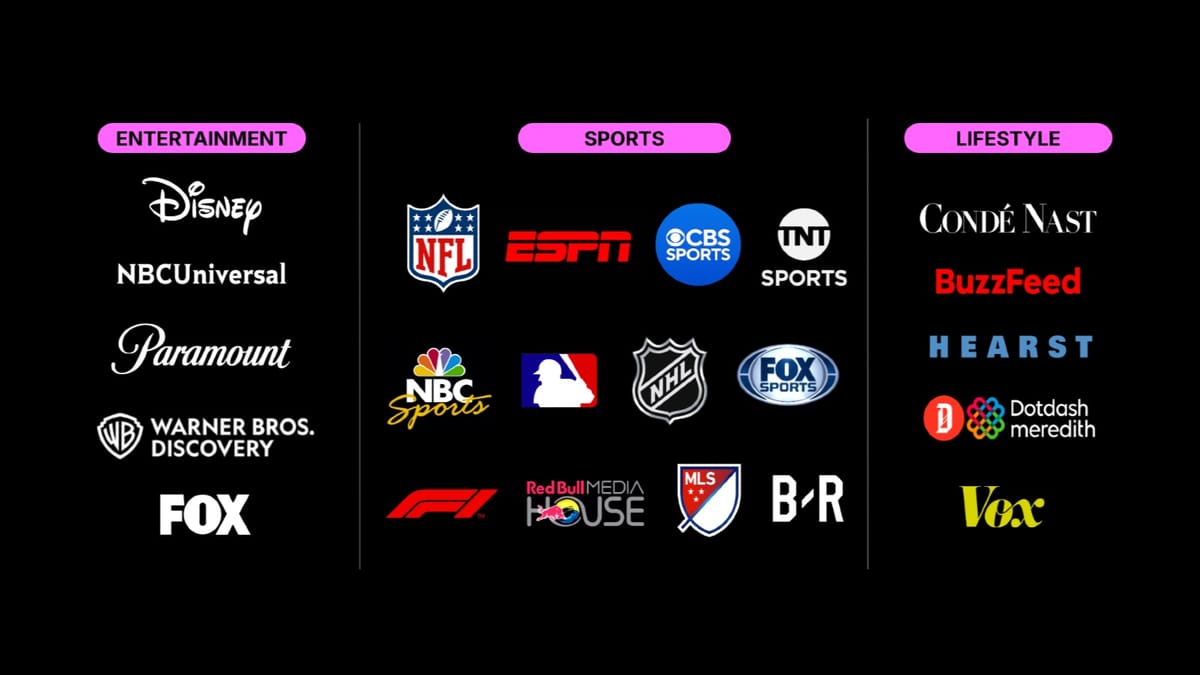
Pulse Premiere gives advertisers the ability to place ads adjacent to content from named media partners. The current list of Premiere publishers includes NBCUniversal, Condé Nast, Paramount, Warner Bros. Discovery, Formula 1, Red Bull Media, BuzzFeed, Disney, People Inc., Hearst, MLS, NFL, NHL, and Vox. Placements are available either tied to specific tentpole events or as an always-on presence across the year.
Pulse Core is the volume product. According to TikTok, it places brand ads next to the top 4% of trending, brand-safe user-generated content, as identified by something called the Pulse Score. Four types of Pulse Core inventory are available: Max Pulse, which runs across all categories for maximum reach; Category Lineups, which are pre-built selections around topics like Beauty & Personal Care or Sports & Recreation; Seasonal Lineups built around moments such as Thanksgiving or the Holiday Season; and Custom Lineups, which are described as bespoke collections of trending content "curated with the help of Generative AI to fit your specific marketing needs." Custom Lineups are now available in Canada.
TikTok's internal data, covering January through March 2025 in the US, indicates that Pulse Core campaigns are on average more than 100 times more likely to appear adjacent to trending topics than other campaign types running in the same period. That figure is notable, though it comes from TikTok's own measurement rather than third-party verification.
Pulse Mentions is a newer targeting approach. It places ads next to content where users are actively discussing a brand or its category - capturing what TikTok describes as high-intent conversations as they form. According to the announcement, Pulse Mentions is currently available to US-based advertisers and will expand to select Canada-based advertisers in Q2 2026.
Pulse Tastemakers is the most recent addition. It places ads immediately after videos from a hand-selected group of individual creators. The intent is to allow brands to associate with specific personalities and their audiences, rather than content categories or publisher brands. Pulse Tastemakers will be available to select US-based advertisers in Q2 2026 and select Canada-based advertisers in Q3 2026.
TikTok grounds the suite in two pieces of external research. According to a study conducted by WARC titled "Business Impact Through Relevance," carried out in the US, UK, and Australia in August 2024, 58% of consumers pay more attention to ads that are culturally relevant. The same study found that 71% pay more attention to ads that are personally relevant. A separate WARC and TikTok consumer survey from August 2024, among 974 respondents who had used TikTok, Instagram, YouTube, and Facebook in the past two weeks, found that 76% of social and video platform users said TikTok is the platform they are most likely to visit to discover new and emerging trends in culture - placing it first among those platforms.
These figures underpin TikTok's commercial argument: that cultural proximity drives measurable advertising attention, and that Pulse products are the mechanism to achieve it at scale.
Perhaps the most operationally useful number in today's release is a reach claim tied to budget allocation. According to TikTok's internal data science team, drawing on an analysis of 519 US campaigns run between July and October 2025, each 1% allocation of an advertiser's total budget to TikTok Pulse delivers 2.4% exclusive reach in addition to whatever reach their other ad placements already generate. The finding positions Pulse not as a replacement for standard in-feed advertising but as an incremental reach layer that compounds returns from the broader media mix.
The framing matters. TikTok is not asking advertisers to shift budget entirely into Pulse; it is suggesting that even a small percentage allocation unlocks audience segments that other placements - across all formats - would not otherwise reach.
The Pulse suite sits within a broader brand safety infrastructure that TikTok has been building since at least 2022, when it earned TAG certification against ad fraud and for brand safety. Pulse Core's promise - that ads appear next to the top 4% of brand-safe content - depends on TikTok's Pulse Score methodology working as described. The document does not detail the technical criteria underlying that score, nor does it specify what happens when content that was trending when the ad was placed subsequently develops issues.
TikTok has expanded brand suitability tools significantly since then. In April 2024, the platform introduced Category Exclusion, Vertical Sensitivity controls, and a unified Brand Safety Hub within TikTok Ads Manager, giving advertisers the ability to exclude specific content verticals before campaigns run. A year later, in April 2025, TikTok added the Video Exclusion List and Profile Feed Exclusion List, enabling near real-time exclusion of specific videos and creator profiles from ad adjacency. Simultaneously, DoubleVerify launched pre-bid video exclusion lists for TikTok on April 14, 2025, allowing advertisers to block placements before bidding rather than after measurement.
Pulse Tastemakers adds a different dimension to brand safety: instead of blocking unsuitable content, it selects a curated set of creators whose content is explicitly approved in advance. The "hand-selected" language in today's announcement suggests a manual or semi-manual curation process rather than purely algorithmic selection, which may matter to advertisers whose brand suitability requirements go beyond category-level controls.
The use of generative AI in Custom Lineups for Pulse Core marks a specific technical choice. TikTok describes it as helping curate bespoke lineups of trending, brand-suitable content. This application follows a pattern of TikTok expanding AI-assisted tools across its advertising products. In January 2025, the platform integrated generative AI into its Video Editor tool within TikTok Ads Manager, adding automated soundtracks, voice cloning for translations, and caption generation. In January 2026, TikTok then upgraded Smart+ with a creative auto-selection feature that pulls from existing advertiser assets and pre-approved creator content sourced through TikTok One.
What distinguishes the Custom Lineups use case is that generative AI is being applied to content selection and editorial curation rather than creative production. The system, as described, identifies content that fits a marketer's specific brief from within TikTok's trending top 4%, then assembles a bespoke inventory package from it. The announcement does not specify the model architecture, the degree of human review in that process, or how quickly lineups update as trending content changes.
Pulse Tastemakers represents TikTok's most direct attempt to monetize the proximity of specific creators without requiring the formal branded content partnerships that characterize influencer marketing. Ads appear immediately after videos from the selected creator set - not inside the creator's content, but in the adjacent slot. The creator presumably benefits from being included in a curated group; advertisers benefit from audience association; TikTok generates revenue from the placement.
This structure navigates a tension that France's competition authority, the Autorité de la concurrence, identified in a February 2026 opinion. The authority found that platforms including TikTok could use algorithmic control to push advertisers toward direct inventory rather than sponsoring creator content, and warned that such behaviour could raise concerns under EU competition law. Pulse Tastemakers is not identical to that scenario - it does not replace creator sponsorship deals, and creators are described as hand-selected rather than algorithmically ranked for advertising value - but the structural dynamic is related. Brands pay TikTok for adjacency to creator content rather than paying creators directly for branded integration.
The TikTok brand awareness study with Tracksuit, published in October 2024, found that high-awareness brands achieve 2.86 times the conversion rate of low-awareness brands on the platform. Pulse Tastemakers, by connecting brand ads to specific trusted creators, is positioned to contribute to that awareness-building layer.
The expansion of Pulse Mentions and Pulse Tastemakers into Q2 and Q3 2026 raises a practical planning question for media buyers. Both products carry select availability initially, which means access will likely depend on existing relationships with TikTok sales representatives and early commitment to test budgets. For brands managing campaigns across multiple social platforms, the Pulse suite introduces a new inventory category - contextual premium adjacency - that sits between standard in-feed advertising and formal influencer deals.
The incremental reach figure - 2.4% exclusive reach per 1% of budget allocated - provides a calculation that media planners can apply to existing campaign models. At scale, for advertisers spending significant budgets on TikTok, that ratio translates to meaningful audience expansion. Whether the audiences unlocked through Pulse adjacency convert at rates comparable to intent-driven placements like TikTok's Search Ads Campaign, introduced in September 2024, is a separate measurement question that the announcement does not address.
Platform-side research consistently supports its own products. That is not unusual - Google, Meta, and Amazon produce similar internal studies. What distinguishes the Pulse data is that TikTok is using external research from WARC for the consumer attention claims while using internal data for the reach multiplier. The distinction matters for marketers evaluating how much weight to give each number.
The four-product structure of the Pulse suite - publisher content, trending UGC, brand conversation, and creator adjacency - maps to different stages of the marketing funnel and different risk profiles. Pulse Premiere, with named publishers like the NFL and NBCUniversal, carries the most transparent brand safety profile. Pulse Core, at scale across UGC, carries the broadest reach but relies most heavily on TikTok's internal scoring. Pulse Mentions targets commercial intent directly. Pulse Tastemakers bets on creator equity.
Together they represent TikTok's attempt to offer advertisers a range of contextual targeting options that the standard in-feed auction cannot provide, at a moment when contextual advertising has gained renewed importance as third-party cookies continue to deprecate across browsers and devices.
Who: TikTok for Business, publishing details addressed to advertisers and media buyers globally, with specific availability expansions for US-based and Canada-based advertisers.
What: A consolidated overview of the TikTok Pulse advertising suite, comprising four contextual placement products - Pulse Premiere (named publisher content), Pulse Core (top 4% of trending UGC scored by the Pulse Score), Pulse Mentions (brand conversation adjacency), and Pulse Tastemakers (hand-selected creator adjacency). The announcement confirms that Custom Lineups in Pulse Core now use generative AI for curation and are available in Canada, that Pulse Mentions is live for US advertisers and expands to select Canadian advertisers in Q2 2026, and that Pulse Tastemakers launches for select US advertisers in Q2 2026 and select Canadian advertisers in Q3 2026. TikTok cites internal data claiming each 1% of budget allocated to Pulse delivers 2.4% exclusive incremental reach, based on 519 US campaigns between July and October 2025.
When: The announcement was published on March 24, 2026. The internal data supporting reach claims covers July to October 2025. Consumer research from WARC dates to August 2024.
Where: TikTok's For You feed serves as the placement environment for all Pulse products. Geographic availability currently centers on the United States, with Canada expansions for Pulse Mentions in Q2 2026 and Pulse Tastemakers in Q3 2026. Custom Lineups in Pulse Core are now available in Canada.
Why: TikTok is positioning the Pulse suite as a solution to the challenge of standing out in the For You feed by associating brand advertising with high-quality, culturally relevant content. The suite addresses advertiser demand for contextual targeting in an environment where third-party audience data is increasingly constrained. By offering four distinct contextual environments - from named premium publishers to specific trending creators - TikTok is building a tiered premium inventory structure that generates incremental revenue alongside standard in-feed auction inventory, while providing advertisers with documented audience reach metrics to justify allocation decisions.