Deep Sync and MiQ cut voter data activation from days to hours
Deep Sync and MiQ expand their programmatic political advertising partnership for 2026 midterms, promising voter data activation in under one hour and 53% more reach.


Deep Sync and MiQ expand their programmatic political advertising partnership for 2026 midterms, promising voter data activation in under one hour and 53% more reach.
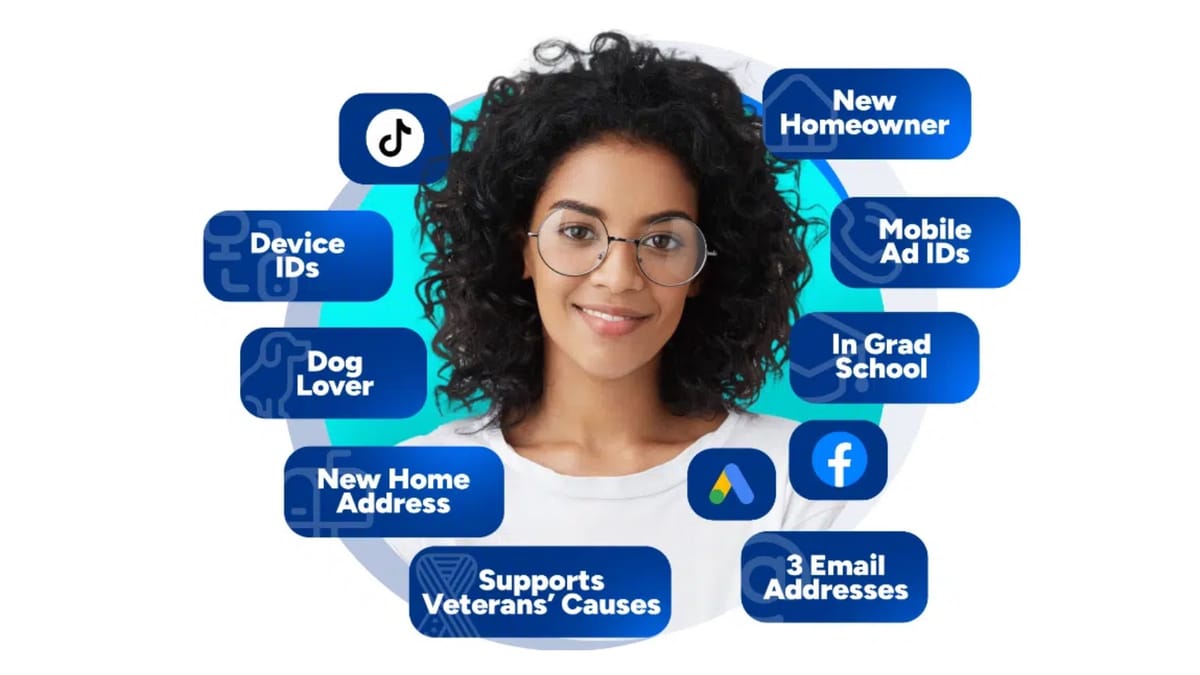
Deep Sync, a Kirkland, Washington-based identity resolution company, announced on April 2, 2026, an expanded partnership with global programmatic media company MiQ to help political campaigns move voter data into live digital advertising faster than traditional workflows allow. The collaboration targets the 2026 U.S. midterm election cycle, which is shaping up as one of the most data-intensive in American political advertising history.
The core technical problem the partnership addresses is deceptively simple to describe but operationally demanding in practice. Political campaigns hold voter file data - lists of registered voters with demographic, geographic, and behavioral attributes - but converting those offline records into addressable digital audiences that can run on platforms like Meta, TikTok, or connected television has historically taken days. According to the companies, the expanded workflow brings that process down to hours, with matching and onboarding completing in under one hour in many cases.
Deep Sync's technology relies on what the company calls deterministic identity resolution - a methodology that links offline voter records to specific digital identifiers with a high degree of certainty, rather than relying on probabilistic inference. According to the press release, the system converts first-party voter datasets into privacy-safe digital identifiers, enabling campaigns to build identity-driven, addressable audiences. Those audiences can then be activated across The Trade Desk, Meta, TikTok, Google Ads, and DV360.
The distinction between deterministic and probabilistic identity matters for political advertising in particular. Probabilistic systems estimate whether a digital profile corresponds to a given voter based on behavioral signals and statistical models. Deterministic systems, by contrast, match directly against verified offline records - hashed emails, phone numbers, and other persistent identifiers that link a real person to a digital profile. For campaigns that need to reach specific registered voters in a specific congressional district, the precision difference is material.
According to the announcement, Deep Sync's platform increases addressability to key programmatic platforms by approximately 25% on average across campaigns. On live campaigns, that figure rises to approximately 120%. The range is wide because addressability gains depend heavily on the quality and recency of the underlying voter file data, the saturation of digital identifiers in a given geographic market, and how recently the campaign's audience was refreshed against current registration records.
Identity resolution can also expand campaign reach through household-level linkage. By connecting individual voter records to household-level identity signals, campaigns can extend their addressable pool beyond the specific registered voter to reach other members of the same household - a relevant capability for campaigns targeting issues that affect families rather than individual voting behavior.
Deep Sync describes its infrastructure as powering approximately 5% of all mail delivered annually in the United States, a figure the company presents as evidence of the scale and reliability of its underlying identity data. Mail delivery relies on the same kinds of address and identity matching that digital audience activation requires, making the postal data footprint a proxy for the breadth of the company's identity graph.
Once Deep Sync prepares the identity-matched audience segments, MiQ handles the programmatic activation side. According to the announcement, audiences prepared through the partnership can be deployed through MiQ's programmatic capabilities in under 48 hours. The incremental reach improvements reported from the 2024 cycle reached up to approximately 53%.
MiQ, founded in 2010 in London and now operating out of more than 33 offices worldwide, runs its programmatic business around an AI-powered operating system called Sigma. The platform processes data science and proprietary signals to optimize campaign delivery across connected TV, digital video, and other programmatic environments. MiQ has been active across multiple technology partnerships in the past year, including a March 2026 acquisition of Adsmovil's Latin America business that created what the companies described as the largest independent programmatic offering in that region.
For political advertising specifically, MiQ has established a dedicated division. Jesse Contario, Regional Vice President, Southeast and Political at MiQ, is cited directly in the press release. "Political campaigns need scale and speed in their media investments," Contario said. "Our work with Deep Sync helps campaigns translate high-quality identity data into real programmatic performance during the 2024 election cycle, and we're bullish on the opportunity ahead in 2026."
MiQ's political division has become a recurring activation partner in the broader 2026 programmatic political ecosystem. In March 2026, Comscore and Yahoo DSP announced Proximic Political Audiences, a product combining Comscore's verified linear television exposure data with Yahoo DSP's identity matching for CTV targeting - with MiQ designated as a primary activation partner for agencies and campaigns running political accounts. That product draws on Yahoo ConnectID, which reaches 232 million logged-in users in the United States.
The September 2025 launch of Comscore's AI-powered Data Partner Network also featured MiQ as an early adopter, with MiQ reporting 30% stronger engagement when using Comscore predictive segments compared to traditional ID-based segments across CTV campaigns.
The expanded partnership builds on work the two companies conducted during the 2024 U.S. election cycle. The specific figure cited - incremental reach improvements of up to approximately 53% - comes from live campaign performance during that cycle, where the combination of Deep Sync's identity-matched audiences and MiQ's programmatic delivery reportedly allowed campaigns to reach substantially more of their target voters than standard digital audience workflows.
The 53% figure refers to incremental reach: voters reached through the Deep Sync/MiQ workflow who would not have been reached through conventional programmatic targeting methods. For a campaign spending a fixed budget on digital advertising, an incremental reach improvement of that magnitude represents a significant efficiency gain, since the additional voters are being reached without additional spend - the same budget covers a larger share of the target universe.
The 2024 cycle also surfaced a persistent industry challenge around data accuracy in voter targeting. Research published in November 2025 by Truthset, examining records from six major data vendors, found that IP address matching produces accuracy rates of only 16% for email matches and 13% for postal matches - figures that raised serious questionsabout the reliability of probabilistic targeting methods commonly used in digital advertising. Deep Sync's emphasis on deterministic matching is partly a response to this class of problem: deterministic systems are designed to produce higher-confidence matches, at the cost of lower overall scale when verified identifiers are unavailable.
Pieter De Temmerman, CEO of Deep Sync, is quoted directly in the announcement. "Political campaigns require speed, precision, and the ability to activate voter data quickly," De Temmerman said. "Our partnership with MiQ helps agencies translate voter data into addressable digital audiences that can be deployed across modern media channels."
The emphasis on speed is not incidental. Political campaigns operate under compressed timelines that commercial advertisers rarely face. A campaign that decides to shift its messaging after a candidate debate, a news event, or a polling change needs to update its digital targeting within hours - not days. A workflow that takes three to five business days to move voter data into live programmatic campaigns is structurally disadvantaged relative to one that completes the same process in under 48 hours.
The fragmentation of the digital media landscape adds further pressure. Voters are reachable across Meta, TikTok, connected television, programmatic display, and digital video - each requiring separate audience activation processes. A centralized identity resolution layer that can prepare audiences for simultaneous deployment across multiple platforms reduces the operational overhead for campaign agencies managing multiple channels simultaneously.
2026 U.S. midterm digital ad spending is projected to break records, according to the companies. The midterm cycle brings contested House, Senate, and gubernatorial races across dozens of states, creating demand for geographically precise targeting at the local market level. Unlike presidential elections, midterm campaigns often operate with smaller budgets concentrated in specific media markets - which places a higher premium on targeting efficiency.
The political advertising market is also navigating a complex regulatory environment. In September 2025, the Digital Advertising Alliance filed an amicus brief in a Washington State Supreme Court case defending a digital advertising company facing a $35 million fine for alleged violations of the state's Fair Campaign Practices Act. The case illustrated the tension between campaign targeting practices and state-level disclosure requirements, with major platforms including Facebook, Google, and X having suspended political advertising in Washington rather than comply with the state's requirements.
The Deep Sync/MiQ workflow, which uses deterministic identity resolution against voter file data, operates within a different regulatory frame than general commercial digital advertising. Voter files are public records in the United States, and their use in political advertising is long established. The privacy framing in the announcement centers on converting voter data into "privacy-safe digital identifiers" - meaning the process generates hashed or tokenized signals rather than transmitting raw personally identifiable information to advertising platforms.
For digital advertising professionals, the Deep Sync/MiQ partnership illustrates a broader shift in how identity resolutionfunctions as infrastructure rather than a campaign-by-campaign capability. The direction across the industry - visible in partnerships between TransUnion and Viant, ID5 and Future Today, LiveRamp and Amazon Ads, and the Comscore Data Partner Network - is toward pre-built identity matching that can be activated quickly rather than rebuilt for each campaign.
PPC Land has covered the identity resolution space extensively, including the IAB Tech Lab's 2024 guide to identity solutions in a cookieless environment, which laid out the technical distinctions between deterministic and probabilistic approaches and their respective trade-offs for programmatic advertising. The same infrastructure questions that apply to commercial programmatic - match rates, addressability, scale, and privacy compliance - apply directly to political campaign activation, with the added dimension of compressed timelines.
The identity resolution challenge is also playing out at a standards level. W3C moved Decentralized Identifiers (DIDs) v1.1 to Candidate Recommendation status in March 2026, a development that carries longer-term implications for how identity signals flow across the digital advertising supply chain. In the nearer term, the practical question for political campaigns is whether their voter file data can be matched quickly enough and at sufficient scale to matter during a compressed campaign window.
Deep Sync's claim of matching and onboarding in under one hour addresses exactly that constraint. Whether the performance holds consistently across campaigns of different sizes, in different geographic markets, and with voter files of varying data quality is a question that the 2026 cycle will test at scale.
Who: Deep Sync, a Kirkland, Washington-based deterministic identity resolution company led by CEO Pieter De Temmerman, and MiQ, a global programmatic media company founded in 2010 in London and operating from more than 33 offices worldwide, with MiQ's political division led by Regional Vice President Jesse Contario.
What: An expanded partnership connecting Deep Sync's deterministic voter data identity resolution technology with MiQ's programmatic activation and analytics capabilities. The workflow converts first-party voter file data into privacy-safe digital identifiers in under one hour and deploys those audiences across programmatic channels including The Trade Desk, Meta, TikTok, Google Ads, DV360, connected TV, and digital video in under 48 hours. The companies reported incremental voter reach improvements of up to approximately 53% during the 2024 election cycle.
When: The expanded partnership was announced on April 2, 2026, targeting the 2026 U.S. midterm election cycle. The underlying collaboration began during the 2024 U.S. election cycle.
Where: The partnership is based in the United States and targets digital advertising platforms where American voters are reachable, including Meta, TikTok, connected television, The Trade Desk, Google Ads, and DV360. Deep Sync is headquartered in Kirkland, Washington; MiQ is headquartered in London with operations across more than 33 offices globally.
Why: Political campaigns operating under compressed timelines need to translate voter file data into live digital advertising faster than traditional workflows allow. Converting voter data to active programmatic audiences has historically taken days; the Deep Sync/MiQ workflow is designed to reduce that to hours. With 2026 midterm digital ad spending projected to break records and competition for voter attention intensifying across fragmented digital channels, the speed of audience activation has become a structural variable in campaign effectiveness.