DIRECTV makes its live TV network available for programmatic DOOH buying
DIRECTV enables programmatic access to its digital out-of-home inventory through Place Exchange, Basis, and The Trade Desk for the first time at CES 2026.


DIRECTV enables programmatic access to its digital out-of-home inventory through Place Exchange, Basis, and The Trade Desk for the first time at CES 2026.
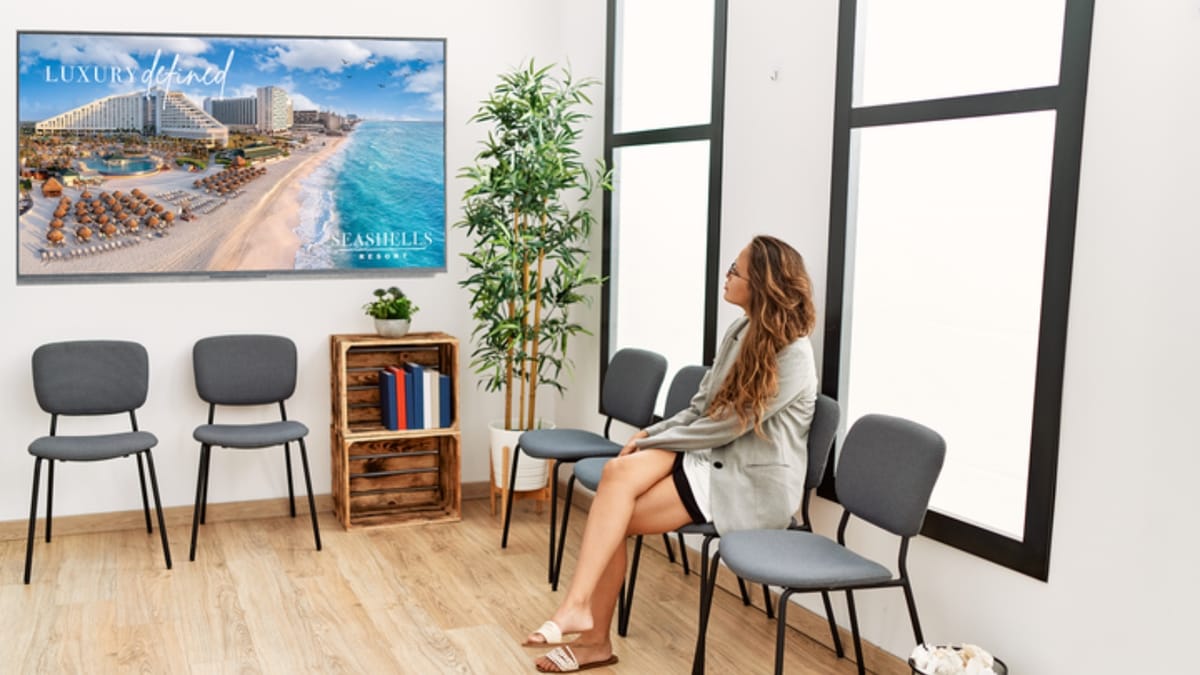
DIRECTV Advertising announced on January 7, 2026, at CES in Las Vegas that it would open its digital out-of-home network to programmatic buying for the first time, bringing live television environments in commercial establishments to demand-side platforms including Basis and The Trade Desk.
The announcement marks a shift from DIRECTV Remote's previous direct-sales approach to automated buying infrastructure, enabling advertisers to access live TV screens in offices, waiting rooms, retail shops, salons, bars, restaurants, and premium hotels through the same workflows they use for other programmatic channels. In-flight inventory across major airlines will remain available exclusively through managed service relationships rather than programmatic access.
DIRECTV launched its Remote network at CES in 2025, building upon the company's nationwide footprint of commercial establishments. The network expanded significantly following DIRECTV FOR BUSINESS's national rollout of its streaming television solution designed specifically for small businesses, providing the scale necessary for programmatic infrastructure implementation.
Subscribe PPC Land newsletter ✉️ for similar stories like this one
"When it comes to TV, it's no longer just about the destination, it's about the journey – and brands can now meet consumers at every step along the way," said Amy Leifer, Chief Advertising Sales Officer at DIRECTV Advertising, in the announcement.
The programmatic enablement operates through Place Exchange by Broadsign, which functions as the supply-side platform connecting DIRECTV Remote inventory to demand-side platforms. Advertisers access the inventory through platforms including Basis and The Trade Desk, with DIRECTV planning to expand availability to additional DSPs during the first quarter of 2026.
Place Exchange's PerView measurement solution will deliver impression, reach, and frequency metrics for DIRECTV Remote campaigns purchased both programmatically and through direct relationships. The measurement framework aligns with Out of Home Advertising Association of America guidelines and utilizes what the company describes as deterministic mobile device data updated continuously to reflect current viewing patterns.
"DOOH is increasingly becoming integrated into omnichannel strategies, and premium video in out-of-home environments is a perfect complement to in-home viewing to reach audiences wherever they are watching TV," said Dave Etherington, Chief Commercial Officer at Place Exchange by Broadsign. Major sporting events are driving unprecedented demand for live television inventory in out-of-home environments, according to Etherington's statement.
The timing coincides with broader market trends favoring video formats within digital out-of-home advertising. Place Exchange by Broadsign's Programmatic OOH Trends Report indicates screen and television spending recently surpassed billboard spending as the largest asset category in programmatic out-of-home transactions, reflecting increased demand for video advertising environments outside traditional home viewing contexts.
DIRECTV Advertising previously expanded programmatic access to its premium television platform during 2024 by opening inventory across both satellite and streaming distribution to automated buying platforms. That infrastructure buildout included innovative formats such as pause advertisements, effectively doubling the amount of brand-safe DIRECTV streaming inventory available through programmatic channels.
Katie McAdams, Chief Marketing Officer at Basis, characterized the development as extending DIRECTV's programmatic strategy beyond home viewing environments. "Programmatic buying on digital out-of-home video is yet another way DIRECTV Advertising is connecting brands with customers in real-world moments at scale," McAdams stated. "Now with programmatic access to out-of-home screens with DIRECTV, Basis is empowering marketers with true omnichannel reach and advertising automation to optimize media investments."
The announcement reflects accelerating infrastructure development across the programmatic digital out-of-home sector throughout 2025 and into 2026. Place Exchange launched Programmatic Guaranteed for DOOH within Google's Display & Video 360 in December 2025, enabling advertisers to secure premium inventory with predetermined pricing and placement certainty while maintaining programmatic workflow efficiency.
Broadsign enabled advance booking capabilities through StackAdapt in November 2025, introducing programmatic guaranteed transactions to North American markets. That partnership eliminated manual negotiation processes typical of traditional outdoor advertising purchases while providing inventory certainty advertisers require when planning campaigns around specific events.
The Trade Desk has positioned itself as a leading independent demand-side platform throughout 2025 despite competitive pressures. The company joined the S&P 500 index in July 2025, becoming the first independent advertising technology company to achieve that status in approximately 20 years. The platform processed $12 billion in gross spend during fiscal year 2024 while maintaining customer retention rates exceeding 95%.
Connected television and video inventory represent The Trade Desk's fastest-growing channels, accounting for nearly 50% of total platform spend according to recent financial disclosures. The company launched Deal Desk in June 2025 to improve transparency in programmatic advertising relationships through AI-powered deal analysis, addressing persistent inefficiencies in strategic partnerships between advertisers and publishers.
Buy ads on PPC Land. PPC Land has standard and native ad formats via major DSPs and ad platforms like Google Ads. Via an auction CPM, you can reach industry professionals.
Programmatic digital out-of-home adoption demonstrates steady growth across global markets, supported by standardization efforts and infrastructure development. Google implemented new requirements for Connected TV and DOOH inventory in May 2025, establishing technical parameters publishers must include in ad requests for programmatic monetization. Those requirements included mandatory screen location parameters and session identifiers specifically for DOOH implementations.
IAB Australia released a comprehensive programmatic DOOH buyers guide in August 2025 to address agency knowledge gaps preventing larger investment allocations. The guide noted that 36% of surveyed marketing professionals cited lack of understanding as the primary barrier to programmatic DOOH adoption. Australia maintains 26,000 screens available for programmatic campaigns, representing 80% of total digital screens accessible through automated buying infrastructure.
The integration of DOOH into omnichannel demand-side platforms represents maturation of the outdoor advertising sector. Previously, DOOH campaigns often required separate planning tools and buying processes, creating operational inefficiencies for advertisers seeking to coordinate outdoor campaigns with other digital channels. The shift toward unified platform approaches enables consistent measurement and optimization tools across multiple advertising environments.
Programmatic DOOH delivers significantly better carbon efficiency compared to traditional digital advertising formats, according to sustainability measurements from VIOOH reported in November 2025. The platform achieved 0.041g CO2e per impression in 2024, operating more than 20 times more carbon efficiently than programmatic display advertising and over 30 times more efficiently than programmatic video.
The broadcast nature of digital out-of-home advertising drives this sustainability performance. A single DOOH advertisement reaches multiple viewers simultaneously in high-traffic locations, distributing energy consumption across numerous impressions. This contrasts fundamentally with display and video advertising, where each impression requires individual data transmission to specific devices.
Search budgets have begun shifting toward alternative digital channels including paid social, audio, connected television, and DOOH, according to December 2025 analysis from Intentsify. Generative AI tools are placing sustained pressure on traditional search advertising, prompting marketers to diversify channel investments across formats that can integrate sophisticated targeting capabilities with content quality controls.
The marketing community should monitor this development for several operational implications. Programmatic access to live television environments in commercial establishments extends advertiser reach beyond home viewing contexts into moments when audiences engage with content outside residential settings. The ability to purchase this inventory through existing demand-side platforms eliminates separate workflow requirements that have historically characterized outdoor advertising operations.
DIRECTV's programmatic DOOH inventory provides access to premium live television environments rather than standard digital screen placements. This distinction matters for advertisers seeking brand-safe contexts with inherent audience attention. Commercial establishments displaying live sports, news, and entertainment programming create viewing environments fundamentally different from typical digital signage deployments showing only advertising content.
The PerView measurement system addresses verification challenges that have limited programmatic DOOH adoption. Real-time audience data collection through deterministic mobile device signals enables dynamic calculation of reach, frequency, and impression metrics comparable to measurement standards used for connected television and digital video campaigns. This measurement consistency facilitates cross-channel performance comparison within unified reporting dashboards.
Basis Technologies has expanded its programmatic infrastructure integration throughout 2025. The company announced a partnership with Mediaocean on January 6, 2026, linking programmatic advertising with enterprise planning, ordering, trafficking, measurement, and financial systems. That integration enables automated synchronization between contracted spend and delivered performance, addressing discrepancies that historically required extensive manual intervention.
The convergence of live television content with programmatic buying infrastructure represents continuing platform consolidation within advertising technology. FreeWheel unified its CTV product ecosystem in April 2025 with new suite names and enhanced capabilities, while multiple platforms have introduced programmatic guaranteed buying methods to satisfy advertiser demands for inventory certainty alongside automation benefits.
DIRECTV's expansion into programmatic DOOH occurs as the company continues developing innovative advertising formats across its streaming infrastructure. Rose McGovern, Head of Programmatic at DIRECTV Advertising, previously highlighted the unique engagement potential of pause advertising, noting that viewer interactions with content create high-attention moments for brand messaging delivery.
The commercial establishment footprint provides DIRECTV with differentiated inventory compared to static outdoor advertising placements. Offices, waiting rooms, retail environments, salons, restaurants, and hotels represent captive audience scenarios where dwell time exceeds typical outdoor advertising exposure durations. These extended viewing opportunities enable different creative approaches compared to billboard campaigns designed for brief exposure windows.
Premium hotel inventory scheduled for availability later in 2026 will extend DIRECTV Remote's reach into hospitality environments where business travelers and vacation audiences engage with television programming during extended stays. This inventory type has historically commanded premium pricing in direct sales contexts due to demographic composition and extended exposure opportunities.
The first-quarter timeline for expanded DSP availability suggests DIRECTV intends rapid scale-up of programmatic access. Place Exchange by Broadsign operates as a leading supply-side platform for programmatic out-of-home media, featuring what the company characterizes as the largest footprint of OOH media worldwide. Integration with multiple demand-side platforms enables competition for inventory through real-time bidding processes similar to other programmatic channels.
The announcement validates industry predictions that video would become the dominant format category within programmatic digital out-of-home advertising. Screen-based inventory now surpasses static billboard spending in programmatic transactions, according to Place Exchange trend analysis. This shift reflects advertiser preferences for motion, sound, and content integration capabilities that video formats provide compared to static imagery.
DIRECTV FOR BUSINESS's streaming television solution for small businesses created the distribution infrastructure necessary for programmatic scale. Traditional satellite-based commercial installations required complex hardware deployments, while streaming distribution enables faster rollouts across diverse establishment types. This technology shift parallels broader industry transitions from broadcast infrastructure to internet-enabled content delivery.
The measurement methodology utilizing deterministic mobile device data addresses privacy concerns while providing impression verification. Session identifiers enable frequency capping without requiring persistent user tracking, aligning with regulatory frameworks governing consumer data collection and usage. This privacy-preserving approach satisfies advertiser needs for campaign measurement while respecting consumer privacy preferences.
Place Exchange's Clear certification program delivers buyers quality, consistency, transparency, and compliance standards across participating inventory sources. These verification protocols have become increasingly important as programmatic DOOH scales, with buyers demanding assurances comparable to verification standards used for connected television and digital video campaigns.
The competitive dynamics within demand-side platforms continue evolving throughout late 2025 and into 2026. The Trade Desk implemented workforce adjustments in December 2025, dismissing approximately 39 employees during an all-hands meeting. Those layoffs occurred almost exactly one year after the company implemented what CEO Jeff Green described as its biggest organizational restructuring.
Basis Technologies operates as a unified advertising platform delivering integrated applications spanning planning, operations, reporting, and financial reconciliation across programmatic, publisher-direct, search, and social channels. The company functions as what it describes as a command center for agencies and brands, enabling leaders to increase efficiency and productivity by closing system gaps and automating workflows.
DIRECTV's decision to enable programmatic access represents strategic recognition that automated buying infrastructure has become the expected transaction method for digital advertising inventory. Advertisers increasingly demand unified platforms capable of managing complex, multi-channel operations at scale rather than navigating separate systems for each advertising format and inventory source.
The development positions DIRECTV Remote as complementary inventory to the company's home-based streaming and satellite advertising products. Omnichannel strategies increasingly emphasize reaching audiences across multiple contexts throughout daily routines rather than concentrating budgets exclusively in home viewing environments. This fragmentation of audience attention across locations requires corresponding fragmentation of inventory access points.
Industry consolidation continues reshaping the programmatic advertising landscape. Direct publisher relationships appear increasingly favored over complex supply chains involving multiple intermediaries, with transparency advocates emphasizing simplified transaction paths that reduce costs and improve auction visibility for buyers.
Subscribe PPC Land newsletter ✉️ for similar stories like this one
Subscribe PPC Land newsletter ✉️ for similar stories like this one
Who: DIRECTV Advertising, in partnership with Place Exchange by Broadsign, Basis, and The Trade Desk, announced the programmatic availability of its digital out-of-home network.
What: DIRECTV Remote inventory became available for programmatic purchase through multiple demand-side platforms for the first time, enabling automated buying of live television screens in commercial establishments including offices, waiting rooms, retail shops, salons, bars, restaurants, and premium hotels. The company will utilize Place Exchange's PerView measurement solution for impression tracking.
When: The announcement occurred on January 7, 2026, at CES in Las Vegas, with plans to expand DSP availability throughout the first quarter of 2026.
Where: The programmatic inventory spans DIRECTV's nationwide footprint of commercial establishments across the United States, with premium hotel inventory scheduled for later in 2026. In-flight inventory across major airlines remains available exclusively through managed service relationships.
Why: The programmatic enablement addresses growing demand for unified omnichannel advertising workflows, allowing brands to reach television audiences outside home viewing contexts using the same automated buying infrastructure deployed for other digital channels. The development reflects broader industry trends toward platform consolidation, measurement standardization, and supply chain simplification within programmatic advertising.