Google expands customization features as publisher partnerships enter AI era
Google launches Preferred Sources globally on December 10, 2025, while piloting AI-powered article overviews with major publishers including The Guardian.


Google launches Preferred Sources globally on December 10, 2025, while piloting AI-powered article overviews with major publishers including The Guardian.
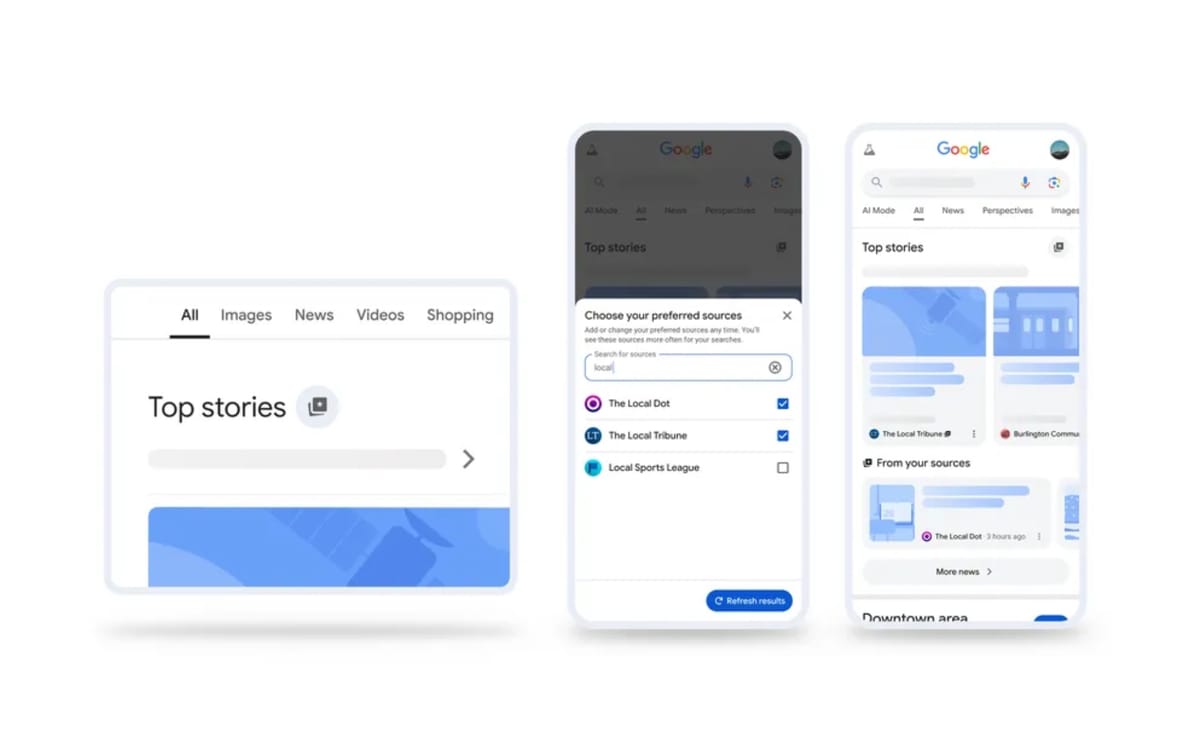
Google announced on December 10, 2025, the global expansion of Preferred Sources in Search alongside new commercial partnerships with news publishers designed for artificial intelligence integration. The announcement marks a significant shift in how the search platform manages content discovery and publisher relationships as AI-powered features reshape information access patterns.
According to the company's blog post published December 10, "We're launching Preferred Sources in Search worldwide" to allow users to "customize your Top Stories in Search to see more from the outlets and sites you value, from global news outlets to local blogs." The feature will roll out to English-language users worldwide in the coming days, with all supported languages following early next year.
Subscribe PPC Land newsletter ✉️ for similar stories like this one
The timing coincides with Google's introduction of a commercial pilot program involving news publishers globally. "We're now piloting a new commercial partnership program with a range of news publishers globally — including Der Spiegel, El País, Folha de S. Paulo, Infobae, Kompas, The Guardian, The Times of India, The Washington Examiner and The Washington Post, among others — to explore how AI can help drive more engaged audiences," according to the announcement from Robby Stein, VP of Product for Google Search, and Jafer Zaidi, VP of Global News Partnerships.
The Preferred Sources feature builds upon limited testing that began in August 2025. Google launched Preferred Sources on August 12 exclusively in the United States and India, enabling users to designate favorite news outlets for increased visibility in Top Stories sections. Early adoption patterns demonstrated substantial user engagement, with nearly 90,000 unique sources selected by users ranging from local blogs to major international outlets.
According to the December 10 announcement, "When someone picks a preferred source, they click to that site twice as much on average." This engagement metric suggests users demonstrate stronger commitment to content from sources they explicitly select. The global expansion provides access to the customization tool for millions of additional users across all languages supported by Google Search.
Technical implementation requires users to navigate to google.com, search for recent news events that trigger Top Stories displays, and locate a Cards star icon positioned near the Top Stories header. Clicking this icon allows users to search for and select preferred sources through checkbox interfaces. According to Google's documentation, "Sources that aren't updated regularly may not be available," indicating algorithmic restrictions on which outlets qualify for user designation.
The publisher partnership program introduces AI-powered features designed to enhance content discovery while maintaining attribution to original sources. According to the announcement, Google is "testing AI-powered article overviews on participating publications' Google News pages to give people more context before they click through." The company is also "experimenting with audio briefings for those who prefer listening." Both features will "include clear attribution and link to articles," according to the blog post.
Google has established partnerships with organizations including Estadão, Antara, Yonhap, and The Associated Press to "include real-time information to enhance results in the Gemini app," according to the announcement. The Associated Press partnership with Google for Gemini integration was announced January 15, 2025, representing an expansion of their existing collaboration for Search features.
The commercial partnership structure represents what Google describes as an evolution of existing relationships with content providers. "In the last few years alone, we've partnered with over 3,000 publications, platforms and content providers in more than 50 countries and we continue to build on this work," according to the announcement. The company characterizes these partnerships as arrangements where "we pay for extended display rights and content delivery methods like APIs."
Google simultaneously announced modifications to how links appear within AI-powered search experiences. According to the blog post, "We're increasing the number of inline links in AI Mode, and updating the design of those links to make them more useful." The company is also "adding contextual introductions to embedded links in AI Mode responses," described as "short statements that explain why a link might be helpful to visit."
The Web Guide feature, which Google introduced in July 2025, received performance improvements and expanded availability. "We've updated Web Guide to make it twice as fast, and we're showing it on more searches in the 'All' tab on Search for people opted into the experiment," according to the announcement. Web Guide uses query fan-out techniques to organize links into helpful topic groups, particularly for complex or open-ended searches.
A new subscription integration feature aims to increase value for paying subscribers to news publications. "We're launching a new feature that highlights links from your news subscriptions, making it easier to spot content from sources you trust and helping you get more value from your subscriptions," according to the blog post. The feature will prioritize links from subscribed publications and display them in dedicated carousels, launching first in the Gemini app within coming weeks, followed by AI Overviews and AI Mode.
The announcements arrive as publishers navigate fundamental traffic distribution changes from Google's platforms. Research published in August 2025 found that Google Discover had become the dominant traffic source for news and media websites, accounting for two-thirds of Google referrals. This shift occurred as AI Overviews reduced traditional search click-through rates, with studies documenting declines of 34.5% to 54.6% when AI summaries appear in results.
AI Mode, Google's conversational search interface, reached more than 75 million daily active users following global rollout across 40 languages, according to third quarter 2025 earnings disclosures. Google expanded AI Mode to over 40 countries and territories in October 2025, marking the most extensive geographical deployment since initial United States launch in March.
The commercial partnership approach contrasts with mounting legal challenges other AI companies face regarding content usage. News Corp CEO Robert Thomson described a "woo and sue" strategy in August 2025 earnings calls, pursuing licensing negotiations with AI companies while maintaining legal actions against unauthorized content use. News Corp reported expanding AI content partnerships in November 2025 while digital subscriptions reached 62% of revenue.
Publishers have organized collective responses to AI-driven changes in content distribution. More than 80 media executives gathered in New York in July 2025 under IAB Tech Lab leadership to develop technical standards forcing AI platforms to respect publisher consent and compensation requirements. The coalition included representatives from Google and Meta alongside Mediavine and other independent publishers.
IAB Europe released a framework in September 2025 proposing mechanisms for blocking unauthorized scraping, implementing content access rules, and establishing compensation systems. According to the framework, unauthorized scraping increased 40% from third quarter to fourth quarter 2024, with robots.txt compliance declining significantly across AI platforms.
The Preferred Sources expansion provides publishers with new audience development tools. According to guidance Google published in August 2025, news organizations can "direct your readers to select your publication in 'Preferred sources'" through methods including deeplinks in social media posts and selection buttons on their websites. Publishers who attract user selections through Preferred Sources designation gain increased visibility in Top Stories displays for those specific users.
Google previously modified Publisher Center in March 2025, transitioning to automatically generated publication pages in Google News and eliminating manual customization features. The company stated that "all publication pages in Google News will be generated automatically" and would "no longer use RSS feeds or web locations that were submitted in Publisher Center." This automation reduced publisher control over content presentation while Google maintained that algorithmic systems would continue surfacing quality content.
The December 10 announcements emphasize maintaining web ecosystem connections despite AI integration. "Search and many of our products connect people to the web, sending billions of clicks per day and driving revenue for websites and creators of all sizes," according to the blog post. The company characterized the updates as responses to users wanting "information faster," seeking "more context to help them sort through it," and looking for "authentic connections with creators and sources they trust."
Google's simultaneous focus on user customization through Preferred Sources and publisher partnerships for AI features represents dual approaches to content distribution challenges. The Preferred Sources expansion provides individual users with greater control over news source selection, while commercial partnerships establish formal relationships with publishers as AI-powered features fundamentally alter how information appears in search results.
The global rollout timing follows sustained criticism from publishers regarding traffic declines attributed to AI Overviews. Independent publishers filed antitrust complaints with the European Commission in June 2025 alleging that Google's AI-powered search features caused "significant harm to publishers, including news publishers in the form of traffic, readership and revenue loss."
Technical modifications to AI Mode and AI Overviews aim to improve link visibility and contextual understanding. The addition of contextual introductions to embedded links addresses previous concerns about users receiving complete answers without understanding why visiting source websites might provide additional value. Enhanced link design in AI Mode responses attempts to make external websites more prominent within AI-generated content.
The subscription highlighting feature acknowledges that direct reader relationships have become increasingly important as platform referral traffic patterns shift. Publishers have invested substantially in subscription models and reader revenue programs as traditional advertising income dependent on referral traffic becomes less reliable. Google's integration of subscription signals into search results provides subscribers with easier access to content they have already paid for while potentially reinforcing the value proposition of digital subscriptions.
The expanded Web Guide availability indicates Google's commitment to organizing diverse web content rather than providing single AI-generated answers for all queries. The feature groups related links into categories focused on specific aspects of user questions, maintaining multiple external website options rather than synthesizing information into unified summaries. Performance improvements making Web Guide twice as fast suggest Google views the feature as a sustainable alternative to comprehensive AI summaries for certain query types.
Publisher responses to the announcements will likely vary based on organization size and existing Google relationships. Major publications included in the commercial partnership pilot program gain access to AI-powered article overviews and audio briefing experiments that could drive reader engagement. Smaller publishers benefit from Preferred Sources expansion providing new mechanisms for audience development through user designation rather than algorithmic promotion alone.
The timing of both announcements on December 10, 2025, suggests coordinated messaging around user choice and publisher collaboration. Preferred Sources expansion demonstrates Google providing users with greater control over content sources, while the partnership program establishes formal commercial relationships with publishers as AI features transform how content appears. Both initiatives address different aspects of the fundamental challenge facing search platforms: maintaining web ecosystem health while deploying AI technologies that reduce traditional click-through patterns.
Subscribe PPC Land newsletter ✉️ for similar stories like this one
Subscribe PPC Land newsletter ✉️ for similar stories like this one
Who: Google, led by VP of Product Robby Stein and VP of Global News Partnerships Jafer Zaidi, announced features affecting news publishers including Der Spiegel, El País, Folha de S. Paulo, Infobae, Kompas, The Guardian, The Times of India, The Washington Examiner, The Washington Post, Estadão, Antara, Yonhap, and The Associated Press, along with millions of search users globally who can now customize news source preferences.
What: Google launched Preferred Sources in Search globally, enabling users worldwide to customize Top Stories displays with favorite news outlets, while simultaneously introducing a commercial partnership pilot program testing AI-powered article overviews, audio briefings, subscription highlighting, enhanced AI Mode links with contextual introductions, improved Web Guide performance, and partnerships for real-time information integration in the Gemini app.
When: Google announced both initiatives on December 10, 2025, with Preferred Sources rolling out to English-language users worldwide in the coming days and all supported languages early in 2026, while the commercial partnership pilot program began with participating publishers testing AI-powered features and the subscription highlighting feature launching first in the Gemini app within coming weeks.
Where: The announcements affect users globally through google.com search results, Google News pages, the Gemini app, AI Overviews, and AI Mode interfaces, with Preferred Sources initially deploying to English-language markets worldwide before expanding to all supported languages, while commercial partnerships involve publishers across multiple countries including Germany, Spain, Brazil, India, Indonesia, United Kingdom, and United States.
Why: The announcements address fundamental shifts in how users consume information, seeking faster access to content, more context for evaluation, and authentic connections with trusted sources, while publishers navigate traffic distribution changes from AI-powered features that reduce traditional click-through patterns, creating need for both user customization tools like Preferred Sources and formal commercial relationships establishing compensation for content usage in AI features.