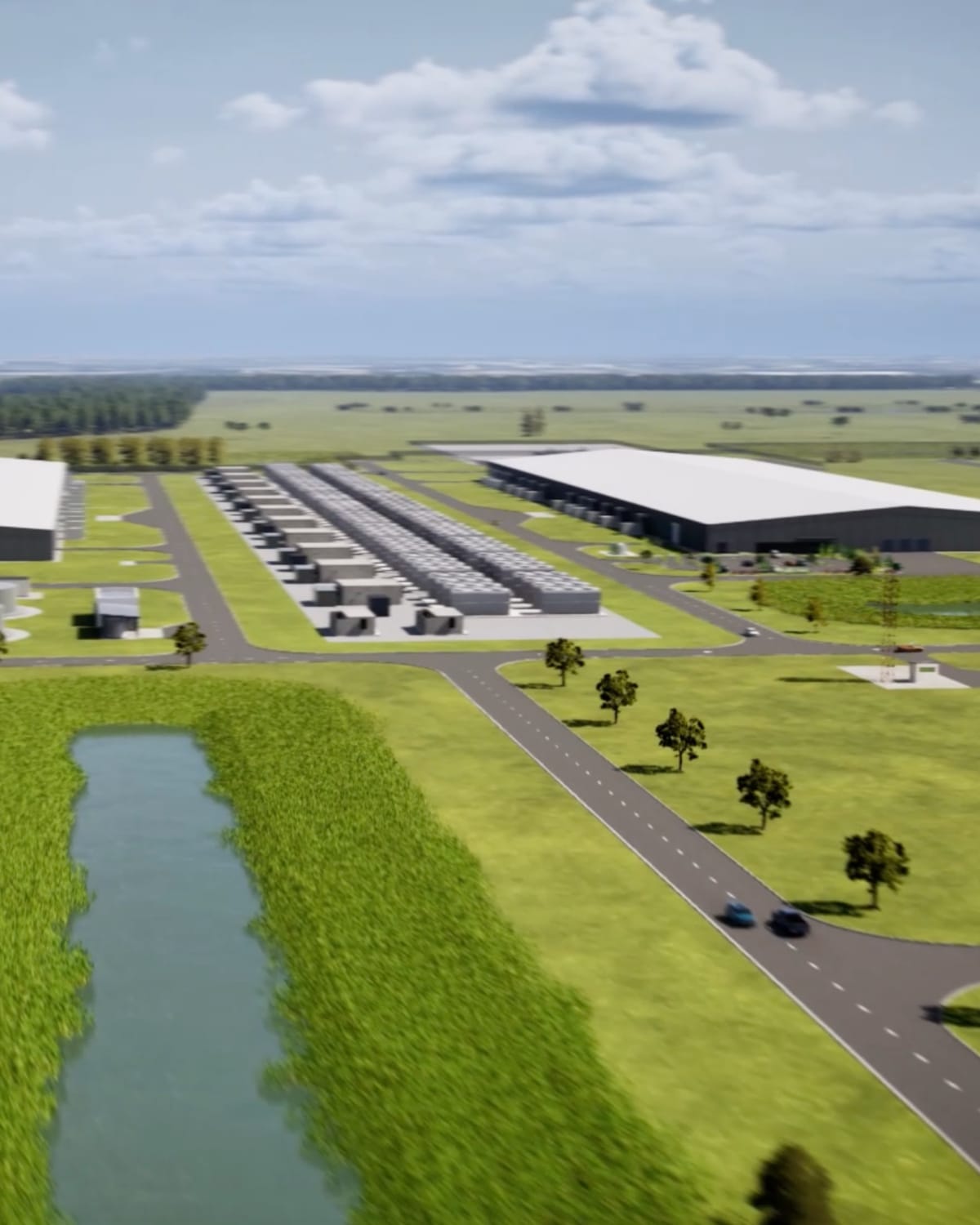
Meta this week broke ground on a state-of-the-art data center campus in Lebanon, Indiana, marking one of the company's largest infrastructure investments to date. The facility will deliver 1 gigawatt of capacity once operational, according to an announcement published on the company's newsroom.
The Lebanon site represents Meta's second data center location in Indiana. Construction at peak periods will support more than 4,000 jobs, with approximately 300 operational positions following completion. The company describes the investment as exceeding $10 billion when combining data center infrastructure with surrounding community commitments.
According to the announcement, gigawatt-scale sites create flexibility to support both Meta's core business and artificial intelligence ambitions as compute demands continue growing. The facility will feature higher bandwidth, lower latency, and improved reliability compared to smaller deployments.
Meta's investment in gigawatt-scale data centers follows CEO Mark Zuckerberg's July 14, 2025 announcement of plans to invest "hundreds of billions of dollars" in AI infrastructure. That commitment included Prometheus, a 1+ gigawatt facility in New Albany, Ohio, and Hyperion, eventually reaching 5 gigawatts in Richland Parish, Louisiana.
The Lebanon facility addresses growing infrastructure needs as Meta develops advanced AI systems while maintaining existing social media platforms serving billions of users. The company's approach differs from competitors by building flexibility into data center architecture to handle both traditional workloads and specialized AI computation.
Meta established a comprehensive community support program for Boone County that extends beyond traditional economic development arrangements. The company committed $1 million annually for 20 years to the Boone REMC Community Fund, providing direct energy bill assistance to local families. Additional funding supports emergency water utility assistance through The Caring Center.
According to the announcement, Meta will invest more than $120 million in critical water infrastructure improvements in Lebanon. These investments encompass roads, transmission lines, and utility upgrades beyond the data center's direct requirements.
The company launched the Boone County-wide workforce development program through the Boone County Career Collaborative. This initiative supports career exploration and work-based learning for students across three school districts, connecting schools with local employers for consistent exposure to new skills and career paths.
Meta emphasized in the announcement that the company pays full costs for energy and water used by data centers. The company works with utilities years in advance to plan for energy needs, ensuring residents face no negative impacts from data center operations.
The Community Action Grants program will extend to Boone County in coming months. This program provides direct funding to schools, nonprofits, and community organizations in data center communities, according to the announcement.
Sustainability commitments and water management
Meta committed to matching 100% of the Lebanon data center's energy use with clean energy sources. The facility will achieve LEED Gold certification once operational, according to the announcement.
The data center employs a water-efficient closed-loop, liquid-cooled system that recirculates the same water. According to Meta, this system will use zero water for the majority of the year, addressing concerns about data center water consumption that have emerged in other communities.
Meta's Newton County, Georgia facility, which broke ground in 2018 on a $750 million investment, experienced significant community water challenges. Residents reported well water failures, sediment buildup, and deteriorating water quality following construction activities, according to a July 21, 2025 investigation.
For Lebanon, Meta committed to restoring 100% of water consumed to local watersheds. The company partnered with Arable to provide irrigation technology to independent farmers in Indiana's Upper Wabash River Basin. This project will restore 200 million gallons of water annually for ten years while reducing costs for farmers.
The company plans to revitalize a section of Deer Creek stream, improving ecological health of the wetland corridor by expanding vegetation and creating better habitat for pollinators, according to the announcement.
Meta's sustainability approach includes achieving LEED Volume pre-certification for its prototype data center design, streamlining more than 60% of LEED measures. All owned data centers maintain LEED Gold certification or higher, with 91% of construction waste diverted from landfills in 2024, according to the company's 2025 Sustainability Report published September 14, 2025.
The company achieved industry-leading 0.20 L/kWh water usage effectiveness compared to the 1.80 L/kWh industry average, according to analysis of Meta's infrastructure investments. However, absolute scale creates significant local impact even with improved efficiency metrics.
Technical specifications and infrastructure scale
The 1-gigawatt capacity designation places Lebanon among the largest single data center sites globally. For context, 1 gigawatt of power consumption equals approximately 750,000 homes' continuous energy use, based on typical residential consumption patterns.
Meta employs Air-Assisted Liquid Cooling architecture using 30°C supply temperature for direct-to-chip cooling. This approach requires hundreds of thousands of gallons daily per facility during operational periods, though the closed-loop system in Lebanon aims to minimize consumption through recirculation.
The facility's design addresses power density increases of 2-9x over current facilities, combined with 24-32x increased networking capacity requirements, according to industry analysis of gigawatt-scale deployments. These specifications demand entirely redesigned infrastructure approaches for heat dissipation and power distribution.
Lebanon's location in central Indiana provides strategic advantages for fiber connectivity to major metropolitan areas while offering access to regional power generation capacity. The site joins Meta's existing Indiana presence, though the company has not disclosed the location or specifications of its first Indiana facility.
Competitive positioning in infrastructure race
Meta's Lebanon announcement occurs amid unprecedented data center construction across the technology sector. Google acquired Intersect for $4.75 billion in cash on December 22, 2025, gaining multiple gigawatts of energy and data center projects under development or construction.
According to CNBC analysis, major technology companies will spend $325 billion on infrastructure in 2025, representing a 46% increase from 2024's $223 billion combined spending. Meta shows the most aggressive scaling trajectory among competitors, with planned capital expenditures of $64-72 billion in 2025.
Amazon announced a $10 billion investment in Germany on June 20, 2024, including AWS infrastructure expansion to 8.8 billion euros by 2026 for cloud services in the Frankfurt region. Microsoft committed $80 billion to data center construction, while Google allocated $75 billion for infrastructure spending.
Meta's investment strategy leverages its dominant advertising revenue to fund AI development. The company generated $164 billion in 2024 revenue, with 98% from advertising, according to The Motley Fool's analysis. Q4 2024 advertising revenue of $46.8 billion represented 21% year-over-year growth, demonstrating the financial engine powering infrastructure investments.
The open-source differentiation strategy with Llama models contrasts with competitors' closed approaches. While Microsoft leverages its OpenAI partnership and Google utilizes custom TPU advantages, Meta's approach creates ecosystem adoption through developer accessibility.
Implications for advertising infrastructure
Meta's AI infrastructure directly transforms digital advertising capabilities. The company envisions complete automation by the end of 2026, according to Investopedia reporting on Meta's strategic plans. Advertisers would need only to provide business URLs, budget parameters, and objectives while AI handles creative generation, audience targeting, campaign optimization, and measurement.
Facebook's economic impact study found Meta's Advantage+ Shopping campaigns generate $20 billion annual revenue with 70% growth. Four million advertisers now use generative AI tools integrated into Meta's advertising platform, according to the company.
Meta announced improved AI optimization for app and gaming advertisers on November 3, 2025, delivering 29% higher return on advertising spend through enhanced mobile measurement partner alignment for iOS and Android campaigns, according to company announcements.
The Lebanon data center's capacity will support these advertising automation initiatives while providing infrastructure for Meta's broader AI development. The facility represents a component of Meta's strategy to establish AI leadership after falling behind in model performance, according to analysis of the company's infrastructure announcements.
Economic impact and regional development
The Lebanon investment creates immediate economic activity through construction employment. Peak construction periods supporting more than 4,000 jobs represent substantial short-term economic injection for Boone County and surrounding areas.
The 300 operational positions following completion provide long-term employment opportunities. Data center operational roles typically include facility engineers, network technicians, systems administrators, and security personnel, with compensation often exceeding regional averages for technical positions.
Meta's $120 million commitment to public infrastructure improvements extends benefits beyond direct employment. Roads, transmission lines, and utility upgrades funded by Meta serve broader community needs while supporting data center operations.
The workforce development program through Boone County Career Collaborative creates pathways for students across three school districts to access technical careers. This initiative addresses skills gaps in data center operations and related technology fields while providing exposure to career opportunities students might not otherwise encounter.
Tax revenue from the facility will flow to local governments, though specific property tax assessments and economic development incentives were not disclosed in the announcement. Indiana's data center tax policies have attracted multiple facilities through favorable treatment of equipment depreciation and energy taxation.
Regulatory and environmental considerations
Meta faces no disclosed regulatory barriers to the Lebanon construction. Indiana maintains relatively streamlined permitting processes for large industrial facilities compared to states with more complex environmental review requirements.
The facility's energy consumption will require coordination with regional power generators and transmission operators. Indiana's electricity generation mix includes substantial coal-fired capacity alongside growing renewable installations, creating questions about how Meta will fulfill its 100% clean energy matching commitment.
Water restoration commitments through the Arable partnership represent a novel approach to addressing data center environmental impact. The 200 million gallons annually restored over ten years equals 2 billion gallons total, though the announcement does not specify the facility's total water consumption for comparison.
Deer Creek stream revitalization and wetland corridor improvements address local ecosystem impacts. These commitments exceed typical data center environmental mitigation requirements, reflecting Meta's broader sustainability positioning amid criticism of data center environmental effects.
The LEED Gold certification requirement establishes minimum performance standards for building design, energy efficiency, water conservation, and materials selection. Meta's achievement of LEED Volume pre-certification for its prototype design streamlines the certification process across multiple facilities.
Timeline and development phases
Meta announced the groundbreaking on February 11, 2026, marking the official start of construction activities. The announcement does not specify expected completion dates or operational timeline milestones.
Typical gigawatt-scale data center construction requires 24-36 months from groundbreaking to initial operational capacity, with additional phases extending over multiple years. Meta's experience with previous large-scale deployments may accelerate this timeline through standardized design approaches.
The company must coordinate construction phases with utility infrastructure upgrades, requiring parallel development of transmission capacity, substation construction, and renewable energy procurement to fulfill clean energy commitments.
Workforce development programs launch immediately to prepare students for operational positions that will become available upon facility completion. The multi-year timeline for these initiatives recognizes the lead time required to build technical skills for data center careers.
Community funding commitments begin immediately, with the $1 million annual Boone REMC Community Fund payments starting before the facility becomes operational. This approach demonstrates Meta's commitment to community impact independent of construction timelines.
Meta stated in the announcement: "We look forward to bringing this data center online and supporting the growth of Lebanon, Indiana."
Timeline
Summary
Who: Meta, the parent company of Facebook, Instagram, and WhatsApp, broke ground on a new data center in Lebanon, Indiana. The project will support more than 4,000 construction jobs at peak periods and approximately 300 operational positions following completion. The facility will serve Boone County residents through workforce development programs and community funding initiatives.
What: The state-of-the-art data center campus will deliver 1 gigawatt of capacity once operational, designed to handle both AI workloads and Meta's core products. The facility represents over $10 billion in combined infrastructure investment and community commitments. Meta committed to matching 100% of energy use with clean energy, achieving LEED Gold certification, and implementing a water-efficient closed-loop liquid cooling system. The company will invest more than $120 million in critical water infrastructure, roads, transmission lines, and utility upgrades. Community support includes $1 million annually for 20 years to the Boone REMC Community Fund for energy bill assistance, funding for emergency water utility assistance, and a workforce development program through the Boone County Career Collaborative.
When: Meta broke ground on February 11, 2026. The announcement does not specify completion dates, though typical gigawatt-scale data center construction requires 24-36 months from groundbreaking to initial operational capacity. Community funding commitments and workforce development programs begin immediately. The water restoration partnership with Arable will restore 200 million gallons annually for ten years.
Where: The facility is located in Lebanon, Indiana, in Boone County. This represents Meta's second data center location in Indiana, though the company has not disclosed specifications for its first Indiana facility. The Lebanon location provides strategic advantages for fiber connectivity to major metropolitan areas while offering access to regional power generation capacity. The site will include public infrastructure improvements extending beyond the data center property.
Why: Meta's investment addresses growing infrastructure needs as the company develops advanced AI systems while maintaining existing social media platforms. Gigawatt-scale sites create flexibility to support both Meta's core business and AI ambitions as compute demands continue growing, according to the announcement. The facility supports Meta's broader strategy to invest hundreds of billions of dollars in AI infrastructure following CEO Mark Zuckerberg's July 14, 2025 announcement. The company aims to establish AI leadership after falling behind in model performance, leveraging $164 billion in annual advertising revenue to fund infrastructure that will enable complete advertising automation by the end of 2026. The Lebanon data center represents a component of Meta's competitive positioning against Amazon's $100 billion, Microsoft's $80 billion, and Google's $75 billion infrastructure spending in 2025.
Share this article
The link has been copied!