OpenAI buys TBPN: the tech show that never asked hard questions
OpenAI paid low hundreds of millions for TBPN, a tech talk show built on friendly access. What the deal means for AI public narrative and marketing.


OpenAI paid low hundreds of millions for TBPN, a tech talk show built on friendly access. What the deal means for AI public narrative and marketing.
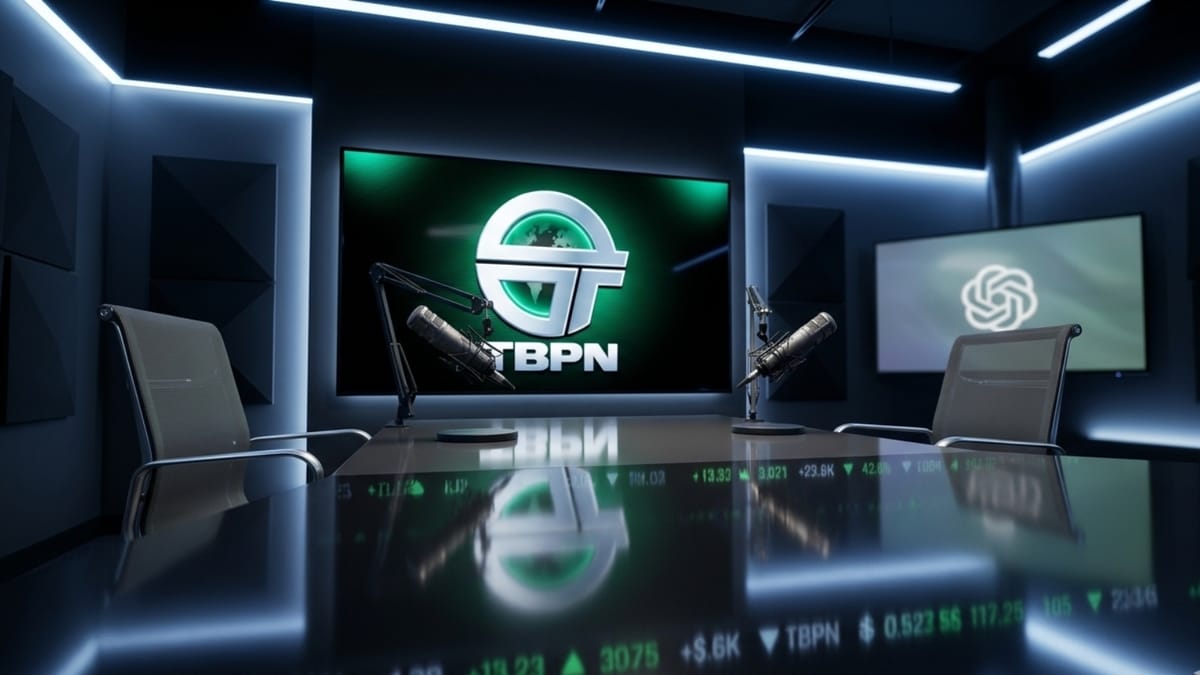
OpenAI acquired the Technology Business Programming Network (TBPN) on April 2, 2026, paying somewhere in the "low hundreds of millions of dollars" for a daily livestream that built its audience on access, affability, and a deliberate avoidance of adversarial journalism. The deal, first reported by the Wall Street Journal, brings the show's hosts, infrastructure, and expanding reach inside one of the companies it has covered since launch. It also draws a sharp line between two models of media: one that maintains independence from its subjects, and one that sells to them.
Technology Business Programming Network is a live video and audio show hosted by entrepreneurs John Coogan and Jordi Hays. According to its Wikipedia entry - last edited on April 3, 2026 - the program streams weekdays from 11 AM to 2 PM Pacific Time, three hours a day, five days a week, primarily on YouTube, X, and Substack, with full episodes available on Apple Podcasts and Spotify. The show launched in October 2024 and accumulated a notable guest list at speed. Its interviewees have included Meta CEO Mark Zuckerberg, Microsoft CEO Satya Nadella, filmmaker James Cameron, Anduril Industries co-founder Palmer Luckey, Marc Andreessen, DoorDash co-founder Andy Fang, and OpenAI CEO Sam Altman himself.
Editorial positioning mattered more than audience size. According to Defector's Patrick Redford, writing on April 3, 2026, TBPN's audiences have always been small, but audience size matters less when the tech world and many of its most powerful people pay close attention. Zuckerberg, who is known for disliking press appearances, appeared on the show - a signal of how the program positioned itself as a space where guests faced no adversarial risk. According to Redford, "Galactically rich and powerful people like Larry Ellison, Palmer Luckey, Sam Altman, and Alex Karp love going on TBPN because they're assured of a friendly bro-down and no hard questions."
The New York Times profiled the show in October 2025. Mike Isaac described TBPN's vibe as, according to Defector's account of the piece, "two self-aware fellas who treat techno-capitalism like a Fantasy Football league." The show's founders described themselves explicitly. Coogan and Hays, as quoted in the Times profile, "don't consider themselves journalists" but do identify as "tech-positive."
Coogan is co-founder of Soylent, the meal replacement company, and worked as entrepreneur in residence at Peter Thiel's venture firm Founders Fund. Hays founded Branded Native, a YouTube advertising company, and a fintech company called Capital - formerly called Party Round - with his wife, Sarah Chase Hays, leading it to its acquisition by Rho Technologies in August 2023. Both hosts, in other words, came from inside the industry they cover. That background informs the show's texture: knowledgeable and personable, but firmly inside the tent.
Structurally, the show styled itself on ESPN. Its signature bit is covering tech hires in the manner of that network covering sports personnel moves, complete with "BREAKING:" graphics. That format proved appealing to an audience of builders and investors who wanted tech news delivered with the informality of sports commentary rather than the caution of institutional journalism.
September 2025 brought the hire of Dylan Abruscato - former Postmates and HQ Trivia executive - as President, a move that signaled TBPN was institutionalizing its operations. In December 2025, the New York Stock Exchange announced a formal partnership with TBPN. The show also signed with talent agency CAA in January 2026, according to a Hollywood Reporter report cited in the Wikipedia entry. By the time OpenAI came knocking, TBPN had an organized business structure, an expanding advertiser base, and a guest list that any communications team would envy.
OpenAI announced the acquisition on April 2, 2026, in a staff message from Fidji Simo, the company's CEO of Applications. The Financial Times reported the price in the "low hundreds of millions of dollars." OpenAI's public announcement described TBPN as "one of the fastest-growing media companies" and cited the New York Times' recent description of the show as "Silicon Valley's newest obsession."
According to the OpenAI announcement, TBPN will sit within the company's Strategy organization, reporting to Chris Lehane. The acquisition brings in Coogan, Hays, Abruscato, and the broader team.
Simo's internal message, later released publicly, addressed why OpenAI saw a media acquisition as consistent with its goals. "As I've been thinking about the future of how we communicate at OpenAI," she wrote, "one thing that's become clear is that the standard communications playbook just doesn't apply to us. We're not a typical company. We're driving a really big technological shift. And with our mission to ensure artificial general intelligence benefits all of humanity comes a responsibility to help create a space for a real, constructive conversation about the changes AI creates - with builders and people using the technology at the center."
The statement frames the acquisition as a communications strategy rather than a media investment. OpenAI did not acquire a news organization or a journalism outlet. It acquired a show built on access and affability - precisely the characteristics that make it useful to a company seeking favorable public framing ahead of a significant period in its history.
The acquisition contract reportedly includes provisions guaranteeing the show's editorial independence. Simo addressed this directly in her statement, calling editorial independence "foundational to their credibility" and saying it is "something we're explicitly protecting as part of this agreement."
According to the OpenAI announcement, "TBPN will continue to run their programming, choose their guests, and make their own editorial decisions." Jordi Hays issued a statement on behalf of the TBPN team: "Over the past year, we've had a front-row seat not just to OpenAI, but to the entire ecosystem, covering the daily news, announcements, and launches in real time. While we've been critical of the industry at times, after getting to know Sam and the OpenAI team, what stood out most was their openness to feedback and commitment to getting this right. Moving from commentary to real impact in how this technology is distributed and understood globally is incredibly important to us."
The independence provisions are difficult to evaluate in advance. TBPN's independence was largely untested before the acquisition because, as Defector's Redford observed, the show was already operating in alignment with tech industry interests. A show whose appeal to guests depends on guaranteed friendliness has limited adversarial capacity to lose. Whether contractual independence means anything in practice will depend on how often TBPN would have challenged OpenAI's positions in the first place.
Simo also noted a second rationale beyond communications: "I'm also excited to bring their amazing comms and marketing instincts to the team. They've helped many brands market online and because they have a strong pulse on where the industry is going, their comms and marketing ideas have really impressed me."
That dual framing - TBPN as both independent media and internal marketing resource - creates structural tension that will be visible in how the show develops.
The acquisition does not emerge in isolation. OpenAI is navigating multiple simultaneous pressures on its public reputation and business model.
The company is building out an advertising business inside ChatGPT that crossed the $100 million annualized revenue threshold within six weeks of launch. The advertising pilot, which began on February 9, 2026, carries a $60 CPM rate - comparable to NFL broadcast inventory - and a minimum advertiser commitment of $200,000. Confirmed early participants included Target, Ford, Mrs. Meyer's, and Adobe. By late March, the program had expanded internationally and counted more than 600 advertisers.
That advertising push coincides with OpenAI's plans for an initial public offering, reportedly targeted for the fourth quarter of 2026, according to Reuters. An IPO demands both revenue growth and public trust. OpenAI's AI models generate substantial concern among portions of the public - around energy consumption, labor displacement, and data practices. A media property capable of spreading constructive narratives about AI would serve both objectives.
Defector's Redford made this connection explicit: "OpenAI is headed toward an initial public offering at some point later this year, and as impactful as that will be, they still need people to like them, not associate them with eliminating your job and doubling your power bill."
The AI industry's relationship with journalism has been consistently extractive. Media leaders have documented significant traffic losses as AI systems capture user attention that previously flowed to news publishers. OpenAI's content crawling ratios reached 250:1 and then 1,250:1 by mid-2025, meaning the company crawled publisher content at rates vastly exceeding the traffic it sent back. Rather than licensing or compensating media organizations at scale, OpenAI acquired a show that generates favorable coverage by design.
The tech industry's broader antipathy toward journalism has historical roots. Defector's Redford noted that Peter Thiel secretly funded lawsuits until he successfully destroyed what was then the largest independent media company in the United States. Elon Musk banned journalists from Twitter after acquiring it. The difference with today's AI companies, Redford argued, is that they emerged in a media environment already badly diminished - and they are being advised by the veterans of that earlier wave.
The TBPN acquisition has specific implications for the marketing and advertising community that follows OpenAI's platform development.
TBPN's influence runs through the tech executive class. Its guest list reads like a media buyer's ideal target audience: founders, investors, platform executives, and the senior figures who make decisions about where companies spend. A TBPN integrated into OpenAI's communications apparatus would have direct access to the people who decide advertising budgets, partner relationships, and technology procurement.
OpenAI's advertising push has been a closely tracked story for marketing professionals. The platform reached 700 million weekly active users by mid-2025. Its $60 CPM entry point, its lack of a pixel or standard attribution system, and its self-serve advertiser tools - planned for April 2026 rollout - are operational questions that marketers need answered by credible sources. A show housed inside OpenAI is not a credible independent source for those answers, regardless of contractual independence provisions.
OpenAI's monetization head had already outlined a vision in a February 9, 2026 podcast where he suggested small businesses could eventually create and manage campaigns by simply prompting ChatGPT - a claim that drew immediate skepticism from agency professionals. TBPN, now inside OpenAI, would be an effective vehicle for amplifying that vision to an audience of exactly the tech founders and investors who might act on it.
The wider pattern - tech companies building or acquiring media properties that serve their interests - is not new to the marketing industry. What is notable here is the price and the candor. A "low hundreds of millions of dollars" acquisition for a show that is not yet two years old reflects how seriously OpenAI is treating the narrative problem. And Simo's internal message, released publicly, articulated the communications rationale more directly than such announcements typically do.
Simo's note to staff also extended TBPN's mandate beyond the show itself: the team's "comms and marketing instincts" would be leveraged to "innovate on how we bring AI to the world in a way that helps people understand the full impact of this technology on their daily lives." That language positions TBPN not merely as a content property but as a marketing capability available to OpenAI across all its channels.
Who: OpenAI, led by CEO of Applications Fidji Simo, acquired TBPN, the live tech talk show co-founded and co-hosted by John Coogan and Jordi Hays, with President Dylan Abruscato joining as part of the deal.
What: OpenAI paid somewhere in the "low hundreds of millions of dollars" for TBPN, a daily three-hour livestream covering tech business news. The show will sit within OpenAI's Strategy organization, reporting to Chris Lehane, while the hosts retain contractual editorial independence over programming and guest selection.
When: The acquisition was announced on April 2, 2026. TBPN launched in October 2024, making it roughly 18 months old at the time of the deal.
Where: TBPN is based in Los Angeles and streams primarily on YouTube, X, and Substack. OpenAI is headquartered in San Francisco. The show's audience is concentrated in the tech and venture capital ecosystems of Silicon Valley and beyond.
Why: OpenAI framed the acquisition as a communications strategy - a way to support "real, constructive conversation" about AI during a pivotal period that includes a planned IPO in the fourth quarter of 2026, the rollout of its ChatGPT advertising business, and growing public concern about AI's effects on jobs and energy consumption. Critics noted that TBPN's existing editorial posture - self-described as "tech-positive" and built on friendly access to powerful guests - was already aligned with OpenAI's interests before any formal relationship existed.