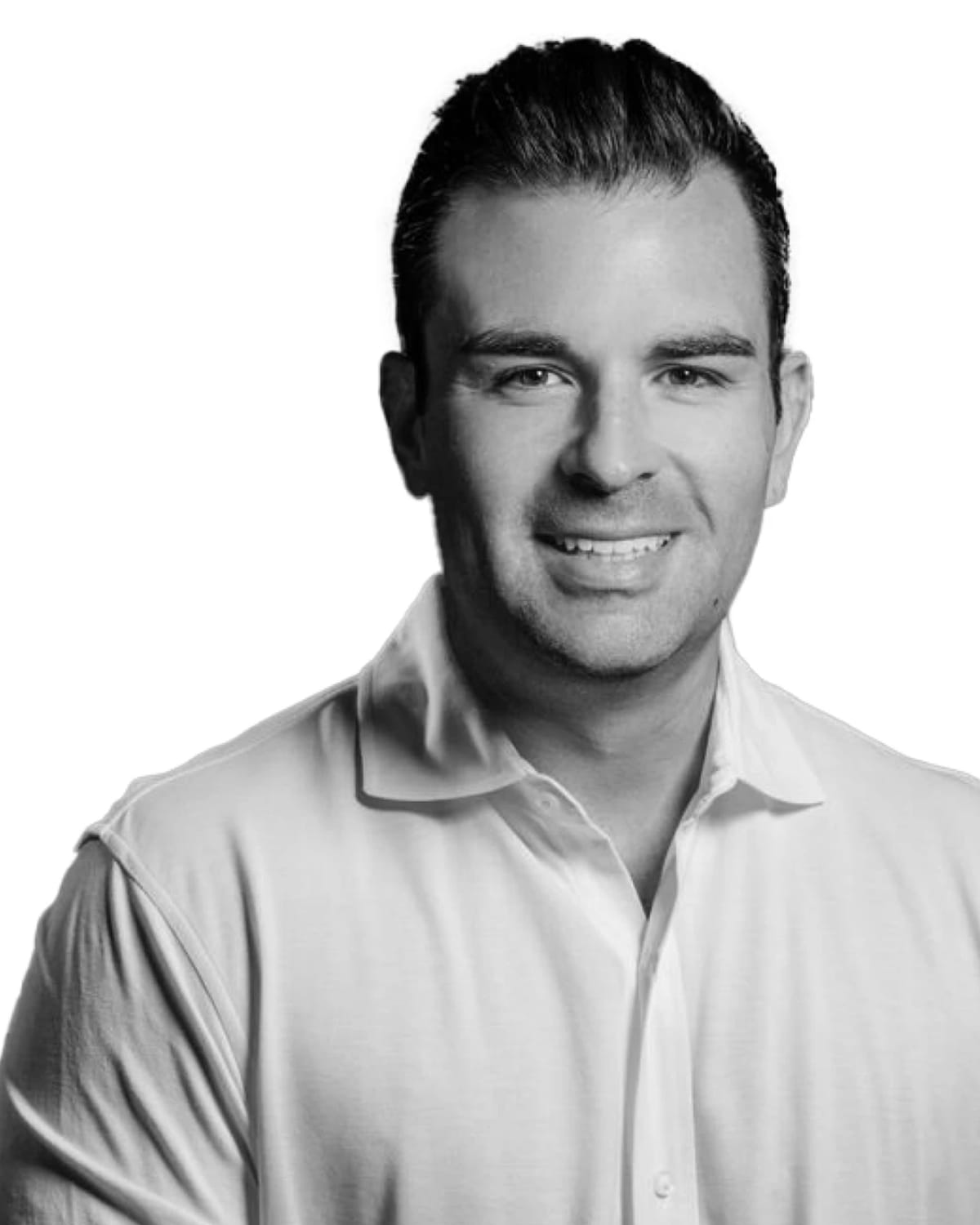
OpenX names Matt Sattel CEO after John Gentry's death from cancer
OpenX Technologies appointed Matt Sattel as CEO on February 5, 2026, following founder John Gentry's death last month after 12-year tenure building independent SSP.

OpenX Technologies last week appointed Matt Sattel as chief executive officer, filling the leadership role left vacant following John Gentry's death last month. The board announcement on February 5, 2026, marks the culmination of a succession process that Gentry himself helped shape during his final years leading the independent supply-side platform.
Sattel previously served as president of OpenX, where he oversaw the company's commercial, technology, strategy, operations, and marketing teams. He worked closely with Gentry for more than four years, a period during which the two built what board chairman Tim Cadogan characterized as a foundation for the company's future direction.
John Gentry passed away on January 15, 2026, at age 58 after a long battle with cancer. He spent 12 years at OpenX, joining in 2012 and assuming the CEO role in 2020. Industry colleagues remembered him as a pioneer who helped shape header bidding technology in the mid-2010s and advanced supply-side identity solutions throughout his tenure.
"Matt is the ideal leader to take OpenX forward," stated Cadogan in the company's announcement. "One of John's greatest gifts was his ability to recognize and nurture exceptional leaders. In Matt, he saw immense talent. He and Matt worked hand in hand to build OpenX over the past few years. John had the utmost conWdence in Matt. I and the board share that conWdence."
The leadership transition occurs as OpenX navigates significant industry challenges. The company filed a comprehensive antitrust lawsuit against Google in August 2025, seeking substantial damages after a federal court ruling found Google illegally monopolized digital advertising markets. That litigation followed years of competitive pressure that forced OpenX to shut down its ad server business entirely in 2019 and conduct two rounds of layoffs between October 2018 and March 2019, terminating 210 employees representing nearly 50% of its workforce.
Sattel's appointment comes at a moment when programmatic advertising faces unprecedented technical and commercial turbulence. Supply-side platforms confront mounting pressure to demonstrate value as artificial intelligence threatens traditional business models through automation of campaign management functions. The header bidding ecosystem experienced significant disruption throughout 2025, including modifications to transaction ID handling that eliminated cross-exchange visibility for demand-side platforms and Microsoft's announcement that it would deprecate its free Prebid Cache service by April 30, 2026.
Against this backdrop, Sattel inherits a company that has systematically expanded its technical capabilities throughout 2025. OpenX launched OpenXSelect on July 16, 2025, a comprehensive curation and supply-side targeting platform that integrates with 237 million U.S. users and 150 million connected television devices through the company's proprietary identity graph. The platform reduced campaign setup and optimization time by up to 50% for current self-service partners.
On January 6, 2026 - just weeks after Gentry's death - OpenX unveiled OpenXBuild, a software suite designed to give advertisers direct control over bidding strategies before auctions occur. Early testing showed substantial performance improvements including a 70% reduction in cost-per-conversion, positioning the company to compete for advertiser budgets in an increasingly consolidated market.
The technical foundation Sattel inherits reflects Gentry's strategic vision. OpenX maintained partnerships with more than 200,000 premium publisher domains and served over 100,000 advertisers globally across connected television, mobile applications, mobile web, and desktop environments. The company achieved CarbonNeutral certification and third-party verification for its Science Based Targets initiative Net-Zero objectives, distinguishing itself among advertising technology providers focused on environmental sustainability.
Sattel's career trajectory prepared him for the operational demands of leading a mid-sized independent platform competing against well-capitalized giants. He joined OpenX in January 2022 as vice president of sales and partnerships, advancing to senior vice president of global buyer development in August 2022. By August 2024, he had assumed the chief revenue officer role before his promotion to president in November 2025.
Before OpenX, Sattel spent nearly four years at MiQ, where he served as senior vice president and head of in-housing from January 2021 to January 2022. That experience gave him direct exposure to advertiser demands for transparency and control over programmatic infrastructure - themes that would become central to OpenX's competitive positioning under Gentry's leadership and now under Sattel's direction.
"John believed deeply in supporting and mentoring those around him," Sattel stated in the company's announcement. "He helped prepare me for this moment, and I'm grateful to the board for the trust they've placed in me. My focus is on building upon the culture he established and delivering best-in-class technology that drives strong performance and business outcomes for our clients."
The personal dimension of Gentry's mentorship emerged clearly in tributes that flooded social media following news of his death on January 16, 2026. Sattel described Gentry as "more than a leader to me. He was an advocate, a mentor, and a friend. JG believed that doing the right thing and building a strong business could go hand in hand, and showed us that it was possible to lead with both strength and humanity, even when it was hard."
Gentry's influence extended beyond technical strategy and competitive positioning. Colleagues consistently emphasized his commitment to building organizational culture that valued both performance and humanity. Amanda Forrester, senior vice president of marketing and communications at OpenX, recalled how Gentry flew her entire family to Arizona for a leadership off-site shortly after she gave birth to her second child, enabling her to participate while still breastfeeding. "That support made it possible for me to continue contributing at the highest level while still being present as a mom," Forrester said.
Rebecca Bonell, now regional vice president of publisher development for North America and Latin America at OpenX, met her husband Bram while both worked at the company. When they disclosed their relationship to management, "His response? 'I knew it! Let me throw your wedding,'" Bonell recalled. "He was so pissed when we eloped. So he threw us a baby shower instead - an epic 100-person event with the entire NYC office and our families."
These cultural touchstones reflected Gentry's broader leadership philosophy, which emphasized creating room for employees' lives outside work while maintaining high performance standards. Julie Rooney, chief privacy officer at OpenX, characterized his approach: "I saw you answer hard questions - late at night, early in the morning, on calls with 20 lawyers, in front of hundreds of people, during deeply difficult moments - with humility, passion, intelligence and eloquence. I also saw you sing karaoke, talk about reality TV and gush over puppies."
Sattel now faces the challenge of preserving that cultural foundation while navigating an advertising technology landscape that has become increasingly inhospitable to independent platforms. The Trade Desk launched OpenAds in October 2025, responding to transaction ID changes with a comprehensive auction platform designed to maintain transparency despite modifications to industry-standard identifiers. CEO Jeff Green characterized the move as addressing what he termed a "duplicate, obfuscate, and sometimes lie" strategy that has dominated supply-side operations.
Major publishers including AccuWeather, BuzzFeed, the Guardian, and Hearst committed to The Trade Desk's OpenAds platform on January 6, 2026 - the same day OpenX announced OpenXBuild. The timing underscored competitive pressures facing independent supply-side platforms as buyers and publishers seek alternatives to existing programmatic infrastructure.
OpenX's strategic response has centered on differentiation through quality rather than scale. The company integrated S&P Global Mobility's Polk Automotive data in August 2025, marking the first time Polk's measurement capabilities reached the supply side. This partnership positioned OpenX to target the substantial U.S. automotive advertising market, projected to surpass $31 billion in 2025, with real-time attribution tied to actual vehicle transactions.
In September 2025, OpenX launched automated discount capabilities from curation and technology partners directly within its OpenXSelect platform. The proprietary feature enabled buyers to access reduced rates from more than 80 integrated partners while preserving budget allocations for working media, addressing mounting pressure on independent agencies and holding companies to demonstrate quantifiable value to brand clients.
The company expanded its leadership team with five senior executive appointments in October 2025, bringing substantial industry experience across product, marketing, communications, and operations. Those additions reflected OpenX's commitment to scaling OpenXSelect and simplifying programmatic complexity for buyers and publishers - objectives that remain central to Sattel's mandate as CEO.
Sattel's immediate priorities will likely focus on maintaining business continuity while advancing initiatives Gentry championed during his final months. OpenX integrated Amazon Ads' Dynamic Traffic Engine in December 2025, enhancing its traffic optimization framework to incorporate machine learning signals that help identify which impression opportunities align most closely with advertiser campaign goals on Amazon DSP.
The competitive landscape Sattel inherits extends beyond technical capabilities to fundamental questions about market structure. Google's dominance in publisher ad serving technology created constraints that shaped supply-side platform strategies for more than a decade. OpenX's August 2025 antitrust lawsuit documented how Google's "three pillar" strategy following its 2008 acquisition of DoubleClick required use of its publisher ad server platform to access desired inventory, used its ad exchange to aggregate that inventory, and forced advertisers on Google Content Network to monetize inventory exclusively via Google's ad exchange.
According to the 87-page complaint, OpenX was a pioneer in digital advertising innovation, introducing real-time bidding technology in 2009 and developing header bidding in 2013. The company held several patents related to these technologies that improved market efficiency for both publishers and advertisers. Google's systematic anticompetitive conduct destroyed OpenX's innovative ad server business and severely damaged its ad exchange operations through what the court previously characterized as "willful" monopolization.
Gentry's leadership through that adversity positioned OpenX to survive where other independent platforms failed. Jason Fairchild, co-founder and CEO of tvScientific and a co-founder of OpenX, described Gentry as "a force of nature. A force centered on doing the right thing - the right thing for the company and the right thing for the individual. The force was uncompromising and often pushed people out of their comfort zones, but it was grounded in empathy and care for the person."
Fairchild and Gentry worked together at software firm GoTo.com before Fairchild recruited Gentry to join OpenX. Under Gentry's oversight, "OpenX retransformed into a high-growth company driven by innovation and incredible execution," Fairchild wrote following news of Gentry's death.
The personal bond between Fairchild and Gentry extended beyond professional collaboration. "We spent countless hours together commuting, vacationing, and just hanging out, talking about work, life's ups and downs, our goals, family, and whatever was going on," Fairchild recalled. "We raised our kids together, sharing Christmas mornings or teaming up against the kids for epic Call of Duty matches, only to get our asses kicked by 8-year-olds."
That combination of personal warmth and professional rigor defined Gentry's tenure at OpenX. Michael Todd, an executive at Silver Lake Partners who previously worked as chief technology officer at OpenX, remembered Gentry as combining "deep industry intuition with genuine care for those around him, and he pushed everyone to operate at a higher standard."
Chris Gaglia, a former OpenX employee, recalled Gentry's initial hesitance to hire him over concerns that Gaglia was a surfer and Gentry was "worried about motivation." The two bonded quickly after discovering shared interests. "As it turned out, JG loved paddle boarding and spending time in Newport Beach - and once we connected, we never looked back," Gaglia said. "Although my time working with him was far too short, I'll never forget our weekly one-on-ones - half nervous, half excited - because he was always direct, always expected outcomes, and yet somehow always sent you away sharper than when you walked in."
Gentry's career before OpenX included significant roles across the advertising and financial services industries. He graduated from UCLA with a bachelor's degree in political science and earned an MBA in marketing and finance from Northwestern University's Kellogg School of Management. He worked at the Walt Disney Company in the 1990s, where he directed distribution strategy for ABC cable networks.
He went on to hold various executive positions at Overture, an early leader in digital advertising that Yahoo acquired for $1.63 billion in 2003, where he served as senior vice president and general manager. He later became chief revenue officer of financial services company Green Dot and president of adtech startup Spot Runner before joining OpenX in 2012.
Gentry was appointed CEO at OpenX in 2020 after years of serving the company as an advisor and later as its president. He steered OpenX through various hurdles including the disruptive entry of header bidding, evolving privacy regulations, and the ongoing legal battle with Google over antitrust allegations that continues under Sattel's leadership.
In his final LinkedIn message, written with his family as his illness progressed and posted after his passing, Gentry opened with characteristic gratitude: "If you are reading this, it means that I'm no longer around and lost my fight with cancer. While I am dying earlier than most, I outlived myself by 28 years, thanks to a kidney transplant and modern medicine, and I've had a wonderful life. I am a lucky and thankful man."
Gentry went on to express appreciation for relationships he formed throughout his career, stating "the best part of the ride has been all the amazing relationships I've formed over the years." That focus on human connection over technical achievement distinguished his leadership approach and shaped OpenX's organizational culture in ways that colleagues described as fundamental to the company's identity.
Sattel now inherits responsibility for preserving that culture while executing a technical and commercial strategy shaped by both opportunity and constraint. OpenX operates as an independent omnichannel supply-side platform with a 17-year track record of programmatic innovation in a market increasingly dominated by large platforms with diversified revenue streams.
The company's 100% cloud-based technology stack enables advertising across connected television, applications, mobile web, and desktop environments - a technical foundation that required substantial investment and technical transformation completed under Gentry's direction. OpenX became the first major exchange to move all on-premises workloads fully into the cloud, a migration that provided scalability advantages but also created dependencies on cloud infrastructure providers.
Industry dynamics continue evolving in directions that create both opportunities and challenges for independent platforms. Connected television's share of media budgets doubled from 14% in 2023 to 28% in 2025, with 72% of marketers planning to increase programmatic advertising investment. This growth creates demand for platforms that can deliver scaled access to streaming inventory with quality and performance guarantees.
Simultaneously, advertisers demand evidence that format innovations drive measurable engagement and business outcomes beyond traditional metrics. Research from Teads examining connected television performance revealed that 32% of media professionals find their CTV advertising "not very effective," despite substantial budget allocations to the channel - creating pressure on supply-side platforms to demonstrate clear value propositions beyond basic inventory access.
Sattel's background in buyer development positions him well to understand these advertiser requirements. His experience leading in-housing initiatives at MiQ exposed him directly to brand and agency demands for transparency, control, and demonstrable return on investment from programmatic infrastructure partners.
The organizational structure Sattel inherits reflects investments Gentry made in building capabilities across critical functions. OpenX appointed five senior executives in October 2025, bringing expertise in product development, marketing, technical operations, and agency partnerships. These additions scaled the company's ability to execute complex initiatives like OpenXSelect and OpenXBuild while maintaining quality standards across its global publisher network.
Sethu Balasubramanian joined as vice president of product with over three decades of experience across TiVo, Undertone, Cadent, and Xandr. Nick Van Amburg assumed the role of vice president of product marketing, bringing over twenty years of experience from Condé Nast, The New York Times, and Dotdash Meredith. Nate Fishler took the position of vice president of global solutions and technical operations, while Emily Kramer joined as head of agency curation and commerce media.
These appointments reflected Gentry's recognition that technical innovation alone could not sustain competitive advantage. OpenX required expertise in translating technical capabilities into buyer-facing value propositions, scaling operational delivery, and navigating complex agency relationships where decision-making authority has become increasingly fragmented.
Sattel's challenge extends beyond executing existing initiatives to defining OpenX's strategic direction in an advertising technology landscape that may look fundamentally different within 18 to 24 months. Artificial intelligence capabilities are advancing rapidly, with implications for both supply-side and demand-side platform business models that remain uncertain but potentially transformative.
The IAB Technology Laboratory introduced its Agentic RTB Framework version 1.0 for public comment in November 2025, establishing requirements for implementing agent services within host platforms through containerized deployment. The framework aims to prevent ecosystem fragmentation by extending established industry standards including OpenRTB, AdCOM, and VAST with modern execution protocols.
Industry analysis suggested autonomous AI systems could automate campaign setup, targeting, and optimization functions currently handled by demand-side platforms - potentially reducing demand for traditional programmatic infrastructure. Supply-side platforms face parallel pressures to demonstrate value as buyers gain access to tools that could enable more direct publisher relationships mediated through AI agents rather than traditional exchanges.
OpenX's response to these challenges will likely emphasize the quality advantages that emerge from curated supply relationships, proprietary identity solutions, and measurement capabilities that extend beyond commodity inventory access. The company's partnerships with data providers like S&P Global Mobility's Polk Automotive Solutions and integration with Amazon Ads' Dynamic Traffic Engine demonstrate a strategy centered on differentiation through intelligence rather than scale.
Whether that strategy proves sufficient to sustain independent platform viability remains uncertain. Google's market power continues shaping competitive dynamics despite ongoing antitrust litigation. The Trade Desk's expansion into auction infrastructure through OpenAds represents potential competition but also possible collaboration if interoperability emerges as a shared priority.
Sattel's appointment provides continuity at a moment when OpenX requires both stability and adaptability. His four-year tenure at the company gave him deep familiarity with operational realities, customer relationships, and technical capabilities. His progression through roles with increasing responsibility demonstrated both performance and Gentry's confidence in his potential to lead.
"Matt understands what our customers need and his strategic acumen, market knowledge, and operating rigor perfectly position him to lead the next phase of OpenX's growth," stated Cadogan in announcing the appointment. That endorsement from the board chairman signals institutional commitment to the succession process and strategic direction Gentry established before his death.
The marketing community will watch closely how Sattel navigates challenges facing independent supply-side platforms. OpenX's trajectory under his leadership will provide insights into whether mid-sized advertising technology companies can sustain competitive viability amid consolidation pressures, technical disruption, and market concentration that favors scale and vertical integration.
For colleagues who worked closely with Gentry, the leadership transition carries emotional weight alongside operational significance. Wayne Blodwell, who leads the programmatic practice at Stagwell agency Assembly Global and previously consulted for OpenX, characterized Gentry as "a thoughtful man that helped me out on numerous occasions without asking for anything in return. His openness and kindness will be missed by those around him and the wider industry."
Sattel inherits not only technical infrastructure and customer relationships but also responsibility for preserving organizational culture that Gentry intentionally cultivated. Tucker Hennemuth, now global head of customer success engineering at OpenX, recalled an evening in 2015 when he and colleagues were diving across yoga balls at the Pasadena office. "JG came around the corner and saw my shenanigans," Hennemuth remembered. "I thought I would be in trouble, but no. He egged me on, asked how many I thought I could dive across and began gathering as many as he could find."
The next day, Gentry sent a company-wide email announcing that Hennemuth would perform a yoga ball stunt in the main lobby at lunch later that week. "JG presented Tucker with an OpenX-branded cape, helped arrange the yoga balls and even stood at the front to hold the first few steady to keep it safe, alongside then CEO Tim Cadogan," Hennemuth said. "That's who JG was to me - a leader who inspired trust, encouraged fun and made people feel seen."
Those cultural touchstones matter as much as technical capabilities in sustaining organizational cohesion through leadership transitions. Sattel's challenge involves honoring Gentry's legacy while establishing his own leadership identity and navigating market conditions that will require different responses than those that proved successful even 12 months ago.
The programmatic advertising industry that Gentry helped build through his work at Overture, Spot Runner, and OpenX faces questions about its fundamental structure and viability. Header bidding, which Gentry pioneered at OpenX in 2013, succeeded in breaking Google's stranglehold on publisher ad serving but created new inefficiencies that now threaten the ecosystem's sustainability.
Transaction ID conflicts that erupted in August 2025 revealed tensions between publisher yield protection, buyer transparency demands, and technical standards compliance that may prove irreconcilable within existing infrastructure. Microsoft's decision to shut down free Prebid Cache services by April 30, 2026, eliminates infrastructure that supported the broader header bidding ecosystem for years.
Against this turbulent backdrop, Sattel assumes leadership of a company that remains committed to independent operation despite competitive pressures that have eliminated or consolidated most mid-sized advertising technology platforms over the past decade. OpenX's ability to maintain that independence will depend on execution excellence, strategic clarity, and perhaps most importantly, preserving the organizational culture and customer relationships that Gentry built over 12 years of leadership.
Who: OpenX Technologies' board of directors appointed Matt Sattel as chief executive officer, succeeding John Gentry who died in January 2026. Sattel previously served as president and worked closely with Gentry for more than four years.
What: The appointment fills the leadership vacancy created by Gentry's death from cancer at age 58. Sattel assumes responsibility for leading an independent supply-side platform with more than 200,000 premium publisher domains, over 100,000 advertiser relationships, and a 17-year track record of programmatic innovation.
When: The board announced Sattel's appointment on February 5, 2026, three weeks after Gentry's death on January 15, 2026. The succession reflects mentorship and preparation that occurred during Sattel's four years working under Gentry's direction.
Where: OpenX operates globally across connected television, mobile applications, mobile web, and desktop environments. The company maintains a 100% cloud-based technology stack and partnerships spanning North America, Europe, Latin America, and Asia-Pacific regions.
Why: The appointment ensures business continuity and preserves strategic direction that Gentry established while navigating significant industry challenges including ongoing Google antitrust litigation, header bidding ecosystem disruption, and competitive pressures from larger platforms. Board chairman Tim Cadogan emphasized that Gentry had "the utmost confidence in Matt" and worked closely with him to prepare for this leadership transition.