Walmart Connect bets on AI agents to reshape retail advertising
Walmart introduces agentic advertising assistant and AI-powered creative tools on January 6, positioning retail media platform against rising competition from Amazon.


Walmart introduces agentic advertising assistant and AI-powered creative tools on January 6, positioning retail media platform against rising competition from Amazon.
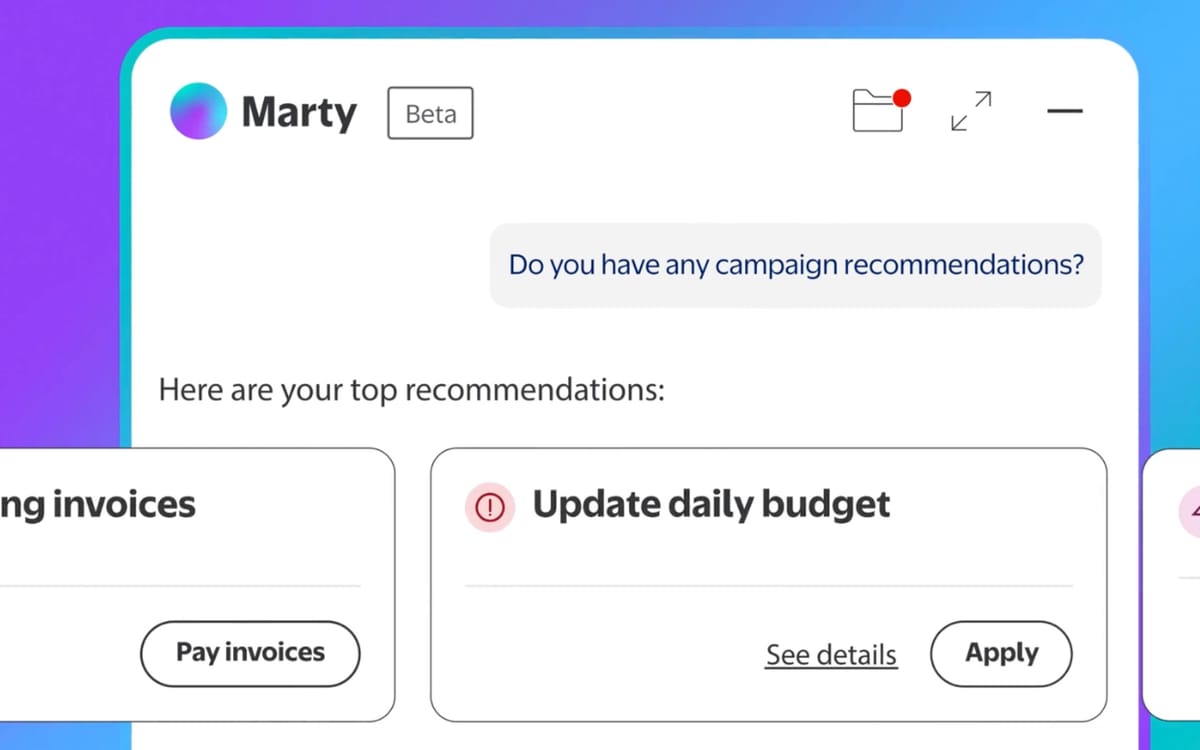
Walmart Connect announced a comprehensive artificial intelligence strategy on January 6, 2026, positioning the retail media network to compete with autonomous shopping systems through an advertising assistant that helps brands build, optimize, and troubleshoot campaigns using conversational chat.
The announcement arrives as retail media networks face structural pressure from AI shopping agents that threaten to disintermediate traditional advertising relationships. Khurrum Malik, Vice President of Business and Product Marketing at Walmart Connect, described the shift as entering "an era defined by AI" that will fundamentally transform how brands reach customers and measure impact.
The advertising assistant, currently in beta for Sponsored Search campaigns, will become available to all Sponsored Search advertisers in the Walmart Connect Ad Center later this half. The system provides answers and recommendations through conversational chat covering bidding, keywords, and billing, including personalized alerts based on account-specific conditions.
Subscribe PPC Land newsletter ✉️ for similar stories like this one
Walmart Connect developed four advanced research reports accessible via chat: Change Analysis, Account Impression Share of Voice, Account Keyword Impression Share of Voice, and Account Category Benchmark Opportunity. According to the announcement, 97% of user queries are unique, indicating advertisers are using the assistant in highly personalized ways rather than repeating generic questions.
The agentic approach represents Walmart's response to Amazon's deployment of generative and agentic AI across its shopping platform, which reached 250 million Rufus users throughout 2025. Amazon's advertising revenue reached $17.7 billion in the third quarter of 2025, growing 22% year-over-year, with analysts projecting the company's annual advertising will likely generate approximately $70 billion in 2025.
Walmart tested advertising formats within its Sparky agent during fall 2025, marking the company's first integration of advertisements into AI shopping experiences. The test demonstrated significant adoption, with 81% of surveyed Walmart customers reporting they used Sparky to check product availability and review product specifications before making purchases, according to Walmart's "Ask Sparky" AI-based Shopping Assistant Custom Survey conducted by the Walmart Connect Media Insights Primary Research survey team in August 2025.
"AI-first shopping experiences have the potential to transform how customers search and discover products," Malik wrote. Search remains the most popular entry point, but as customers adopt new shopping behaviors, Walmart explores ways to help brands meet customers where they are.
The company's Automated Creative Generator reduced creative production time by 80% in early beta testing from August 1 through October 31, 2025, according to Walmart first-party data. The measurement compares advertisers' median creative production time in the Walmart Connect Ad Center Creative Hub using the GenAI-powered solution against all advertisers submitting creatives manually within the same timeframe. Creative production time is measured in minutes between the time creative is created to the time creative is submitted.
Walmart Connect introduced lifestyle backgrounds for brand products in its Automated Brand Shop Builder, allowing advertisers of all sizes to quickly produce ready-to-activate ad creatives. The GenAI-powered performance insights extend to end-of-campaign reports and path to conversion reports, coming to the Walmart Connect Ad Center in fiscal year 2027.
The advertising assistant will help power Walmart's Marty super agent, first introduced in July 2025. The system simplifies campaign setup through plain-language guidance, from strategy to execution, allowing users of any expertise level to manage advertising operations without specialized technical knowledge.
Walmart Connect achieved 100% sponsored product coverage across tracked search queries in the second and third quarters of 2025, maintaining position from the previous year while demonstrating the most balanced advertiser distribution among major networks with only 3% head concentration, 23% torso representation, and 75% tail participation.
The platform's teams are using AI to efficiently scale and provide strategic guidance to brands, from research assistants that synthesize documents for faster insights to automatically generating brand-specific insights newsletters powered by Walmart's associate super agent. This infrastructure approach aligns with broader industry trends toward agentic advertising implementations across platforms during 2025.
Buy ads on PPC Land. PPC Land has standard and native ad formats via major DSPs and ad platforms like Google Ads. Via an auction CPM, you can reach industry professionals.
Walmart's AI strategy acknowledges fundamental tensions in autonomous commerce. Independent analyst Andrew Lipsman published analysis on October 6, 2025, questioning the commercial viability of AI shopping agents, examining eight structural challenges facing autonomous shopping systems. "The fundamental flaw with 'agentic commerce' or 'agentic advertising' is that it violates the motivations of retail outlets to control the customer relationship and monetize their first-party data with advertising," wrote Eric Seufert of MobileDevMemo in analysis cited by Lipsman.
Amazon and Shopify collectively control more than 50% of the U.S. ecommerce market and currently block AI agents to maintain discovery ownership and protect retail media businesses racing toward $300 billion by 2030. Amazon filed a federal lawsuit against Perplexity AI on November 4, 2025, alleging the startup deployed covert artificial intelligence agents into the e-commerce platform's systems without authorization.
Walmart's approach differs by integrating advertising directly into its own AI shopping experiences rather than blocking third-party agents. The Sparky integration represents a bet that advertisers will find value in reaching customers through conversational commerce interfaces, even as industry observers question whether retailers have commercial motivation to allow third-party agents broadly without restriction.
The retail media sector reached $52.44 billion in the United States during 2024, with brands increasingly working with multiple networks. Brands working with four to six retail media networks doubled from 10% to 24% in 2025, indicating diversification strategies among advertisers seeking first-party data access as privacy regulations limit traditional digital advertising targeting capabilities.
Walmart's advertising revenue surged 46% in the second quarter of fiscal 2026, though this growth included significant contribution from the VIZIO acquisition completed earlier in fiscal 2026. The acquisition provides Walmart entry into connected television advertising, expanding beyond traditional retail media offerings.

Walmart Connect positions itself through omnichannel scale, solutions, and signals that differentiate the platform from competitors. The company operates 170,000 digital screens across more than 4,500 stores, allowing advertisers to reach millions of customers through in-store TV walls and self-checkout screens. Display and search ads operate on Walmart.com and in the Walmart App, while first-party shopper data integrations enable media performance for advertisers outside Walmart's proprietary sites.
The platform partnered with The Trade Desk following the 2021 relaunch as Walmart Connect, providing marketers access to shopper data in what the companies described as a way that protects consumer privacy and improves the consumer experience. "Walmart is pioneering a new frontier in digital advertising, providing marketers with access to shopper data for the first time," said Jeff Green, CEO and co-founder of The Trade Desk at the time.
Malik emphasized that the pace of change in AI is fast, but the mission stays consistent: delivering real value to advertisers, simplifying the complex, and connecting brands to customers in meaningful ways through full-funnel solutions. The company envisions creative that builds itself from product pages and adapts across video, display, and in-store formats, campaigns that predict intent and optimize spend in the moment, and measurement that moves from reporting to real-time predictive insight across every channel.
The advertising assistant currently handles campaign management for Sponsored Search, but Walmart plans more enhanced capabilities and insights rolling out along the way. The system's ability to process unique queries rather than generic requests suggests advertisers are using the tool for account-specific optimization rather than basic information retrieval.
Multiple companies introduced agentic transaction capabilities during November 2025, with platforms racing to establish positioning within emerging infrastructure before dominant standards solidified across the ecosystem. PubMatic launched AgenticOS with partnerships from WPP Media, Butler/Till, and MiQ as early participants testing agent-led workflows in market deployments throughout the first quarter of 2026.
The advertising technology infrastructure faces fundamental questions about how AI-mediated commerce reshapes marketing strategies. Karsten Weide suggested that "direct response advertising will fade. Brand advertising will gain in importance as we want to influence consumers before they tell their agent what to do." This transformation would prioritize brand awareness campaigns over direct response formats currently dominating digital marketing.
Walmart Connect's approach of integrating advertising into its own AI shopping experiences while providing advertisers with AI-powered campaign management tools represents a dual strategy: maintaining control over customer relationships and first-party data while offering automation that reduces operational friction for brands. The company acknowledges it is only scratching the surface of what's possible as artificial intelligence reshapes advertising from how brands find customers to how decisions get made.
The beta testing phase for the advertising assistant in Sponsored Search campaigns provides Walmart with data on how advertisers interact with conversational interfaces for campaign management. The 97% unique query rate indicates users are asking account-specific questions rather than generic help requests, suggesting the system provides value beyond basic documentation.
GenAI-powered performance insights extend beyond creative production into strategic analysis. End-of-campaign reports and path to conversion reports leverage omnichannel retail data to turn shopping signals into actionable intelligence for advertisers. These capabilities, coming to the Walmart Connect Ad Center in fiscal year 2027, represent Walmart's bet that proprietary retail data combined with AI analysis provides competitive advantage over pure advertising technology platforms.
The Automated Brand Shop Builder demonstrates how GenAI reduces barriers for advertisers of all sizes to create professional advertising creative. Lifestyle backgrounds for brand products enable small and medium businesses to compete visually with larger advertisers that maintain dedicated creative teams. The 80% reduction in creative production time translates to faster campaign launches and more efficient resource allocation for brands managing multiple retail media networks.
Walmart's associate super agent and research assistants that synthesize documents for faster insights reflect the company's investment in AI tools for its own teams. These internal applications of AI technology inform the development of advertiser-facing tools like the advertising assistant, as Walmart's teams learn how conversational interfaces can streamline complex workflows.
The company's willingness to test advertising formats within Sparky during fall 2025 demonstrates a pragmatic approach to AI shopping experiences. Rather than viewing conversational commerce as a threat to advertising revenue, Walmart explores how sponsored products and recommendations can integrate naturally into AI-guided shopping sessions. The 81% adoption rate for checking product availability and reviewing specifications indicates Sparky provides utility that encourages customer engagement.
Walmart Connect faces competition from Amazon's comprehensive AI shopping infrastructure, including the Rufus chatbot with 250 million users, Buy for Me agentic purchasing for products from third-party websites, and Alexa+ voice shopping that generates three times more on-device purchases compared to classic Alexa. Amazon's scale in AI shopping experiences establishes benchmarks for customer expectations around conversational commerce.
Google launched agentic checkout and AI shopping tools on November 13, 2025, introducing features that enable AI systems to complete purchases, contact stores, and process complex product queries. Merchant eligibility for agentic checkout depends on integration with Google's payments infrastructure, with Wayfair, Chewy, Quince, and select Shopify merchants as initial participants.
The convergence of retail media and artificial intelligence creates opportunities and risks for advertisers. Platforms that successfully integrate advertising into AI shopping experiences while maintaining control over customer relationships and data monetization will capture disproportionate value. Those that allow third-party agents to disintermediate customer touchpoints risk losing advertising revenue and strategic positioning.
Walmart's announcement emphasizes that AI and human creativity will work together to spark innovation, growth, and sales. This framing positions artificial intelligence as augmentation rather than replacement, acknowledging that creative strategy and brand building require human judgment even as operational execution becomes automated.
The company's investment in AI infrastructure across creative production, campaign management, performance analysis, and shopping experiences represents a comprehensive strategy to maintain relevance as autonomous systems assume larger roles in consumer transactions. By developing both advertiser-facing tools and customer-facing AI experiences, Walmart positions itself to capture value regardless of how quickly agentic commerce adoption accelerates.
Subscribe PPC Land newsletter ✉️ for similar stories like this one
Subscribe PPC Land newsletter ✉️ for similar stories like this one
Who: Walmart Connect, the retail media network division of Walmart Inc., announced artificial intelligence capabilities through Khurrum Malik, Vice President of Business and Product Marketing. The developments affect advertisers of all sizes using Walmart's platform for Sponsored Search campaigns, display advertising, and in-store digital screens. Competitive context includes Amazon with 250 million Rufus users, Google's agentic checkout capabilities, and emerging platforms like PubMatic's AgenticOS. Industry analysts including Andrew Lipsman and Eric Seufert have questioned the commercial viability of AI shopping agents that could disintermediate retail media relationships.
What: Walmart Connect introduced an agentic advertising assistant in beta for Sponsored Search campaigns, providing conversational chat interfaces for building, optimizing, and troubleshooting campaigns. The system includes four advanced research reports: Change Analysis, Account Impression Share of Voice, Account Keyword Impression Share of Voice, and Account Category Benchmark Opportunity. Walmart developed an Automated Creative Generator that reduced creative production time by 80% in early beta testing, alongside lifestyle backgrounds in the Automated Brand Shop Builder. The company tested advertising formats within its Sparky AI shopping assistant during fall 2025, finding 81% of surveyed customers used the agent for product availability and specifications. GenAI-powered performance insights including end-of-campaign reports and path to conversion reports will arrive in the Walmart Connect Ad Center during fiscal year 2027.
When: Walmart Connect announced the artificial intelligence strategy on January 6, 2026. The advertising assistant is currently in beta for Sponsored Search campaigns and will become available to all Sponsored Search advertisers later this half, with enhanced capabilities rolling out progressively. Early beta testing of the Automated Creative Generator occurred from August 1 through October 31, 2025. Walmart tested Sparky advertising formats during fall 2025, with customer surveys conducted in August 2025. The company first introduced its Marty super agent in July 2025, establishing the foundation for the advertising assistant announced January 6.
Where: The advertising capabilities operate within the Walmart Connect Ad Center, Walmart's self-service advertising platform for brands managing campaigns on Walmart.com, the Walmart App, and in-store digital screens across more than 4,500 locations with 170,000 digital screens. The Sparky agent integration affects AI shopping experiences within Walmart's e-commerce and mobile applications. Walmart Connect competes in the U.S. retail media sector that reached $52.44 billion during 2024, operating alongside Amazon, Target, Kroger, Albertsons, and other retail media networks. The announcement positions Walmart within the broader advertising technology ecosystem experiencing rapid deployment of agentic AI capabilities across platforms during 2025.
Why: Walmart Connect's AI strategy responds to fundamental shifts in how customers discover and purchase products, with artificial intelligence increasingly mediating shopping experiences that previously involved human-controlled search and browsing. The advertising assistant addresses operational complexity in campaign management, with 97% of user queries being unique indicating advertisers need account-specific optimization rather than generic help. The 80% reduction in creative production time through AI-generated assets enables smaller advertisers to compete visually with larger brands maintaining dedicated creative teams. Integration of advertising formats within Sparky demonstrates Walmart's strategy to maintain control over customer relationships and first-party data monetization as AI shopping experiences expand, contrasting with Amazon and Shopify blocking third-party AI agents. The developments matter for marketing professionals as autonomous systems threaten to disintermediate traditional retail media relationships, potentially shifting emphasis from direct response advertising to brand awareness campaigns that influence consumers before they instruct AI agents what to purchase.