When LEGO abandoned open creativity for licensed franchise merchandising
Marketing consultant questions LEGO's shift from open-ended building blocks to licensed IP sets, sparking debate about retail economics versus imagination.


Marketing consultant questions LEGO's shift from open-ended building blocks to licensed IP sets, sparking debate about retail economics versus imagination.
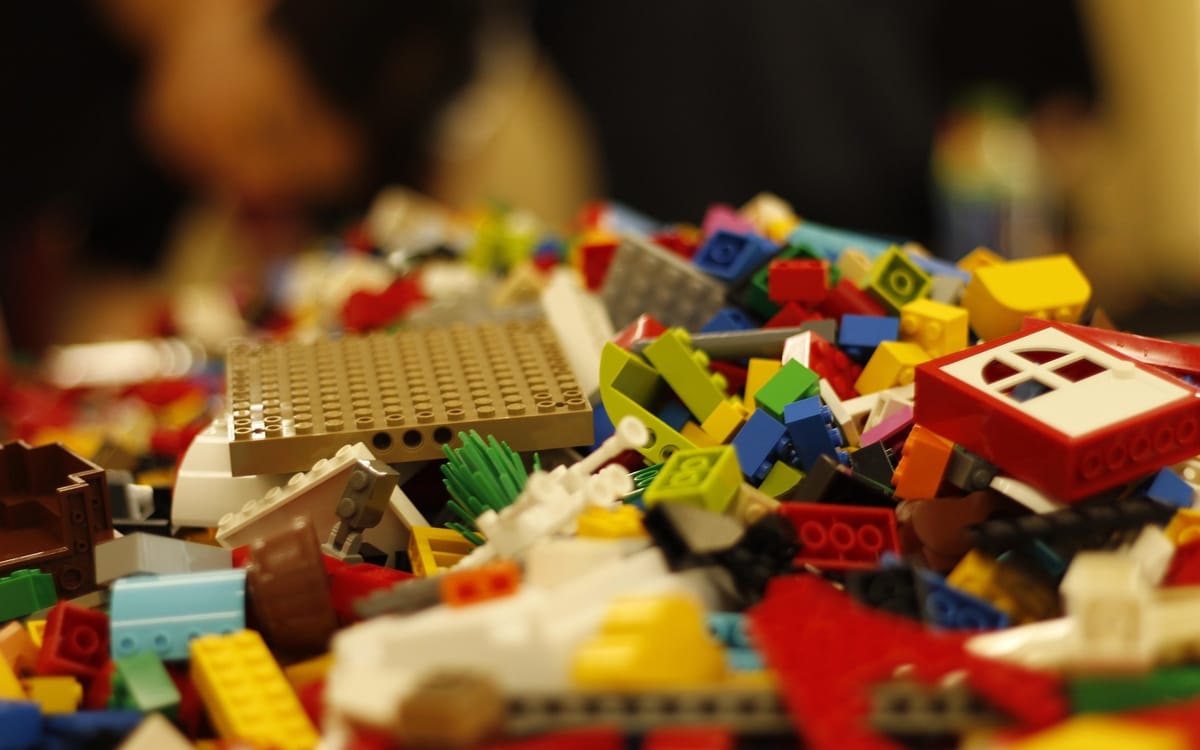
Tom Goodwin today posted a pointed observation on X, questioning when LEGO changed from "bland modular blocks that a kid could make anything from" to "making specific things with only one off pieces, and no creativity."
"When did Lego change from bland modular blocks that a kid could make anything from, letting the imagination go wild," Goodwin wrote. "To making specific things with only one off pieces, and no creativity. Seems like a huge step back."
His commentary, which sparked multiple responses, captures a fundamental tension in modern brand strategy that extends far beyond children's toys. Goodwin followed up with a second post contrasting two eras: "Lego .1995, build anything let your imagination run free, there is no limit to possibilities. 2025, make precisely and only this, do not deviate."
The observation resonates because it identifies a shift that marketing professionals recognize across consumer categories. Goodwin, who founded business transformation consultancy All We Have Is Now and authored "Digital Darwinism: Survival of the Fittest in the Age of Business Disruption," has amassed over 730,000 LinkedIn followers through analysis of how commercial pressures reshape brand positioning.
Several respondents in Goodwin's thread offered competing perspectives on the transformation. Ralph Grabowski noted that "with rectangular bricks, which I had as a kid, I could build 'anything' but tended to rectangular things, like houses, towers. With a 4,000-piece like this one, construction takes a week or two and the accomplishment is more satisfying."
Matt Large suggested the shift reflected adult preferences rather than children's needs: "When those kids grew up. As well as being able to make anything, kids were fine with its inevitable destruction. Adults don't have the stomach for it."
Rhymer Rigby simply responded "Decades ago, alas," while Alex Brown noted "They're generally expensive sets and they sell well. Modern business in a nutshell."
The LEGO Group's official brand documentation presents a different narrative than Goodwin's observation suggests. According to materials on the company's website, LEGO maintains six core brand values: imagination, creativity, fun, learning, caring, and quality.
The brand framework explicitly states that "free play is how children develop their imagination—the foundation for creativity" and emphasizes that "systematic creativity is a particular form of creativity that combines logic and reasoning with playfulness and imagination."
LEGO's stated mission emphasizes that "we are the masters of reinvention" and that "LEGO play offers the chance of constant discovery—the possibility of creating something new every time." The company describes its product as "only ever one half of the toy. The other half is the child."
The LEGO Group timeline reveals that the company was founded in 1932 by Ole Kirk Kristiansen in Billund, Denmark. Kristiansen made his first wooden toy in 1932 and persevered until his business succeeded. The name LEGO derives from combining two Danish words "leg godt," meaning "play well."
Buy ads on PPC Land. PPC Land has standard and native ad formats via major DSPs and ad platforms like Google Ads. Via an auction CPM, you can reach industry professionals.
According to historical documentation, LEGO started with wooden toys including cars, airplanes, and yoyos. In 1949, the company moved beyond wood, launching Automatic Binding Bricks made of plastic. The traditional LEGO bricks were introduced in 1958, featuring an interlocking design with studs on top and tubes on the bottom.
The LEGO History Timeline shows that in 1960, a fire destroyed the wooden toy warehouse. Following this event, LEGO discontinued wooden toys and focused exclusively on plastic systems. In 1963, Godtfred Kirk Christiansen, who had taken over management from his father, established 10 LEGO characteristics to guide product development.
These 10 characteristics include: unlimited play possibilities, for girls and boys, enthusiasm for all ages, year-round play, stimulating and harmonious play, endless hours of play, imagination/creativity/development, multiplied play value with more LEGO, always topical, and safety and quality.
An internal survey in 1965 revealed that LEGO consumers were more likely to be younger children and boys. To address this limitation, Godtfred Kirk Christiansen decided to emphasize "play combined with the creative and constructive," launching Town, Space, and Castle-themed products, the LEGOLAND line, and LEGO Minifigures.
The LEGO Group is owned by KIRKBI A/S, which holds 75% ownership, with the LEGO Foundation controlling the remaining 25%. The company maintains private ownership by the Kirk Kristiansen family. KIRKBI A/S is headquartered in Billund, Denmark, with additional offices in Copenhagen, Denmark, and Baar, Switzerland.
The LEGO Foundation is a corporate foundation that shares LEGO's mission to "inspire and develop the builders of tomorrow." The foundation's work focuses on redefining play and reimagining learning by changing how people understand the importance of play in equipping children with essential 21st century skills.
A marketing case study shows that LEGO has been named "Toy of the Century" twice and became one of the world's largest toy manufacturers. In 2024, LEGO was the most valuable toy brand in the world with a brand value approaching eight billion U.S. dollars.
The company's market share and revenue increased during the first half of 2024, significantly outperforming the wider toy industry. Part of this growth was attributed to LEGO's partnerships and expanded product lines across multiple categories.
LEGO's transformation toward licensed intellectual property represents one aspect of this commercial success. The company has developed strategic partnerships with entertainment franchises including Star Wars, Super Mario, Marvel, Harry Potter, Lord of the Rings, Indiana Jones, Disney, and others. These themed sets appeal to both children seeking character recognition and adults pursuing nostalgic connections.
The shift toward specific sets rather than generic building blocks addresses distinct market dynamics. Themed sets provide clear value propositions at retail. Licensed products offer immediate recognition on crowded store shelves. Franchise collaborations tap into existing fan bases developed by entertainment companies.
LEGO stores play a strategic role in brand positioning. According to company materials, these retail locations offer interactive shopping experiences with free play areas, life-size models, special events, and exclusive product launches. Pick a Brick walls allow purchase of individual bricks. Some stores feature Minifigure Factories where customers design customized figures.
The strategic placement of stores in high-traffic areas including New York's Fifth Avenue, London's Leicester Square, and California's Downtown Disney District expands brand reach beyond traditional toy buyers. These locations attract tourists and consumers outside LEGO's typical audience.
LEGO Ideas, launched in 2014, allows fans to submit their own designs which can potentially become official products. Fans share unique creations on social media, with LEGO featuring fan-made content on official channels. This community focus emphasizes creativity and user-generated contributions to the brand.
The company has also maintained sustainability commitments. According to official documentation, LEGO aims to make products from more sustainable materials by 2032, switch to recyclable packaging, and reduce greenhouse gas emissions to net zero by 2050. The first LEGO elements made from sustainable materials entered product lineups in 2018.
Goodwin's observation about the tension between commercial success and creative philosophy extends beyond LEGO to broader marketing trends. Research for 2026 shows brands increasingly optimize for AI agents and algorithmic discovery rather than human creativity and exploration.
Retail media networks demonstrate similar patterns, with sponsored product coverage increasing 7% year-over-year as retailers shift from static placements toward dynamic, algorithm-driven positioning. This mirrors the evolution Goodwin identifies in LEGO's product strategy.
Brand marketing research shows that favorability drives long-term sales impact up to six times greater than short-term tactics. Yet consumer behavior patterns reveal shoppers plan to spend $890.49 per person on holiday items in 2025, with 63% waiting until Thanksgiving weekend for promotional events. This behavior rewards recognizable products over experimental offerings.
The disconnect between LEGO's stated brand values and its product evolution represents a broader challenge in marketing measurement. Research shows 86% of marketers cannot determine channel impact despite unprecedented data access, suggesting that commercial decisions often override brand positioning principles.
Goodwin characterized his observation as potential book material in a follow-up comment: "I could write a book on this." The statement resonates because LEGO's transformation encapsulates fundamental questions about how brands balance commercial necessity against founding principles.
When Goodwin asks when LEGO changed, he identifies a tension that extends across consumer categories. Brands maintain aspirational positioning emphasizing creativity and possibility while operational decisions follow market logic prioritizing recognition and certainty.
For marketing professionals, LEGO's evolution demonstrates how external forces shape brand strategy more than internal values. Distribution channels, retail partners, and purchase behavior patterns create pressures that push brands toward specificity regardless of creative commitments stated in brand frameworks.
The question facing marketers involves whether this trajectory represents inevitable maturation or avoidable compromise. Can brands maintain experimental creativity at commercial scale, or does growth inherently require the prescriptive specificity Goodwin observes in modern LEGO products?
Current retail targeting approaches emphasize 16 distinct segmentation methods to transform first-party data into measurable performance. This precision-focused strategy mirrors LEGO's shift from "build anything" to "build this specific set."
The parallel between LEGO's transformation and digital advertising trends proves instructive. Both transitions sacrifice exploration for conversion efficiency. Both prioritize algorithmic optimization over human creativity. Both demonstrate how commercial scale affects creative products.
Goodwin's critique resonates because it names what commercial success narratives typically ignore. LEGO achieved market dominance while moving away from the open-ended creativity that originally defined its brand promise. That achievement deserves recognition while the philosophical compromise deserves acknowledgment.
The toy industry's evolution mirrors consumer spending patterns where households demonstrate selective behavior rather than impulsive purchases. September retail spending declined 0.49% month-over-month despite strong 5.72% year-over-year growth, reflecting strategic consumer behavior that rewards clear value propositions.
Marketing professionals navigating similar tensions between aspiration and conversion recognize the pattern Goodwin identifies. Brand positioning emphasizes creativity, innovation, and possibility. Sales optimization requires specificity, recognition, and certainty. The gap between these positions defines modern marketing complexity.
Several respondents in Goodwin's thread noted that creative building hasn't disappeared entirely. Nola Simon mentioned "there are websites sharing directions how to use standard kits to build other amazing things" using official LEGO sets for alternative builds. This suggests that maker culture continues through community channels even as official products emphasize licensed themes.
The democratization of building instructions through digital platforms provides a counterpoint to LEGO's corporate strategy. While official products feature licensed IP and specific builds, community-generated content maintains experimental building that characterized earlier eras.
LEGO's adult collector market represents another dimension of this transformation. Adult fans of LEGO, known as AFOLs in community terminology, purchase complex sets for display rather than open-ended play. Architecture and botanical collections designed for adult buyers demonstrate LEGO's deliberate cultivation of collector segments that prioritize completion over creativity.
The strategic question involves whether LEGO's stated brand values around imagination and creativity remain authentic when product development prioritizes licensed reproduction. Marketing materials maintain aspirational positioning while SKU-level decisions follow commercial logic.
Goodwin's observation provides a framework for evaluating this tension. He identifies what was lost without dismissing what was gained. LEGO achieved unprecedented commercial success while constraining the creative freedom its brand framework claims to champion. Both statements remain accurate simultaneously.
For advertising professionals, the implication suggests brand values and commercial strategy often diverge at scale. Companies maintain aspiration in positioning while operations follow market requirements. This gap doesn't necessarily represent hypocrisy but rather recognition that survival requires adaptation to distribution realities.
The toy industry faces similar pressures toward technological integration, with Mattel partnering with OpenAI to develop AI-powered products. These developments demonstrate how traditional toy companies seek partnerships to modernize offerings and maintain relevance with evolving consumer expectations.
Goodwin's December 30, 2025 post captures a moment when commercial success and creative philosophy diverge visibly. His observation that LEGO moved from "build anything" in 1995 to "make precisely and only this" in 2025 identifies a transformation that marketing professionals recognize across categories.
Whether this shift represents inevitable business evolution or avoidable brand compromise remains debatable. What proves clear is that LEGO achieved market leadership by embracing constraints rather than resisting them, demonstrating how retail economics ultimately shape product strategy regardless of stated brand values.
Subscribe PPC Land newsletter ✉️ for similar stories like this one
Subscribe PPC Land newsletter ✉️ for similar stories like this one
Who: Tom Goodwin, marketing consultant, author, and founder of All We Have Is Now consultancy, along with LEGO Group, which is owned by KIRKBI A/S (75%) and LEGO Foundation (25%), with the Kirk Kristiansen family maintaining control since founding the company in 1932.
What: Goodwin questioned LEGO's fundamental transformation from abstract building blocks encouraging unlimited creativity to licensed intellectual property sets with specialized pieces requiring specific assembly. His December 30, 2025 social media post contrasted 1995's open-ended building philosophy with 2025's prescriptive, franchise-focused product strategy, generating debate about commercial pressures versus creative brand values.
When: Goodwin posted his analysis on December 30, 2025, framing the comparison between 1995's creative freedom and 2025's specificity. The transformation he identifies occurred gradually across decades, with LEGO's history showing thematic products introduced as early as 1965 and accelerating through subsequent partnerships with entertainment franchises.
Where: The observation applies to LEGO's global operations from headquarters in Billund, Denmark, through retail distribution channels including LEGO-branded stores in high-traffic areas like New York's Fifth Avenue and London's Leicester Square, where retail media increasingly emphasizes algorithm-driven product positioning.
Why: Goodwin's critique identifies tension between LEGO's stated brand values emphasizing imagination, creativity, and unlimited possibilities versus product strategies prioritizing licensed IP, specific builds, and recognizable franchise themes. This disconnect reflects broader marketing challenges where commercial success requires specificity and recognition while brand positioning maintains aspirational creativity messaging, demonstrating how retail economics and distribution pressures shape strategy regardless of founding principles.