Apple expands App Store search ads with multiple placements arriving in 2026
Apple announced additional App Store search ad positions launching in 2026, automatically enrolling campaigns without modifications as competition intensifies.


Apple announced additional App Store search ad positions launching in 2026, automatically enrolling campaigns without modifications as competition intensifies.
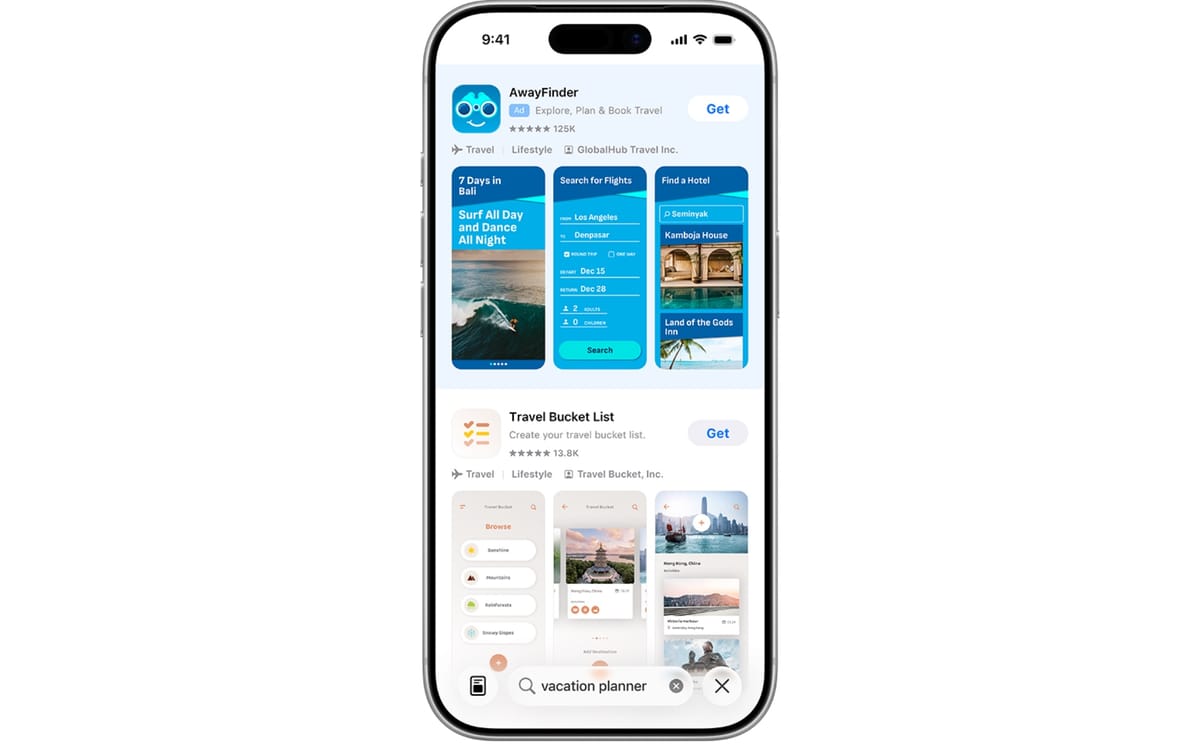
Apple announced additional advertising positions throughout App Store search results starting in 2026, according to documentation published by the company. The expansion introduces multiple ad placements beyond the current top-of-search-results position, automatically enrolling existing campaigns without requiring advertiser modifications.
The announcement, shared via Apple's advertising help documentation and confirmed through industry sources on December 18, 2025, marks the platform's most significant inventory expansion since the company rebranded its advertising business from Search Ads to Apple Ads in April 2025. According to the documentation, advertisers cannot select or bid for specific placements. Instead, ads will appear either at the existing top position or further down in search results based on Apple's automated placement algorithms.
Subscribe PPC Land newsletter ✉️ for similar stories like this one
Nearly 65 percent of App Store downloads happen directly after a search, according to Apple's data from 2022. This statistic underscores why search results represent the platform's most valuable advertising inventory. The company's current search advertising system, launched in October 2016 with a single top-of-search placement, has expanded gradually to include the Search tab, Today tab, and "You Might Also Like" sections on product pages. The 2026 additions represent the first increase in search results ad density since the platform's initial launch.
Search results ads at the top position deliver more than a 60 percent average conversion rate, according to Apple's data spanning November 2024 through October 2025. The company defines this conversion rate as tap-through install rates across all available Apple Ads countries and regions. This performance metric significantly exceeds typical mobile advertising benchmarks, where global e-commerce apps achieved 2.28 installs per thousand impressions in 2024.
The ad format remains consistent across all positions. Advertisers can use either default product pages generated from App Store metadata or custom product pages created in App Store Connect. Custom product pages integrate with Apple Search Ads to create ad variations aligned with specific audiences and keyword themes. Deep links directing users to specific in-app destinations are available for search results placements on devices running iOS or iPadOS 18 and later.
Apple's auction system determines which ads appear based on relevance and bid amounts. The company explicitly states that apps lacking relevance to search queries will not display "regardless of how much you may be willing to pay." This relevance requirement distinguishes Apple's approach from traditional keyword-triggered advertising systems that prioritize bid amounts over contextual matching. Apple considers both factors but excludes apps from auctions entirely if they fail internal relevance thresholds.
Advertisers running active search results campaigns will automatically qualify for all available positions without campaign modifications. The company specifies that billing continues based on existing pricing models: cost per tap or cost per install. This automatic enrollment approach differs from typical platform expansions that require advertisers to opt into new inventory sources or adjust campaign settings manually.
The expansion arrives as Apple's advertising business faces increased scrutiny from regulators and competitors. French antitrust authorities fined Apple €150 million in early 2025 over App Tracking Transparency implementation, arguing the consent framework created advantages favoring Apple Ads over third-party networks. The expansion of Apple's advertising inventory raises questions about whether increased ad density affects user experience or App Store economics for developers who choose not to advertise.
Apple's advertising business operates within its broader services division, which reached new revenue highs in the first quarter of 2025. The company has steadily increased its advertising footprint since launching Search Ads in 2016. The platform expanded to 21 new countries across Europe, Asia, and Africa in October 2024, including Türkiye, Cyprus, Morocco, and 18 other diverse markets spanning different economic and technological landscapes.
The timing of the 2026 expansion coincides with broader shifts in mobile advertising infrastructure. Apple implemented App Tracking Transparency in April 2021, requiring apps to obtain user permission before accessing the Identifier for Advertisers. This framework fundamentally altered iOS advertising measurement, with SKAdNetwork (rebranded as AdAttributionKit in 2025) now covering 77 percent of all referral-based conversions to the App Store according to industry analysis. The challenges created by privacy restrictions have pushed advertisers toward Apple's first-party advertising products, which maintain deterministic attribution within the company's ecosystem.
Aykut Karaalioglu, founder of MobileAction, commented on the announcement via LinkedIn that "more placements = more surface area, but also more competition." He suggested that "creative, relevance, and keyword strategy are about to matter more than bids alone." Hitanshu Ghelani, a marketing consultant, characterized the development as "a big shift" where "more placements = more surface area, but also more competition."
The expansion creates potential advantages for larger advertisers with sophisticated keyword strategies and creative testing capabilities. Smaller developers and independent publishers may face increased competition for visibility in search results, though Apple's relevance requirements could protect against purely bid-driven displacement. The automatic enrollment approach ensures that existing advertisers maintain access to new inventory without technical barriers, though competitive dynamics within the expanded auction environment remain uncertain.
Buy ads on PPC Land. PPC Land has standard and native ad formats via major DSPs and ad platforms like Google Ads. Via an auction CPM, you can reach industry professionals.
Apple's intelligent technology matches user search terms with advertised apps using either advertiser-selected keywords or Apple-suggested keywords. The system's 60 percent average conversion rate suggests relatively sophisticated matching algorithms that prioritize contextual relevance over broad keyword matching. Advertisers can choose their own keywords or accept Apple's suggestions based on app metadata, category, and competitive positioning.
The platform's keyword-based approach differs from discovery-focused advertising placements in the Today tab or product page sections. Search advertising captures users with explicit intent, as evidenced by the 65 percent of downloads occurring directly after searches. This intent signal produces higher conversion rates compared to discovery advertising, where users browse without specific app categories or features in mind.
Deep linking functionality adds another layer of conversion optimization. Apps using this feature can direct users to specific content, features, or promotional offers rather than generic app landing screens. The restriction to iOS 18+ devices limits deep linking availability but reflects Apple's approach of linking advanced advertising features to recent operating system versions. This requirement potentially creates fragmented user experiences where some ad clicks lead to deep-linked destinations while others default to standard app launches.
Apple maintains existing pricing models despite the inventory expansion. Advertisers pay either cost per tap (CPT) or cost per install (CPI) depending on campaign objectives and platform configurations. The company does not specify whether different placements carry different cost structures, suggesting uniform pricing across all search results positions. This approach contrasts with display advertising platforms that typically charge premium rates for above-the-fold positions.
Cost per install serves as a primary metric for measuring app advertising effectiveness, representing the total cost incurred for each app installation generated through paid campaigns. The metric enables advertisers to gauge campaign performance, compare advertising platforms, and set realistic acquisition goals. CPI varies significantly by app category, geographic market, and competitive intensity, with more competitive categories generally commanding higher rates.
The preserved pricing model suggests Apple prioritizes auction efficiency and advertiser continuity over differential pricing strategies. However, placement performance differences could effectively create cost variations through conversion rate disparities. Top-of-search-results ads achieving 60 percent conversion rates deliver lower effective CPI than lower placements with reduced visibility and conversion performance, even if the nominal CPT or CPI pricing remains consistent.
The expansion affects multiple stakeholder groups within Apple's app ecosystem. Developers gain additional advertising opportunities to reach users during high-intent search moments. However, increased ad density throughout search results could affect organic discovery, particularly for apps ranking immediately below paid placements. The addition of multiple ad positions means more search result pages will feature advertising, potentially pushing organic listings further down the screen.
Apple's approach of automatic campaign enrollment without placement selection contrasts with platforms offering granular inventory control. Google Ads, for comparison, allows advertisers to specify network targeting, placement exclusions, and bid adjustments by position. Apple's unified approach simplifies campaign management but reduces advertiser control over where ads appear and how much they pay for specific placements.
The relevance-first auction design reflects Apple's positioning as a premium advertising platform prioritizing user experience over pure monetization. The company's stated unwillingness to display irrelevant apps "regardless of how much you may be willing to pay" creates theoretical protection against low-quality advertising. However, the definition and measurement of relevance remain proprietary to Apple, with limited transparency about how the company evaluates app-query matching quality.
Mobile advertising measurement firm Adjust reported that e-commerce app installs declined 14 percent in 2025 despite session growth, suggesting broader challenges in app acquisition economics. Global e-commerce app CPI reached $0.99in Q1 2025, with significant regional variations ranging from $0.90 in Asia-Pacific to $2.70 in North America. These metrics indicate substantial cost differences across markets, likely influencing how the 2026 inventory expansion affects different geographic regions.
Ads utilize either default product pages or custom product pages configured in App Store Connect. Default ads pull metadata directly from app listings, including title, subtitle, icon, screenshots, and ratings. Custom product pages allow advertisers to create tailored presentations emphasizing specific features, use cases, or promotional messages aligned with keyword themes or audience segments.
Ad variations enable sophisticated targeting approaches where different creative messages match specific search contexts. An app with multiple use cases could create variations highlighting fitness features for fitness-related searches and productivity features for work-related queries. This customization capability became available when Apple integrated custom product pages with Apple Search Ads in January 2022.
The visual format mirrors organic app listings to maintain consistency within search results. Ads display the same information hierarchy as non-paid listings, with clear "Ad" labels distinguishing promotional content from organic results. This design approach prioritizes user experience over advertising differentiation, though critics argue it creates confusion about which results represent algorithmic rankings versus paid placements.
Apple's advertising expansion occurs against a backdrop of regulatory scrutiny regarding platform market power and competitive practices. The company faces antitrust investigations in multiple jurisdictions examining whether its control over iOS distribution creates unfair advantages for Apple's own services, including advertising products. The French fine related to App Tracking Transparency specifically addressed concerns that privacy controls favored Apple Ads over competitors.
The recent tightening of App Store age controls and data sharing disclosure requirements in November 2025 demonstrates Apple's ongoing platform governance role. These policies affect how apps collect data, obtain user consent, and implement age verification systems. Critics argue that Apple's dual role as platform operator and advertising provider creates inherent conflicts of interest, particularly when platform policies affect competitive dynamics in advertising markets.
The advertising expansion benefits Apple's services revenue, which reached record levels in early 2025. However, the company maintains that advertising remains a small component of overall services revenue compared to subscriptions, App Store commissions, and payment processing fees. Apple executives have consistently emphasized that advertising growth will not compromise user privacy or experience, though the addition of multiple search results ads tests this commitment.
Developers must evaluate whether the expanded inventory justifies increased advertising investment. The automatic campaign enrollment means existing advertisers will compete across more placements without explicit action, but budget allocations and bid strategies may require adjustment as competitive dynamics evolve. Advertisers cannot specifically target or exclude the new placements, limiting strategic flexibility compared to platforms offering position-level bidding controls.
The relevance-based auction system theoretically protects quality apps with strong metadata and user ratings from being outbid by less relevant competitors with larger budgets. However, the expansion potentially increases overall advertising costs as more inventory attracts more advertisers and intensifies auction competition. Developers must balance advertising investment against other user acquisition channels, including organic optimization, social media, influencer partnerships, and cross-promotion networks.
Small and independent developers face particular challenges in expanded advertising environments. Larger publishers with dedicated user acquisition teams, sophisticated keyword research tools, and substantial advertising budgets can optimize across multiple placements more effectively than resource-constrained independents. The automatic enrollment provides technical accessibility but does not address fundamental resource disparities affecting competitive positioning.
The emphasis on keyword strategy and creative optimization suggests that successful advertisers will invest in comprehensive keyword research, ad variation testing, and custom product page development. These activities require time, expertise, and potentially specialized tools or agency support. Developers treating Apple Search Ads as a simple extension of App Store optimization may find themselves disadvantaged as the advertising environment becomes more sophisticated and competitive.
Apple states the expansion will occur "in 2026" without specifying exact launch dates or phased rollout plans. This timeframe provides limited guidance for advertisers planning 2026 budgets and strategies. The company may implement the changes gradually across markets or launch simultaneously in all active Apple Ads territories. Previous Apple Ads expansions have typically followed global rollouts without extended testing periods.
Advertisers need not modify existing campaigns to access the new placements. However, strategic preparation could include keyword expansion, custom product page development, bid strategy refinement, and budget reallocation planning. The lack of placement-specific controls means advertisers cannot prepare targeted campaigns for specific positions but can optimize for overall search advertising performance improvements.
The announcement arrives during the critical holiday shopping season, when mobile app advertising typically experiences peak demand and pricing. E-commerce app installs traditionally surge during Q4, with 44 percent of consumers starting holiday shopping in October or earlier according to industry research. The 2026 timing suggests the expanded inventory will be available for the subsequent holiday season, potentially affecting year-over-year planning cycles for seasonal advertisers.
Google's app advertising system operates across YouTube, Google Search, Google Play, and the Display Network, offering advertisers granular channel selection and placement controls. Google introduced modeled conversions for iOS app campaigns to address measurement challenges created by App Tracking Transparency, though these conversions remain unavailable in third-party measurement tools. The multi-channel approach contrasts with Apple's App Store-focused advertising ecosystem.
Meta's app advertising products concentrate on Facebook and Instagram placements, leveraging social context and detailed targeting capabilities unavailable in search environments. TikTok has invested heavily in iOS advertising measurement improvements, with real-time conversion tracking through Kochava partnership addressing SKAdNetwork limitations. These platforms compete with Apple Search Ads for app advertising budgets but serve different discovery contexts and user intent states.
Apple's closed ecosystem approach provides measurement advantages within iOS but limits multi-platform campaign coordination. Advertisers running campaigns across iOS and Android must manage separate attribution systems, with Apple's deterministic first-party attribution contrasting sharply with modeled approaches required on platforms lacking direct iOS integration. The expansion of Apple's advertising inventory potentially increases budget allocation toward the company's first-party products at the expense of cross-platform alternatives.
The global app economy is projected to surpass $626 billion by 2030, representing a compound annual growth rate of 14.3 percent from 2024 according to industry analysis. Mobile advertising maintains a dominant position, with U.S. mobile ad spend expected to reach $228.11 billion in 2025, constituting 66.4 percent of total digital ad spending. Apple's advertising business represents a small but growing portion of this market.
Apple Search Ads benefits from the company's premium user base and high-spending app users. The platform's 60 percent conversion rate substantially exceeds industry benchmarks, suggesting that App Store search advertising delivers superior performance despite potentially higher costs. This performance advantage derives from the combination of high user intent during searches, quality user base characteristics, and effective relevance matching algorithms.
The addition of multiple search placements increases addressable inventory without expanding total App Store search volume. This means the same pool of searches will feature more advertising, potentially affecting user experience and organic discovery patterns. The economic impact depends on whether increased ad density displaces organic listings, reduces organic click-through rates, or distributes user attention across more paid and unpaid results without substantially changing overall behavior patterns.
Apple's advertising platform maintains deterministic attribution within the company's ecosystem, avoiding the modeling and estimation required by third-party platforms operating on iOS. Advertisers can track installs and in-app conversions with high confidence, though cross-device tracking and offline conversion measurement remain limited. The SKAdNetwork framework (AdAttributionKit) provides privacy-preserving attribution for all iOS advertising, with Apple's first-party products benefiting from tighter integration and faster reporting.
The expansion to multiple placements raises questions about attribution transparency and placement-level performance reporting. If Apple does not provide placement-specific metrics, advertisers cannot determine whether top-of-search or lower placements deliver better performance. This limitation would prevent optimization strategies based on placement effectiveness, requiring advertisers to accept Apple's unified auction approach without granular performance insights.
Third-party measurement platforms face ongoing challenges attributing iOS conversions, with modeled approaches partially compensating for deterministic attribution limitations. Apple's first-party advertising products avoid these measurement complications, creating potential advantages over competitors requiring probabilistic attribution methodologies. However, advertisers seeking unified measurement across platforms may find Apple's ecosystem approach complicates cross-platform performance comparison and budget optimization.
The consistent ad format across all placements simplifies creative development but limits strategic differentiation by placement. Advertisers cannot create custom messages specifically for top-of-search versus lower positions, instead developing universal creative approaches effective across multiple contexts. This constraint differs from display advertising environments where advertisers tailor creative to specific placements, formats, and audience segments.
Custom product pages provide the primary creative optimization mechanism. Advertisers can develop multiple variations emphasizing different features, benefits, or use cases matched to keyword themes. Testing these variations against keyword performance enables data-driven creative optimization, though Apple does not disclose testing best practices or provide automated creative testing tools comparable to platforms offering dynamic creative optimization.
Screenshots, app preview videos, and promotional text constitute the primary creative elements within App Store listings. Apple restricts certain promotional approaches, including claims about rankings, competitive comparisons, and price-focused messaging. These limitations affect advertising creative development, requiring advertisers to emphasize features, benefits, and user value propositions rather than promotional tactics common in other advertising environments.
The 2026 expansion represents continued growth in Apple's advertising business, following the 2025 rebrand from Search Ads to Apple Ads and speculation about potential expansion into Apple Maps, Apple News, and other first-party properties. The generic "Apple Ads" naming supports theories that the company plans advertising beyond the App Store, though no official announcements have confirmed these directions.
Industry observers anticipate that Apple will continue expanding advertising inventory carefully to balance revenue growth with user experience protection and privacy commitments. The company's approach contrasts with ad-supported platforms that prioritize advertising revenue, instead treating advertising as a supplementary services revenue stream within a hardware-focused business model. This positioning potentially provides flexibility to maintain stricter quality standards and user experience requirements than competitors dependent on advertising as primary revenue sources.
The expansion occurs as artificial intelligence transforms digital advertising through automated campaign management, creative optimization, and predictive targeting. Apple has tested AI-powered ad placement optimization, according to 2024 reports, suggesting the company may leverage machine learning to maximize advertising effectiveness within the expanded inventory structure. However, Apple's privacy-focused approach limits data collection compared to competitors, potentially constraining AI model development relative to platforms with more extensive user tracking capabilities.
Subscribe PPC Land newsletter ✉️ for similar stories like this one
Subscribe PPC Land newsletter ✉️ for similar stories like this one
Who: Apple announced changes affecting advertisers, app developers, and App Store users across all markets where Apple Ads operates. The company's advertising platform team published updated documentation detailing the expansion, with industry professionals including Aykut Karaalioglu of MobileAction and marketing consultants commenting on competitive implications.
What: Apple will introduce additional advertising positions throughout App Store search results beyond the current top-of-search placement. Existing campaigns will automatically qualify for all available positions without modifications. Ads will appear either at the top of search results or further down, with advertisers unable to select or bid for specific placements. The ad format remains consistent across positions, using default or custom product pages with optional deep links. Billing continues based on existing pricing models: cost per tap or cost per install.
When: The expansion launches in 2026 according to Apple's announcement on December 18, 2025, though the company did not specify exact implementation dates or phased rollout plans. The changes will apply automatically to all active search results campaigns when implemented.
Where: The additional placements will appear throughout App Store search results across all countries and regions where Apple Ads currently operates. The company expanded to 21 new markets in October 2024 and operates in dozens of countries spanning North America, Europe, Asia-Pacific, Latin America, the Middle East, and Africa. The expansion affects iOS and iPadOS users searching for apps within the App Store application.
Why: Apple cites search as the primary app discovery method, with nearly 65 percent of downloads happening directly after searches. The expansion provides advertisers "more opportunities to drive downloads from search results" by increasing available advertising inventory. The changes occur as Apple grows its advertising business, which remains a small component of services revenue but has expanded significantly since the 2016 Search Ads launch. The expansion follows the April 2025 rebrand to "Apple Ads" and speculation about potential advertising expansion beyond the App Store into other Apple properties.