FreeWheel plugs an MCP server into premium video ad deals, pilots with PMG
FreeWheel launches AI agent infrastructure with an MCP server and Intelligence tools to automate premium video ad buying and selling, piloting with PMG's Alli platform.


FreeWheel launches AI agent infrastructure with an MCP server and Intelligence tools to automate premium video ad buying and selling, piloting with PMG's Alli platform.
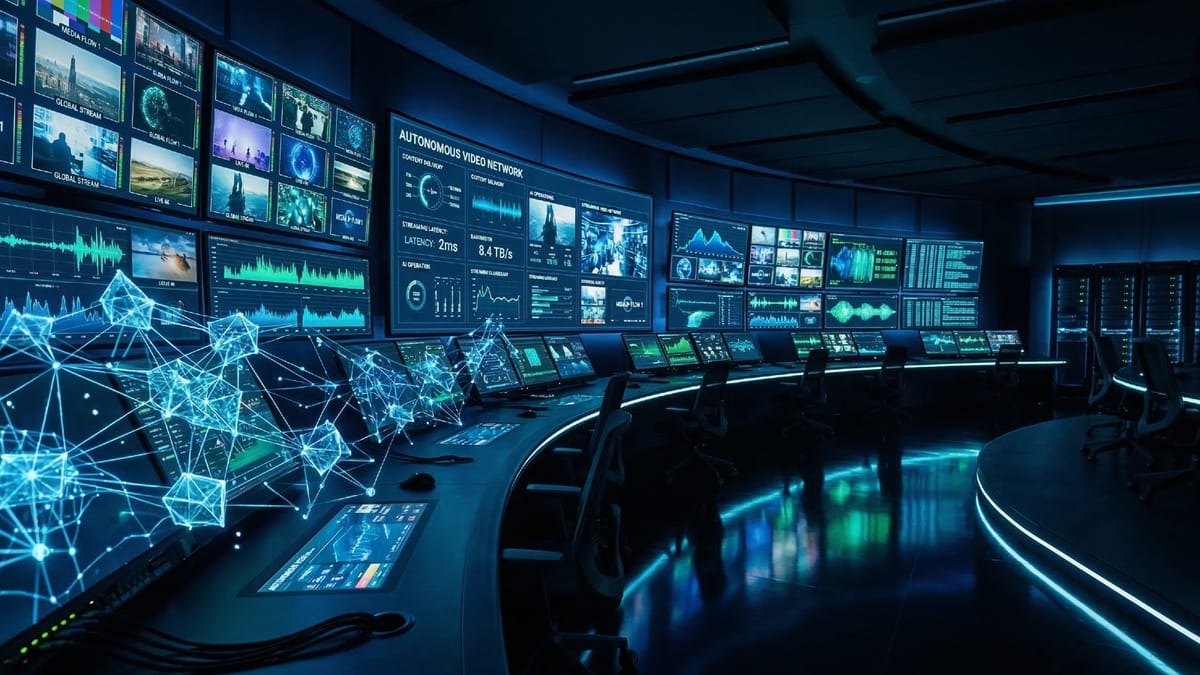
FreeWheel this week launched an AI agent infrastructure for the streaming advertising market, built around a new Model Context Protocol (MCP) server and a suite of what the company calls Intelligence tools. The announcement, made on March 11, 2026, positions FreeWheel - a Comcast company - as one of the first premium video ad technology platforms to embed AI agents directly into the transactional layer of its platform, rather than layering them on top as a separate interface. Global independent platform company PMG is the first partner piloting the capabilities, integrating them into Alli, its proprietary marketing operating system.
The launch comes at a moment when agentic advertising infrastructure has moved from theoretical frameworks to active deployment across the programmatic industry. Yahoo DSP integrated agentic AI capabilities on January 6, 2026, and Magnite embedded a seller agent into SpringServe that same week. The IAB Tech Lab's Agent Registry expanded to 10 entries on March 11, 2026, the same day as FreeWheel's announcement, reflecting how concentrated industry activity has become around agentic standards. FreeWheel's move adds a significant node to this infrastructure, given the company's central position in premium broadcast and streaming ad serving.
At the technical core of the announcement is the MCP server - a secure bridge that allows external AI agents to connect to FreeWheel's platform and execute actions. The Model Context Protocol, originally developed by Anthropic and donated to the Linux Foundation, has become a widely adopted open standard for enabling AI systems to communicate with external data sources, tools, and workflows through standardized interfaces. Google released an open-source MCP server for its Ads API on October 7, 2025, and Amazon launched a closed beta for its MCP Server on November 13, 2025. FreeWheel's implementation extends MCP adoption into the premium video ad server layer, a segment of the market that has historically operated through manual and relationship-driven processes.
According to the announcement, FreeWheel's MCP server provides a "secure foundation that allows AI agents to talk directly to FreeWheel's platform and take action." The phrasing signals that the system is designed for bidirectional interaction, not merely data retrieval. AI agents connecting through the MCP server are intended to read performance data and issue instructions - adjusting deals, responding to inventory signals, and modifying campaign parameters in real time.
Built on top of the MCP server are FreeWheel's Intelligence tools, described as a set of capabilities that continuously monitor deal performance, analyze spend and inventory quality, track commitments, and automate routine decision-making. The phrase "always-on execution" appears in FreeWheel's description of the system, indicating that the Intelligence tools are designed to operate without waiting for human input at each decision point. This represents a structural departure from how premium video advertising has typically functioned, where deal management and optimization have required sustained human involvement from both buyers and sellers.
Mark McKee, General Manager of FreeWheel, stated in the announcement: "With our MCP Server and Intelligence tools, we are creating a new foundation where AI can help buyers and sellers operate more efficiently, make smarter decisions, and unlock greater value from premium inventory."
PMG, a global independent platform company with more than 1,000 employees and offices across New York, London, Dallas, Fort Worth, Austin, Atlanta, Boston, Brighton, Costa Rica, Cleveland, Düsseldorf, Mexico City, and Toronto, is the first partner to pilot FreeWheel's new infrastructure. The pilot takes place inside Alli, PMG's in-house marketing operating system, which the company describes as a unified platform for media, data, creative, and strategy.
According to the announcement, the integration allows Alli to "query and act on streaming data with minimal latency." This is technically significant. Latency in data retrieval has been a persistent constraint in programmatic advertising, particularly for deal-based buying in premium video where inventory and pricing conditions change rapidly. By connecting Alli directly to FreeWheel's AI infrastructure through the MCP server, PMG aims to reduce the time between signal and action in global streaming campaign management.
Mike Treon, Head of CTV and Video Strategy at PMG, described the nature of the technical integration in terms that distinguish it from surface-level AI implementations. "Often AI in our industry today is just a wrapper around generic models," Treon stated. "What we have built with FreeWheel is true technical interoperability. By connecting Alli to FreeWheel in real-time, we have given our customers an agentic AI solution that goes beyond reporting and actually understands the streaming ecosystem."
Treon's characterization of "true technical interoperability" points to a distinction worth examining. Many AI tools in advertising operate by summarizing data that has already been extracted from a platform, then presenting recommendations for human action. What FreeWheel and PMG describe is a system where the AI agent has live access to FreeWheel's platform, can read current deal and inventory states, and can act - not merely advise. Whether that action requires human approval at the point of execution is not fully specified in the announcement, a question that remains open across much of the agentic advertising landscape, as PPC Land noted in its analysis of the IAB Tech Lab registry.
PMG serves brands including Apple, Nike, CKE Restaurants, Dropbox, Zoom, Experian, Intuit, Kohler, Sephora, Travelex, and Whole Foods. The company received recognition as MediaPost's 2025 Independent Agency of the Year and has been named to Ad Age's Best Places to Work for 11 consecutive years. Mike Treon's expertise in CTV and video strategy was previously visible in industry coverage of contextual CTV solutions, reflecting PMG's sustained focus on connected television as a discipline.
Today's announcement does not emerge in isolation. FreeWheel has pursued a multi-year strategy of consolidating and modernizing its technical infrastructure. The company unified its CTV product ecosystem with new suite names in April 2025, reorganizing its offerings into a Publisher Suite and an Advertiser Suite. The Advertiser Suite includes three components: FreeWheel Curation Hub, FreeWheel DSP (formerly Beeswax DSP), and FreeWheel Buyer Cloud (formerly Beeswax's Bidder-as-a-Service).
Comcast made traditional TV inventory biddable through a programmatic marketplace in October 2025, using FreeWheel's Buyer Cloud technology to power the implementation. That move extended FreeWheel's infrastructure from streaming into linear television, completing a beta phase with Comcast inventory before opening to other FreeWheel publisher clients. Lionsgate selected FreeWheel as its exclusive ad-serving partner across nearly 30 U.S. FAST channels in December 2025, adding franchise-driven content including John Wick, The Hunger Games, and Twilight to the supply available through FreeWheel's platform.
The announcement today also follows what FreeWheel describes as a milestone at CES, where the company says it introduced cross-platform agentic AI media buying for the first time alongside other industry leaders. PPC Land covered the broader CES period in January 2026, documenting how the week of January 5-10 marked an inflection point for advertising infrastructure as platforms moved from testing to live deployment of agentic AI systems. FreeWheel's CES participation placed it within that context, though today's launch represents the formal product announcement that follows from that preview.
The deployment of an MCP server specifically for premium video advertising carries implications for how the broader agentic advertising standards debate will develop. The IAB Tech Lab's Agentic Advertising Management Protocols initiative, named formally on February 26, 2026, organized itself around three pillars: execution, protocols, and the Agent Registry. The registry now shows 10 entries, all classified as MCP servers, with zero A2A (Agent-to-Agent) entries as of March 11, 2026. FreeWheel's MCP server is not listed in that registry in the current announcement, but the technical architecture aligns with the MCP standard that dominates early agentic advertising deployments.
The Ad Context Protocol, launched by six advertising technology companies on October 15, 2025, represents an alternative approach. Magnite's SpringServe integration used the Ad Context Protocol as its communication layer for the December 2025 agentic test with Scope3. Swivel launched agentic transaction capabilities on November 4, 2025, projecting availability in FreeWheel's infrastructure by year-end 2025. The FreeWheel MCP server announced today provides a different path - one where FreeWheel controls the interface through which AI agents access its platform, rather than operating through an open cross-platform protocol.
This architectural choice has strategic consequences. By building a proprietary MCP server, FreeWheel creates a direct integration point that partners like PMG connect to specifically. The openness of the MCP standard at the protocol level coexists with FreeWheel's control over what actions are available through its particular implementation. The announcement characterizes the infrastructure as "secure" and "open," language that acknowledges the dual nature of the design: open enough for partners to build differentiated capabilities, but secure in a way that FreeWheel defines and governs access.
PPC Land's comparison of seven video ad servers from November 2025 noted FreeWheel's strength specifically in North American premium broadcast and OTT inventory, with particular depth through its NBCUniversal integration. The AI agent infrastructure announced today extends that position by adding an automation layer to the deal management and optimization workflows that run across that inventory.
For agencies and media buyers operating in premium video, FreeWheel's announcement represents a material change in what automated interaction with a premium video ad server can accomplish. The traditional model for managing streaming deals involves dedicated personnel monitoring dashboards, interpreting performance data, and making manual adjustments to pacing, targeting, and spend allocation. FreeWheel's Intelligence tools are designed to perform those monitoring and analysis functions continuously, flagging conditions that require attention and, according to the announcement, automating "routine decision-making."
The PMG pilot is the current live instance of this capability, running through Alli. Other partners are not named in the announcement, though FreeWheel's language - "partners like PMG are helping lead this transformation" - implies additional participants are expected. FreeWheel states it will continue introducing new AI-powered capabilities throughout 2026.
The emphasis on deal performance monitoring and commitment tracking in the Intelligence tools description addresses a specific operational challenge in premium video. Upfront commitments and guaranteed deals in streaming advertising require close tracking against delivery targets. If impressions are not delivering as projected, buyers need visibility quickly to make adjustments or renegotiate terms. An always-on monitoring system that integrates directly with the deal management layer - rather than requiring manual data exports and analysis - reduces the lag between detection and response.
Who: FreeWheel, a Comcast company and global technology platform for streaming advertising, and PMG, a global independent platform company with more than 1,000 employees serving brands including Apple, Nike, and Sephora. Mark McKee serves as General Manager of FreeWheel; Mike Treon is Head of CTV and Video Strategy at PMG.
What: FreeWheel launched an AI agent infrastructure consisting of a Model Context Protocol (MCP) server and a suite of Intelligence tools. The MCP server provides a secure connection layer allowing external AI agents to access FreeWheel's platform and execute actions. The Intelligence tools continuously monitor deal performance, analyze spend and inventory quality, track commitments, and automate routine decision-making in premium video advertising. PMG is integrating these capabilities into Alli, its in-house marketing operating system, to manage and optimize global streaming campaigns with reduced manual intervention.
When: The announcement was made on March 11, 2026. The CES demonstration referenced in the announcement occurred during the week of January 5-10, 2026. FreeWheel states new AI-powered capabilities will continue throughout 2026.
Where: FreeWheel operates globally with offices in New York, Chicago, London, Paris, Beijing, and other locations. PMG has offices across New York, London, Dallas, Fort Worth, Austin, Atlanta, Boston, Brighton, Costa Rica, Cleveland, Düsseldorf, Mexico City, and Toronto. The infrastructure itself operates within FreeWheel's streaming advertising platform, which serves buyers and sellers transacting across premium video inventory.
Why: Premium video advertising - particularly streaming deals and guaranteed commitments - has historically required sustained manual management by dedicated personnel. As the scale and complexity of streaming campaigns increases, and as competitors across the programmatic stack deploy agentic systems, FreeWheel's MCP server and Intelligence tools are positioned to automate deal monitoring, optimization, and execution. The launch addresses operational friction that affects both buyers managing global streaming campaigns and sellers maintaining yield across premium inventory at scale.