Google Analytics drops three major features that will reshape how marketers track campaigns
Google yesterday integrated cross-channel budgeting alongside enhanced conversion management and attribution analysis in Google Analytics, marking significant changes to how advertisers optimize spending across platforms.
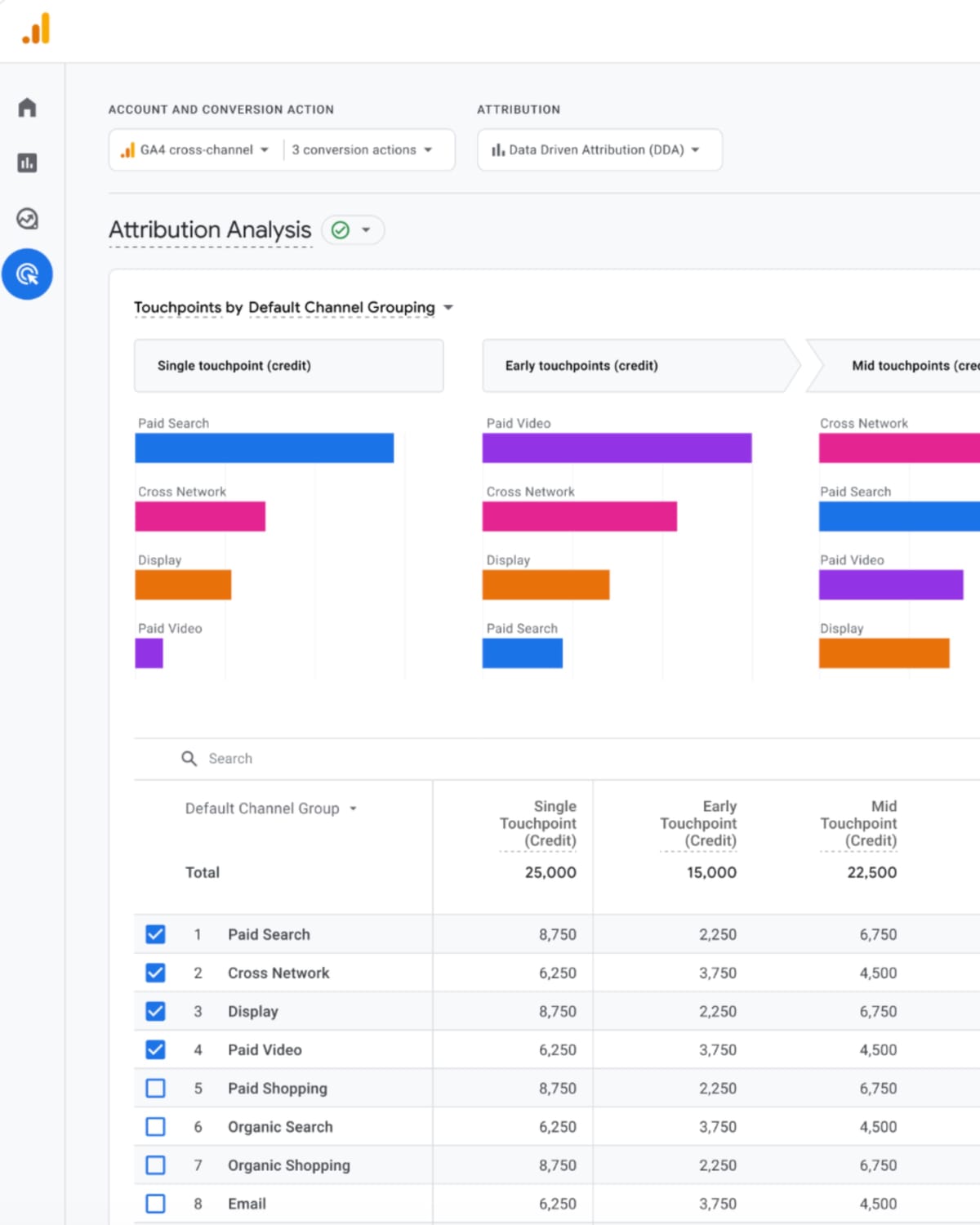
Google Analytics Attribution Analysis report showing data-driven attribution credit across touchpoints and funnel stages
Google yesterday announced three beta features for Google Analytics that fundamentally alter how advertisers track performance, allocate budgets, and understand customer journeys across marketing channels. The updates—cross-channel budgeting, improved web conversion management for Google Ads customers, and a conversion attribution analysis report—launched on January 16, 2026.
The features arrived without formal press releases or marketing announcements, appearing instead in Google Analytics Help Center documentation. This quiet rollout pattern mirrors Google's approach to other measurement infrastructure changes throughout 2025, including cost data import expansions and attribution model refinements.
All three features carry beta designations with availability limitations. According to the documentation, "This feature may not be available to your Google Analytics property. The Google Analytics team is actively working to expand this feature to more properties." Property owners with eligibility questions should contact their support teams directly.
Cross-channel budgeting transforms media planning
Cross-channel budgeting introduces projection and scenario planning tools that enable advertisers to forecast channel performance against spend, conversions, and revenue targets. The system represents Google's most sophisticated forecasting capability within Google Analytics, moving beyond historical performance analysis toward forward-looking projections informed by spending plans.
0:00
/0:18
Projection plans identify optimization opportunities by showing how advertising channels will perform against established KPIs. The system generates performance expectations based on planned budgets, enabling proactive optimization decisions before performance degradation occurs. Advertisers can evaluate whether current spending remains on track relative to targets without waiting for campaign completion.
Scenario plans help determine optimal budget distribution for future media initiatives by exploring potential ROI at different spending levels. Marketing teams traditionally relied on historical performance ratios and industry benchmarks to allocate budgets across channels. The scenario planning tool provides data-driven recommendations based on each property's specific performance patterns and conversion characteristics.
The system addresses questions central to campaign management: whether current spending remains on track, how many future conversions forecasts predict based on planned spend, and how budget allocation should maximize revenue and ROI. These capabilities directly respond to advertiser frustrations with fragmented planning tools that lack unified visibility across paid channels.
The projection functionality particularly benefits businesses managing substantial advertising budgets across multiple platforms. Scenario planning enables "what-if" analysis that previously required manual spreadsheet modeling or expensive third-party planning tools. Advertisers can test budget allocation hypotheses within Google Analytics' native interface.
Technical requirements for cross-channel budgeting include imported cost data from advertising platforms, properly configured conversion tracking with values, and sufficient historical data to generate reliable projections. Properties with limited conversion volumes or incomplete cost data imports may see unreliable forecasts that compromise planning accuracy.
Budget optimization features connect with Google's broader advertising automation strategy. Journey Aware Biddingannounced in September 2025 learns from both biddable and non-biddable signals across entire customer journeys rather than optimizing exclusively for final conversion events.
Google finally enabled fixed budgets for Search and Shopping campaigns on January 15, 2026, expanding campaign total budgets beyond initial Demand Gen and YouTube campaign limitations. The timing suggests coordinated development of budget management capabilities across Google's advertising measurement infrastructure.
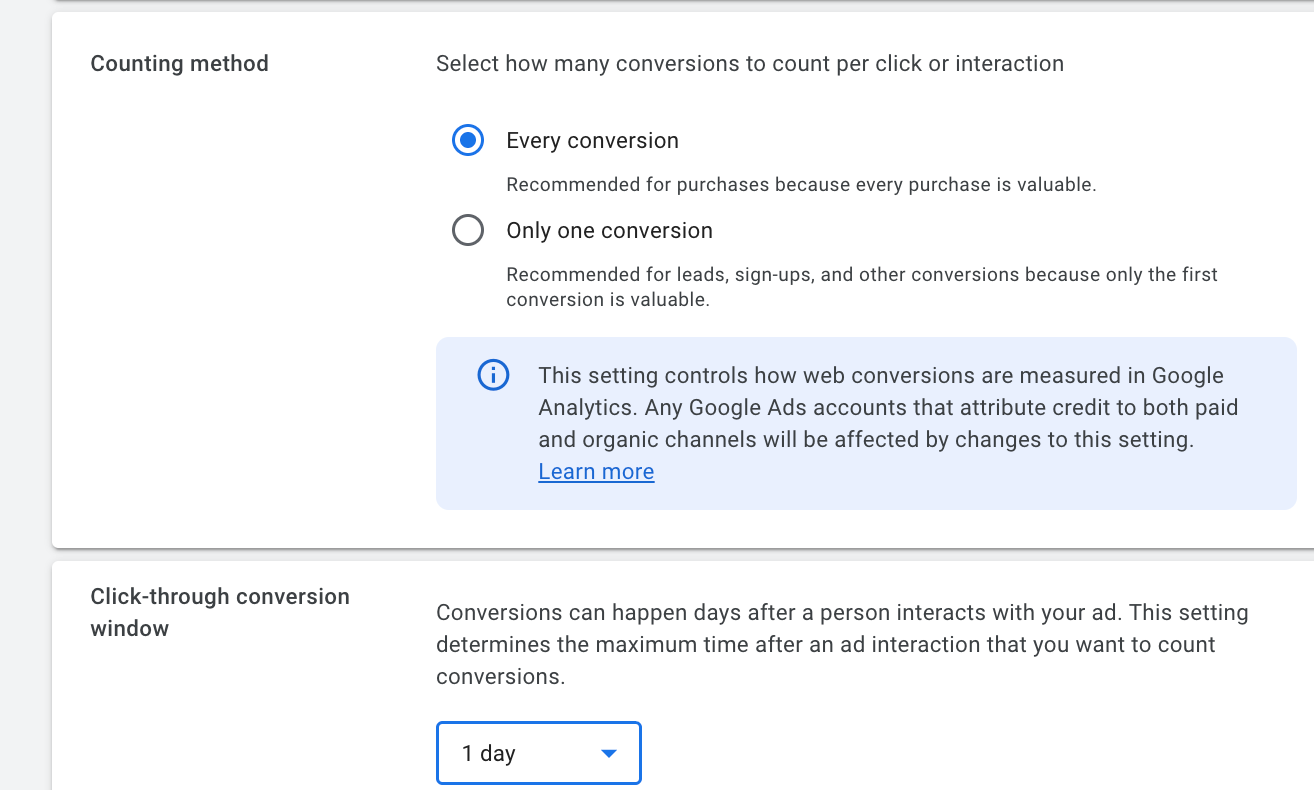
Conversion attribution settings now adjust independently for every conversion event. This modification enables advertisers to fine-tune bidding strategies in Google Ads, eliminate conversion reporting discrepancies versus Google Ads, and gain confidence in advertising spend efficacy. The change represents a significant departure from previous attribution configurations where property-level settings applied uniformly across all conversion events.
According to the announcement, the update includes "more comprehensive cross-channel reporting features and capabilities, including new reporting dimension filters" that unlock insights previously unavailable through Google Analytics' reporting infrastructure. The technical implementation enables granular control that matches conversion types with appropriate attribution methodologies.
Independent attribution settings address a fundamental limitation in previous Google Analytics configurations. Advertisers managing multiple conversion types—such as lead form submissions, phone calls, and e-commerce transactions—previously applied identical attribution models across conversions with vastly different customer journey characteristics.
Lead generation conversions typically warrant longer attribution windows and multi-touch credit distribution, reflecting extended consideration periods and multiple touchpoint engagement before submission. Direct-response e-commerce conversions might perform better with shorter windows and last-click attribution, particularly for businesses with impulse purchase dynamics.
The flexibility enables businesses to align attribution methodologies with actual customer behavior patterns rather than accepting one-size-fits-all approaches. Marketing teams can configure different attribution models, conversion windows, and credit distribution rules for each conversion type based on empirical journey analysis.
Attribution model options available for independent configuration include data-driven attribution, last click, first click, linear, time decay, and position-based models. Data-driven attribution uses machine learning to analyze actual conversion paths within each property, assigning credit based on statistical contribution analysis rather than predetermined rules.
According to the documentation, when Google Analytics attribution settings are selected, advertisers can change the attribution model and it applies to the entire selected date range. When Google Ads attribution settings are selected, the model reflects the active setting used for each conversion, which may differ across the selected date range if settings changed during that time.
The update addresses reporting discrepancies between Google Analytics and Google Ads that have frustrated advertisers since Google Analytics 4 launched. Attribution model differences created confusion when the "Google paid channels last click" model attributed 100% of conversion value to the last Google Ads channel customers interacted with before converting.
Independent conversion attribution settings particularly benefit organizations with complex measurement requirements. Enterprise advertisers managing global campaigns across regional markets can configure attribution methodologies that respect local market dynamics. B2B companies with long sales cycles spanning months can apply extended attribution windows without affecting short-cycle product conversions.
Technical implementation requires proper conversion tracking infrastructure with conversion values. The documentation emphasizes using "Google Ads conversion tracking with conversion values" and recommends learning about "tracking transaction specific conversion values" for optimal results.
The new reporting dimension filters enable advertisers to analyze conversion performance across traffic source dimensions including source, medium, campaign, source/medium combinations, default channel groups, custom channel groups, and primary channel groups. Secondary dimension capabilities allow simultaneous filtering by multiple traffic source dimensions.
Attribution analysis report reveals hidden channel value
The conversion attribution analysis report appears within the advertising workspace, providing visualization of how different touchpoints contribute to business outcomes through customer journey analysis. The report offers two specialized views designed to uncover full marketing channel value across entire customer journeys.
Last click view: Assisted conversions methodology
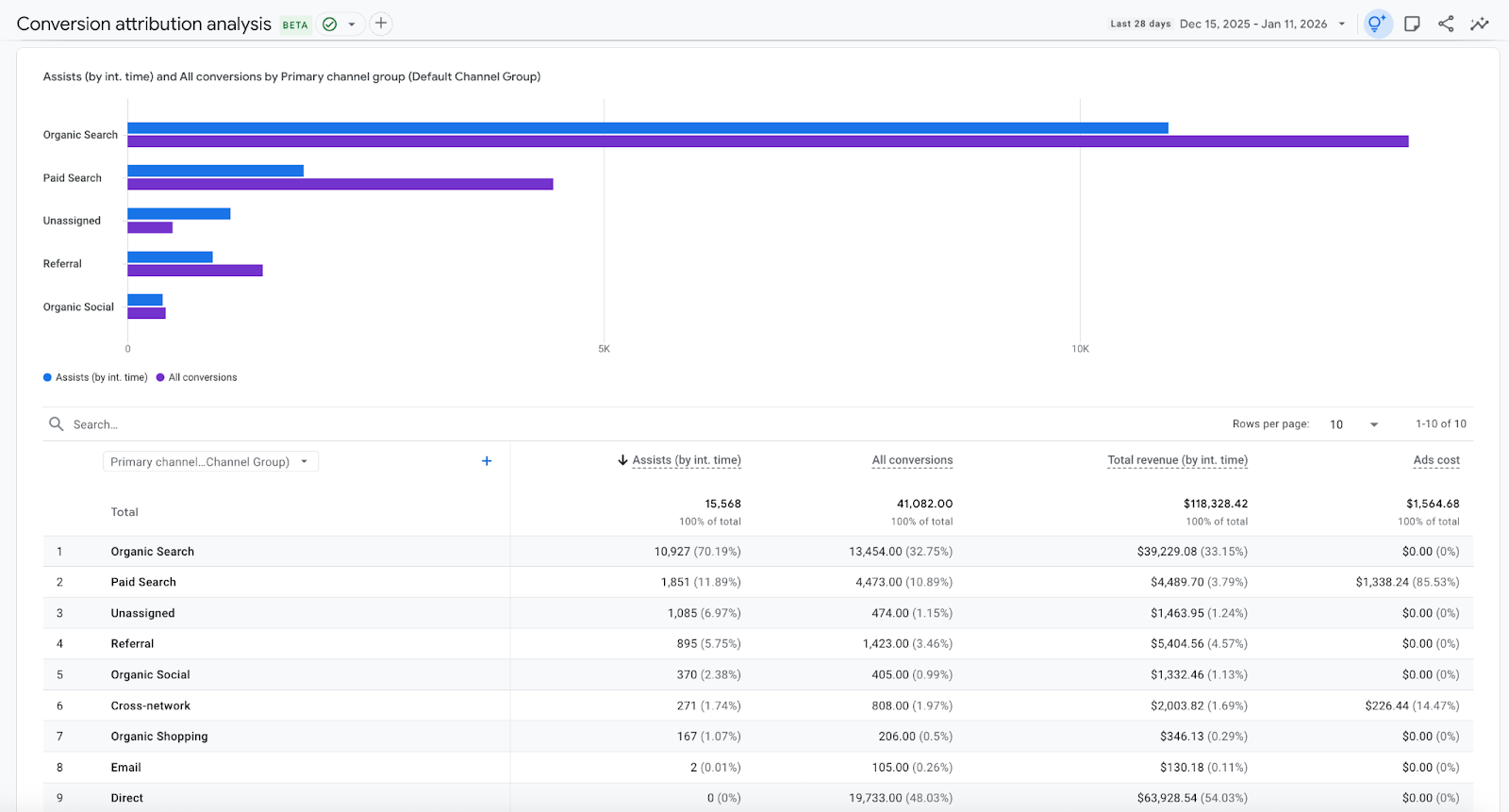
The attribution analysis report with last click model helps advertisers understand customer conversion paths by focusing on the last interaction before conversion. The report presents visual data and detailed metrics that assess campaign effectiveness and optimize advertising strategies.
Bar charts illustrate relationships between assists and last touch conversions through double-bar visualizations. Table views provide detailed conversion data with key metrics related to assists and last touch conversions. This dual-presentation approach enables both high-level pattern recognition and granular metric analysis.
Assists represent the count of interactions that happened before the final touchpoint in conversion paths. This metric proves essential for identifying undervalued upper-funnel channels such as YouTube or Demand Gen that drive interest before final search or direct visits. Traditional last-click attribution systematically undervalues these channels by assigning zero credit to interactions that don't immediately precede conversions.
According to the documentation, "These metrics show you which ads users engage with at different points in their journey. For example, you can identify which campaigns have the highest number of assists compared to all conversions. This indicates that those campaigns are effective at the early stage of bringing a customer into the conversion path."
All conversions metrics show the total number of times users triggered conversion actions and what share of those events were attributed to selected channels. Total revenue sums revenue from purchases, subscriptions, and advertising, combining purchase revenue plus subscription revenue plus ad revenue into comprehensive financial performance metrics.
Ads cost metrics show the total amount paid for advertisements, enabling direct ROI calculation when combined with revenue metrics. The integration of cost and revenue data within attribution reporting eliminates manual spreadsheet reconciliation that previously consumed substantial analyst time.
Last-click attribution sparked controversy in March 2025 when Google introduced platform-comparable conversion columns for Demand Gen campaigns. Marketing consultant Rémi Kerhoas noted that Google had deprecated most attribution models over a year prior "because they were unused (supposedly)" while pushing advertisers toward data-driven attribution.
The documentation notes that advertisers can switch between attribution analysis report views by selecting different attribution models in the dropdown at the top of the report. When switching from last click to data-driven attribution, the entire reporting interface and metrics update to reflect the selected methodology.
Attribution timing settings enable reporting based on either conversion time or interaction time. Conversion time reporting bases analysis on when conversions occurred, helping review trends over time. Interaction time reporting bases analysis on when ad interactions occurred that led to conversions, helping view recent conversion data and compare with Google Ads.
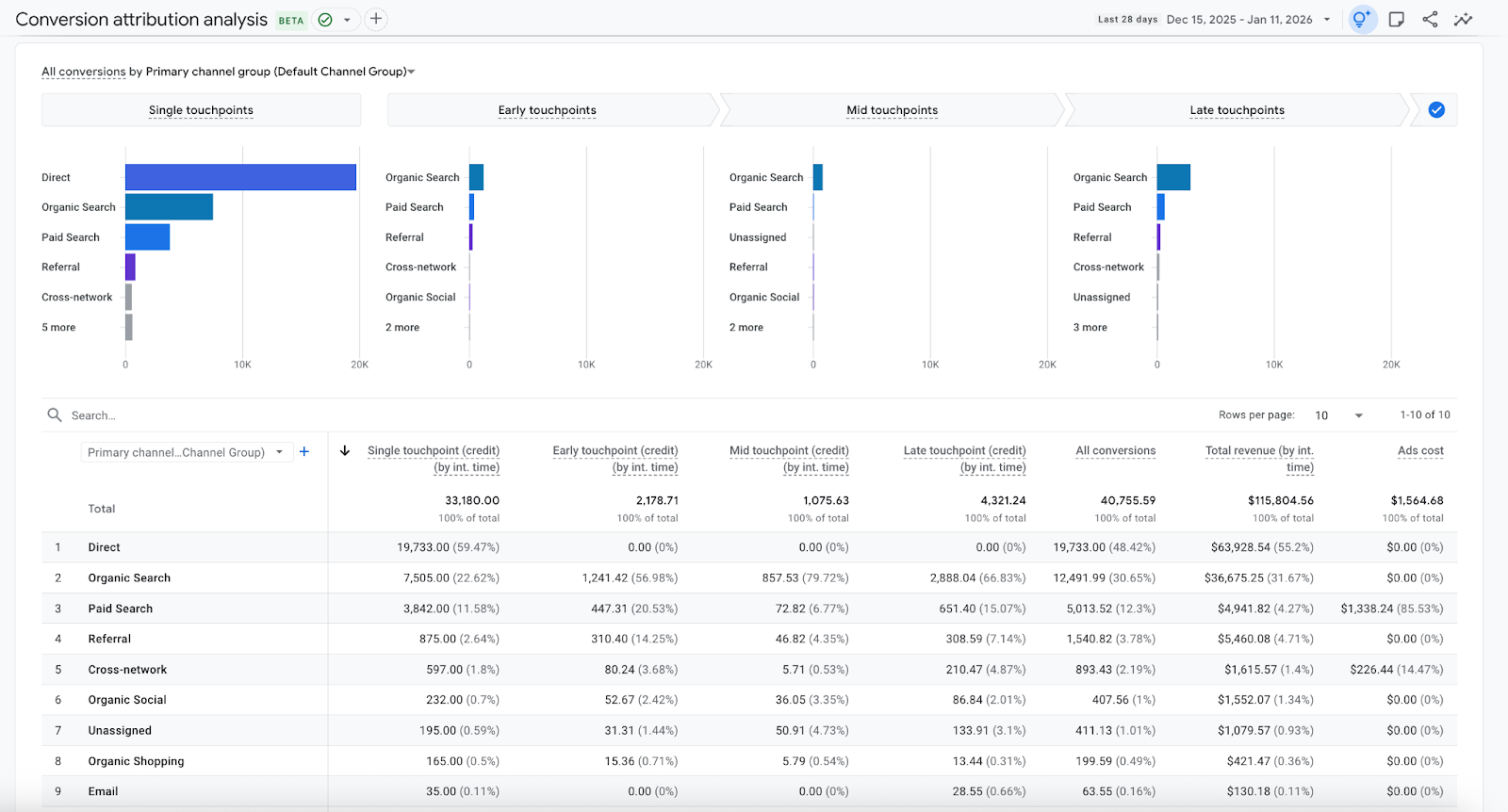
The attribution analysis report with data-driven attribution model enables advertisers to understand how marketing touchpoints contribute to conversions by identifying the value of each interaction. The DDA model assigns credit to touchpoints based on their impact on conversion probability rather than applying predetermined attribution rules.
Early/mid/late visualization provides visual breakdown of DDA credits categorized by early, mid, and late stages for the top five traffic source dimensions. Single touchpoints separate for distinct analysis, enabling advertisers to distinguish between standalone conversion drivers and journey contributors.
Table views show detailed data for conversion attribution across all touchpoints, not just the top five dimensions. The comprehensive tabular presentation enables deep-dive analysis into specific traffic sources, campaigns, or channel combinations that drive conversion contributions.
The DDA model credit metrics include single touchpoint credit, early touchpoint credit, mid touchpoint credit, and late touchpoint credit. Single touchpoint credit represents total DDA credit assigned to single touchpoints where direct traffic drives standalone conversions. Early touchpoint credit covers total DDA credit assigned to interactions occurring at the first 25% of multi-touch conversion paths.
Mid touchpoint credit encompasses total DDA credit assigned to interactions occurring in the middle of multi-touch conversion paths. Late touchpoint credit represents total DDA credit assigned to interactions occurring towards the last 25% of multi-touch conversion paths. This stage-based categorization enables strategic evaluation of campaign roles within customer journeys.
According to the documentation, "These metrics help you understand how converting users engage with your ads. For example, you can use the single touchpoint metric to identify which traffic source performs best for users who convert from a single interaction. Then, compare it to the multiple touchpoint metrics to see how ads perform when they are part of a series of interactions leading to a conversion."
The system separates single-touchpoint paths from multi-touchpoint journeys, providing clarity on which campaigns close complex journeys versus those acting as standalone drivers. Understanding this distinction enables strategic campaign optimization where standalone converters might justify higher immediate ROAS targets while journey contributors warrant evaluation based on their influence across entire conversion paths.
All conversions metrics show the total number of times users triggered conversion actions and what share of those events were attributed to selected channels. This comprehensive conversion tracking enables advertisers to understand both absolute conversion volume and relative channel contribution simultaneously.
Refined funnel analysis addresses a fundamental challenge in multi-channel marketing: understanding campaign roles within different journey types. Some campaigns primarily drive standalone conversions where customers convert immediately after their first interaction. Other campaigns contribute to complex journeys involving multiple channel touches over extended timeframes.
The data-driven attribution approach uses machine learning to analyze actual conversion paths within each property, assigning credit based on statistical contribution analysis. This methodology theoretically provides more accurate credit distribution than rule-based attribution models, though it requires substantial conversion volume to generate reliable results.
Technical requirements include adequate conversion volume for meaningful insights. Properties with limited conversion data may see incomplete or unreliable attribution patterns. Google recommends properties accumulate sufficient conversion history before relying on attribution analysis for budget allocation decisions.
Cross-channel conversion reporting infrastructure
The broader cross-channel conversion reporting infrastructure provides context for understanding how these three new features integrate with existing Google Analytics capabilities. The advertising section navigation includes advertising snapshots, conversions reporting, conversions attribution models, conversion management, and key events reporting.
Advertising snapshots provide summaries of key event and conversion performance reports, showing conversions created from Google Analytics events and key events in one place. Conversions and key events have separate reporting sections, both located under the advertising snapshot section for centralized performance visibility.
Conversion performance reports enable advertisers to review which marketing channels led to conversions across selected accounts. The system supports both Google Analytics property and attribution settings or Google Ads account and attribution settings. Google Analytics property settings enable planning, monitoring, and optimizing spend across all accounts and marketing channels.
Google Ads account and attribution settings enable planning, monitoring, and optimizing spend within specific Google Ads accounts across Google channels or across all accounts and marketing channels. This dual-setting approach provides flexibility for advertisers with different reporting requirements and organizational structures.
Advertisers can choose which conversions to report on, select attribution models when Analytics is selected, and choose reporting by conversion or interaction time. Conversion time reporting bases analysis on when conversions occurred, helping review trends over time. Interaction time reporting bases analysis on when ad interactions occurred that led to conversions.
The "All conversions" metric shows data for all primary and secondary conversion actions. In report tables, advertisers can apply different dimensions similar to other reports. This dimensional flexibility enables customized analysis aligned with specific business questions and reporting requirements.
Google Analytics refocused user-provided data in November 2025, shifting the system's focus toward advertising conversion accuracy and away from user session attribution. Enhanced Conversions represents one primary beneficiary, supplementing conversion events by matching first-party customer data with Google data from consented, signed-in users.
Conversion attribution models pages allow advertisers to compare metrics for different attribution models side-by-side. Attribution models can provide better understanding of how ads perform and help optimize across conversion journeys. The report enables advertisers to compare campaign performance using various attribution models simultaneously.
Available dimensions for attribution model comparison include various linked products, enabling cross-platform performance evaluation. Advertisers can select conversions, access conversion attribution models, choose which conversions to report on, and apply different dimensions in tables similar to other reports.
Conversion management capabilities enable viewing conversions based on Google Analytics events, comparing Analytics and Ads conversion settings side by side, and editing settings on Analytics or Ads conversion measurement. Overflow settings enable comparing conversion settings used for Google Analytics reporting versus conversion settings used for Google Ads reporting and campaign optimization.
This comparison functionality helps advertisers understand how conversions are being measured and how to align them to business objectives. Creating and managing conversions became more sophisticated in July 2025 when Google launched specialized reports and audience templates designed specifically for lead generation customers.
Key events reporting distributes credit across channels for paid, organic, and direct traffic. All key event reports show up automatically once events are marked as key events. Advertisers can manage key event settings in Google Analytics from Admin > Events > Key event table. These remain independent of conversion settings except for default value settings.
Using key events for reporting provides several benefits. When conversions based on Google Analytics events aren't available in reporting, key events fill data gaps and measure across different channels. If query data in conversion performance reports falls outside the range when conversions based on Google Analytics events are available, key events provide continuity.
Key events without created conversions enable measurement across channels until conversions are created and accumulate enough data. For reports not supported by conversions based on Google Analytics events, such as attribution paths reports, key events continue measuring across channels. For reports not supporting certain data like app conversions, Search Ads 360, Display Video 360, or Campaign Manager 360 dimensions, key events provide coverage.
Technical implementation requirements
Technical implementation varies by feature. Cross-channel budgeting requires imported cost data from advertising platforms using campaign data import, properly configured conversion tracking with values, and sufficient historical data to generate reliable projections.
Google Analytics added nine new data sources for cost data import in June 2025, including Google Sheets, Amazon Redshift, Amazon S3, BigQuery, Google Cloud Storage, HTTPS, MySQL, PostgreSQL, and Snowflake. The expansion significantly broadened data integration capabilities beyond previous limitations.
Direct integrations with major social media platforms followed throughout 2025. Meta and TikTok integrations arrived on October 7, 2025, completing coverage of major social advertising platforms. Pinterest, Snap, and Reddit integrations launched throughout 2025.
Conversion management capabilities need Google Ads account linking and properly implemented conversion tracking with values. The documentation emphasizes using Google Ads conversion tracking with conversion values and recommends learning about tracking transaction-specific conversion values for optimal results.
Attribution analysis reports depend on adequate conversion volume to generate meaningful insights. Properties with limited conversion data may see incomplete or unreliable attribution patterns. The data-driven attribution model requires particularly substantial conversion volume as machine learning algorithms need sufficient conversion path examples to identify statistically significant patterns.
Traffic source dimension support includes source, medium, campaign, source/medium combinations, default channel group, custom channel group, and primary channel group. Report data can be filtered by conversion type ID and traffic source dimensions. Advertisers can also select secondary dimensions if needed, enabling simultaneous filtering by "Campaign" and "Source" traffic source dimensions.
Privacy considerations affect how these features operate. Attribution analysis respects user consent preferences and data protection regulations, applying thresholding measures that prevent individual user identification based on demographics, interests, or other signals. Microsoft Clarity enforced final cookie consent requirements on October 31, 2025, requiring valid consent signals before collecting analytics data.
Industry context and competitive landscape
The timing of these announcements coincides with increasing advertiser demand for unified measurement across fragmented platform environments. Meta tested direct GA4 integration in October 2025, enabling advertisers to connect Meta Ads accounts directly to Google Analytics 4 for cross-platform attribution and measurement capabilities.
Marketing consultant Dominic van Uhm called the Meta-GA4 integration a "huge step toward unified tracking," reflecting broader frustration within the marketing community regarding fragmented measurement ecosystems that complicate campaign optimization and budget allocation decisions across platforms.
Google published an analytics reporting playbook in November 2025 that addressed widespread confusion about the platform's multiple reporting surfaces. The Advertising section focuses specifically on analyzing advertising campaign performance, helping users understand how marketing efforts drive conversions and revenue while optimizing ad spend and targeting strategies.
According to a LinkedIn post by Jesús Martín Calvo, Head of Data and Measurement at Google Iberia, the Google Analytics team developed the playbook as "a HUGE resource" to help users navigate the platform's complexity. The measurement world has grown substantially more complex compared to previous Google Analytics versions.
Google launched Ads and Analytics Advisors in November 2025, rolling out AI-powered Gemini-based campaign optimization tools to all English-language accounts in December 2025. The tools represent Google's implementation of agentic conversational experiences designed to accelerate data analysis and campaign management.
Ads Advisor operates within Google Ads accounts to provide campaign optimization guidance. Analytics Advisor enables conversational data exploration within Google Analytics properties. The integration suggests Google anticipates these features working together, with AI advisors helping advertisers interpret cross-channel budgeting projections and attribution analysis insights.
Google Ads marked 25 years in October 2025 with reflection on the transformation from manual optimization to AI automation. The anniversary reflection emphasized that automation does not mean ceding responsibility to algorithms but rather making the job more strategic and focused on providing business-informed guidance.
Privacy and regulatory changes have fundamentally altered available signals for measurement and optimization. AI plays a significant role in modeling and prediction to fill measurement gaps, making first-party data critical for measurement and providing clear signals about business priorities.
Strategic implications for marketers
Marketing professionals managing multi-channel campaigns gain several strategic advantages from these updates. Cross-channel budgeting enables proactive spending adjustments before performance degradation occurs, addressing a persistent challenge in media planning where reactive optimization typically follows performance declines.
Independent conversion attribution settings allow precise optimization aligned with specific business objectives. Organizations managing diverse conversion types can finally configure attribution methodologies that respect actual customer behavior patterns rather than accepting one-size-fits-all approaches that systematically misrepresent channel contributions.
Attribution analysis reports uncover previously invisible channel contributions that influence budget allocation decisions. Upper-funnel channels including display advertising, video campaigns, and social media often generate early-stage engagement that traditional last-click attribution undervalues by assigning zero credit to non-final interactions.
However, implementation challenges remain. Smaller advertisers with limited conversion volumes may struggle to generate reliable projections and attribution insights. Properties lacking comprehensive cost data imports from all advertising channels will see incomplete cross-channel perspectives that compromise planning accuracy.
Organizations without proper conversion tracking infrastructure must address fundamental measurement gaps before accessing advanced features. The technical prerequisites ensure data quality but create barriers for advertisers still working through Google Analytics 4 migration challenges.
The beta availability pattern suggests Google prioritizes properties with substantial advertising spend and conversion volume for initial access. This approach enables feature validation with advertisers most likely to benefit from sophisticated measurement capabilities while gathering feedback for broader rollout.
Early adopters should expect iterative feature refinements based on real-world usage patterns and advertiser requirements. Google typically uses beta periods to gather feedback about feature utility, interface design, and reporting accuracy before committing to permanent implementation with general availability.
The documentation provides learning resources for each new capability. Cross-channel budgeting includes dedicated documentation explaining projection and scenario planning workflows. Conversion management guidance covers attribution setting configuration and cross-channel reporting features. Attribution analysis documentation explains assisted conversions and refined funnel analysis methodologies.
Marketing teams implementing these features should consider their broader measurement infrastructure. Integration with existing Google Ads bidding strategies represents a critical component of conversion management improvements. Google research showed ad auction model shifts from CPC to user lifetime value in a May 2024 study examining auction evolution.
The conversion attribution analysis report particularly benefits businesses with long consideration cycles and multiple marketing touchpoints. B2B marketers, high-value consumer goods advertisers, and service providers typically see customers engage with numerous marketing messages across extended timeframes before converting.
Cross-channel budgeting addresses fundamental tensions in marketing planning: allocating finite resources across competing channels without reliable performance forecasts. Previous planning approaches relied heavily on historical performance extrapolation, which assumes future performance will mirror past results. The projection and scenario planning tools attempt to incorporate forward-looking factors.
The advertising workspace consolidation continues Google's strategy of organizing Analytics functionality around business objectives rather than data source types. This philosophical approach recognizes that marketers care about business outcomes more than technical measurement implementation details.
Who: Google Analytics team announced updates affecting advertisers and marketers using Google Analytics properties, particularly those managing multi-channel advertising campaigns with Google Ads integration requiring sophisticated attribution and budget optimization capabilities across platforms including Meta, TikTok, Pinterest, and other paid channels.
What: Three beta features launched simultaneously: cross-channel budgeting with projection plans showing expected channel performance and scenario plans exploring optimal budget distribution; improved web conversion management enabling independent attribution settings for each conversion event with new reporting dimension filters; and conversion attribution analysis report offering last click view with assisted conversions and data-driven attribution view with early/mid/late funnel stage categorization.
When: Google announced all three features on January 16, 2026, with immediate beta availability for eligible Google Analytics properties, though the company actively works to expand feature access to additional properties over time with no specified general availability timeline.
Where: Features appear within Google Analytics properties globally, specifically within the advertising workspace for attribution analysis reports and through planning sections for cross-channel budgeting tools, requiring proper Google Ads account linking, conversion tracking implementation with values, and imported cost data from advertising platforms.
Why: The updates address critical advertiser needs for unified cross-platform budget optimization enabling proactive spending adjustments, elimination of conversion reporting discrepancies between Google Analytics and Google Ads through flexible attribution configuration, and comprehensive understanding of full customer journey value including previously undervalued upper-funnel channel contributions that traditional last-click attribution systematically ignored.
Share this article
The link has been copied!
Your link has expired. Please request a new one.
Your link has expired. Please request a new one.
Your link has expired. Please request a new one.
Great! You've successfully signed up.
Great! You've successfully signed up.
Welcome back! You've successfully signed in.
Success! You now have access to additional content.