Google's smart bidding secrets: what advertisers get wrong in 2026
Google Ads product managers reveal smart bidding best practices for 2026, covering Smart Bidding Exploration, journey aware bidding, and campaign total budgets.


Google Ads product managers reveal smart bidding best practices for 2026, covering Smart Bidding Exploration, journey aware bidding, and campaign total budgets.
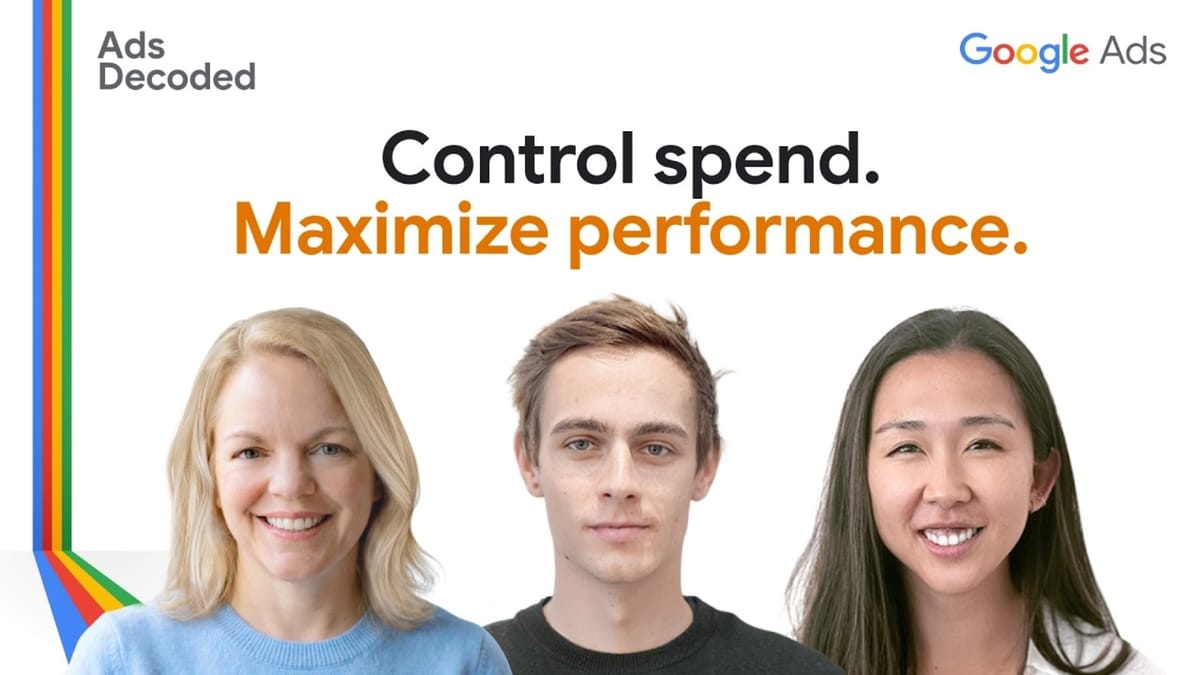
Google published a detailed episode of its Ads Decoded video series on YouTube, dated March 11, 2026, in which two Google Ads product managers lay out the current state of smart bidding and budgeting - and challenge several assumptions that still circulate widely among practitioners. The episode, titled "Budgets, bidding & AI-powered campaigns: Best practices for 2026," features Ginny Marvin alongside Kristina Park and Carlo Buchmann, who both specialize in budgets and bidding at Google. An accompanying LinkedIn newsletter from the Ads Decoded channel, published March 12, 2026, expands the conversation with additional guidance and myth-busting.
The timing matters. Google's advertising automation has been accelerating across campaign types and bidding systems throughout late 2025 and early 2026, with significant implications for how practitioners structure accounts, set targets, and evaluate performance. This episode is Google's most direct attempt yet to address misconceptions that, according to Park and Buchmann, continue to cost advertisers meaningful conversion volume.
One of the most persistent debates in paid search concerns what to do when a campaign or account has no conversion history. The conventional thinking - start with max clicks or manual CPC until enough data accumulates, then switch - is wrong, according to the product managers.
"Generally you can start with the bidding strategy that you want to optimize towards," Park said. "The system will learn as new conversions or conversion value comes in and adjust quickly." The reasoning is technical: smart bidding does not operate in isolation within a single campaign. According to the episode, the system trains and learns across all conversions in an entire account. A new campaign may introduce new keywords or a new goal, but it can draw on existing account-level signals from the first impression.
The LinkedIn newsletter from March 12 is equally direct. "You no longer need to wait until you have a bank of conversion data to start using Smart Bidding," it states. The newsletter also advises that advertisers with existing conversion history should begin with targets aligned to historical tROAS or tCPA - not artificially conservative figures designed to ease the system in slowly. This guidance has measurable parallels in how conversion delay can distort performance evaluations, leading practitioners to abandon campaigns that are, in fact, performing as expected.
The March 12 newsletter also introduces a notable piece of terminology: the "conversion sweet spot." Smart bidding needs fuel to operate, and that fuel is conversion data. Buchmann explained that the goal is to identify "the lowest conversion action in the customer journey that will have volume and is a high-quality indicator of value." For businesses with long or sparse sales cycles, that may mean bidding toward a qualified lead rather than a fully converted lead - accepting a more proximate signal in exchange for greater data frequency.
A specific interface signal - "limited by target" - appears when a tCPA or tROAS strategy is too restrictive to participate competitively in auctions. The system sees opportunities to generate conversions but declines them because the efficiency requirement would not be met. According to Buchmann, the appropriate response is to relax the target: raise the tCPA figure or lower the tROAS figure. The system then gains access to additional traffic that meets business goals while staying within budget constraints.
The discussion also addresses how to handle target changes without triggering excessive volatility. Park noted that the system can handle direct target adjustments when a business need requires it. The recommendation, however, is to wait at least one conversion cycle before making further adjustments - allowing the model to converge before introducing another variable. Making target changes every few minutes is "probably suboptimal," she said.
Evaluating performance correctly during volatile periods is a related challenge. According to Buchmann, advertisers should always account for conversion delay when assessing results. The interface shows projected additional conversions expected within the delay window, and using that view rather than raw reported figures prevents premature conclusions about campaign performance. Conversion lag - the gap between a click and when a conversion is finally attributed - can extend 7 to 21 days in complex sales environments, which makes any evaluation within that window inherently incomplete.
One recurring concern from advertisers involves cost-per-click volatility - sudden, unexpected movements that feel difficult to interpret. The episode provides a mechanistic explanation. The system is continuously optimizing toward the highest number of conversions or the most conversion value at the target set by the advertiser. When it identifies what it believes to be a high-value customer in a specific auction, it may bid significantly higher. Conversely, when it determines a click is unlikely to yield value, it bids lower or does not participate.
External factors compound this. Auction composition changes when competitors adjust their bids or enter and exit specific query categories. A different advertiser bidding more aggressively on the same terms will affect the clearing prices an account encounters, regardless of the advertiser's own strategy settings. This is not a system malfunction - it is the direct consequence of competing within a real-time auction environment where every participant is simultaneously running an optimization algorithm.
Smaller businesses face a particular challenge with learning periods. The interface displays a "learning" status when a campaign is newly created or significantly modified - and that signal can trigger anxiety. Buchmann was precise about what it does and does not indicate. The learning status means the system is calibrating. It does not mean the campaign is failing to achieve desired tCPA goals during that period.
For businesses with limited conversion volume or longer sales cycles, the practical guidance is to optimize toward a conversion event that is neither too sparse nor too delayed. An action higher in the funnel - with more frequent occurrences - can provide the system with enough signal to operate effectively while a business works toward having the data density required for deeper funnel optimization. The episode also mentions portfolio bidding strategies as a tool for grouping campaigns with shared targets and goals, which pools conversion data across campaigns and improves signal quality for the learning system.
The episode dedicates significant time to value-based bidding - specifically, the move from optimizing toward a binary conversion event toward optimizing toward the revenue or profit associated with each conversion. According to Park, many businesses began their smart bidding journey by tracking easily measured events like form submissions. Over time, those abstract conversion proxies created a disconnect: the system was optimizing toward an action that did not directly reflect what the business actually cared about.
"A lot of businesses actually do care about conversion value," Park said. "It's actually just more difficult for them to pass that back into Google Ads." The challenge is technical - passing profit-level data back into the platform requires either calculation within the conversion tag or use of offline conversion import. But the payoff, according to the discussion, is that the system receives information that more accurately reflects business economics, which produces better optimization outcomes.
The episode is clear that value-based bidding is not appropriate for every advertiser. If the values being passed are inaccurate or poorly calibrated, the optimization will degrade accordingly. The biggest pitfall, according to Park, is passing values that do not actually reflect the underlying business goals - and then being surprised when the system hits its ROAS target but results do not translate into business performance.
For advertisers wanting to optimize toward profit margin, the episode confirms this is technically possible. Profit data can be passed through the conversion tag directly - if the advertiser is comfortable with that calculation running client-side - or via offline conversion import after the fact. Platforms have been building tools to help advertisers calibrate these conversion values more precisely, including features that calculate suggested values based on target ROAS settings.
A new capability now available globally is campaign total budgets. This feature allows advertisers to set a single budget amount to be spent over a defined time period with a hard start and end date. According to the episode, the intended use cases are promotions, holiday sales, and product launches - scenarios where a fixed amount must be deployed within a specific window.
The LinkedIn newsletter adds technical specificity. Campaign total budgets work across Search, Performance Max, Demand Gen, Shopping, and YouTube campaigns. The time range must be between 3 and 90 days for most campaign types. One constraint worth noting: the budget type cannot be changed after a campaign launches. If a campaign enters a "limited by target" status during the total budget period, the system may fail to deploy the full budget by the end date - making target calibration especially important when this feature is used.
The episode addresses seasonality adjustments as a precision tool rather than a general-purpose setting. They are appropriate for short, sharp conversion rate spikes - a three-day flash sale, for example - that the system could not anticipate from historical data alone. For events the system already understands historically, like Black Friday or Valentine's Day, seasonality adjustments may be unnecessary because the model incorporates those patterns.
The key principle is that seasonality adjustments should address deviations that historical data cannot account for. Google has been extending this feature to additional campaign types, including App campaigns in beta form, signaling that the mechanism is being broadened across the platform.
The most technically detailed segment of the episode covers Smart Bidding Exploration (SBE), a feature that Park described in the episode as "the biggest advancement in bidding in years." It is currently available only to Search campaigns using a target ROAS bidding strategy - a constraint that reinforces the overall push toward value-based optimization.
SBE works by expanding the range of search queries the system considers when bidding. Standard smart bidding stays within established patterns - queries where the system already has confidence about conversion likelihood. SBE asks the advertiser to give the system more flexibility in its ROAS target, and then deploys that flexibility to explore queries where conversions are plausible but not yet established. The mechanism is described as a slider in the Google Ads interface. According to the episode, advertisers who enable Smart Bidding Exploration see an average of 10% more conversions than those who simply lower their ROAS target overall.
That comparison - against simply lowering tROAS - is central to understanding what SBE does differently. Lowering the ROAS target uniformly tells the system to accept less efficiency across all existing traffic. SBE is more targeted: it maintains performance on established core traffic while specifically expanding into unexplored territory. "It's still maintaining performance and making sure you deliver on your core traffic," Buchmann explained, "but it also explores new areas to help find growth so that the system learns."
A new metric - traffic diversity - has been added to the Google Ads interface to help assess whether SBE is working. It measures the number of unique search terms generating impressions, clicks, or conversions. If that figure rises after enabling SBE, the system is successfully broadening its reach. Advertisers can find this in the campaign table or the bid strategy report.
SBE is also compatible with AI Max, Google's expanded targeting option for Search campaigns. The combination is described as particularly effective: AI Max expands the universe of queries a campaign is eligible to appear for, and SBE then helps the system bid more effectively across that expanded set. PPC Land has covered AI Max's rollout extensively, including research suggesting it delivers meaningful conversion improvements for accounts structured to take advantage of it, though independent analysis has also found cases where results diverge from Google's stated projections.
The data cited in the newsletter is dated internally: Google Internal Data, Global, March 11, 2025 to April 11, 2025. The 10% improvement figure is therefore based on a one-month measurement window from a year before the episode's publication.
The episode also previews a coming capability called Journey Aware Bidding. This feature was first announced publicly at Google's Think Week event in September 2025 and covered by PPC Land at the time. It represents a structural departure from how smart bidding currently works.
Today, advertisers select a single conversion event as the optimization target - a purchase, a converted lead. Journey Aware Bidding proposes to use additional conversion events mapped across the full sales funnel to provide earlier signals. If a purchase typically takes 7 to 14 days from the initial click, intermediate funnel events - content downloads, product page views, initial form submissions - can indicate conversion probability well before the terminal event occurs.
"You're giving us additional data points along that funnel that the system can use to further improve your bids," Park explained. The advertiser still specifies the primary goal - say, a purchase - but the system receives and uses auxiliary data from other stages. The effect is a faster, more reactive model. Rather than waiting for a purchase to confirm that a user was valuable, the system can begin weighting signals earlier in the journey. Google Analytics has been building supporting infrastructure in parallel, including cross-channel budgeting features launched in January 2026 that depend on comprehensive journey data.
No launch date was provided for Journey Aware Bidding in the episode.
The community Q&A portion of the episode addresses a question from Reddit about whether secondary conversion actions influence bidding. The answer is that they do not - with one exception. Secondary conversions are visible in the "all conversions" column but are excluded from bidding calculations. The system uses only primary conversion actions that are included in the campaign's goal setting for bid optimization. The exception: a custom goal that uses secondary conversion actions will include those actions in bidding. Advertisers relying on secondary events to pass data to the system without influencing bids should verify their campaign settings to confirm the distinction is configured correctly.
The episode arrives as automated bidding continues to consolidate into fewer, more powerful strategies. Microsoft merged its Target CPA and Target ROAS strategies into Maximize Conversions and Maximize Conversion Value respectively in August 2025. Google phased out Enhanced CPC for Search and Display campaigns on a similar timeline. The direction across the industry is toward systems that optimize holistically rather than at the keyword or placement level.
For practitioners, the practical implications are several. Conversion tracking quality now determines bidding quality - the system is only as effective as the data it receives. Target calibration matters more than it once did, because setting aggressive targets doesn't just slow spending; it actively prevents the system from accessing traffic that would otherwise be reachable. And the notion of a "warm-up" period before using smart bidding is now described by Google's own product team as a myth - one with measurable costs.
The emergence of SBE as a distinct tool for growth - separate from simple target relaxation - represents a specific technical capability that marketing teams running tROAS campaigns on Search should evaluate through experiments before committing to full deployment.
Who: Google Ads product managers Kristina Park and Carlo Buchmann, interviewed by Ads Liaison Ginny Marvin on the Ads Decoded channel.
What: A detailed video episode and accompanying LinkedIn newsletter presenting Google's current best practices for smart bidding and campaign budgeting in 2026, including guidance on cold starts, target volatility, value-based bidding, campaign total budgets, seasonality adjustments, Smart Bidding Exploration, and the forthcoming Journey Aware Bidding feature.
When: The YouTube episode was published March 11, 2026 and had received 1,604 views at the time of writing. The LinkedIn newsletter followed on March 12, 2026.
Where: Published on Google's official YouTube channel (Ads Decoded series) and the Google Ads LinkedIn newsletter. The guidance applies to Google Ads accounts globally. Smart Bidding Exploration is currently available only to Search campaigns using target ROAS bidding.
Why: Google is addressing persistent misconceptions about smart bidding - particularly the belief that new campaigns require a "warm-up" period with manual or simplified strategies before switching to automated bidding. The company is simultaneously promoting newer capabilities like Smart Bidding Exploration and previewing Journey Aware Bidding as the next step in its bidding system's evolution.