Index Exchange CEO outlines programmatic's shift to impression-level AI
Andrew Casale details how agentic sell-side decisioning moves intelligence upstream in programmatic advertising, eliminating cloud tax while enabling real-time optimization.


Andrew Casale details how agentic sell-side decisioning moves intelligence upstream in programmatic advertising, eliminating cloud tax while enabling real-time optimization.
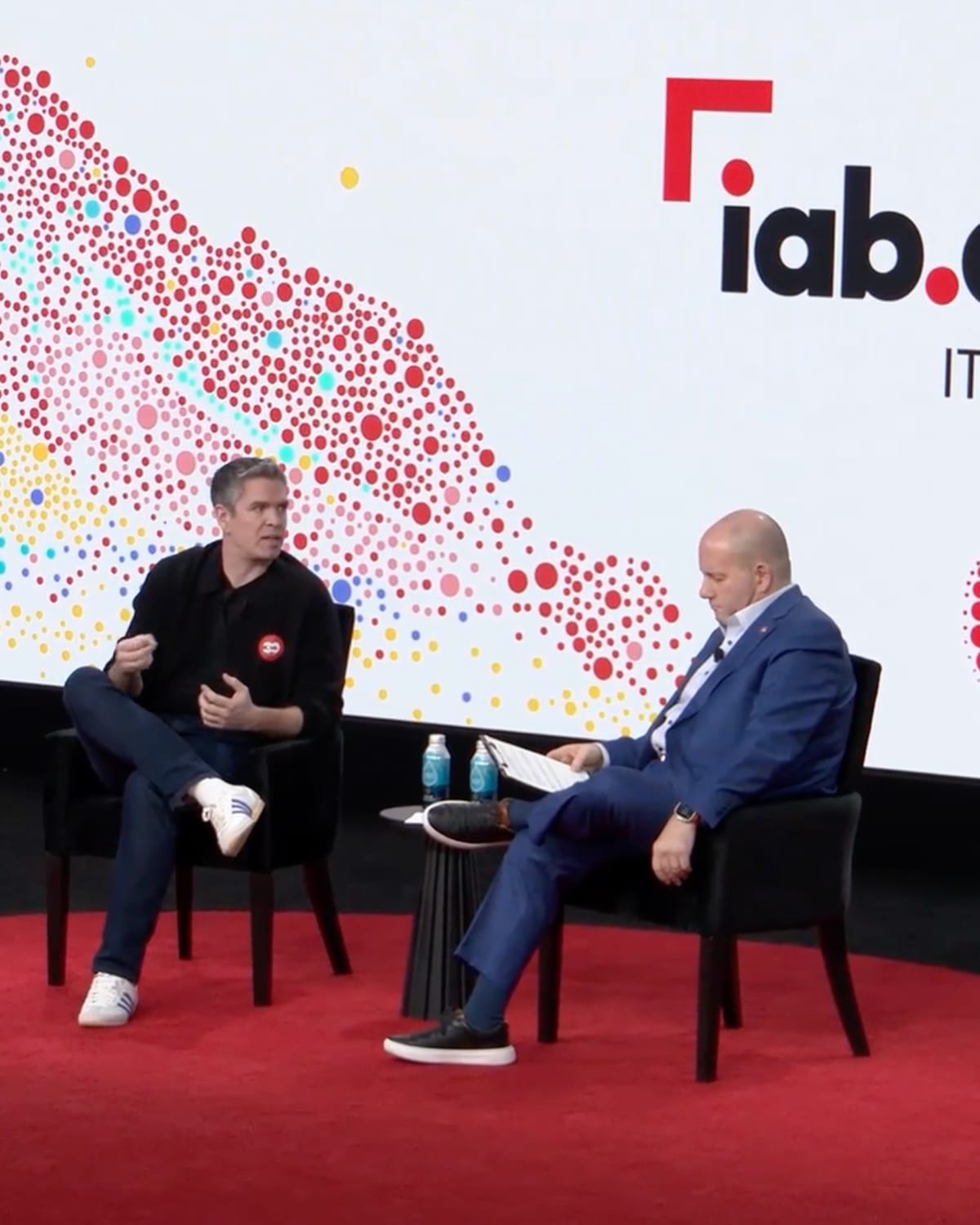
Index Exchange CEO Andrew Casale outlined the next phase of programmatic advertising infrastructure during IAB's 2026 Annual Leadership Meeting, describing a fundamental shift in how decisioning operates across digital advertising supply chains. The company positioned agentic sell-side decisioning as an architectural transformation moving intelligence from downstream optimization to upstream execution at the impression itself.
According to Casale, the programmatic industry faces mounting inefficiencies driven by what he characterized as the "cloud tax" - operational costs stemming from external infrastructure dependencies that consume resources and constrain innovation. Traditional programmatic architectures rely on outbound calls to cloud providers, remote compute environments, and third-party services to evaluate each impression. Every network hop adds latency, increases costs, and limits algorithmic sophistication.
"[The cloud tax] consumes so many operating costs that hamper innovation and hold performance back. And it's now starting to be turned on its head as we move to a model where code runs really, really fast at the edge of the impression through containerization," Casale stated during the February 12 session with IAB CEO David Cohen.
The technical approach leverages containerized models running directly on exchange infrastructure rather than requiring external computation for each bidstream evaluation. By eliminating unnecessary outbound requests, decisioning accelerates while compute costs decline and system complexity decreases. This architectural shift addresses fundamental constraints in real-time bidding environments where decisions must occur within 100-millisecond timeframes.
Index Exchange has systematically built infrastructure supporting upstream decisioning throughout 2025. The company introduced show-level transparency capabilities with Gracenote in January 2026, embedding contextual intelligence directly into programmatic workflows. It integrated AI-powered attention measurement from xpln.ai in February 2026, transforming attention metrics from post-campaign reporting into pre-bid optimization signals.
The company published case study results in February 2026 demonstrating how sell-side decisioning technology deployed within its Marketplaces infrastructure drove a 75% reduction in cost per site visit for a major apparel retailer. The performance gains emerged from deploying predictive intelligence at the supply layer rather than relying exclusively on demand-side optimization.
Casale emphasized that impression-level intelligence unlocks capabilities impossible in traditional architectures. Supply-side platforms maintain access to inventory context, publisher relationships, and signals that don't always transmit through standard bid requests. Combining this data with decisioning infrastructure creates opportunities for rapid innovation without the latency penalties that limit demand-side algorithmic complexity.
"There is so much rich signal in the impression itself, that doesn't always get to the buy side. And when you couple that with decisioning, you actually have this really exciting environment for innovation. You have uncapped scale. You have massive access to signals, and you can innovate rapidly," Casale explained.
The approach represents a departure from conventional programmatic structures where intelligence concentrates on the demand side. Advanced algorithms trained on marketing data don't inherently belong to any single platform. Once trained, that intelligence operates across environments rather than remaining locked into proprietary ecosystems. Agentic sell-side decisioning brings portability closer to reality by enabling sophisticated optimization while maintaining transparency and long-term control.
Containerized real-time bidding approaches have gained traction as advertisers seek access to granular site-level data typically unavailable through standard bid requests. Zillow tested containerized RTB with Chalice Custom Algorithms and Index Exchange in August 2025, enabling quality-focused inventory decisions using artificial intelligence tools with enhanced data access.
OpenX launched OpenXBuild in January 2026, reporting 70% cost-per-conversion reductions through APIs enabling advertisers to deploy custom logic directly into supply-side infrastructure. The platform eliminates network round-trips that add latency by allowing computation to occur closer to inventory sources.
Casale stressed that individual platforms implementing isolated solutions would stall progress. Historical evidence demonstrates that major programmatic shifts succeed only when the industry moves collectively toward shared standards. Agentic decisioning follows this pattern - requiring coordination across multiple participants rather than proprietary implementations.
"We do need to come together as an industry. We need to agree on the same set of standards, and we have to do it the same way, or this takes forever. We over complicate everything, and we end up just burning years," Casale stated.
IAB Tech Lab released its Agentic RTB Framework version 1.0 for public comment in November 2025, introducing standardized specifications for deploying containerized agents within real-time bidding infrastructure. The framework establishes requirements for implementing agent services that operate within host platforms, leveraging containers deployed into infrastructure to enable delegation of bidstream processing tasks.
The specification defines requirements for container runtime behavior and establishes an API for bidstream mutation. Service providers can package offerings once for deployment to any standard-compliant platform, reducing integration overhead while maintaining control and security. Host platforms maintain control of data and service level agreements while providing greater access to service agents without concerns about data leakage.
IAB Tech Lab released its Deals API specification version 1.0 for public comment in December 2025, addressing manual entry and transparency gaps in curated programmatic deals. The specification streamlines operations by clarifying high-level terms of each deal while identifying which parties participated in curating and selling packages.
The frameworks create interoperable infrastructure essential to realizing the full potential of agentic systems. Shared standards enable speed, reduce integration complexity, and provide scale across the ecosystem. Without coordination, platforms risk creating fragmented implementations that limit adoption and slow innovation cycles.
Casale positioned agentic sell-side decisioning as infrastructure enabling the open internet to compete with walled garden platforms on performance rather than relying on philosophical arguments about openness. The competitive landscape has intensified as major platforms capture increasing market share through proprietary optimization systems unavailable across open web inventory.
"I really hope in a year's time or two years' time, the open internet stops apologizing and starts gaining meaningful share. As we get together as an ecosystem, when we gain the advantage of some of this incredible modern technology, we can grow the pie that we really need to grow to fund incredible content," Casale stated.
The statement reflects broader industry concerns about programmatic advertising's competitive position. Marketers allocate budgets based on performance outcomes rather than infrastructure characteristics. If walled gardens deliver superior return on investment through proprietary intelligence layers, advertisers direct spending accordingly regardless of open web principles.
PubMatic introduced AgenticOS in January 2026, positioning the infrastructure as the first operating system built specifically for autonomous advertising execution across premium digital environments. The system integrates three architectural layers including infrastructure processing tens of millions of auctions per second, application layer with agentic capabilities automating planning and optimization, and transaction layer connecting decisioning to buying platforms.
Multiple supply-side platforms have implemented curation and decisioning capabilities throughout 2025. Magnite partnered with Cognitiv in January 2026 to integrate deep learning models into ClearLine, expanding real-time curation capabilities across premium video inventory. These developments reflect industry consensus around the value of embedding intelligence at the supply layer rather than limiting optimization to demand-side systems.
The containerized approach delivers environmental benefits alongside operational efficiencies. Traditional architectures generate computational waste through redundant evaluations and network transmission overhead. Every impression triggers multiple external calls consuming energy and infrastructure resources regardless of whether those calls contribute to better decisioning outcomes.
Industry leaders debated curation benefits during IAB Europe's Virtual Programmatic Day in July 2025, with sustainability emerging as a key consideration. Panelists noted that curation demonstrably reduces carbon footprints through decreased computational requirements, though specific measurement methodologies weren't detailed during the session.
Moving decisioning to the impression level eliminates many redundant operations. Containerized models execute locally rather than requiring remote computation for each evaluation. The architecture reduces data transmission, decreases latency, and lowers energy consumption across the programmatic supply chain. These sustainability improvements align with industry commitments to reduce environmental impact while maintaining or improving advertising effectiveness.
The sell-side decisioning approach addresses market dynamics where advertisers increasingly recognize limitations of buy-side-only optimization. Media.net launched ELEVATE with Claritas in October 2025, described as the first sell-side attribution and measurement solution for programmatic advertising. The platform operates within the sell-side path itself, embedding attribution capabilities upstream in the supply chain rather than relying on advertiser-side tracking mechanisms.
The retailer case study demonstrating 75% cost per site visit reductions provides tangible evidence of potential business impact. E-commerce advertisers face intensifying competition for site visits as acquisition costs rise across programmatic channels. The efficiency improvement substantially improves campaign economics while maintaining or increasing visit volume.
However, adoption patterns typically lag case study publications as advertisers conduct internal testing, evaluate integration complexity, and assess applicability to specific business requirements. The documented performance gains may influence advertiser willingness to test newer programmatic approaches including containerized bidding, curated marketplaces, and supply-side decisioning deployments.
The technical implementation requires cooperation between multiple parties including supply-side platforms, algorithm providers, and demand partners. Advertisers considering similar approaches need access to platforms supporting containerized deployments or marketplace infrastructures enabling partner solution integration at the supply layer.
Index Exchange positions Marketplaces as infrastructure enabling partners to build and activate solutions across premium supply without additional platform fees. The company emphasizes transparency and control for media owners who maintain full authority over inventory settings and data while accessing demand opportunities through curated deal packages.
This positioning contrasts with traditional supply-side platforms that primarily aggregate inventory without embedding partner intelligence upstream. The marketplace model enables specialized algorithm providers to deliver optimization capabilities without building complete platform infrastructure, while supply-side platforms maintain core auction mechanics and publisher relationships.
The architecture addresses fundamental latency constraints that limit algorithmic sophistication in traditional real-time bidding environments. Decisions must occur within milliseconds to maintain user experience quality. Moving computation closer to inventory sources reduces latency compared to architectures where demand-side platforms must evaluate all bid requests remotely.
Casale's comments position agentic sell-side decisioning as infrastructure rather than feature development. The distinction matters because infrastructure changes reshape how all participants interact with programmatic systems, while features provide incremental improvements within existing architectures.
The shift from downstream optimization to upstream intelligence represents a fundamental rethinking of how decisions are made across the programmatic ecosystem. Traditional models concentrated intelligence on the demand side, with supply-side platforms primarily managing yield optimization and floor pricing. Agentic decisioning enables sophisticated algorithms to operate where inventory, context, and supply-side signals converge.
The competitive implications extend beyond individual company strategies. If open internet infrastructure achieves performance parity with walled garden platforms through upstream decisioning, advertisers gain viable alternatives for programmatic spending. Market dynamics shift when multiple environments deliver comparable return on investment, enabling budget allocation based on strategic considerations rather than pure performance differentials.
Industry standardization efforts will determine whether agentic decisioning delivers on its potential. The IAB Tech Lab frameworks provide foundation, but adoption requires coordination across supply-side platforms, demand-side platforms, algorithm providers, and advertisers. Historical precedent suggests that successful programmatic innovations require multi-year implementation cycles involving hundreds of companies.
The sustainability advantages may accelerate adoption as advertisers face increasing pressure to reduce environmental impact. Computational efficiency translates directly to energy consumption reductions. If containerized decisioning delivers both performance improvements and sustainability benefits, the combination strengthens business cases for infrastructure migration.
Who: Index Exchange CEO Andrew Casale and IAB CEO David Cohen discussed the future of programmatic advertising infrastructure during IAB's 2026 Annual Leadership Meeting.
What: Casale outlined how agentic sell-side decisioning represents a fundamental shift in programmatic architecture, moving intelligence from downstream optimization to upstream execution at the impression level through containerized models. The approach eliminates cloud tax costs, reduces latency, and enables sophisticated algorithms to operate where inventory, context, and supply-side signals converge.
When: The discussion occurred on February 12, 2026, building on Index Exchange's systematic infrastructure development throughout 2025 including contextual intelligence integrations, dynamic pricing mechanisms, and marketplace capabilities supporting partner solution deployment.
Where: The announcement occurred at IAB's Annual Leadership Meeting, with implications extending across the programmatic advertising ecosystem including supply-side platforms, demand-side platforms, algorithm providers, and advertisers operating across display, video, connected television, and audio formats.
Why: The initiative addresses mounting inefficiencies driven by cloud infrastructure dependencies that consume operational resources, constrain innovation, and limit algorithmic sophistication. By moving decisioning to the impression level, the open internet gains infrastructure enabling performance competition with walled garden platforms while delivering sustainability benefits through reduced computational waste.