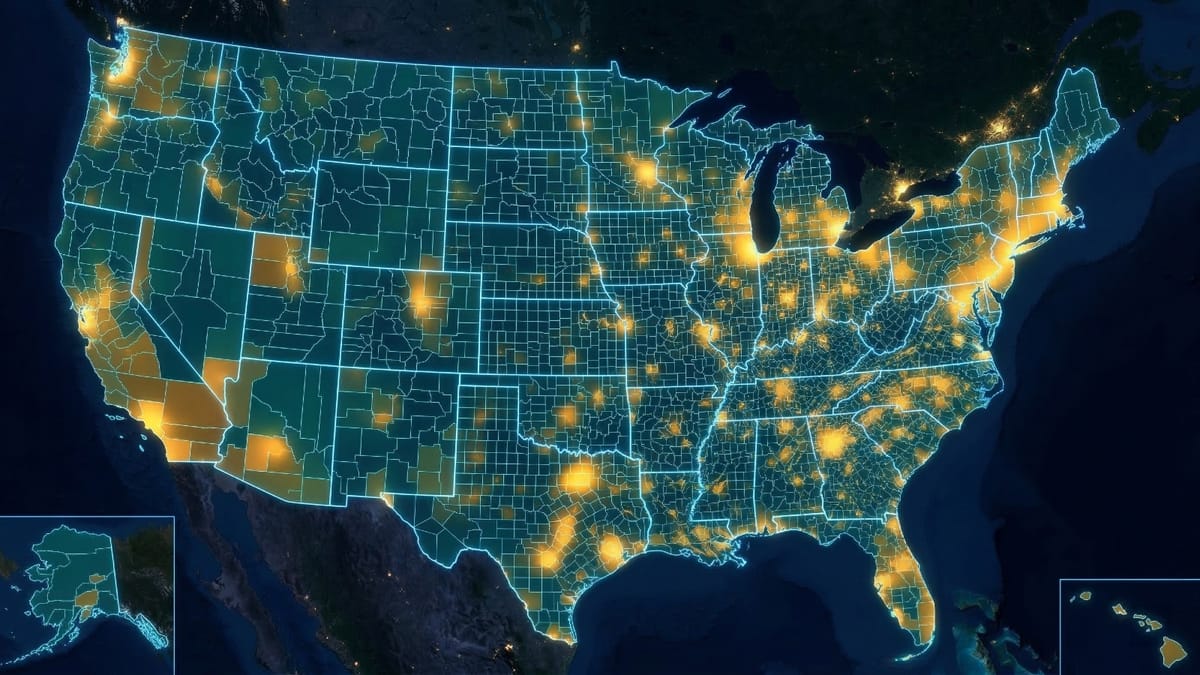
Meta on March 13, 2026 announced the end of Nielsen's Designated Market Area targeting within its automotive model ads product, setting a hard deadline of June 22, 2026, after which any campaign still relying on DMA codes will stop delivering. The announcement, authored by Patrick Opoosun on the Meta for Developers blog, outlines a transition to Comscore Markets® - a geographic targeting standard that Meta introduced to its automotive advertising infrastructure in August 2025.
The shift is not optional. It is a forced migration with specific technical steps, a structured timeline, and a clear consequence for inaction: paused campaigns.
What automotive model ads are
Before understanding what changes, it helps to understand what the product does. According to Meta's Business Help Centre documentation, automotive model ads - previously called automotive offer ads - use machine learning to deliver personalised vehicle models and offers to people who may be in the market for a vehicle. Advertisers build a catalogue of vehicle models and offers, including details such as colour, trim and financing structures. Meta's systems then determine the most relevant model, offer, or combination to serve to a given user based on intent, behaviour and actions.
One campaign can generate personalised ads at scale without requiring the creation of individual ads for every model iteration or offer. The product supports retargeting of car shoppers who visited a website or viewed a model but did not convert, as well as prospecting toward new audiences who have expressed vehicle interest through broad targeting signals.
The underlying infrastructure requires a Facebook catalog - a structured container of product information that advertisers use to upload vehicle inventory. Each item in the catalog represents a unique vehicle offer, including fields for make, model, year, offer type and regional market codes. The transition announced on March 13 centres on that last field: specifically, how geographic markets are defined and passed through the catalog feed.
From DMA codes to Comscore Market IDs
Nielsen's Designated Market Areas are a longstanding geographic classification system used across US media planning. There are 210 Nielsen DMAs, each assigned a numeric code. DMA 501 corresponds to New York, DMA 803 to Los Angeles, DMA 524 to Atlanta, DMA 623 to Dallas-Fort Worth. Automotive advertisers using Meta's catalog feed have historically passed these codes via a dma_code field to indicate the geographic markets where a given vehicle offer is valid.
Comscore Markets® uses a parallel but distinct system. Also covering 210 geographic areas across the United States, Comscore Markets® assigns its own identifiers - called Comscore Market IDs. New York becomes market ID 2001, Los Angeles becomes 2002, Dallas-Fort Worth becomes 2005, Atlanta becomes 2008. The naming conventions also differ in places: Nielsen's "Boston (Manchester)" corresponds to Comscore's "Boston, MA" with ID 2009, while Nielsen's "Tampa - St. Pete (Sarasota)" maps to Comscore's "Tampa - St. Petersburg, FL" with ID 2013.
According to Meta's announcement, a mapping table is provided by Facebook to convert existing dma_codes to Comscore Market IDs. The new field in the catalog feed is comscore_market_codes, formatted as an array of strings. A Toyota Camry lease offer valid across New York, Philadelphia and Indianapolis, for example, would be expressed as ["2001","2004","2025"]under the new structure.
The old dma_code field on the pixel side used a different format - a single integer value such as 502. That parameter, documented in Meta's developer reference for automotive pixel events, indicated the DMA in which a user was viewing vehicle offers. The transition to Comscore affects the catalog feed side; the broader pixel parameter documentation has not specified equivalent Comscore replacements in the current materials, though feed-level changes are clearly required for campaigns to remain eligible.
The timeline in detail
Meta's announcement sets out four distinct dates for the transition.
The first milestone arrives on March 23, 2026 - just ten days after the announcement. From that date, advertisers will be able to update their vehicle offer feeds to include Comscore Market IDs instead of DMA codes. The update can be executed through Catalog Manager or through the Marketing API. Advertisers are instructed to validate their feeds to confirm that all DMA codes are correctly mapped and that the new field is formatted as an array of strings, then to monitor vehicle offers to confirm correct regional targeting.
On April 20, 2026, Meta will begin issuing notifications during feed ingestion for Catalog Ads if dma_codes is still present in the vehicle offer feed. This notification phase serves as a warning mechanism - campaigns will continue running, but advertisers will see alerts indicating that their feeds contain a field that is approaching deprecation.
The hard cutoff arrives on June 22, 2026. On that date, Nielsen's DMAs will be removed from all Meta targeting and reporting solutions. Any campaign still using dma_codes for automotive ads will stop delivering. Restarting those campaigns will require updating the feed to Comscore Market IDs first. The Business Help Centre page covering the Comscore Markets and Nielsen DMA comparison table is itself noted as available to access only until June 22, 2026 - signalling a clean break.
How the feed update works technically
The change requires modifying catalog feed files to replace the dma_codes column with comscore_market_codes. According to Meta's example in the developer blog post, a CSV entry for a 2024 Toyota Camry lease would read:
offer123,Toyota,Camry,2024,lease,$299/month lease,"[\"2001\",\"2004\",\"2025\"]"
The XML equivalent replaces the DMA element with <comscore_market_codes>2001,2004,2025</comscore_market_codes>.
For advertisers updating vehicle offers via the Marketing API directly, the JSON payload structure includes "comscore_market_codes": ["2001", "2004", "2025"] alongside standard fields for vehicle offer ID, make, model, year, offer type and title.
Feed uploads can be scheduled using Meta's product feeds API via a POST request to /{product_catalog_id}/product_feeds, with a schedule parameter specifying interval, URL and hour. Meta's developer documentation for automotive model ads recommends using scheduled feed uploads to automatically push the latest offer feed rather than uploading refreshed files manually. The same feed structure has supported daily, weekly and custom interval schedules through this mechanism.
Why the switch matters beyond a field rename
The reasons Meta offers for the change are framed in operational terms. According to the March 13 announcement, "this transition to Comscore Markets® allows us to provide advertisers with a partner solution that is more sustainable and scalable for long-term performance and measurement."
That framing reflects a broader shift in how measurement data is structured in the US advertising ecosystem. Nielsen's DMA framework, while ubiquitous across television planning, has faced pressure as media consumption fragmented across streaming and digital platforms. Nielsen ended its legacy panel-only TV ratings system in January 2025, transitioning to a hybrid Big Data + Panel approach amid growing competition from Comscore, VideoAmp and iSpot.tv. The competitive dynamics between Nielsen and Comscore in measurement have intensified notably over the past two years.
Comscore, for its part, has been expanding its geographic measurement infrastructure. Comscore and Yahoo DSP announced in March 2026 a political advertising product built on local market measurement capabilities spanning all 210 US Designated Market Areas, demonstrating the company's investment in local-level geographic data. Comscore also introduced Comscore Campaign Ratings Local in February 2024, bridging national and local ad campaign measurement across the top 100 US DMAs, with full market coverage planned subsequently. The integration of Comscore Markets® into Meta's automotive targeting infrastructure fits within that pattern of expanding Comscore's footprint in digital advertising measurement.
For the marketing community, the practical significance sits at two levels. First, there is the immediate operational task: any advertiser running automotive model ads with geographic targeting encoded as DMA codes must update feeds before June 22, 2026. Feeds that remain unchanged will trigger warning notifications from April 20 and campaign pauses from June 22. Second, there is the structural implication: Meta introduced Comscore Markets® to its automotive advertising infrastructure in August 2025 - not in March 2026 - meaning the Comscore system has already been available for months. The March announcement does not introduce a new geographic framework; it terminates the old one.
Context within Meta's broader developer infrastructure changes
The automotive targeting transition is one of several feed and API-level changes Meta has implemented or announced across its advertising platform in recent months. Meta announced in February 2026 the introduction of Graph API v25.0 and Marketing API v25.0, which carried breaking changes for campaign creation. That release deprecated legacy Advantage Shopping Campaign and Advantage App Campaign APIs, a process that PPC Land covered in detail when Meta announced the phased deprecation schedule.
Meta also enabled Dynamic Media by default for all new Advantage+ Catalog ads starting September 1, 2025, reaching full enforcement by October 20, 2025. That change, like the Comscore transition, required feed-level and API-level preparation from automotive and retail advertisers who manage catalogs programmatically.
The pattern is consistent: Meta has accelerated the pace of deprecating legacy technical structures while introducing replacements that align with its Advantage+ automation strategy and updated measurement frameworks. Automotive advertisers, who typically operate large catalogs across multiple regional markets, face proportionally higher operational burden during each of these transitions compared to simpler retail advertisers.
What automotive advertisers need to do
The pixel implementation for automotive model ads involves four standard events: ViewContent, Search, AddToWishlist and Lead. Each event accepts a range of recommended parameters including make, model, year, body_style, trim, price, transmission, fuel_type, drivetrain, preferred_price_range and postal_code. The dma_code parameter is listed as recommended rather than required within the pixel event documentation, and the current automotive model ads documentation also references market_ids as an alternative pixel parameter. The deprecation announcement focuses on the catalog feed field dma_codesrather than pixel parameters explicitly, though advertisers should verify both dimensions of their implementation.
Advertisers using the Product Feed Debug Tool in Catalog Manager can validate updated feeds by selecting the Vehicles option from the catalog dropdown. The tool identifies formatting errors and warnings before a live feed upload, which is particularly useful when restructuring field formats as the Comscore migration requires.
Timeline
- August 2025 - Meta introduces Comscore Markets® to its automotive advertising infrastructure as an available targeting standard.
- March 13, 2026 - Meta publishes the official transition announcement, authored by Patrick Opoosun on the Meta for Developers blog, setting out the deprecation of Nielsen DMA targeting for automotive model ads.
- March 23, 2026 - Advertisers gain the ability to update vehicle offer feeds to replace
dma_codes with comscore_market_codes. The mapping table from Meta covering all 210 market equivalents becomes usable for feed migration. - April 20, 2026 - Meta begins issuing feed ingestion notifications for Catalog Ads if
dma_codes is still present in vehicle offer feeds. Campaigns continue delivering but with warning alerts. - June 22, 2026 - Nielsen's DMA system is removed from all Meta targeting and reporting solutions. Automotive model ads campaigns using
dma_codes stop delivering immediately. Campaigns can only resume after feed update to Comscore Market IDs. The Meta Business Help Centre comparison page covering Nielsen DMA and Comscore Markets naming conventions will also be taken down on this date.
Summary
Who: Meta Platforms, through its developer relations team, affects all automotive advertisers using the automotive model ads product with geographic targeting based on Nielsen Designated Market Area codes. The announcement was authored by Patrick Opoosun on the Meta for Developers blog.
What: Meta is discontinuing support for Nielsen's DMA targeting framework within its automotive model ads catalog feed, replacing the dma_codes field with comscore_market_codes based on Comscore Markets®. The transition covers all 210 US geographic markets, which have direct name and ID equivalents in both systems. Campaigns not updated by the deadline will stop delivering.
When: The announcement was published on March 13, 2026. Feed updates become possible from March 23, 2026. Warning notifications for non-migrated feeds begin April 20, 2026. The final cutoff and campaign pause enforcement begins June 22, 2026.
Where: The change affects Meta's catalog-based automotive advertising infrastructure globally for US market targeting, specifically within the vehicle offer feed structure managed through Catalog Manager or the Marketing API. The Comscore Markets® framework applies to US geographic regions only.
Why: According to Meta, the transition enables a "more sustainable and scalable" partner solution for long-term performance and measurement. The shift also reflects a broader industry realignment away from Nielsen's DMA framework as a universal geographic standard, as Comscore has expanded its footprint in digital advertising measurement across multiple platforms and use cases.
Share this article
The link has been copied!