OpenX and TVision bring real-time attention targeting to CTV buyers
OpenX and TVision launched a CTV attention targeting solution on March 11, using predictive scores and pre-bid activation across 231 million monthly unique users.


OpenX and TVision launched a CTV attention targeting solution on March 11, using predictive scores and pre-bid activation across 231 million monthly unique users.
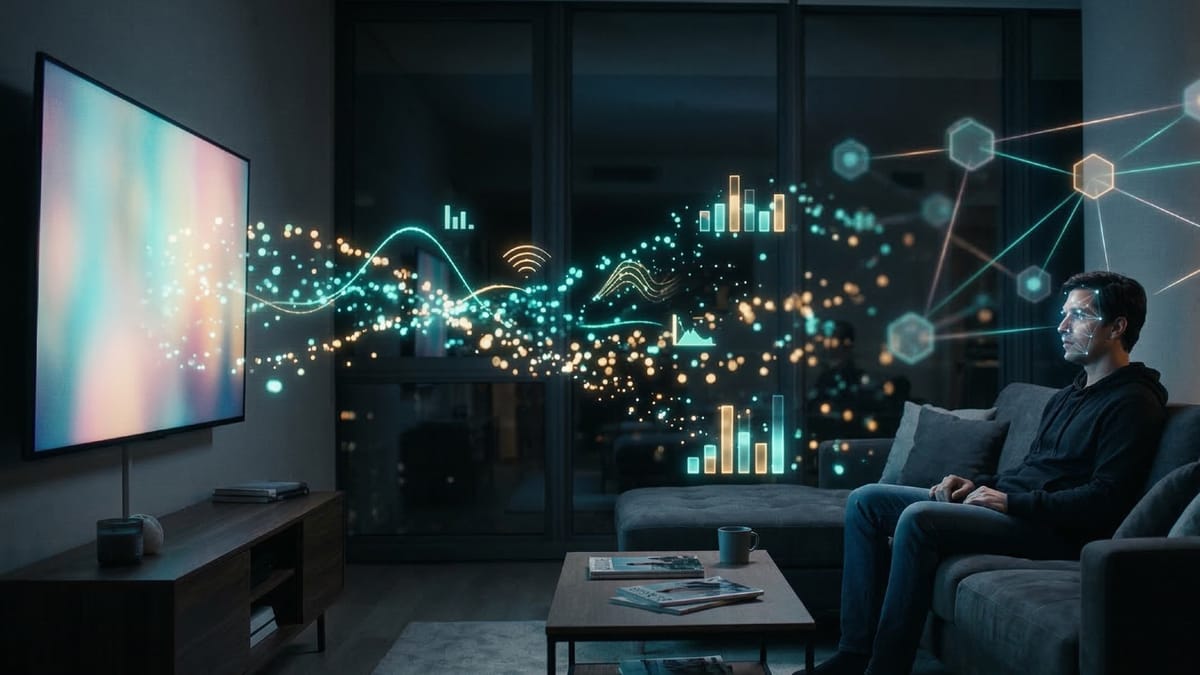
OpenX and TVision on March 11, 2026 announced the launch of OpenX Attention Targeting, a pre-bid targeting capability for connected television advertising that converts attention measurement data into real-time activation signals before a bid is placed. The integration, available exclusively through OpenXSelect, marks the first time a supply-side platform has brought attention-based targeting directly into the pre-bid layer for CTV at this scale. For a channel where impression-level engagement has historically been difficult to isolate and act upon, the announcement carries technical significance that extends beyond the two companies involved.
The core mechanic works as follows. TVision, which operates a passive, in-home person-level panel, generates second-by-second attention data across linear and streaming television. That data is used to build predictive attention modelsgrounded in actual viewer engagement rather than inferred or proxy signals. Those models are then combined with OpenX's real-time bidstream signals - including time of day, device type, and viewing duration - to produce attention scores at the impression level. Buyers accessing TV by OpenX supply through OpenXSelect can then apply those scores as a targeting parameter across any CTV deal they curate, whether through self-serve or managed service workflows.
The result is a shift in how attention data functions within the programmatic stack. Previously, attention measurement informed post-campaign analysis; it told buyers which placements had performed well after the budget was already spent. The OpenX and TVision integration repositions that same data as a pre-bid input, enabling buyers to shape which impressions they purchase before an auction clears. Index Exchange embedded a similar pre-bid attention signal into its supply-side platform in February 2026, through a separate partnership with xpln.ai, suggesting that SSPs are increasingly assuming responsibility for operationalizing attention as a real-time optimization lever rather than a retrospective reporting metric.
According to the announcement, advertisers using OpenX Attention Targeting can reach CTV viewers across 231 million-plus monthly unique users via OpenX's identity graph. That figure is slightly larger than the 237 million U.S. users and 150 million CTV devices cited when OpenX announced the general availability of OpenXSelect in July 2025. The discrepancy likely reflects the specific CTV-focused scope of the new targeting capability versus the broader omnichannel footprint of OpenXSelect as a platform.
The integration requires no additional setup for buyers who already use OpenXSelect. Attention signals can be layered alongside audience, content, and contextual targeting parameters, and the capability supports the curation of private marketplace deals that complement direct buys with high-attention, multi-publisher inventory. OpenX describes TV by OpenX as a product pioneered in 2023 that provides what the company calls 100% glass-on-wall supply and direct publisher relationships - meaning inventory where the television set is confirmed to be physically present and actively in use.
TVision's measurement methodology underpins the targeting logic. The company operates a passive panel of in-home viewers, using computer vision technology to track presence-in-room and attention second-by-second. TVision's State of Streaming report released in August 2025 demonstrated measurable differences across content types: original streaming content captured 64% attention compared to 59% for library content, and the methodology spans 5,000 homes weighted to represent national viewing patterns. That panel data forms the training foundation for the predictive attention models now being deployed within OpenX's bidstream.
Hassan Babajane, CRO at TVision, said in the announcement: "The next evolution of attention metrics is from pre- and post-campaign to real-time optimization. This partnership allows buyers to use attention metrics to shape campaign performance. We're proud to bring the most actionable use of attention data yet to the programmatic ecosystem alongside OpenX."
Erika Loberg, Global Head of CTV at OpenX, added: "OpenX Attention Targeting gives brands what they've been asking for: real-time CTV performance optimization based on true viewer engagement. For the first time, advertisers can activate attention as a targeting parameter at scale, in real time, and directly influence outcomes before the bid."
The launch arrives against a backdrop of sustained pressure on CTV to demonstrate measurement capabilities beyond impressions and completion rates. Research from Gracenote published in October 2025, drawing on a survey of 600 U.S. media executives, found that 32% of respondents considered their CTV advertising "not very effective," while 80% of respondents continued prioritizing demographic and interest-based targeting methods over contextual or attention-based approaches better suited to brand awareness objectives. That gap - between stated campaign goals and actual targeting choices - has been one of the more persistent structural problems in CTV planning.
An industry expert writing on LinkedIn in November 2025 identified inventory curation as the first of four common mistakes in CTV campaign execution, arguing that advertisers targeting the open market frequently serve ads on FAST channels with supply volumes too large to quality-control effectively. The recommendation was to operate through private marketplace deals or programmatic guaranteed arrangements - precisely the format that OpenX Attention Targeting supports.
According to the OpenX announcement, CTV ad spend is projected to grow nearly 14% in 2026. That projection sits within a wider range of estimates from different sources. Comscore's State of Programmatic Report released in January 2026 found that CTV budgets had increased three percentage points year-over-year to 26% of media spend on average, with more than half of respondents expecting over 60% of CTV buys to occur programmatically in 2026. A separate survey of over 300 U.S. marketing professionals published in November 2025 by Go Addressable found that 43% of large advertisers planned to increase spending on addressable TV in 2026.
Against that volume of money entering the channel, questions about how to verify and optimize impression quality become materially consequential. IAB Europe published findings on March 11, 2026 - the same date as the OpenX announcement - from its CTV Working Group, noting that over one-third of CTV ad impressions are delivered in TV-off environments, contributing to an estimated $1 billion in annual wasted advertising spend.
The attention measurement space has been moving rapidly across platforms and formats. Lumen Research announced on March 5, 2026 a partnership with Netflix to deliver eye-tracking attention measurement for CTV, desktop, and mobile ads in five European markets - the UK, Germany, France, Italy, and Spain. That announcement came six days before the OpenX and TVision integration. The Media Rating Council and IAB finalized attention measurement guidelines in November 2025, establishing standardized frameworks for measuring attention across digital advertising formats after years of fragmented and inconsistent methodologies.
TVision's data has featured prominently in third-party studies measuring the effectiveness of CTV creative formats. Research published in September 2025 using TVision measurement found that Kargo's Enhanced Branded Canvas format achieved 88% longer attention duration than YouTube ads, with 15-second implementations capturing 55% more attention than standard CTV benchmarks. A separate TVision study announced in August 2025 documented Kargo CTV campaigns achieving 78% higher attention than industry standards overall. Those studies positioned TVision's panel-based methodology as a credible benchmark provider, establishing the data foundation that the OpenX integration now deploys as a targeting input.
An IAB Europe panel discussion in July 2025 documented the attention measurement trend gaining momentum, with participants observing that it had become "easier than ever to test" in the programmatic environment. The panel noted, however, that standardization challenges and attribution complexities remain significant barriers to universal adoption. That context matters for understanding the OpenX and TVision integration: the capability enters a market that is increasingly comfortable with attention as a concept but still working through how to operationalize it consistently.
The OpenX Attention Targeting launch is the latest in a series of product developments from OpenX spanning the past two years. The company's Cookieless Deal Library, launched in February 2024, included attention deals powered in part by TVision among its more than 1,000 pre-built deal IDs - an earlier integration that established the commercial relationship now being deepened. OpenXSelect became generally available in July 2025, introducing the curation platform that serves as the exclusive access point for the new attention targeting capability. In January 2026, OpenX announced OpenXBuild, a software suite with three APIs enabling custom decisioning, identity resolution, and auction insights.
According to its company profile, OpenX operates a 100% cloud-based technology stack, works with more than 200,000 premium publisher domains and over 100,000 advertisers, and holds 17 years of programmatic history. The company was the first adtech company to be certified as CarbonNeutral™ and to achieve third-party verification for SBTi Net-Zero targets.
TVision, headquartered in New York City with offices in Boston and Tokyo, provides second-by-second, person-level data about viewing behavior across linear and streaming television. Its clients include advertisers, agencies, networks, streaming content providers, measurement companies, and data platforms. The company's passive, in-home panel methodology distinguishes it from approaches that rely on device-level signals alone, which typically cannot distinguish between a television being on in an empty room and one being actively watched.
The broader significance for buyers is structural. Attention-based targeting applied pre-bid is a different kind of tool than post-campaign attention reporting. It does not describe what happened; it shapes what is purchased. Combined with OpenX's identity graph reaching 231 million-plus monthly unique users and the ability to layer attention scores alongside audience and contextual signals, the capability moves CTV a step closer to the granular, impression-level optimization that performance advertisers have come to expect in search and social environments.
That progression matters. 63% of marketers planned to boost CTV and digital display investment in early 2026, according to Mediaocean's advertising outlook report. More money entering CTV with tools that improve inventory qualification represents a meaningful quality-of-spend improvement for buyers operating in a fragmented streaming landscape. Whether predictive attention models built on panel data can deliver consistent optimization signal across the full diversity of CTV viewing contexts remains to be seen in practice - but the infrastructure to test that question now exists within OpenXSelect at scale.
Who: OpenX Technologies, an independent omnichannel supply-side platform with 17 years of programmatic history and relationships with over 200,000 premium publisher domains, and TVision, a CTV attention measurement company headquartered in New York City operating a passive in-home person-level panel.
What: The launch of OpenX Attention Targeting, described as the first supply-side pre-bid attention targeting capability for connected television. The integration uses TVision's predictive attention models - built from second-by-second panel data - combined with OpenX's real-time bidstream signals to enable buyers to target high-attention CTV inventory before placing a bid. The capability is available exclusively through OpenXSelect and reaches 231 million-plus monthly unique users via OpenX's identity graph.
When: Announced on March 11, 2026.
Where: The capability is available through OpenXSelect, OpenX's curation and supply-side targeting platform, across TV by OpenX supply. TVision is headquartered in New York City, with offices in Boston and Tokyo. OpenX is an independent company with global publisher and advertiser relationships.
Why: CTV ad spend is projected to grow nearly 14% in 2026 while the broader streaming market remains fragmented and impression-level engagement has been difficult to measure and act upon in real time. Advertisers have historically received attention measurement data only after campaigns concluded, limiting its utility for optimization. The integration moves attention from a post-campaign diagnostic to a pre-bid targeting input, addressing a structural gap in how CTV inventory is qualified and purchased at scale.