RTL cuts 600 German jobs as broadcaster confronts streaming shift
RTL announces 600 job cuts in Germany citing weak TV ad revenue, just weeks after presenting TV Key Facts 2025 showing viewing strength.


RTL announces 600 job cuts in Germany citing weak TV ad revenue, just weeks after presenting TV Key Facts 2025 showing viewing strength.
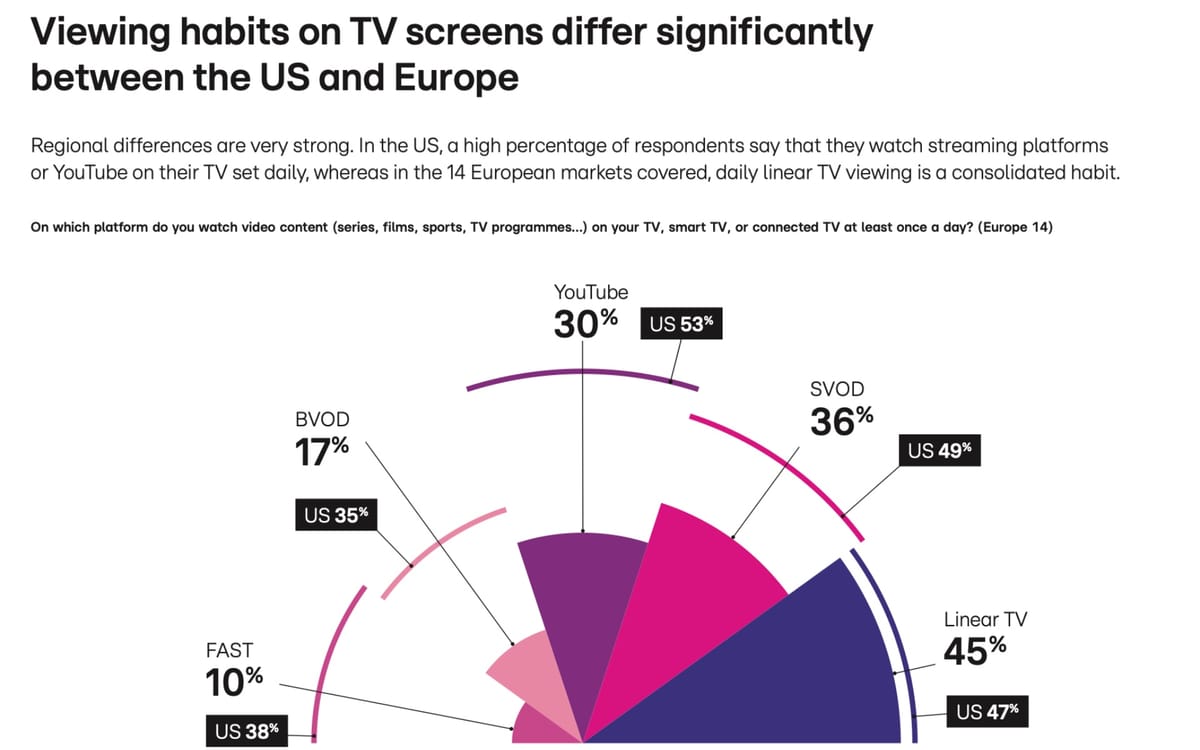
European broadcaster RTL disclosed plans on December 2, 2025, to eliminate approximately 600 full-time positions across its German operations, representing about 10 percent of the workforce in the country. The announcement comes less than a month after the company's RTL AdAlliance division presented TV Key Facts 2025, an annual research report highlighting the enduring strength of television viewing across Europe. The juxtaposition illustrates the complex reality facing legacy broadcasters as they navigate structural changes in advertising markets while maintaining positions as audience leaders.
RTL Germany CEO Stephan Schmitter described the workforce reduction as necessary to strengthen the company's competitive position in light of structural and economic challenges. "The media market is undergoing profound change," Schmitter stated in the announcement. The executive emphasized that remaining competitive requires intensified focus on streaming operations, particularly the RTL+ service available in Germany and Hungary.
Subscribe PPC Land newsletter ✉️ for similar stories like this one
The cuts will affect all RTL Germany locations through special severance programs and early retirement arrangements, according to the company's statement. RTL Germany operates the flagship RTL channel, VOX, news channel ntv, and streaming service RTL+. Parent company Bertelsmann owns RTL Group, which maintains broadcasting operations across multiple European markets.
Shares in RTL declined 2 percent following the workforce reduction announcement, reflecting investor concerns about the advertising market deterioration cited by the company. According to Reuters, RTL has struggled for years with weakened advertising revenues and intensifying competition from American streaming platforms including Netflix and Prime Video.
The timing creates a notable contrast with RTL AdAlliance's TV Key Facts 2025 presentation, delivered November 7, 2025, which emphasized television's continued relevance and reach across European markets. The 32nd edition of the annual report featured extensive data demonstrating sustained viewing levels and advertiser interest in television-based content. "For over three decades, TV Key Facts has embodied RTL AdAlliance's data-driven vision, offering you, the media and advertising community, fresh insights into how audiences engage with video content across the total video landscape," the presentation stated.
The 2025 edition centered on trust as its organizing theme. "In times of fragmentation, misinformation and endless content, trusted media matters more than ever for viewers, for brands, for advertisers, and for society actually as a whole," according to the presentation introduction.
During the TV Key Facts presentation, RTL AdAlliance senior marketing director Aurelie Brunsu emphasized that advertisers and agencies feel overwhelmed by data quantity and conflicting metrics from various platforms. "Everyone is number one," Brunsu stated, referencing the challenge of evaluating claims from publishers and platforms. The presentation aimed to provide meaningful context for total video viewing habits rather than promoting any single format or delivery method.
Brunsu highlighted how global platform metrics can mislead advertisers when applied to local markets. YouTube recently claimed 200 billion views for short-form videos, which translates to approximately 25 short videos per person on Earth daily. However, YouTube changed its view definition for short videos in early 2025, now counting any moment the video starts regardless of watch time. Each loop counts as an additional view. "Very clearly for a brand you know there is no really value with that metric," Brunsu stated during the presentation.
The report provided concrete examples of how global reach claims translate to local markets. Mr. Beast, one of YouTube's most famous creators, reports 447 million subscribers worldwide. BARB measurement in the United Kingdom, which tracks viewing on television sets, showed Mr. Beast's weekly reach at 319,000 individuals aged four and older. This figure compares to Yorkshire Auction House, a lesser-known channel, demonstrating how perspective drastically changes when examining actual local audience delivery.
Research presented in TV Key Facts 2025 showed Europeans watched an average of 3 hours and 6 minutes of linear television daily in 2024, maintaining strength compared with other regions globally. North America averaged 2 hours and 31 minutes, while Asia reached 1 hour and 58 minutes. Africa led globally with 3 hours and 48 minutes of daily television viewing.
Within Europe, significant variation exists between markets. Hungary leads with 4 hours and 54 minutes of daily viewing time, followed by Portugal at 4 hours and 38 minutes, and Italy at 3 hours and 27 minutes. Spain and Germany both average 2 hours and 51 minutes. At the lower end, Denmark and Netherlands record approximately 2 hours of daily television consumption, with Switzerland at 1 hour and 49 minutes.
Daily reach figures demonstrate television's continued ability to aggregate audiences. Portugal exceeds 80 percent daily reach for linear television, while France achieves 73.7 percent daily reach. The United Kingdom sits closer to 55 percent daily reach. Daily reach in most markets defines as one consecutive minute of viewing time during a day.
Smart television penetration has expanded substantially across European markets, creating infrastructure for both traditional broadcasting and streaming delivery. France leads with 84.3 percent smart TV penetration, followed by Austria at 68.6 percent and Italy at 72.8 percent. Spain reaches 68 percent smart TV penetration. Global comparisons show Japan at 47.6 percent, Brazil at 74 percent, demonstrating significant variation in connected television adoption rates.
Samsung data presented during TV Key Facts 2025 showed increasing usage of applications on smart television devices. The data, covering Australia, demonstrated semester-over-semester growth in app engagement, reflecting how viewers access diverse content sources through television screens.
Buy ads on PPC Land. PPC Land has standard and native ad formats via major DSPs and ad platforms like Google Ads. Via an auction CPM, you can reach industry professionals.
The report emphasized that trusted media environments transfer credibility to advertising brands. Thinkbox research from the United Kingdom indicated that brands advertising on television and radio generate more trustworthiness by default compared with digital-only platforms. Research showed viewers are 44 percent more likely to trust a brand seen alongside professional content rather than non-professional content. This trust effect holds across age groups, including viewers aged 16 to 34 years.
Stephane Coruble, CEO of RTL AdAlliance, concluded the presentation by noting that 75 to 80 percent of advertising investment currently flows to five global platforms. The concentration increases in the United States, where 91 percent of new advertising dollars directs to three companies: Amazon, Google, and Meta. "We represent an alternative in media," Coruble stated, emphasizing RTL AdAlliance's role connecting advertisers with trusted European broadcaster brands.
Coruble emphasized that RTL AdAlliance brings "reach at scale" with "simplified product standardized product to make our inventory simple to buy in a brand safe environment." The company provides innovation in technology while maintaining what Coruble described as "the people's business" with experts across Europe providing information needed for client decision-making.
The presentation acknowledged streaming's growth trajectory while highlighting linear television's sustained performance. Broadcast viewing remains dominant across most European markets, with countries including Portugal, Greece, Bulgaria, and Hungary maintaining above 95 percent live viewing as a proportion of total television consumption. Sweden reaches 89 percent live viewing, while France hits 90 percent. Time-shifted viewing reaches highest levels in Belgium and Switzerland, where advertising formats have adapted to address fast-forwarding through commercial breaks.
Switzerland showed 72 percent live viewing, representing the lowest proportion in Europe, while Netherlands reached 76 percent and United Kingdom 78 percent. "Countries that have the highest time-shifted viewing rates such as Belgium and Switzerland, have developed specific advertising formats to reach viewers who fast-forward through ad breaks," the report stated.
Streaming advertising increased substantially according to data from IAB Europe presented in TV Key Facts 2025. The growth derived primarily from advertising tiers on subscription video-on-demand platforms, particularly following Amazon Prime Video's automatic migration of users to advertisement-supported access. Broadcaster video-on-demand services, representing consolidated businesses, still increased 30 percent across Europe in 2024.
Content familiarity emerged as a key finding in the research. Digital i data tracking viewing across 19 countries on global streaming platforms including HBO Max, Disney+, Prime Video, and Netflix showed legacy programs dominating the top 10 most-viewed shows by viewing hours. Friends, The Big Bang Theory, and Grey's Anatomy ranked among the most-watched content. The Big Bang Theory, which broadcast from 2007 to 2019, ranked second in viewing hours across these platforms.
Legacy entertainment formats maintain substantial audiences. The Masked Singer, first launched 10 years ago, remains in the top 10 programs across seven countries out of 70 monitored worldwide in 2024. Dancing with the Stars, first launched 21 years ago, ranks in the top 10 across six countries. "Familiarity in content does matter a lot," Brunsu stated during the presentation.
The presentation featured a case study of Top Chef France partnering with Accor to promote Mercure brand restaurants. Top Chef attracts 3 to 4 million viewers per episode during prime time from March to May, with 12 to 15 episodes per season. The program's 16th season in 2025 demonstrated sustained audience engagement. Last year, 34 million people were exposed to the show at least once, illustrating the scale of reach available through established television formats.
The workforce reduction at RTL Germany reflects advertising revenue challenges that extend beyond Germany's borders. RTL Group reduced its 2025 adjusted EBITA guidance from approximately €780 million to €650 million on November 18, 2025, citing television advertising market weakness in Germany and France. Second-half television advertising revenue now expects to decline by high single-digit percentages rather than grow 2 to 3 percent as previously forecast.
The financial revision demonstrated the magnitude of advertising market deterioration in RTL's core territories. Traditional television advertising declined 6.9 percent during the first half of 2025, while digital advertising surged 27 percent to €230 million, according to RTL Group's financial reports. Digital advertising now represents 16.4 percent of total advertising revenue, up from 12.5 percent in the first half of 2024.
Streaming services RTL+ and M6+ pursue aggressive subscriber growth strategies as European streaming adoption accelerates. Content spending increased from €338 million in 2024 with targets approaching €500 million by 2026, supporting original programming development. The company reached 7.6 million paying subscribers across its streaming platforms by September 2025.
WPP Media data presented during TV Key Facts 2025 offered alternative perspectives on advertising spend classification beyond traditional television, print, and digital categorizations. The analysis segments spending into commerce (retail media), intelligence (search), location (outdoor and cinema), and content categories. This framework provides clearer understanding of where advertising investment flows within digital channels rather than treating all digital spending as equivalent.
Different markets show distinct spending patterns under WPP's classification system. China demonstrates high retail media investment as the second-largest spending category, while France allocates substantially less to retail media, positioning it similarly to outdoor advertising levels. Search represents the second-largest category in France, illustrating how local market dynamics shape advertising allocation decisions.
The presentation addressed the common statistic that 75 percent of advertising spend in the United Kingdom directs to digital platforms. However, this figure includes substantial investment from small companies that have limited alternatives beyond digital advertising due to cost and accessibility barriers. "We know that the small companies they invest massively," Brunsu stated. "They hardly have another option that to invest in digital because it's cheaper and it's easier."
For medium and large companies, examining advertising spend within their specific competitive set reveals different patterns. WPP's content category analysis showed that established companies allocate budgets differently than overall market averages suggest when small business digital spending is separated.
Stagwell research presented during TV Key Facts 2025 demonstrated that advertising alongside quality journalism produces no negative brand effects even when content addresses sensitive topics. Testing compared advertising next to crime coverage, Biden-Trump political stories, and inflation reporting against neutral contexts including business, sports, and entertainment programming. Purchase intention showed no statistically significant differences across these content categories, supporting the argument that quality journalism provides appropriate advertising environments regardless of subject matter.
The challenge facing RTL and similar European broadcasters involves competing with platforms that operate at global scale. The presentation emphasized how scale creates advantages but also noted that local expertise and cultural relevance remain differentiators. European viewing patterns vary substantially, influenced by cultural tastes, economic conditions, and technology adoption rates.
Audience peak times across Europe reflect local dining patterns and daily rhythms. France shows peak viewing at 21:15 with 24.4 million viewers, while Spain reaches maximum audience at 22:15 with 12.4 million viewers, aligning with later dinner times. The United Kingdom peaks at 21:00 with 17.1 million viewers. France also demonstrates a significant lunch viewing peak at 13:15 with 13.2 million viewers, while Spain shows lunch viewership of 9.5 million at 15:30.
Fiction programming led the top 10 programs across European markets in 2024, representing 37 percent of highly-viewed content, followed by entertainment at 24 percent. Within entertainment programming, talent shows continue dominating with 45 percent of the category consisting of reality competitions such as The Masked Singer and Dancing with the Stars.
Major sporting events demonstrate television's ability to aggregate massive audiences. The 2024 Summer Olympics Opening Ceremony in France generated an all-time high audience record with 24.4 million peak viewers at 21:15, achieving a 38.9 percent rating and 83.1 percent share. In Italy, the UEFA Euro 2024 match between Croatia and Italy attracted 13.25 million viewers with a 23.1 percent rating and 58.4 percent share.
RTL AdAlliance has pursued multiple initiatives to compete more effectively against global platforms. The company launched its AdManager platform in March 2025, providing self-service advertising capabilities for agencies and brands across European markets. The platform enables independent management of Total Video campaigns with real-time performance tracking and budget control through a five-step process: selecting channels and placements, setting budget parameters, targeting audiences through segmentation options, uploading creative content, and launching campaigns with integrated payment systems.
Partnership expansion represents another strategic approach. RTL AdAlliance added Austrian broadcaster ORF to its international sales portfolio in October 2025, extending advertiser access to premium inventory across additional European markets. The company already works with France Télévisions in France and announced cooperation with ORF in Austria beyond its historical focus on market leaders in each territory.
Premium content acquisition remains central to RTL's strategy. The company secured Warner Bros. Discovery and DFB-Pokal deals in September 2025, positioning RTL Deutschland competitively in sports broadcasting. Groupe M6 secured exclusive broadcasting rights for the FIFA Women's World Cup 2027, demonstrating sustained investment in premium content despite advertising market challenges.
Technology partnerships extend RTL's reach across distribution platforms. RTL+ became available on Sky Stream's IPTV platform in August 2024, expanding audience access through cross-platform distribution. The company extended its streaming partnership with Deutsche Telekom until 2030, integrating RTL+ Premium into MagentaTV subscription plans.
Advertising technology collaboration addresses another competitive dimension. ProSiebenSat.1 and RTL Deutschland announced an adtech partnership in February 2024, combining Virtual Minds and Smartclip technologies to create European alternatives to dominant American advertising platforms. The collaboration aims to simplify campaign management across linear television, smart TV, and streaming platforms.
The workforce reduction represents a significant moment for RTL Germany's operations, affecting a company that employs approximately 6,000 people across German locations. The scale of cuts reflects the magnitude of structural changes affecting European broadcasting economics as advertising revenue shifts toward digital platforms while content production costs continue increasing.
RTL's situation mirrors challenges facing broadcasters across Europe. Traditional television advertising markets face pressure from multiple directions: streaming platform competition for viewing time, digital advertising platforms offering sophisticated targeting capabilities, and changing consumption patterns particularly among younger demographics. Streaming surpassed traditional television in Germany for the first time in 2024, with 87 percent of Germans aged 16 and above streaming content compared with 86 percent watching broadcast television.
European broadcasters maintain advantages through local content knowledge and regulatory frameworks supporting public service broadcasting. TV Key Facts 2025 highlighted how legacy programs continue attracting substantial audiences. The presentation showcased iconic programs from markets including France, Germany, Italy, Spain, Austria, Belgium, and Netherlands that have maintained audience loyalty across generations. This content familiarity builds trust that transfers to advertising brands appearing in those environments.
The presentation featured brands discussing their approaches to trust-based media planning. Rishma Pier representing Wero, a European payment initiative backed by 16 banks, emphasized that "trust is really at the center of everything we do." Marine Jaïs from AXA stated that "trust is the heart of our business" for insurance brands. Both emphasized selecting media partners carefully and supporting quality journalism through advertising investments.
AXA has switched from visibility-based key performance indicators to attention metrics over the past three years, achieving increased return on investment on brand campaigns while decreasing carbon footprint through reduced advertising wastage. The company developed algorithms with attention partners to bid on placements that deliver appropriate attention levels for creative impact.
Looking ahead, RTL faces the challenge of executing its streaming transformation while managing declining traditional television revenue. The company expects streaming operations to reach profitability by 2026, dependent on digital advertising revenue growth and operational efficiency improvements. Approximately 9 million paying subscribers across streaming services represent the strategic target by 2026, creating expanded inventory for digital advertising campaigns.
The workforce reduction announcement underscores the urgency of this transition. While TV Key Facts 2025 presented data demonstrating television's continued audience strength, the business reality involves advertising markets shifting faster than viewing habits change. European viewing time remains high by global standards, with the 2024 average of 3 hours and 6 minutes declining only 16 minutes from the 3 hours and 22 minutes recorded in 2000, despite the emergence of Netflix, YouTube, smartphones, tablets, and connected television devices during this period.
For the marketing community, RTL's situation illustrates the disconnect between audience reach and advertising revenue allocation. Television maintains substantial daily reach across European markets, but these audience figures have not translated into proportional advertising investment as budgets migrate to digital platforms promising more granular targeting and attribution.
The coming months will test whether RTL's strategic initiatives can stabilize revenue performance and justify the workforce reduction. The company's medium-term adjusted EBITA target of €1 billion remains unchanged despite short-term challenges, reflecting confidence that investments in streaming, technology, and content partnerships will eventually generate returns. As Coruble stated during the TV Key Facts presentation: "Trusted media protects democracy, but it's also good for the business."
Subscribe PPC Land newsletter ✉️ for similar stories like this one
Subscribe PPC Land newsletter ✉️ for similar stories like this one
Who: RTL, the European broadcaster owned by media conglomerate Bertelsmann, announced the workforce reduction affecting employees across all German locations. RTL Germany operates the flagship RTL channel, VOX, news channel ntv, and streaming service RTL+. RTL AdAlliance, led by CEO Stephane Coruble, serves as the company's international advertising division.
What: The company plans to eliminate approximately 600 full-time positions representing about 10 percent of the German workforce through special severance programs and early retirement arrangements. The cuts come less than a month after RTL AdAlliance presented TV Key Facts 2025, annual research highlighting television's sustained viewing strength across Europe with average daily viewing time of 3 hours and 6 minutes, down only 16 minutes from 2000 levels despite streaming platform emergence.
When: RTL disclosed the workforce reduction plans on December 2, 2025, following the November 7, 2025, TV Key Facts 2025 presentation and November 18, 2025, financial guidance revision that cut profit expectations by 16.7 percent from €780 million to €650 million.
Where: The job cuts affect all RTL Germany locations where the company employs approximately 6,000 people. The broader advertising revenue challenges extend across Germany and France, RTL Group's core European markets where television advertising declined more severely than anticipated during 2025, with second-half TV ad revenue expected to fall by high single-digit percentages.
Why: RTL cited weakness in advertising revenues as traditional television advertising declined 6.9 percent in the first half of 2025 while digital advertising surged 27 percent, reaching 16.4 percent of total advertising revenue. RTL Germany CEO Stephan Schmitter stated the media market undergoes profound change requiring intensified streaming focus to remain competitive. The company has struggled for years with weakened advertising markets and competition from American streaming platforms including Netflix and Prime Video, while 75 to 80 percent of advertising investment flows to five global platforms, and 91 percent of new US advertising dollars directs to Amazon, Google, and Meta.