Scammers exploit OpenAI's name in fake ad platform targeting marketers
Digital marketers face new phishing campaign using fraudulent TestFlight app claiming to offer OpenAI advertising credits and campaign tools.


Digital marketers face new phishing campaign using fraudulent TestFlight app claiming to offer OpenAI advertising credits and campaign tools.
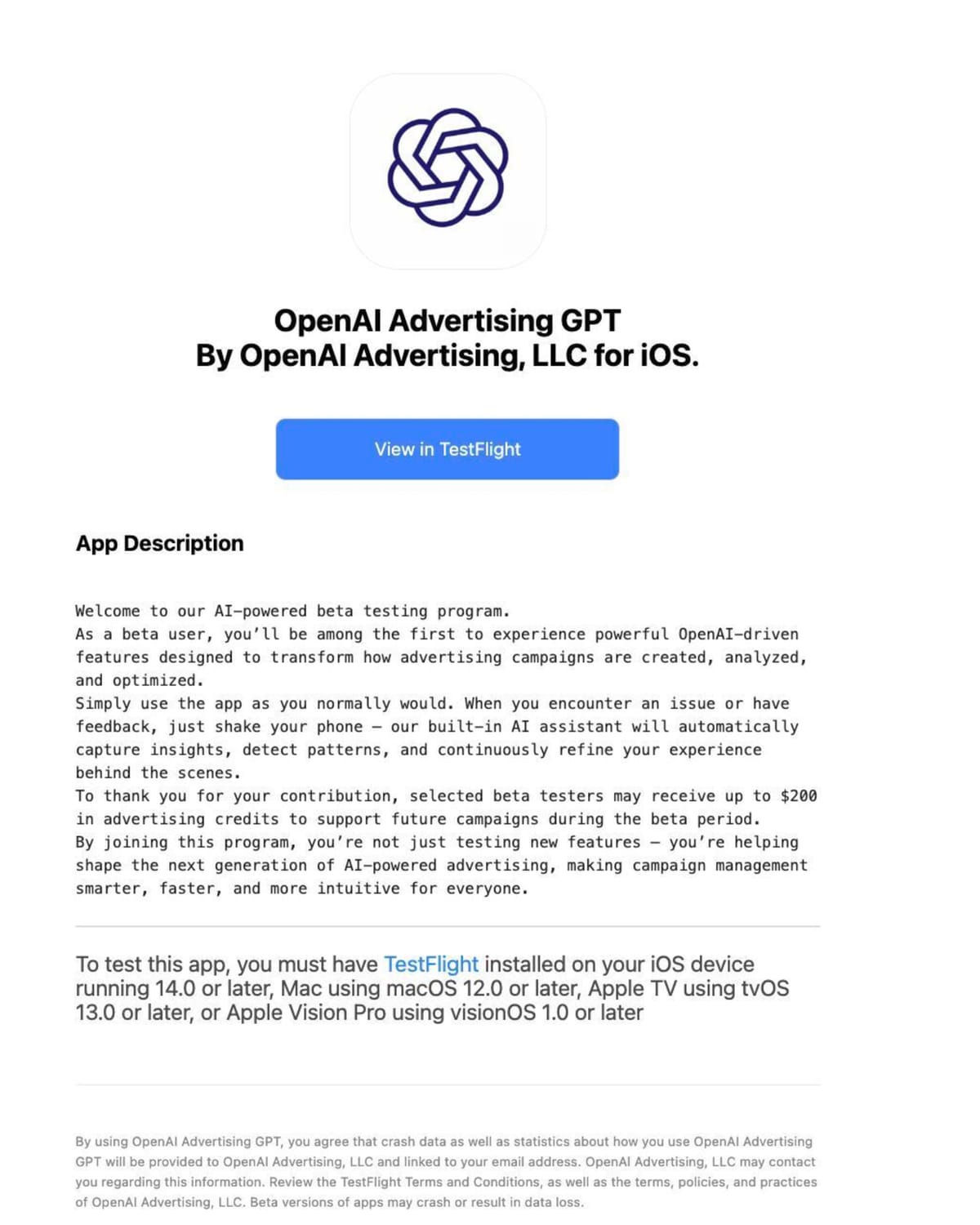
A phishing operation is currently targeting digital marketers and app testers with emails claiming to provide beta access to "OpenAI Advertising GPT," a non-existent product promoted through Apple's TestFlight platform. The fraudulent application promises advertising credits and AI-powered campaign management tools while impersonating OpenAI, the company behind ChatGPT.
Adriaan Dekker, a marketing professional who specializes in Google Ads scaling, issued a public warning about the scam through LinkedIn on January 25, 2026. His alert detailed the deceptive email campaign that uses the name "OpenAI Advertising, LLC" to solicit beta testers for what appears to be a legitimate advertising technology product.
The fake application presents itself through a TestFlight invitation, Apple's platform for distributing pre-release iOS applications to developers and beta testers. The scam email includes a TestFlight link directing recipients to install "OpenAI Advertising GPT," an application described as offering "powerful OpenAI-driven features designed to transform how advertising campaigns are created, analyzed, and optimized."
"This is not a legitimate OpenAI product," Dekker stated in his warning. The marketing professional identified several red flags distinguishing the fraudulent operation from authentic OpenAI communications. "OpenAI Advertising, LLC" is not an official OpenAI entity, he noted. OpenAI does not invite people to test products via random TestFlight emails, and no official announcement, OpenAI domain, or verification exists for this purported advertising platform.
The fraudulent application description claims users will be "among the first to experience powerful OpenAI-driven features designed to transform how advertising campaigns are created, analyzed, and optimized." It instructs potential victims to "simply use the app as you normally would" while promising that a "built-in AI assistant will automatically capture insights, detect patterns, and continuously refine your experience behind the scenes."
The scam offers a specific financial incentive to encourage installation. "To thank you for your contribution, selected beta testers may receive up to $200 in advertising credits to support future campaigns during the beta period," the fraudulent description states. The promise of advertising credits represents a classic phishing tactic, using monetary incentives to bypass skepticism about unsolicited technology invitations.
Technical requirements listed in the fake TestFlight page specify that users "must have TestFlight installed on your iOS device running 14.0 or later, Mac using macOS 12.0 or later, Apple TV using tvOS 13.0 or later, or Apple Vision Pro using visionOS 1.0 or later." These specifications mirror legitimate TestFlight requirements, adding credibility to the fraudulent operation by demonstrating familiarity with Apple's beta distribution platform.
The scam arrives during a particularly opportune period for brand impersonation. OpenAI confirmed plans to test advertising within ChatGPT on January 16, 2026, announcing that ads would appear "in the coming weeks" for logged-in adults using free and Go subscription tiers in the United States. This genuine announcement creates confusion that scammers exploit, making fraudulent advertising products appear plausible to marketing professionals tracking OpenAI's monetization strategy.
The timing proves strategic. OpenAI's legitimate advertising infrastructure development has been documented throughout 2025, including posting a job listing on September 24, 2025, seeking a Growth Paid Marketing Platform Engineer to build campaign management tools and advertising platform integrations. The company also appointed Omnicom Media Group's PHD as its global media agency of record, while CEO of Applications Fidji Simo conducted interviews with candidates to lead a team focused on bringing advertisements to ChatGPT.
However, these legitimate developments do not include beta testing programs distributed through unsolicited TestFlight invitations. OpenAI's actual advertising approach centers on five principles outlined in the January 16 announcement: mission alignment, answer independence, conversation privacy, long-term value, and user choice. The company explicitly stated that "ads do not influence the answers ChatGPT gives you" and maintains that user conversations remain "private from advertisers."
Brand impersonation represents a growing threat within advertising technology. Google suspended more than 700,000 advertiser accounts promoting AI-generated public figure impersonation scams during 2024, achieving a 90% reduction in reports of this scam category. The enforcement actions highlight how artificial intelligence has enabled increasingly sophisticated impersonation tactics that bypass traditional detection mechanisms.
The phishing operation targeting marketers follows established patterns documented in fraud investigations. Classic tactics include brand impersonation combined with TestFlight distribution and incentive structures offering credits or exclusive access. The Federal Trade Commission settled with operators of a massive fraud scheme in August 2025 that claimed relationships with major companies including Nike, Disney, 3M, Colgate, Dove, and Yeti while promising passive income through AI-powered e-commerce stores. That scheme resulted in over $20 million in monetary judgments and permanent industry bans.
Dekker provided specific guidance for marketing professionals who receive the fraudulent invitation. "Don't click the TestFlight link," he instructed. "Don't install the app. Don't reply to the email. Report it as phishing / impersonation." He emphasized the importance of sharing the warning throughout professional networks, particularly targeting marketers, growth leads, and anyone who tests beta tools.
The warning arrives as scams using well-known AI brands are increasing fast. The Australian Competition and Consumer Commission's December 17, 2025, industry snapshot documented consumer risks including AI-generated fake reviews, misleading conduct through synthetic content, and sophisticated scams affecting digital advertising platforms. The regulatory analysis tracked scam losses reaching A$260 million during a nine-month period, demonstrating the financial scale of AI-related fraud operations.
Authentication failures plague the advertising technology ecosystem. Multiple platforms have struggled with verification systems that fail to distinguish legitimate tools from impersonation attempts. Microsoft Advertising removed over one billion advertisements violating advertising policies during 2024, with enforcement efforts specifically targeting phishing attacks and brand infringement schemes. The platform's investment in advanced agentic workflows strengthened its ability to detect phishing attacks and new scam patterns, with large language models helping to decipher context and identify novel tactics ranging from get-rich-quick schemes disguised as celebrity endorsements to zero-day phishing attacks.
TestFlight's role in this scam represents a concerning development. Apple's beta distribution platform provides legitimate developers with tools to test applications before App Store submission. Apple announced substantial TestFlight updates at WWDC 2025 on June 11, including integration with mobile devices through the App Store Connect app, allowing developers to review feedback, screenshots, and crash logs directly on iPhone and iPad devices. The platform's legitimacy creates opportunities for scammers who exploit user familiarity with TestFlight invitations to distribute malicious applications.
The fraudulent application's promise to "capture crash data as well as statistics about how you use OpenAI Advertising GPT" linked to email addresses raises data collection concerns beyond simple phishing. "OpenAI Advertising, LLC may contact you regarding this information," the fake terms state. This language suggests potential objectives including email harvesting, personal information collection, or subsequent targeted attacks against marketing professionals who install the application.
Consumer protection agencies have documented how AI impersonation scams target specific professional communities. The marketing and advertising industry presents particularly attractive targets due to practitioners' familiarity with beta programs, early access opportunities, and platform testing initiatives. Marketing professionals regularly evaluate emerging advertising technologies, creating circumstances where fraudulent invitations blend with legitimate product testing requests.
The sophistication of AI-generated scams has increased substantially throughout 2025. Research published in July 2025revealed that suspected AI-generated content reduces reader trust by nearly 50%, while AI advertising spreading misleading product claims across major platforms documented in August 2025 demonstrated how artificial intelligence creates convincing but entirely fictional product demonstrations that mislead consumers about actual capabilities.
Detection challenges compound as scammers incorporate elements of legitimate OpenAI developments into fraudulent operations. The company's actual advertising infrastructure includes genuine partnerships with major platforms and substantial investment in advertising technology systems. OpenAI delayed advertising implementation on December 2, 2025, issuing an internal "code red" directive to focus resources on improving ChatGPT's core functionality. CEO Sam Altman told employees that newer projects, including advertising, AI agents for health and shopping, and a personal assistant called Pulse, would be postponed.
This postponement provides important context for evaluating unsolicited advertising platform invitations. OpenAI's advertising development exists primarily in infrastructure-building phases focused on internal campaign management tools and agency partnerships, not external beta testing programs distributed through TestFlight. The company's measured approach to advertising implementation contrasts sharply with the aggressive tactics employed by the fraudulent operation targeting marketers.
Industry analysts have tracked OpenAI's advertising strategy throughout 2025. Debra Aho Williamson, Chief Analyst at Sonata Insights, predicted in December 2025 that ChatGPT would begin displaying advertisements in 2026, with new ad formats launching on AI-driven platforms including Google AI Overviews, Microsoft Copilot, and Amazon's Rufus. Her analysis positioned AI platforms as emerging media channels requiring new advertiser strategies and budget allocations.
The fraudulent TestFlight campaign demonstrates how scammers exploit industry anticipation around AI advertising platforms to create plausible impersonation schemes. Marketing professionals tracking OpenAI's monetization developments might reasonably expect beta testing opportunities for advertising tools, making the fake invitation more credible to professionals familiar with the company's infrastructure investments.
Verification methods provide essential protection against brand impersonation scams. Legitimate OpenAI communications originate from verified company domains, include official announcement channels, and provide authentication mechanisms beyond simple email invitations. The company's actual products appear through established distribution channels with proper domain verification, security certificates, and transparent terms of service referencing genuine corporate entities.
The phishing operation's use of "OpenAI Advertising, LLC" as the purported company name represents a deliberate attempt to create corporate legitimacy while avoiding direct impersonation of OpenAI Inc. This tactic mirrors fraud patterns documented in other technology impersonation schemes where scammers create similarly-named entities to bypass trademark protections while exploiting brand recognition.
Browser security features have expanded to address phishing threats. DuckDuckGo expanded browser scam protection on June 19, 2025, to include fake e-commerce sites, fraudulent cryptocurrency exchanges, and scareware claiming devices are infected. The privacy-focused search engine company's enhancement addressed online fraud reaching $12.5 billion in consumer losses during 2024, with investment scams, online shopping fraud, and internet services representing major threat categories.
Platform responsibility for fraud prevention continues expanding. Advertising platforms face mounting pressure to implement verification systems that prevent brand impersonation before fraudulent content reaches potential victims. However, the distributed nature of email phishing campaigns combined with TestFlight's legitimate developer tools creates enforcement challenges that traditional advertising platform controls cannot address.
Marketing professionals should implement verification protocols when receiving unsolicited product invitations, particularly those claiming affiliation with major technology companies. Essential verification steps include checking sender email domains against official company websites, searching for official product announcements through established channels, confirming beta programs through company-controlled communications, and reporting suspected impersonation attempts to both the impersonated company and relevant platforms.
The OpenAI Advertising GPT scam demonstrates how fraudsters adapt quickly to emerging industry developments, creating impersonation schemes that exploit legitimate business activities. As OpenAI proceeds with actual advertising implementation throughout 2026, marketing professionals should expect continued phishing attempts that reference genuine company developments while promoting fraudulent applications designed to harvest personal information or distribute malicious software.
Dekker's warning serves marketing professionals navigating an increasingly complex landscape where legitimate AI advertising platforms coexist with sophisticated impersonation schemes. "Scams using well-known AI brands are increasing fast," he concluded. "Stay sharp."
Who: Scammers impersonating "OpenAI Advertising, LLC" are targeting digital marketers, growth leads, and app testers through fraudulent TestFlight invitations. Marketing professional Adriaan Dekker issued the public warning identifying the phishing campaign. OpenAI, the legitimate company behind ChatGPT, has no connection to the fraudulent application.
What: A phishing operation distributes fake beta testing invitations for "OpenAI Advertising GPT," a non-existent product claiming to offer AI-powered advertising campaign tools. The scam promises up to $200 in advertising credits to beta testers while requesting installation through Apple's TestFlight platform. The fraudulent application collects crash data and usage statistics linked to email addresses while potentially harvesting personal information from marketing professionals.
When: The scam warning was issued on January 25, 2026, arriving nine days after OpenAI's legitimate January 16, 2026, announcement confirming plans to test advertising within ChatGPT. The timing exploits industry anticipation around OpenAI's advertising platform development throughout 2025 and early 2026.
Where: The phishing campaign operates globally through email distribution, targeting marketing professionals and app testers with unsolicited TestFlight invitations. The fraudulent application claims compatibility with iOS devices running 14.0 or later, Mac using macOS 12.0 or later, Apple TV using tvOS 13.0 or later, and Apple Vision Pro using visionOS 1.0 or later.
Why: The scam exploits OpenAI's legitimate advertising infrastructure development and recent announcement of ChatGPT advertising tests to create plausible impersonation targeting marketing professionals. Fraudsters capitalize on industry familiarity with beta testing programs and early access opportunities to distribute malicious applications for data harvesting, email collection, or subsequent targeted attacks. The operation demonstrates how brand impersonation scams adapt quickly to emerging industry developments, using well-known AI brands to bypass skepticism about unsolicited technology invitations.