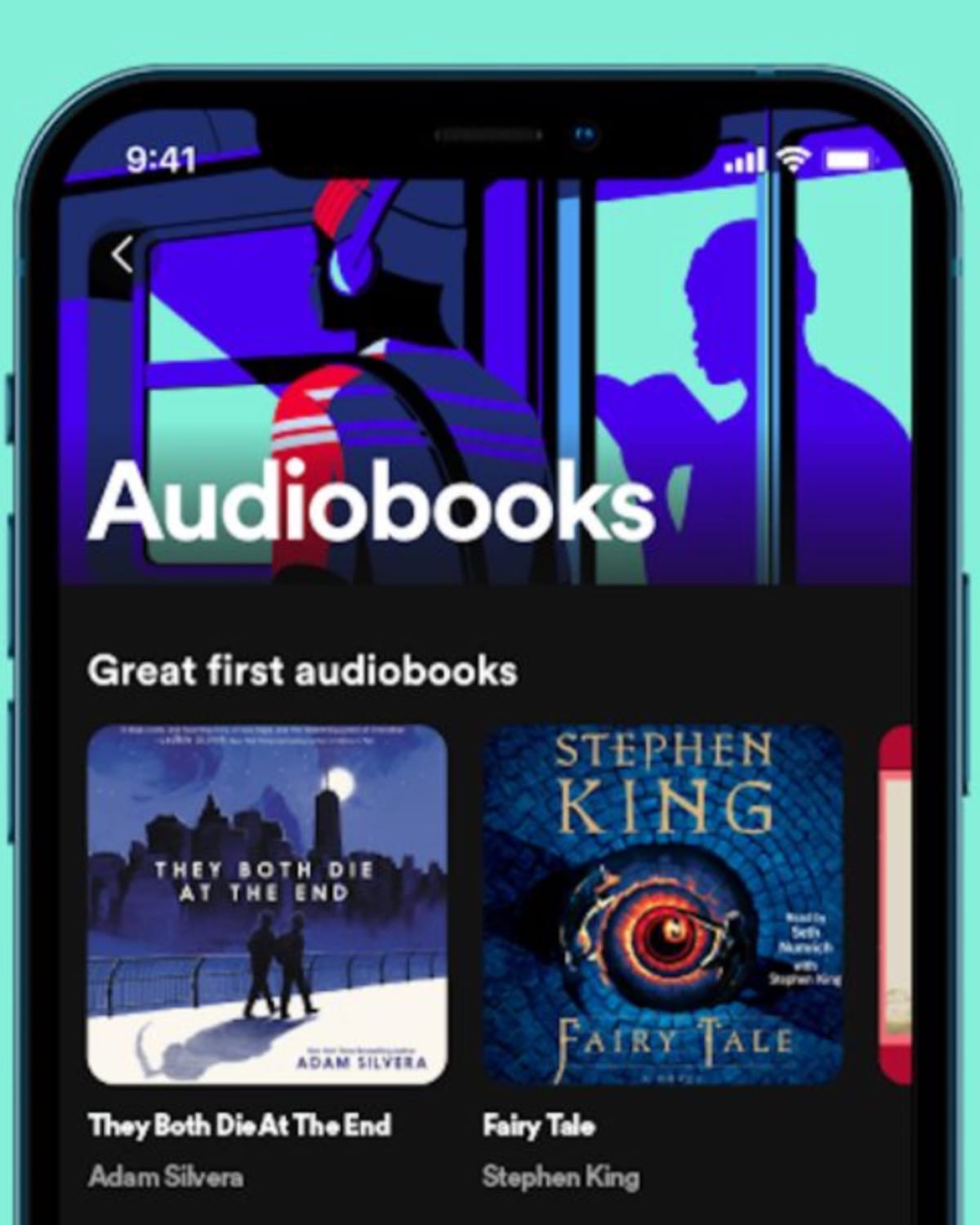
Spotify's audiobook charts land in the U.S. and U.K. - and publishers are paying attention
Spotify launched weekly Audiobook Charts for the U.S. and U.K. on February 27, 2026, ranking titles by listening engagement for Free and Premium users.

Spotify introduced Audiobook Charts for the United States and United Kingdom on February 27, 2026, expanding its discovery infrastructure into a segment of the audio market where visibility has historically been harder to come by than in music or podcasting. The weekly charts, accessible to both Free and Premium subscribers, rank the top audiobooks overall and by genre, drawing on listening behavior and engagement data from across the platform.
The move brings audiobook discovery closer in line with how Spotify has long presented music and podcasts - through ranked, publicly visible popularity data. Whether that structural shift proves as commercially significant for books as it has for other audio formats is a question the publishing industry will now be watching closely.
Rankings are updated weekly and organized in two ways: a general Top Audiobooks list and genre-specific breakdowns. According to Spotify, the methodology is based on listening behavior and engagement on the platform, though the company has not disclosed the precise weighting applied to different signals such as starts, completions, or hours consumed.
Both charts - for the U.S. and U.K. - are live inside the Audiobooks hub. In the Spotify app, users tap Search and select the "Audiobooks" tile to enter the hub, then scroll to the "Dive deeper" shelf to find the charts. Access is not restricted to paid subscribers; Free users can browse rankings alongside Premium account holders.
The genre-level breakdowns add a layer of granularity that is likely to be of particular interest to publishers and agents. A thriller finding traction in genre charts but not the overall top list signals something different from a title climbing both simultaneously - and those nuances carry real implications for promotional decisions.
Spotify's Director of Audiobook Partnerships and Licensing, Duncan Bruce, framed the charts launch explicitly by referencing the platform's experience with its other content verticals. "As we've proven with Music and Podcasts Charts, when content is easier to access, discover, and enjoy, the demand grows," Bruce said. "We are delighted to now bring that to audiobooks, to help provide even more ways for users, publishers, and authors to discover what's trending on Spotify, and make books more connected with culture in real time."
That argument - that surfacing popularity data increases overall category consumption - underpins Spotify's broader push into audiobooks. The company has spent roughly three years systematically building out the infrastructure to make that case credible.
The audiobook charts do not arrive in isolation. They are the latest addition to a stack of features and market expansions Spotify has assembled since first entering the audiobooks space.
Spotify entered the audiobooks market in October 2023, offering 150,000 titles to Premium subscribers in the United Kingdom, Australia, and later the United States with 15 hours of monthly listening time. The catalog has grown substantially since then. By the time of the German-language market launch in April 2025, the platform had reached 350,000 titles.
Geographic expansion has proceeded at a steady pace. Spotify brought audiobooks to France, Belgium, the Netherlands, and Luxembourg in October 2024, offering more than 200,000 titles to Premium subscribers. The monthly listening allocation was reduced from 15 hours to 12 hours for those markets, a structure that has since become the standard for newer market launches.
The platform expanded to Germany, Austria, Switzerland, and Liechtenstein on April 15, 2025, bringing 350,000 titles to Premium subscribers in German-speaking countries. Individual 10-hour top-up blocks are available for €9.99 when monthly allocations run out. On July 16, 2025, Spotify launched Audiobooks+ add-on subscriptions across 11 European markets, providing an additional 15 hours of monthly listening beyond the base plan allocation.
Sweden, Denmark, Finland, Iceland, and Monaco came online November 18, 2025, with audiobook listener growth of 36% year-over-year and total listening hours up 37% in English-language markets cited in that announcement.
The charts launch builds on two features Spotify has rolled out in recent months that are directly relevant to engagement depth - the metric presumably feeding chart rankings.
Page Match, announced in February 2026, lets users sync their position between a print book or e-book and the audiobook version using a smartphone camera scan. The feature launched on iOS and Android for most English-language titles, addressing one of the friction points that can interrupt sustained audiobook engagement: the difficulty of resuming listening when someone has been reading rather than listening.
Audiobook Recaps, launched on November 13, 2025, uses artificial intelligence to generate short audio summaries of an audiobook up to a listener's current position. The feature becomes available after a listener completes the first 15 to 20 minutes of a title and updates as they advance through the content. Spotify has stated that audiobook content is not used for large language model training or voice generation through this feature.
Both Page Match and Recaps are oriented toward reducing the dropout rate - the point at which a listener abandons a title. A user who finishes books is more likely to start new ones, and more starts means more engagement data feeding the chart algorithm.
The charts carry different implications depending on where you sit in the audiobook supply chain. For individual listeners, they function as a social proof signal - what other people are listening to right now, sorted by category. For the publishing industry, they represent a new promotional surface.
According to Spotify, the charts are designed to benefit the entire audiobook ecosystem. Publishers including Bloomsbury, HarperCollins, and Lagardère have previously credited the platform with driving double-digit growth in audio sales, according to the November 2025 Nordic expansion announcement. The underlying dynamic Spotify points to is that its consumption-based model gives publishers access to audiences who might not purchase audiobooks through traditional retail channels.
Chart placement, if it functions as it does in music, could become a meaningful marketing asset. An audiobook that breaks into the top 10 on a genre chart gains discoverability not just from the chart itself but from the promotional materials publishers and authors can build around that placement - a dynamic Spotify acknowledged explicitly in the Bruce quote above.
Spotify for Authors, launched November 26, 2024, gives publishers and authors analytics, promotional tools, audience demographic data, and redemption codes for sharing royalty-free copies with reviewers. That platform already enables authors to generate social media assets in a single click. Chart data will presumably flow into those tools, giving creators more concrete performance data to act on.
The timing of the charts launch matters to anyone tracking Spotify as an advertising environment. The platform reported 751 million monthly active users in its most recent results, a number that gives any new engagement surface significant potential reach. Audiobooks, however, occupy a different place in that user base than music or podcasts.
Audiobook listeners tend to engage more deeply - longer session times, higher completion rates on individual titles - than the average listener browsing curated playlists. That profile has implications for advertising formats that reward sustained attention. If chart-driven discovery increases the number of users who begin and finish audiobooks, it expands the segment of the Spotify user base most likely to be receptive to audio advertising delivered during longer listening sessions.
The current charts cover only the U.S. and U.K., which happen to be Spotify's most mature audiobook markets. Both markets have had audiobook access since 2023, giving the platform three years of engagement data from which to construct ranking algorithms. That depth of historical data likely makes the U.S. and U.K. the most reliable starting points for a chart system that needs to produce stable, meaningful rankings week over week.
Several questions remain unanswered by the February 27 announcement. The methodology statement - "based on listening behavior and engagement on Spotify" - leaves the weighting of different signals undefined. Does a title that 10,000 people start rank higher than one that 5,000 people finish? Completion rates, which would indicate deeper engagement, may or may not carry more weight than raw starts.
For advertisers and marketers considering audio as a channel, the absence of transparent methodology creates ambiguity around what chart position actually signals about audience quality. Spotify's ad-supported user base showed a 6% year-over-year decline in ad-supported revenue to €446 million in Q3 2025, a data point that underscores how the platform is still navigating the relationship between free access and monetization.
The charts also currently cover only two markets - the U.S. and U.K. Spotify has not announced a timeline for expanding to other territories where it has launched audiobooks, including France, Germany, the Nordic countries, or the other European markets added over the past two years. For publishers with significant sales in those regions, the current geographic limitation constrains the chart's usefulness as a global promotional tool.
For marketing professionals tracking digital audio, the audiobook charts development points to an ongoing structural shift in how content discovery works across the Spotify platform. The logic is consistent with what has happened in podcast advertising, where programmatic buying at scale became possible once the infrastructure for audience data and targeting was sufficiently developed.
Audiobooks represent a younger, potentially more premium audience segment. According to data from the November 2025 Nordic expansion announcement, more than half of Spotify's global audiobook audience falls between ages 18 and 34. That demographic profile is attractive to advertisers. As chart data makes it easier to identify which titles and genres are drawing sustained engagement from that audience, it creates sharper signals for contextual advertising alignment.
The broader platform context matters here. Spotify reported 751 million users and €701 million operating income in its most recent quarterly results, with audiobooks cited as a substantial growth opportunity. The company launched over 50 product features during 2025, according to that same reporting, positioning audiobooks as one of several vectors for user engagement growth alongside video podcasts and AI-powered music features.
Charts are a discovery mechanism but also, implicitly, a data surface. The titles that perform well on Spotify's audiobook charts will generate engagement signals that feed back into the platform's recommendation and advertising infrastructure. Publishers that understand this dynamic - and that already work with tools like Spotify for Authors - are better positioned to act on chart-related momentum quickly.
Who: Spotify, led by Duncan Bruce (Director of Audiobook Partnerships and Licensing), in coordination with publishers, authors, and the broader audiobook ecosystem including Free and Premium users in the United States and United Kingdom.
What: The launch of weekly Audiobook Charts for the U.S. and U.K., ranking the top audiobooks overall and by genre based on listening behavior and engagement data. Charts are accessible to all Spotify users inside the Audiobooks hub.
When: The charts were announced and made available on February 27, 2026.
Where: Within the Spotify app, accessible via the Search function, the Audiobooks tile, and the "Dive deeper" shelf in the Audiobooks hub. Currently limited to U.S. and U.K. markets.
Why: Spotify positions the charts as a discovery tool that drives category consumption, citing the precedent from its Music and Podcast Charts. The launch is also designed to benefit publishers and authors by creating new promotional surfaces and helping stories reach new audiences - extending a multi-year infrastructure build aimed at establishing Spotify as a significant platform in the global audiobook market.