
Sweden's influencer ad crackdown: fines, court rulings, and EU law coming
Sweden's Konsumentverket flags persistent ad disclosure failures in influencer marketing, with fines up to 1.5M kronor and EU Digital Fairness Act due in 2026.

Sweden's Konsumentverket flags persistent ad disclosure failures in influencer marketing, with fines up to 1.5M kronor and EU Digital Fairness Act due in 2026.
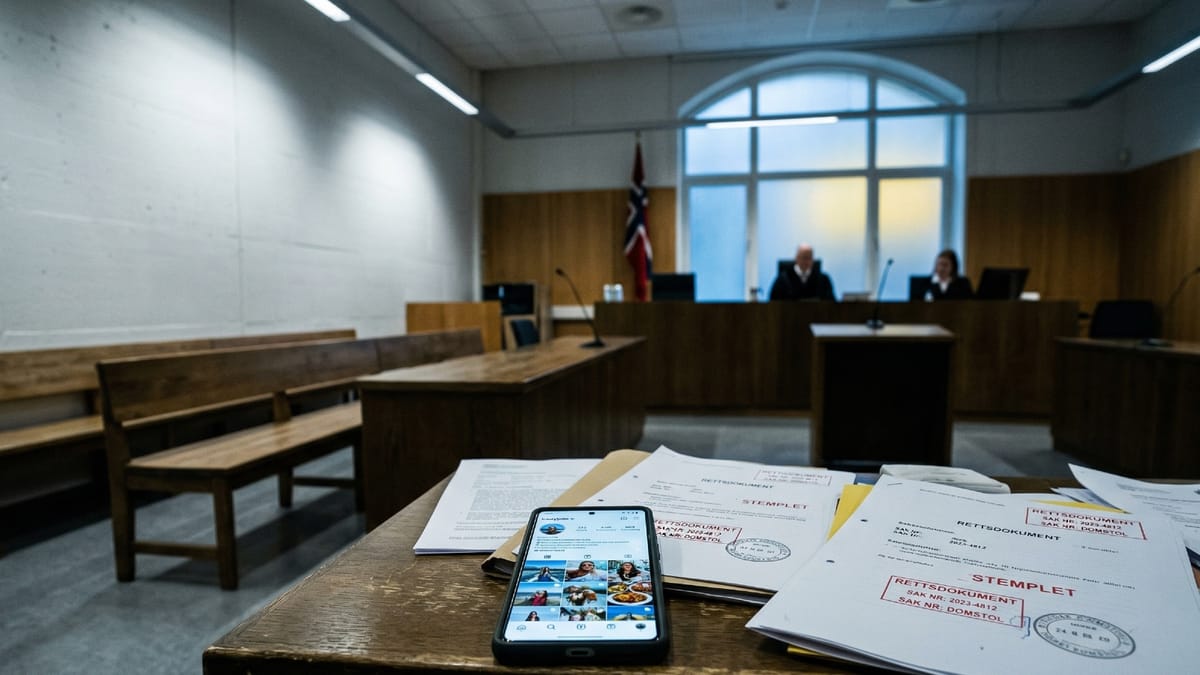
Sweden's consumer watchdog has placed the influencer marketing industry under sharp scrutiny, publishing a comprehensive government-commissioned report that documents years of persistent non-compliance with advertising disclosure rules - and signalling that tougher EU-level regulation is already on the way.
The report, Rapport 2026:3 Marknadsföring via influencers, was published by Konsumentverket - the Swedish Consumer Agency - on behalf of the Swedish government. According to IAB Sverige, the document concludes that the industry "despite years of supervision and information continues to fail on fundamental points." The publication arrived approximately two weeks before this article, placing it in early March 2026, and it lands at a moment when Sweden's digital advertising ecosystem is already navigating significant regulatory turbulence.
The core finding of the Konsumentverket report is not new - but its persistence is. According to the report, inadequate advertising labelling has been a common problem for many years, and legislation is only partially complied with despite multiple rounds of supervisory and information initiatives. The agency has opened around a hundred targeted enforcement cases against both influencers and advertisers in recent years.
One single operation, conducted in spring 2025, focused specifically on platforms where children and young people spend time. That action alone resulted in 52 targeted enforcement cases - a number that underlines how concentrated non-compliance is in the youth-facing segment of the market. The scale is significant. Fifty-two cases from a single thematic operation suggests that the problem is not scattered or isolated; it is structural.
The legal standard has now been established with some clarity by the Patent and Market Court of Appeal. According to the court's rulings, the average consumer must be able to perceive that a post constitutes advertising upon even a fleeting encounter with it. That threshold - fleeting contact, immediate recognition - sets a high bar. Labels such as "i samarbete med" (in collaboration with) or the hashtag "#samarbete" (collaboration) do not meet it, according to the court's findings. This is not a grey area. Platforms and advertisers operating in Sweden face a clear, judicially established requirement.
The Consumer Ombudsman has issued prohibition injunctions with financial penalties of up to 1,500,000 kronor per violation - roughly equivalent to approximately €130,000 at current exchange rates. That figure is per violation, not per campaign or per account, which means repeated or systematic failures could accumulate into substantial liability quickly.
One area of the report that carries particular significance for advertisers and agency partners involves the scope of responsibility. Courts have clarified that a marketing assignment may be deemed to cover more posts than the parties explicitly agreed to. This interpretation has direct consequences for contract management: brands cannot assume that liability is contained to individually approved content.
Compensation, moreover, need not be monetary to trigger advertising law obligations. According to the report's findings, courts have found that remuneration can take the form of products, travel, or other benefits - not just cash payments. An influencer who receives a free trip and posts about it may be engaging in commercial communication subject to the same disclosure rules as a formally invoiced campaign.
The liability question reaches further still. Courts have ruled that an influencer who owns and controls a company whose products appear in their posts may be considered the primary responsible party for the marketing - even in the absence of a formal payment flow. This ruling closes a gap that had been exploited by some market participants who structured their commercial relationships to avoid formal advertiser-influencer arrangements. If the influencer is the business owner and the business benefits from the content, the responsibility for proper disclosure sits with that influencer regardless of whether money changed hands.
Taken together, these judicial interpretations expand the perimeter of compliance well beyond what informal industry practice had assumed. Brands and creators who have been managing disclosure obligations loosely - relying on vague hashtags, assuming that only paid posts count, or treating gifted products differently from cash deals - are operating outside the law as it currently stands in Sweden.
Konsumentverket's report does not exist in isolation. It arrives as the European Commission is preparing new EU-wide legislation that will directly address influencer marketing practices across all 27 member states.
According to IAB Sverige, the European Commission intends to present the Digital Fairness Act during 2026, with the objective of complementing existing regulations and addressing problematic aspects of influencer marketing. These include deceptive web design and personalised marketing that exploits consumers' vulnerabilities.
The Commission is considering several specific measures. These include clarifying influencers' responsibilities for advertising labelling, imposing on advertisers a responsibility to ensure that influencers comply with their obligations, and prohibiting certain types of claims as well as retouched or AI-generated images that may be inappropriate for children.
That last point - AI-generated imagery directed at children - marks a meaningful expansion of the regulatory agenda. It acknowledges that the content environment influencers operate in has changed technically, not just commercially. The industry's use of AI tools to generate or enhance visual content now intersects directly with child protection concerns under the forthcoming framework.
The advertising industry has already engaged with the Digital Fairness Act consultations. IAB Europe and a coalition of advertising industry associations submitted a joint letter on 14 July 2025 to European Commission executives Henna Virkkunen and Michael McGrath, challenging the scope of the DFA consultation and arguing that existing digital regulations already address consumer protection concerns. The coalition warned against creating overlapping regulatory frameworks - a concern also raised in the context of the Digital Services Act, which has already generated complex compliance requirements for platforms and advertisers operating across European markets.
That pre-existing regulatory layering is the backdrop against which the Digital Fairness Act arrives. The EU's Digital Services Act has been reshaping platform obligations since its full applicability from February 2024, including in ways that touch advertising transparency directly. The addition of influencer-specific rules within the DFA framework will add another layer to an already complex compliance architecture.
For the marketing community specifically, one section of Konsumentverket's report is particularly candid. The agency assesses that knowledge about marketing law - and how to apply it in practice - is "varying and in many cases deficient" among participants in the influencer industry.
That assessment carries a specific sting because it does not describe new entrants or small creators. It describes the industry broadly. Years of supervisory activity have not produced the knowledge transfer that might have been expected.
Worse, according to the report, actors who have previously been subject to supervision repeat the same or similar violations. Compliance is not self-sustaining. The pattern suggests that individual enforcement actions do not reliably produce sector-wide behavioural change - a problem familiar to regulators across multiple domains of advertising law.
Cecilia Torelm Tornberg, lawyer and partner at law firm MarLaw, writing for IAB Sverige, characterised the report as "a further signal from Konsumentverket that the industry should take responsibility." She noted that the industry recommendation from Sveriges Kommunikationsbyråer (the Swedish Association of Communication Agencies), Sveriges Annonsörer (the Swedish Advertisers' Association), and IAB Sverige was updated in January 2026 and serves as "a concrete tool for doing things right in practice."
That updated industry recommendation provides a baseline for what proper compliance looks like under current Swedish law. Its January 2026 revision makes it current with the judicial developments documented in the Konsumentverket report.
The Swedish situation is not an outlier - it is a leading indicator. Sweden's advertising market reached 38.1 billion kronor in total digital spending in 2024, growing 8.6 percent that year. Within that market, compliance expectations are now substantially higher than informal industry practice has historically assumed.
More importantly, the Digital Fairness Act will not be confined to Sweden. When the European Commission finalises and presents the legislation later in 2026, its provisions will apply across all EU member states simultaneously. Advertisers, agencies, and influencer platforms operating in European markets will face the same requirements that Swedish courts and regulators have been developing domestically.
This regulatory trajectory has precedents in Sweden's recent advertising enforcement actions. IAB Sverige expelled Meta from its membership on March 11, 2026, citing insufficient action against deceptive advertising on its platforms. The decision was formalised at an emergency board meeting and replaced an earlier vote declared invalid due to a procedural error. The expulsion, rare for a trade body of this type, signals that Swedish advertising industry institutions are prepared to take formal positions against non-compliant practices - even from very large platform members.
This context is important for understanding what Konsumentverket's report represents. It is not merely an academic analysis. It sits within an active enforcement environment where fines reach 1.5 million kronor per violation, courts are interpreting liability broadly, and the industry's own trade associations are taking disciplinary action.
For marketing professionals managing influencer partnerships in European markets, the operational implications are clear. Contract structures that assume liability is confined to formally agreed posts, or that treat gifted products differently from paid fees, are misaligned with current legal standards. Disclosure formats that rely on collaborative hashtags or vague partnership labels do not satisfy the judicial threshold. And brands whose influencer partners own the products being featured may carry direct liability regardless of payment arrangements.
The Konsumentverket report, read alongside the forthcoming Digital Fairness Act, describes a direction of regulatory travel rather than a fixed endpoint. The rules are tightening. The enforcement machinery is active. And the EU legislation on the horizon will internationalise what Sweden is already doing at the national level.
PPC Land has been tracking the broader European regulatory environment affecting digital advertising, including the European data protection board's September 2025 guidelines on DSA and GDPR compliance for marketers and the FTC's 2024 rules targeting fake reviews and endorsement transparency, which together illustrate the global momentum behind stricter advertising disclosure enforcement.
Who: Konsumentverket (the Swedish Consumer Agency), acting on a government mandate, is the author of the report. The findings affect influencers, advertisers, agencies, and platform operators active in Sweden and, prospectively, across the EU. IAB Sverige published the analysis written by Cecilia Torelm Tornberg of law firm MarLaw.
What: Rapport 2026:3 Marknadsföring via influencers documents persistent non-compliance with advertising disclosure obligations in influencer marketing. The report records approximately 100 targeted enforcement cases in recent years, a single operation that produced 52 cases in spring 2025, penalties of up to 1,500,000 kronor per violation, and court rulings that expand liability to gifted products, brand-owning influencers, and posts beyond formally agreed terms. The report also previews the incoming EU Digital Fairness Act.
When: The report was published approximately two weeks before March 22, 2026, placing it in early March 2026. The industry recommendation from the three Swedish trade bodies was updated in January 2026. The Digital Fairness Act is expected to be presented by the European Commission during 2026.
Where: The enforcement actions and judicial decisions described apply to Sweden. The forthcoming Digital Fairness Act will apply across all 27 EU member states. The IAB Sverige analysis was published on the organisation's website and distributed to Swedish advertising industry stakeholders.
Why: Persistent non-compliance with advertising disclosure rules creates consumer harm by obscuring the commercial nature of content that audiences may perceive as editorial or personal. The report signals regulatory escalation: existing fines and court orders have not produced the compliance behaviour the law requires, and the EU is preparing to address this at a structural level through the Digital Fairness Act. For the marketing community, the regulatory direction is now unambiguous - and the window for voluntary compliance adjustment ahead of mandatory EU-level requirements is narrowing.