YouTube CEO defends AI moderation as creators lose channels overnight
Neal Mohan says automated enforcement improves weekly while banned creators report instant appeal rejections and wrongful terminations by YouTube's AI systems.


Neal Mohan says automated enforcement improves weekly while banned creators report instant appeal rejections and wrongful terminations by YouTube's AI systems.
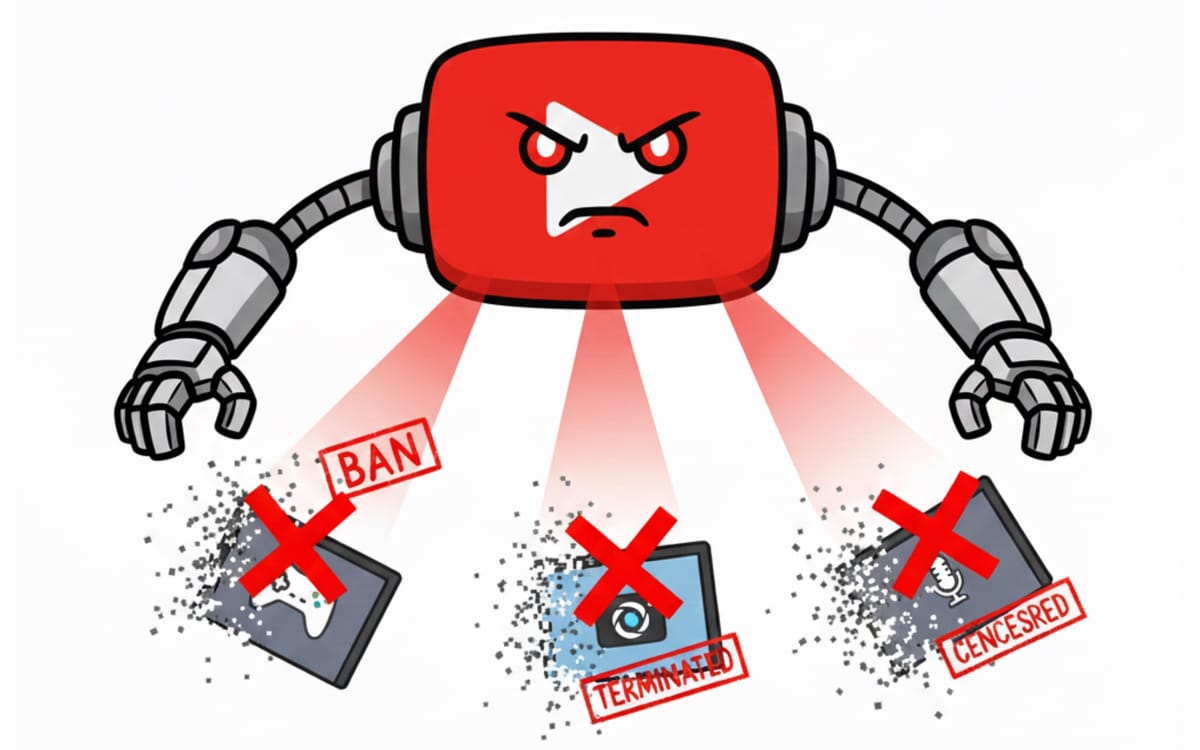
YouTube CEO Neal Mohan defended the platform's expanding use of artificial intelligence in content moderation on December 10, 2025, calling the technology essential for enforcement while creators reported daily instances of wrongful channel terminations by automated systems.
Mohan told Time Magazine that AI moderation capabilities improve "literally every week" and help the platform "detect and enforce on violative content better, more precise, able to cope with scale." The statement came after Time named him CEO of the Year, recognizing his leadership of the video platform that generates over $10 billion in quarterly advertising revenue.
Subscribe PPC Land newsletter ✉️ for similar stories like this one
The CEO's comments drew immediate backlash from prominent creators including MoistCr1TiKaL, who called the defense "delusional" in a December 10 video watched by more than 1.5 million viewers. The YouTuber pointed to recent cases where AI systems banned original content creators while leaving up channels that had stolen and reuploaded their videos.
"AI should never be able to be the judge, jury, and executioner," MoistCr1TiKaL stated, according to the video transcript. "It should never have the ability to terminate a channel. There is no world where that makes sense for YouTube to just give the keys to the kingdom over to AI where it will ban people."
The controversy centers on YouTube's content moderation infrastructure, which processes hundreds of hours of video uploads every minute through a combination of automated detection and human review. The platform operates as the primary gatekeeper for billions of dollars in creator earnings through its Partner Program, which now supports 3 million monetized channels globally.
Creators have documented cases where AI systems issued channel terminations for policy violations, only to have human reviewers reverse those decisions hours or days later. The pattern suggests automated enforcement operates with insufficient accuracy for decisions affecting creator livelihoods.
Pokemon YouTuber SplashPlate experienced this process firsthand when YouTube terminated his channel on December 9, 2025, claiming he violated circumvention policies. According to posts documented in news coverage, another channel called EvolutionArmy had reuploaded one of SplashPlate's videos, which still contained his watermark. YouTube's AI systems apparently concluded SplashPlate was reuploading banned content rather than posting his own original material.
SplashPlate received multiple messages from TeamYouTube stating the termination would remain in place and was "final," according to screenshots he shared publicly. The platform reversed its decision on December 10, 2025, after widespread attention to the case. YouTube acknowledged his channel was "not in violation" of Terms of Service and thanked him for his patience.
"This doesn't end with me," SplashPlate wrote after reinstatement. "Hundreds of people are being terminated daily due to similar errors."
The technical failures occur despite YouTube's public characterization of its appeal process as manually reviewed by human staff. TeamYouTube stated on November 8, 2025, that "appeals are manually reviewed so it can take time to get a response" in reply to a creator whose appeal had remained pending since October 1.
However, creators reported receiving automated rejection notices within minutes of submitting appeals throughout early November 2025, contradicting claims of human review. Some creators documented receiving provisional reinstatement notices from YouTube support staff, only to face subsequent terminations hours later when the platform characterized additional reviews as confirming violations.
The rapid rejection pattern cut across multiple termination categories including spam, deceptive practices, and policy violations. Creators with subscriber counts ranging from thousands to hundreds of thousands reported identical experiences with instant automated responses to what YouTube publicly described as manual appeal processes.
Animation creator Nani Josh lost a channel with 650,000 subscribers on November 13, 2025, when YouTube terminated the account for "spam and scam" despite every video being original content. The creator's appeal received rejection in five minutes, according to social media posts. "My life's work is gone," Josh wrote in a public statement about the termination.
YouTube released a comprehensive statement on November 13, 2025, addressing creator questions about moderation systems following increased scrutiny. TeamYouTube collaborated with the Trust & Safety team to review hundreds of social media posts and corresponding channels outside typical workflows. The vast majority of termination decisions were upheld, with only a handful of cases overturned, according to Rob from TeamYouTube.
The platform confirmed no bugs or known issues existed with its systems, attributing creator concerns to an old Help Center message from October 4, 2024, that had circulated on social media. YouTube maintained that its hybrid moderation system combining automation and human review remains the only viable approach for processing the platform's scale.
Buy ads on PPC Land. PPC Land has standard and native ad formats via major DSPs and ad platforms like Google Ads. Via an auction CPM, you can reach industry professionals.
Mohan's Time Magazine interview extended beyond moderation to defend AI's role in content creation. He predicted the technology would create "an entirely new class of creators that today can't do it because they don't have the skills or they don't have the equipment," comparing this potential to YouTube's early era populated by "exuberant amateurs."
The CEO argued that AI tools would "revive YouTube's early villagy days" while "helping the platform surface stronger content overall." Mohan stated that good content and bad content would both emerge from AI generation, requiring YouTube to invest in "technology and algorithms to bring that to the fore."
MoistCr1TiKaL rejected this characterization entirely. "When you have these tools and make it so accessible to people to squeak out 30 seconds worth of AI drivel on Shorts and do that 40 times a day, that's what you will get – just AI slop," he stated in his response video. "We haven't seen anything positive on YouTube as a result of these AI tools that Neal speaks so highly of."
The criticism reflects broader creator concerns about AI-generated content flooding YouTube Shorts and monetized channels. Economic incentives from the YouTube Partner Program have created opportunities for mass production of low-quality artificial intelligence content designed primarily to capture engagement and generate revenue.
YouTube launched more than 30 AI-powered programs in September 2025 designed to make video creation easier, according to the Time Magazine profile. These included tools that can turn phrases into songs, translate and dub videos, find the best parts of raw footage for automatic editing, and convert long videos into Shorts. The platform positioned all these capabilities as "helping more people become creators."
The article noted that YouTube's content creation tools can "literally just steal footage and make a video out of it for yourself to make money off of," according to the MoistCr1TiKaL video description of the capabilities.
Clownfish TV, a commentary channel with 646,000 subscribers, analyzed the situation in a November 29, 2025 video titled "Late Stage YouTube," arguing the platform wants to transform into a Netflix and Disney Plus competitor rather than maintain its user-generated content foundation. The creators pointed to view collapses affecting long-form commentary channels, preferential treatment for corporate content in recommendations, and reduced support for live streaming as evidence of strategic shifts.
"YouTube wants to go legit," stated the Clownfish TV host in the video transcript. "They want to become a Netflix and Disney Plus competitor and the user generated content is going to be put on the back burner if not further back than that."
The commentary channel documented experiencing multiple instances throughout 2025 where views collapsed for long-form content while YouTube recommendations increasingly prioritized mainstream media outlets like CNN and John Oliver segments over independent creator content. The hosts suggested YouTube aims to position itself as advertiser-friendly by reducing reliance on unpredictable user-generated material.
Gaming creator PewDiePie announced on December 9, 2025, that he would stop producing gaming content after 13 years, citing his role as a new father and shifting priorities. The announcement came amid broader creator concerns about platform sustainability and YouTube's strategic direction. PewDiePie had previously reduced his YouTube activity substantially, though he maintained occasional uploads.
YouTube's advertising revenues reached $10.3 billion in the third quarter of 2025, with Shorts achieving revenue parity with traditional video on a per-watch-hour basis in the United States. The platform's financial performance depends partly on creator confidence in tools that maintain content quality and viewer trust, making moderation disputes particularly significant for ecosystem health.
The volume of content uploaded to YouTube creates inherent scaling challenges for human review systems. The platform reports that users upload hundreds of hours of video per minute, generating massive content libraries requiring policy enforcement. This operational reality places pressure on automated systems to handle initial violation detection and potentially appeal processing.
YouTube maintains that human reviewers examine nuanced cases and train automated systems, characterizing the approach as a necessary "team effort" between AI and people. The platform processes appeals through YouTube Studio, allowing creators one year from termination dates to submit appeals. YouTube's team reviews only one appeal per channel termination, with appeals sent after one year or beyond the one-appeal maximum receiving no further review.
YouTube introduced a pilot program on October 8, 2025, allowing some terminated creators to request new channels after one-year waiting periods. The program excludes creators terminated for copyright infringement and those who violated Creator Responsibility policies, providing a second chance mechanism for certain violation categories while maintaining strict enforcement for serious infractions.
The terminated creator reinstatement pilot acknowledges that enforcement standards have shifted considerably since YouTube's inception two decades ago. Creators whose applications receive approval can start fresh with zero subscribers and may later apply for the YouTube Partner Program once meeting eligibility criteria.
MoistCr1TiKaL called for legislative intervention to prevent AI systems from making termination decisions without human oversight. "That should just straight up be illegal," he stated in his video. "YouTube knowingly allowing AI, which has a very provable track record of being wrong and making mistakes, be the one to take away entire people's livelihoods like that without any human oversight."
The YouTuber proposed that AI should flag channels internally for human review rather than executing bans autonomously. "If it wants to use AI for moderation, it should only be able to flag channels internally and then put that up the ladder for a human being to look at," he explained.
Roger Goodell, NFL Commissioner, provided a supporting statement for Mohan in the Time Magazine profile, stating the YouTube CEO demonstrates "deep understanding of the media landscape and where YouTube fits and where content can help him advance his strategies." The profile characterized Mohan as someone "known for his willingness to dig into the weeds of an issue and really understand it."
MoistCr1TiKaL questioned this characterization given YouTube's ongoing moderation problems. "Since when? When has that started?" he asked. "Even with this issue with AI moderation, I haven't seen him call out anything with it or make any big bold changes."
YouTube has invested heavily in creator infrastructure throughout 2024 and 2025, introducing enhanced comment moderation capabilities, Effect Maker expansion, brand collaboration features, and Communities functionality across desktop and mobile platforms. The platform now supports 3 million monetized channels through the Partner Program, representing substantial economic infrastructure for content creators globally.
Marketing professionals utilizing YouTube for brand awareness campaigns face uncertainty about content environment stability as platform moderation systems evolve. Brands investing in creator partnerships must navigate risks associated with potential wrongful terminations affecting campaign delivery and audience reach.
The controversy reflects mounting creator skepticism about platform accountability as major technology companies deploy AI systems in high-stakes decisions affecting livelihoods. YouTube operates as a critical gatekeeper controlling access to audiences and monetization for millions of creators worldwide, making moderation accuracy essential for maintaining creator trust and platform vitality.
Content creators terminated under automated systems can submit appeals through YouTube Studio, initiating what the platform describes as manual review processes. However, documented cases of instant automated rejections within minutes of submission contradict public characterizations of human oversight in appeal handling.
YouTube clarified its content moderation practices on November 13, 2025, stating that automation catches harmful content quickly while humans review nuanced cases. The platform identified opportunities for additional education around specific policies including mass uploading content with sole purpose of gaining metrics, mass uploading auto-generated or low-value content, and content scraped from other creators with minimal edits.
These violations fall under YouTube's Spam, deceptive practices and scams policies, which govern channel terminations for inauthentic content patterns. The platform renamed its "repetitious content" policy to "inauthentic content" in July 2025 while maintaining existing enforcement standards that have governed monetization for years.
The technical challenges YouTube faces in content moderation extend across distinguishing legitimate creative content from spam-like material while processing hundreds of hours of uploads per minute. The company has invested significantly in machine learning systems for content analysis, but manual review remains necessary for complex cases involving editorial judgment.
YouTube's philosophical approach separates search algorithm improvements from content moderation enforcement. Search ranking aims to identify relevant results for queries, while content policy enforcement requires binary determinations about whether material violates specific rules. These distinct operational contexts create different requirements for automation and human oversight.
The current controversy coincides with YouTube's expansion of AI-powered content creation tools including photo to video generation, green screen backgrounds, generative effects using Google DeepMind's Veo 3 model, and speech to song capabilities. The platform upgraded from Veo 2 to Veo 3 in late November 2025, enabling videos up to eight seconds in length compared to previous six-second maximums.
YouTube introduced Edit with AI in November 2025, enabling creators to generate Shorts automatically from existing footage. The feature operates in 15 markets including the United States, India, and Brazil, though remains excluded from European Union and United Kingdom territories due to regulatory considerations.
The platform's simultaneous expansion of AI creation tools and AI enforcement mechanisms creates tension as creators question whether automated systems possess sufficient accuracy for high-stakes moderation decisions. MoistCr1TiKaL suggested Mohan "would have no problem stepping down and letting AI run YouTube at some point," characterizing the CEO's defense of automated enforcement as evidence of "how delusional this company is under the leadership of Neal."
YouTube maintains community guidelines that govern all platform activity regardless of monetization status, covering prohibited content, harassment, misinformation, and harmful behavior. These guidelines operate independently from advertiser-friendly policies and can result in content removal, channel strikes, or account termination.
While monetization policies affect revenue eligibility, community guidelines determine whether content can exist on the platform at all, representing YouTube's baseline standards for acceptable user behavior. The distinction matters for creators as violations of different policy categories trigger separate enforcement mechanisms with varying appeal processes.
Creator advocacy organizations have not issued formal statements about the appeal processing controversy documented in November 2025. Individual creators continue sharing experiences on social media platforms, with some documenting multi-month appeal periods while others report instant rejections suggesting potential inconsistencies in how YouTube's systems handle different termination categories or creator account types.
The disparity in processing times and outcomes raises questions about transparency in platform governance as YouTube operates critical infrastructure for digital media distribution and creator economics. The platform's decisions affect not only individual creator livelihoods but also broader information ecosystems as YouTube serves as a primary video distribution channel globally.
Subscribe PPC Land newsletter ✉️ for similar stories like this one
Subscribe PPC Land newsletter ✉️ for similar stories like this one
Who: YouTube CEO Neal Mohan defended AI moderation while creators including MoistCr1TiKaL, SplashPlate, and Nani Josh experienced or documented wrongful channel terminations by automated systems.
What: YouTube's AI moderation systems issued channel terminations for policy violations, with some cases involving original content creators being banned while channels that stole their videos remained active. Appeals described as manually reviewed received automated rejections within minutes.
When: The controversy intensified in November and December 2025, culminating in Mohan's December 10 Time Magazine interview defending AI enforcement amid widespread creator backlash.
Where: Channel terminations affected creators globally across YouTube's platform, which processes hundreds of hours of video uploads every minute and supports 3 million monetized channels through the Partner Program.
Why: YouTube relies on AI moderation to process massive content volumes at scale, but documented cases of wrongful terminations and instant automated appeal rejections raise questions about accuracy, transparency, and human oversight in high-stakes decisions affecting creator livelihoods and platform trust.