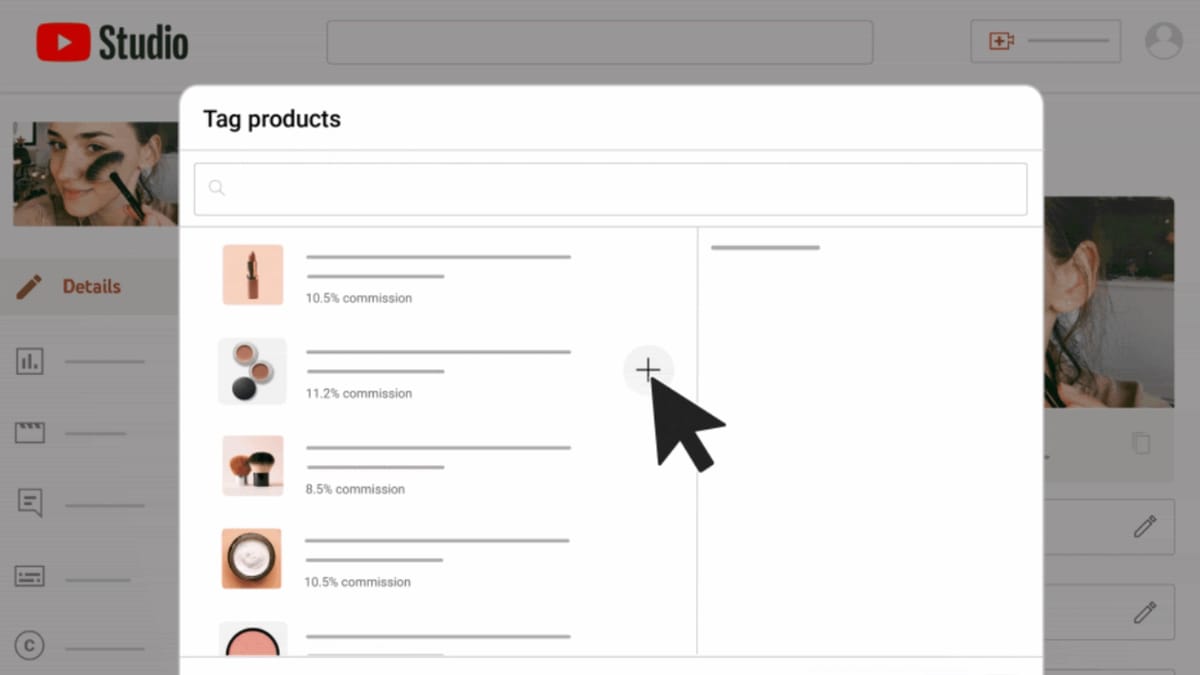
YouTube today lowered the barrier to its Shopping affiliate program, opening access to all creators enrolled in the YouTube Partner Program - including those who qualify under the expanded YPP tier that requires just 500 subscribers. The announcement was posted to the YouTube Help Center Community by Natasha from TeamYouTube, marking one of the more consequential shifts in the program's eligibility framework since the affiliate feature was introduced.
Until now, the program carried a threshold that kept smaller channels on the outside. According to YouTube's existing documentation, the affiliate program previously required channels to maintain more than 10,000 subscribers to participate. That figure placed it out of reach for the large share of creators who have built early-stage audiences but have not yet crossed the higher milestones associated with full YouTube Partner Program access. The change announced today ties affiliate eligibility directly to YPP membership itself, regardless of which tier a creator joined under.
What the expanded YPP tier means
To understand the significance of this shift, some background on the YouTube Partner Program structure matters. The expanded YPP operates at a lower threshold than the standard programme: initial access is granted to channels with either 500 subscribers, 3,000 watch hours on long-form videos, or 3 million Shorts views. Full access to ad revenue sharing still requires 1,000 subscribers alongside either 4,000 watch hours over 12 months or 10 million Shorts views within 90 days. Creators in the expanded YPP tier could previously access features such as fan funding and channel memberships but were excluded from the Shopping affiliate program.
That exclusion ends with today's update. According to the announcement, any creator who is part of the YouTube Partner Program and meets all eligibility criteria for the affiliate Shopping program is now eligible to tag products and access affiliate features. The change is meaningful not just for individual creators but for the scale of the affiliate network that brands can reach across YouTube.
Eligibility requirements in detail
The program still carries specific conditions. A channel must be enrolled in the YouTube Partner Program and must meet the subscriber threshold for YPP participation - the minimum being 500 subscribers under the expanded tier. Geographic location remains a hard requirement. According to YouTube's programme overview documentation, the affiliate programme is currently available to creators based in the United States, Korea, Indonesia, Thailand, Vietnam, Malaysia, Philippines, India, Singapore, Brazil, Taiwan, and Japan - twelve countries in total.
Several content-type restrictions also apply. Music channels are excluded, as are Official Artist Channels and any channel associated with music partners - a category that encompasses music labels, distributors, publishers, and Vevo. Channels classified as Made for Kids are ineligible, and channels with a significant share of Made for Kids content likewise do not qualify. These restrictions were already in place before today's change and remain unchanged.
How the sign-up process works
Creators who meet the criteria do not need to seek an invitation through a separate process. According to YouTube's documentation, the enrollment pathway runs through YouTube Studio. A creator opens YouTube Studio, navigates to the Earn tab from the bottom menu, and - if eligible - finds a section for the affiliate programme. Selecting "Get started" and then "Turn on" at the bottom of the screen initiates the process, followed by acceptance of the YouTube Shopping Affiliate Programme Terms of Service.
Once enrolled, creators can tag products across new and existing content. The tagging scope extends to long-form videos, Shorts, and livestreams. YouTube also provides a bulk tagging tool within the Earn section of Studio, under the Shopping tab. This bulk tagging feature, which YouTube introduced in April 2024, allows creators to apply product tags to multiple videos simultaneously, with the platform automatically detecting suggested products based on links already present in a video's description.
Commission mechanics and payment timing
The financial structure of the programme deserves close attention. According to YouTube's programme documentation, every participating brand and retailer sets its own commission rates and attribution window for each product. Commission percentages are displayed per product offer, allowing creators to compare rates before deciding what to tag. When a viewer clicks a tagged product and completes a purchase on the retailer's site, the creator may earn a commission.
Payment does not arrive immediately. According to the documentation, "commission earned will be paid through AdSense for YouTube within 60 to 120 days of the purchase to account for customer returns." If a customer returns the product within that window, the commission is reversed through the same AdSense system. This delayed settlement is a structural feature of the programme, not a timing irregularity, and applies uniformly across all participating creators. YouTube Analytics serves as the tracking tool for creators monitoring clicks, sales, and revenue from their shopping content.
YouTube's marketing pages for the Shopping programme reference several data points that put the scale of the opportunity into context. According to YouTube internal data from January 2025, videos in the United States with product tags that had timestamps enabled alongside description links saw 43% more clicks on products than videos with description links alone. That figure emerged from an experiment comparing the two formats and has been cited by YouTube in its creator-facing communications about the Shopping programme.
The global rollout of Shopping Product Stickers for Shorts in June 2025 produced a comparable signal. In testing conducted in May 2025 in the US, Shorts with Shopping product stickers saw over 40% more clicks on products than Shorts using the older shopping button format. These figures point to the same underlying behaviour: visual, embedded product references outperform link-based referrals in the YouTube environment.
Creator-level case studies referenced on YouTube's Shopping pages reinforce the pattern. Marnie Goldberg drives what YouTube describes as 15x revenue using auto-tagging and descriptive links. Vince Carneglia reportedly earns 4 to 10 times higher commissions compared to traditional affiliate programs. Miss Louie attributes 40 to 50% of her income to YouTube Shopping activity.
Product safety review remains in place
One operational detail that the announcement emphasises is worth noting. According to Natasha's post, YouTube continues to review every product tag submitted by creators. The platform frames this as a measure to maintain a secure, high-quality environment. Creators who enrol and begin tagging should expect that not every tag will go live immediately - the review layer applies regardless of creator size or programme tier.
The eligibility change has direct implications for brands participating in the Shopping affiliate programme. A broader creator base - particularly one that now includes channels with as few as 500 subscribers - expands the pool of potential product promoters considerably. Smaller channels often serve highly specific niche audiences where product relevance and viewer trust run high. For brands selling in categories where specialist creators hold sway, access to that long tail of micro-creators is commercially significant.
YouTube's shopping ecosystem data published in October 2025 offered a detailed picture of how purchases move on the platform. The YouTube Culture and Trends team analysed the top 5,000 most-purchased products from the first half of 2025 and the top 1,000 videos by transaction on tagged products during a 60-day period. The research, conducted in partnership with SmithGeiger, surveyed active online users aged 14 to 49 and found that 43% of 14 to 24 year-olds reported feeling more loyal toward brands they shop based on creator recommendations on YouTube.
That data reinforces what agency partnership programme announced in June 2025 already suggested: YouTube is systematically building out its affiliate infrastructure. That announcement introduced 45 specialised agencies across nine global markets to help connect creators with brands. Today's eligibility expansion operates on the supply side of that same infrastructure, widening the creator pool that brands and agencies can work with.
From an advertiser perspective, the programme sits at the intersection of performance marketing and creator economics. Because commissions are tied to completed purchases rather than impressions or clicks alone, the Shopping affiliate model carries an inherent accountability that traditional influencer contracts often lack. Brands pay when transactions occur. Creators earn when products sell. The model aligns incentives in a way that has made affiliate programmes a durable component of performance marketing strategies, and YouTube's scale gives it an unusual reach relative to standalone affiliate networks.
YouTube detailed 10 distinct revenue streams for creators in March 2025, with Shopping appearing alongside ad revenue, channel memberships, Super Chat, Super Thanks, Super Stickers, Gifts, BrandConnect, Premium revenue, and ticketing. The platform's approach to monetisation has been to layer complementary revenue streams rather than rely on a single mechanism. The affiliate programme sits alongside those other streams, and today's change makes it accessible at an earlier stage of a creator's development than previously possible.
The unification of BrandConnect and the Creator Partnerships Hub into YouTube Creator Partnerships, announced in seven markets on March 24, 2026, adds further context. That structural change consolidated two previously separate creator monetisation tools, creating a single platform for brand-creator matching and outreach. Together, the two announcements - one on the creator side and one on the brand side - suggest a period of active rationalisation of YouTube's commerce and creator-partnerships infrastructure.
Timeline
- February 2024 - YouTube adds affiliate product tagging to livestreams as part of a broader creator update
- April 9, 2024 - YouTube introduces bulk product tagging for creators in YouTube Shopping
- April 9, 2024 - YouTube launches enhanced Affiliate Hub inside the YouTube app
- April 9, 2024 - YouTube introduces Shopping Collections, allowing creators to curate themed product storefronts
- March 31, 2025 - YouTube details 10 creator revenue streams as the platform approaches its 20th anniversary
- May 2025 - YouTube conducts Shopping Product Stickers testing in the US, showing over 40% increase in product clicks
- June 9, 2025 - YouTube expands affiliate programme with 45 agency partnerships across nine global markets
- June 17, 2025 - YouTube rolls out Shopping Product Stickers globally for Shorts creators, replacing the older shopping button
- October 16, 2025 - YouTube publishes shopping ecosystem report analysing 5,000 top-purchased products from the first half of 2025
- March 24, 2026 - YouTube Creator Partnerships unifies BrandConnect and the Creator Partnerships Hub into a single platform across seven markets
- March 27, 2026 - YouTube expands Shopping affiliate programme eligibility to all YouTube Partner Program creators, including those with 500 subscribers under the expanded YPP tier
Summary
Who: YouTube, through TeamYouTube community manager Natasha, announced the change. It affects all creators enrolled in the YouTube Partner Program who meet the affiliate programme eligibility criteria, including those who joined under the expanded YPP tier requiring just 500 subscribers.
What: YouTube expanded access to its Shopping affiliate program, allowing creators to tag products from participating brands in their videos, Shorts, and livestreams and earn commissions on resulting purchases. The key change removes the previous 10,000-subscriber barrier tied to affiliate access and ties eligibility to YPP membership instead.
When: The announcement was made today, March 27, 2026, posted to the YouTube Help Center Community by Natasha from TeamYouTube.
Where: The programme is available in 12 countries: the United States, Korea, Indonesia, Thailand, Vietnam, Malaysia, Philippines, India, Singapore, Brazil, Taiwan, and Japan. Enrollment and product tagging are managed through the Earn tab in YouTube Studio.
Why: YouTube framed the change as part of its ongoing goal to help creators build sustainable businesses at all stages of their journey. The expansion widens the affiliate creator supply base, increases the volume of shoppable content available to brands, and aligns with YouTube's broader strategy of layering commerce features across its monetisation infrastructure - a direction the platform has pursued consistently since at least 2024 through bulk tagging tools, Shopping Collections, Shopping Product Stickers, agency partnerships, and ecosystem data transparency.
Share this article
The link has been copied!