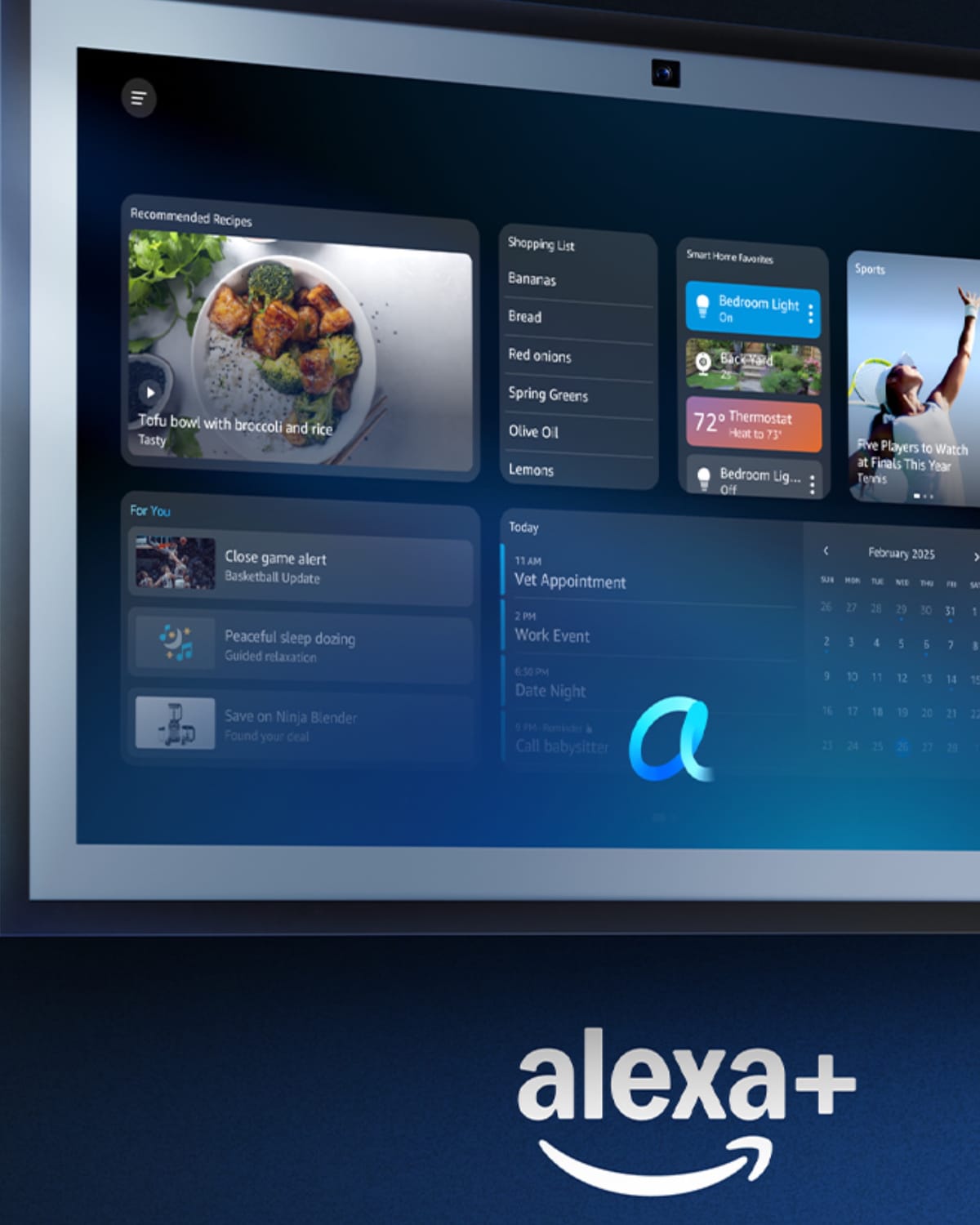
Amazon today opened Alexa+ access to all United States customers while making the artificial intelligence assistant free for Prime members, according to announcements published by the company. The move ends the Early Access program that began in mid-2025 and positions the enhanced voice assistant as a core membership benefit alongside streaming content and expedited shipping. Non-Prime customers can access a limited chat experience through Alexa.com and the mobile application, or purchase unlimited access for $19.99 monthly.
The timing reflects intensifying competition in voice commerce and conversational AI. Tens of millions of customers participated in Early Access testing since the program launched, with usage patterns demonstrating engagement doubled compared to the previous Alexa version. Customers submitted twice as many queries and completed three times more purchases through voice interactions during testing periods.
Prime members receive household-wide access across all Alexa-enabled devices, Alexa.com, and the mobile application without additional charges. The integration provides unlimited usage with no restrictions on query volume or feature access. Amazon structured the offering to incentivize Prime membership adoption while extending the voice assistant's reach across its established device ecosystem.
Architecture powered by Amazon and Anthropic models
Alexa+ operates through an architecture combining large language models from both Amazon Nova and Anthropic. This dual-model approach enables natural conversation flows where customers speak continuously without repeating the wake word after the initial "Alexa" prompt. The system maintains conversational context across exchanges, processing follow-up questions that reference earlier statements without requiring full restatement of parameters.
According to the announcement, the technology represents "an entirely new architecture powered by large language models" that makes the assistant "significantly more powerful" than previous iterations. Customers can transition between topics within single conversations - asking about musical artists, then requesting tour dates, then checking ticket availability - while the system tracks intent across subject shifts.
The conversational capabilities extend to task completion. Alexa+ handles restaurant reservations through integrations with services including Yelp, Expedia, Angi, and Square. Customers describe desired dining experiences using natural language, and the assistant locates options, checks availability, and confirms bookings without requiring manual navigation through separate applications or websites.
Device compatibility spans the Echo speaker lineup, Echo Show displays, Fire TV streaming hardware, and mobile applications. The assistant operates through voice commands on hardware devices and text-based chat interfaces on web browsers and smartphones. Cross-device continuity enables customers to begin conversations on one platform and continue them elsewhere while maintaining full context of previous exchanges.
Shopping functionality received substantial enhancements within Alexa+. The assistant monitors items in customer shopping carts and wish lists, automatically alerting users when prices drop below specified thresholds. Customers can establish target prices for specific products, and the system completes purchases automatically when items reach those prices using default payment methods and shipping addresses.
The automated purchasing capability represents Amazon's approach to agentic commerce - AI systems that execute transactions without requiring manual confirmation for each step. A customer tracking a vacuum cleaner priced at $200 could set a target price of $100, and Alexa+ would complete the purchase immediately when the price drops, even during overnight hours when the customer is unavailable.
Echo Show 15 and 21 devices now feature Shopping Essentials, a command center displaying real-time delivery tracking, recent orders, household essentials requiring reordering, shopping lists, and saved items. Customers tap displayed items to view details, add products to carts, or proceed to checkout without navigating away from the home screen interface. The system suggests items that can be added to incoming deliveries up until packages leave fulfillment centers.
Personalized gift recommendations operate through conversational exchanges where customers describe recipients and occasions. The assistant generates product suggestions organized into categories for browsing. This functionality builds on Amazon's broader AI shopping infrastructure, which processed 250 million Rufus users throughout 2025 and enabled Buy for Me agentic purchasing across more than half a million products from external brand websites.
Music discovery through conversational interfaces
Music capabilities received fundamental redesigns within Alexa+. The assistant locates songs using partial information including incomplete lyrics, artist names, contexts where customers heard tracks, or soundtrack mentions. These fragment-based searches eliminate situations where customers remember portions of songs but lack sufficient details for traditional search queries.
Recommendation conversations flow naturally without formulaic query structures. Customers request music matching specific eras, moods, or tempos while excluding particular artists or styles through continuous conversation. The system refines suggestions based on feedback without requiring customers to restart searches using different terminology when initial results miss the intended direction.
Custom playlist generation accepts activity-based or scenario-specific prompts including "music for driving along the Pacific Coast Highway at sunset." Playlists remain fully dynamic - customers save them to libraries, rename them, or request additions of specific tracks at any time. The system provides deep knowledge about artists, albums, music history, and cultural context, functioning as an interactive encyclopedia responding to queries about musical topics.
The enhanced music features operate within the Amazon Music application, where customers access conversational search through a designated button interface. The functionality demonstrates how Alexa+ extends beyond traditional smart speaker hardware into mobile applications, creating consistent experiences across different interaction contexts.
Household management through contextual intelligence
Calendar management moved beyond simple event scheduling. Alexa+ extracts event details from emails, photos of school flyers, and event invitations, automatically adding relevant information to family calendars without requiring manual data entry. The system provides contextual summaries rather than literal recitations of calendar entries, explaining daily schedules in relation to household commitments and member availability.
Full-screen calendar views offer daily, weekly, and monthly perspectives. When customers share school schedules or activity notifications, Alexa processes contained information and populates calendar fields with extracted dates, times, locations, and descriptions. The automation reduces administrative overhead for households managing multiple family member schedules across work commitments, educational activities, and social engagements.
Personal recipe libraries enable customers to digitize handwritten family recipes by photographing index cards, notebook pages, or printed documents. The system extracts ingredient lists, cooking steps, and margin notes into structured digital recipe cards. Customers customize entries with photographs and modify ingredients including doubling chocolate chip quantities or adding specific condiments for personal preferences.
Recipe access operates through conversational requests where customers ask Alexa to display specific recipes, walk through cooking steps, or remind them which groceries require addition to shopping lists. The digitization addresses the practical problem of translating physical recipe collections into formats accessible through voice commands during cooking sessions when hands are occupied.
Personalization through voice and visual identification
Individual family member recognition enables targeted experiences. Visual ID and Voice ID combine to identify specific household members, delivering personalized reminders, displaying relevant calendar information, and playing music matching individual preferences rather than household-wide listening patterns.
Reminder systems distinguish between family members. Parents create reminders for partners about laundry requiring attention, or remind children to walk dogs, while receiving separate notifications about dinner reservations. This granular targeting makes shared devices function more like personal assistants for each family member rather than generic household tools.
Echo Show devices featuring compatible hardware support both identification methods. Visual ID recognizes individuals through camera-based facial detection, while Voice ID analyzes speech patterns. The dual-system approach enables consistent personalization whether family members speak commands from across rooms or stand directly in front of displays.
Personality customization extends beyond functional capabilities. Alexa+ responds with emotional intelligence to excitement, sarcasm, and criticism, adjusting tone accordingly. The system displays expressive animations called Alexicons - visual indicators including smiles, hearts, and music notes that appear on device light bars during conversations, providing visual feedback matching conversational tone.
Advertising implications for marketing ecosystem
The Alexa+ deployment creates considerations for marketers operating within Amazon's $68.6 billion annual advertising business. Voice commerce optimization has emerged as a factor for brands selling through Amazon's marketplace. Enhanced natural language processing changes how brands structure content for voice search discovery, particularly as conversations replace formulaic keyword queries.
Contextual commerce potential increases as customers interact with Alexa+ across more devices and situations. Questions about travel plans could trigger relevant advertising for hotels, airlines, or accessories. Home service requests might activate advertising from equipment manufacturers or home improvement retailers. The integration of shopping widgets directly into Echo Show home screens reduces friction in purchase pathways that previously required customers to navigate separate applications.
The announcement arrives as Amazon unified its advertising infrastructure, merging the demand-side platform and sponsored ads console into Campaign Manager with AI-powered features during November 2025. That consolidation streamlined workflows that previously required advertisers to manage campaigns across fragmented interfaces. The parallel development of voice commerce capabilities and advertising platform consolidation suggests coordinated infrastructure buildout supporting conversational commerce.
Cross-device continuity features create touchpoint opportunities as conversations flow between voice assistants, mobile applications, and web browsers while maintaining user context. Marketing professionals monitoring Amazon's platform evolution track how recommendation algorithms surface products within conversational contexts, particularly as AI systems make more purchase decisions based on browsing history and stated preferences rather than traditional search behavior.
However, monetization details remain undisclosed. Amazon has not revealed how sponsored recommendations or paid placements will appear within Alexa+ responses. Voice assistant advertising represents significant opportunity given the company's retail media dominance, yet regulatory scrutiny of recommendation algorithms could constrain monetization strategies.
Pricing structure and access tiers
Amazon established three access levels. Prime members receive unlimited Alexa+ across all features and devices as part of membership benefits costing $14.99 monthly or $139 annually. The inclusion makes the AI assistant equivalent in value to the standalone subscription while requiring no incremental payment from existing members.
Non-Prime customers access a free chat experience through Alexa.com and the mobile application featuring text-based interfaces for quick answers, planning, research, and topic exploration. Access limitations apply based on usage volume, though Amazon did not specify exact thresholds determining when free tier restrictions take effect.
Standalone Alexa+ subscriptions cost $19.99 monthly for customers who want unlimited access without Prime membership. This tier provides identical functionality to the Prime-included version, spanning all devices, applications, and web interfaces. The household-wide access model means single subscriptions support all family members rather than requiring individual accounts per user.
The pricing strategy positions Alexa+ as a Prime membership value driver rather than a standalone revenue stream. Amazon has consistently expanded Prime benefits throughout 2025, including extending Prime Day to four days from the traditional 48-hour format and adding Same-Day Delivery to over 1,000 cities for perishable groceries.
Broader device ecosystem expansion
Alexa+ integration extends beyond Amazon's proprietary hardware into third-party consumer electronics. Samsung integrated the assistant into select smart television models beginning late January 2026, enabling voice-controlled entertainment discovery and smart home management through TV interfaces without additional devices. BMW deployed Alexa+ across vehicle infotainment systems, while Bosch incorporated the technology into coffee machines and Oura added integration to health rings.
The third-party hardware expansion breaks Amazon's historical pattern of restricting advanced AI capabilities to Echo speakers and Fire TV devices. By operating as software built into partner products, Alexa+ reaches customers in contexts where Amazon lacks direct hardware presence. Each integration point creates additional data collection opportunities and commerce touchpoints as users interact with the assistant across diverse device categories.
Timeline
Summary
Who: Amazon announced Alexa+ availability for all United States customers, with the AI assistant becoming a free benefit for Prime members.
What: Alexa+ is a generative AI-powered voice assistant using large language models from Amazon Nova and Anthropic that enables natural conversations, automated shopping with price tracking and automatic purchases, music discovery through conversational search, household management with calendar automation and recipe digitization, and personalized experiences through voice and visual identification. Three access tiers include: unlimited access free for Prime members, limited free chat for non-Prime customers through web and mobile applications, and standalone $19.99 monthly subscriptions for unlimited household access.
When: The announcement occurred on February 4, 2026, following an Early Access program that began in mid-2025 and attracted tens of millions of participants. The release ends the testing phase and makes the technology available to all United States customers.
Where: Alexa+ operates across Alexa-enabled devices including Echo speakers and Echo Show displays, Fire TV streaming hardware, the Alexa mobile application, and Alexa.com web interface. Third-party hardware integration extends to Samsung televisions, BMW vehicles, Bosch coffee machines, and Oura health rings.
Why: The integration positions Alexa+ as a core Prime membership benefit that increases value proposition while driving adoption of Amazon's voice assistant technology. Enhanced conversational AI capabilities and automated shopping features advance Amazon's voice commerce infrastructure, creating opportunities to capture more transactions through voice-initiated purchases. For Amazon's advertising business, which generated $68.6 billion in 2025, the deployment creates new contexts for contextual commerce as customers interact with the assistant across devices and situations. The move responds to competition in conversational AI while leveraging Amazon's established smart home ecosystem and e-commerce infrastructure.
Share this article
The link has been copied!