


Amazon Ads this year unveiled research demonstrating that interactive video advertisements outperform standard video formats across engagement, attention capture, and perceived relevance metrics. The study, conducted with Publicis Media and third-party research firm Latitude, surveyed more than 7,800 consumers nationwide to examine how interactive features affect viewer responses to streaming television advertising.
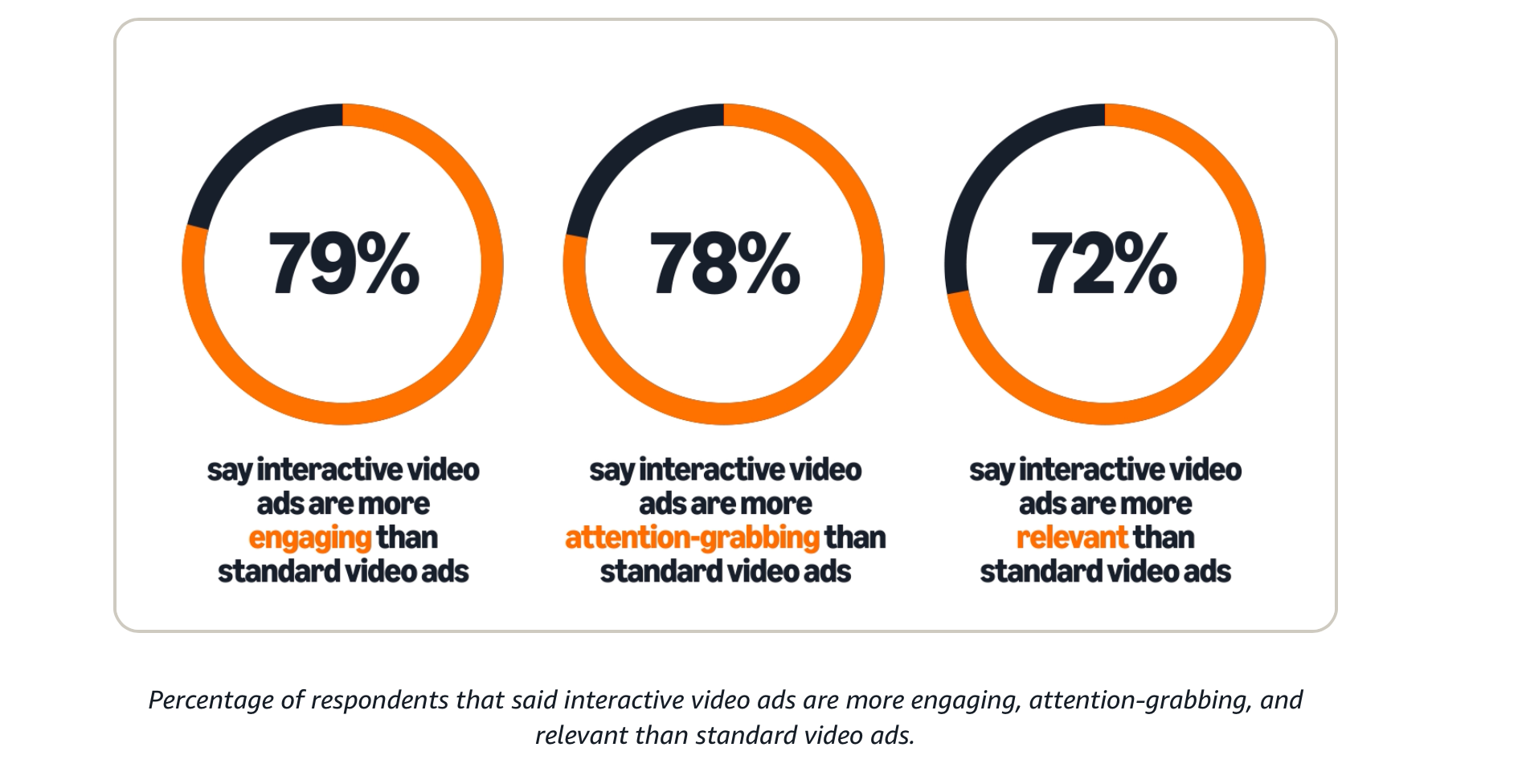
According to the research announced at CES, 79% of respondents indicated interactive video ads are more engaging than standard video ads. The study found 78% characterized interactive formats as more attention-grabbing, while 72% considered them more relevant compared to traditional video advertising. Maggie Zhang, Head of Global Video Measurement GTM at Amazon Ads, presented the findings on January 6, 2026, as part of the company's ongoing measurement initiatives.
The research examined multiple interactive video ad formats featuring varying calls-to-action across ten participating brands, including companies that sell on Amazon and those that do not. This diverse brand selection allowed researchers to evaluate how interactivity performs across different categories and commercial relationships. The survey methodology provided a comprehensive look at consumer preferences regarding advertising formats within streaming television environments.
Call-to-action variations show distinct performance patterns
Interactive advertisements incorporating "add-to-cart" functionality demonstrated measurable advantages across multiple perception metrics. For brands selling on Amazon, ads featuring add-to-cart calls-to-action achieved a 7-percentage point lift in noticeability, 9 points in convenience perception, and 11 points in perceived innovation compared to standard video advertisements.
The research revealed clear viewer preferences for direct, transparent calls-to-action that align with natural next steps in the shopping journey. Consumers showed appreciation for the ability to view pricing information, discover deals, or save products for later consideration without interrupting their viewing experience. These interactive capabilities address friction points that historically separated television advertising exposure from purchase consideration.
The preference for direct calls-to-action held consistent regardless of whether brands maintained Amazon selling relationships. This finding suggests that the interactivity itself improves the advertising experience rather than the specific commercial transaction enabled by the interactive elements. The data indicates viewers value the convenience and transparency provided by interactive features across different brand contexts.
Promotional messaging amplifies interactive effectiveness
Pairing interactive capabilities with promotional content created measurable engagement advantages. The research found 81% of respondents considered promotional interactive formats more engaging than standard video ads, while 80% characterized them as more attention-grabbing and 75% found them more relevant.
The combination of value proposition, urgency signals, and immediate action capability appears to create compounding effects on viewer engagement. When consumers encountered pricing information or limited-time offers alongside the ability to act immediately, attention metrics increased substantially. The research demonstrates that promotional messaging enhances the effectiveness of interactive features rather than simply adding another layer to the advertisement.
Amazon's expansion into interactive advertising formats began with the introduction of pause ads, brand trivia ads, and shoppable formats on Prime Video in May 2024. That initial deployment demonstrated 10x increases in product page views and conversions for brands using interactive formats compared to traditional streaming television advertisements. The current research extends those findings by examining viewer perceptions across broader format variations and brand categories.
Industry attention to engagement measurement has intensified throughout 2025. Nielsen and Adelaide integrated attention metrics with reach data in October 2025, introducing unified approaches to measuring both audience reach and media attention quality. These measurement developments reflect growing advertiser demand for granular engagement insights beyond traditional viewability standards.
Business impact spans marketing funnel stages
For brands selling on Amazon, interactive advertisements drove 3-4 percentage point lifts across brand opinion, consideration, purchase intent, and recommendation compared to standard advertising formats. These effects manifested across multiple stages of the marketing funnel, demonstrating that interactive formats influence both awareness and conversion objectives.
Brands without direct purchase options on Amazon still benefited from interactive advertising through brand opinion improvements. The research documented a 4-percentage point lift in brand opinion for these advertisers, establishing value for awareness-focused campaigns. The finding indicates interactive formats serve multiple marketing objectives beyond immediate transaction facilitation.
The business impact measurements address persistent questions about streaming television advertising effectiveness. Research from Teads examining connected television performance revealed that 32% of media professionals find their CTV advertising "not very effective," despite substantial budget allocations to the channel. The Amazon research demonstrates that format innovations can improve advertising effectiveness within streaming environments.
Connected television's share of media budgets doubled from 14% in 2023 to 28% in 2025, with 72% of marketers planning to increase programmatic advertising investment. This growth creates demand for formats that demonstrate measurable engagement advantages and business outcomes. Interactive video ads represent one response to advertiser requirements for performance measurement in streaming contexts.
Simplicity emerges as critical success factor
Viewers consistently favored interactive experiences characterized by effortless engagement. The research revealed that consumers do not want to type phone numbers or navigate complex interaction patterns. They value convenience above elaborate interactive features. This preference for simplicity informs design principles for effective interactive advertising formats.
Content context influences interactive advertising performance. The research identified comedy and action content as natural pairings with interactive formats, where tone and pacing align with the interactive experience. This context dependency suggests that media planners should consider programming environments when deploying interactive advertisements rather than treating all streaming inventory as equivalent.
Four best practices emerged from the research findings. First, interactive experiences should prioritize simplicity and convenience over feature complexity. Second, advertisements should match content genre to optimize engagement potential. Third, calls-to-action should align with viewer position in the customer journey. Fourth, promotional messaging should be deployed strategically to create urgency without overwhelming the viewer experience.
Implementation considerations for marketing professionals
The research findings carry immediate implications for streaming television campaign planning. Marketers can test individual interactive formats within upcoming campaigns to evaluate performance against existing video advertising approaches. Format selection should correspond to campaign objectives, with add-to-cart functionality serving immediate sales goals while informational interactions support awareness building.
Current video creative assets require evaluation for interactive enhancement potential. Advertisers should identify existing video content where interactive elements would add value rather than creating redundant information layers. This assessment process helps prioritize interactive deployment across campaign portfolios.
Budget allocation decisions for 2026 should incorporate specific line items for interactive format testing and optimization. The research suggests interactive formats require different creative approaches than standard video advertising, necessitating dedicated resources for format development and performance analysis.
Amazon introduced Sponsored Products video in November 2025, enabling advertisers to upload between one and five product feature videos per product. Early testing revealed 9% click-through rate increases for campaigns with video compared to campaigns without video, with performance differentials becoming more pronounced among engaged viewers. These developments demonstrate Amazon's systematic expansion of video advertising capabilities across its advertising ecosystem.
The company enabled zip code-level ad targeting for Prime Video in October 2025, introducing location-based interactive advertisements displaying nearest dealership information, local agent contact details, or regionally specific pricing. This targeting granularity combined with interactive formats creates new possibilities for national advertisers with local operations.
Amazon Marketing Cloud launched Prime Video viewership signals in November 2025, introducing content engagement data enabling advertisers to analyze viewing patterns across the platform's catalog. The integration provides three primary data types: content title information, content type classification, and show-level engagement metrics. These measurement capabilities support optimization of interactive advertising deployments based on content affinity data.
Measurement ecosystem context
The interactive video advertising research arrives as measurement providers expand attention and engagement capabilities across streaming platforms. MRC and IAB released comprehensive attention measurement guidelines in November 2025, establishing standardized frameworks for measuring attention across digital advertising formats. The guidelines cover various approaches including data signals, visual tracking, physiological observation, and panel-based methodologies.
TVision research examining streaming attention patterns found that original content captures 64% attention compared to 59% for library content, representing an 8.5% difference. The research demonstrated that content type and release strategy significantly influence viewer engagement, reinforcing the importance of context in advertising effectiveness.
Kargo CTV campaigns achieved 78% higher attention rates than industry benchmarks through enhanced branded canvas formats, according to August 2025 research from TVision. Viewers demonstrated 7% longer attention time for 15-second enhanced formats compared to standard advertisements. These findings align with Amazon's research showing format innovations can drive measurable engagement improvements.
Industry experts have identified challenges preventing connected television advertising from reaching full programmatic potential. Analysis from programmatic professionals highlights critical mistakes marketers make when activating connected TV campaigns, from open-market targeting to web-based measurement approaches. The education gap reflects broader industry challenges as traditional marketers and digital-native advertisers converge on streaming platforms.
Competitive dynamics in streaming advertising
Amazon's research positions the company competitively within the expanding streaming advertising market. Prime Video launched with advertising in January 2024 across the United States, reaching an estimated 115 million monthly viewers at launch. The platform subsequently expanded to the United Kingdom, Canada, Germany, and Austria in February 2024, with additional markets following throughout 2024.
Amazon's German upfront event on June 4, 2025, disclosed Prime Video maintains average monthly ad-supported reach exceeding 17 million customers in Germany, with 95% of those viewers making Amazon purchases within the previous three months. Those viewers spend 75% more than average Amazon customers, demonstrating the commercial value of the streaming audience.
Amazon consolidated its advertising platforms in November 2025, introducing unified Campaign Manager that merges the Amazon DSP and Ads Console into a single buying tool. The consolidation eliminates the fragmented experience that previously forced advertisers to navigate separate interfaces for search advertising and programmatic buying. This infrastructure development supports scaled deployment of interactive advertising formats across Amazon's advertising inventory.
The interactive video advertising research emphasizes Amazon's data-driven approach to advertising product development. The company partnered with Latitude, an independent third-party research firm, to conduct the consumer survey rather than relying solely on internal metrics. This methodological choice provides external validation for the performance claims associated with interactive formats.
Format evolution across streaming platforms
Wunderkind launched programmatic CTV pause ads in July 2025, demonstrating 79% cost reduction compared to traditional streaming television advertising approaches. The programmatic approach differentiates from typical connected TV pause advertising executions, which traditionally rely on direct insertion orders. This innovation demonstrates industry momentum toward interactive formats deployed through automated buying systems.
LG Ad Solutions reported 60% growth in home screen advertising placements in November 2025. Research conducted earlier in 2025 revealed that 59% of connected TV viewers find television ads useful for providing shopping information, representing 73% year-over-year growth. Smart TV home screen advertisements showed particularly strong performance, with 25% of CTV viewers finding these ads helpful, marking 105% year-over-year increase.
Pinterest acquired tvScientific in December 2025, bringing performance advertising measurement to television screens. The transaction marks Pinterest's first major expansion into television advertising, combining its 600 million monthly active users with deterministic attribution technology designed for streaming environments. The acquisition reflects competitive dynamics as platforms seek to capture growing advertiser investment in performance-driven connected television.
The research methodology employed by Amazon Ads and Publicis Media established consumer preference baselines for interactive advertising features. The 7,800-person survey sample provided statistical power for examining format preferences across demographic segments and brand categories. Third-party research firm involvement addressed potential bias concerns associated with platform-conducted effectiveness research.
Latitude's role as independent research provider follows industry practices established by major measurement initiatives. The firm's involvement parallels approaches taken by other platforms seeking external validation for advertising product effectiveness claims. This methodological transparency supports advertiser confidence in research findings.
Strategic implications for advertising ecosystem
The research findings contribute to ongoing industry discussions about optimal connected TV advertising approaches. IAB Australia released a comprehensive video measurement framework in December 2025, establishing standardized approaches for evaluating video campaigns across media delivery, brand impact, and sales outcomes. The framework addresses measurement fragmentation complicating campaign evaluation and budget allocation.
Retail media and CTV convergence accelerated throughout 2025, with retail media advertising spend on connected television projected to grow three times faster than retail media search. This convergence creates opportunities for interactive formats that bridge awareness and transaction objectives within streaming environments. The Amazon research demonstrates how interactive capabilities serve both brand-building and performance marketing requirements.
Brain research examining video advertisement effectiveness revealed that neural signals associated with emotion and memory become predictive of advertisement liking within the first three seconds of exposure. The study identified social cognition as a strong predictor of advertisement liking, suggesting sustained engagement with narrative elements drives preference formation. These neurological findings support the emphasis on emotional engagement and storytelling in interactive advertising creative development.
The Amazon research emphasizes that interactive video advertisements transform passive viewing into immediate action. The ability to add products to cart, explore additional information, or save items for later consideration represents fundamental shifts in how consumers can respond to television advertising. These capabilities address historical limitations of television as a medium restricted to one-way communication.
Implementation of interactive formats requires coordination between creative development, media planning, and measurement teams. Advertisers must establish workflows that incorporate interactive element design into video production processes rather than treating interactivity as post-production enhancement. This operational requirement influences campaign timelines and resource allocation decisions.
The research positions Amazon advantageously within competitive dynamics among major advertising platforms. As Google expanded video advertising capabilities and other platforms introduced interactive features, differentiation increasingly depends on demonstrating measurable effectiveness advantages. The consumer preference data provides evidence supporting interactive format adoption arguments.
Timeline
- May 12, 2024: Amazon introduces interactive and shoppable ad formats for Prime Video including pause ads, brand trivia ads, and remote-activated shopping
- June 16, 2025: Amazon announces Live signals in Marketing Cloud for enhanced measurement of live shopping broadcasts
- August 12, 2025: TVision releases State of Streaming report revealing original content captures 8.5% more attention than library programming
- August 20, 2025: Kargo CTV campaigns achieve 78% higher attention than industry standards through Enhanced Branded Canvas format
- October 7, 2025: Nielsen and Adelaide integrate attention metrics with reach data in Outcomes Marketplace
- October 23, 2025: Teads launches deterministic CTV measurement for streaming campaigns
- October 31, 2025: Amazon enables zip code-level ad targeting for Prime Video with location-based interactive advertisements
- November 6, 2025: IAB Europe publishes analysis on retail media and CTV convergence as shopping shifts to streaming
- November 10, 2025: Amazon consolidates Campaign Manager platform, unifying sponsored ads and DSP
- November 11, 2025: Amazon launches Sponsored Products video with interactive feature thumbnails
- November 25, 2025: MRC and IAB release attention measurement guidelines establishing standardized frameworks
- December 11, 2025: IAB Australia releases video measurement framework addressing fragmentation across viewability and attention metrics
- December 11, 2025: Pinterest announces definitive agreement to acquire tvScientific for CTV expansion
- January 6, 2026: Amazon Ads and Publicis Media unveil interactive video advertising research at CES surveying 7,800 consumers
Summary
Who: Amazon Ads partnered with Publicis Media and third-party research firm Latitude to conduct the research. Maggie Zhang, Head of Global Video Measurement GTM at Amazon Ads, presented the findings. Ten brands participated in the study, including companies that sell on Amazon and those that do not.
What: Research demonstrating interactive video advertisements outperform standard video formats across engagement (79% of respondents), attention capture (78%), and perceived relevance (72%) metrics. The study examined multiple interactive formats with varying calls-to-action, finding add-to-cart functionality drove 7-11 percentage point lifts across noticeability, convenience, and innovation perception. Promotional interactive formats achieved 81% engagement ratings, 80% attention-grabbing ratings, and 75% relevance ratings. Interactive ads drove 3-4 percentage point lifts in brand opinion, consideration, purchase intent, and recommendation for brands selling on Amazon.
When: The research was announced at CES on January 6, 2026. The survey was conducted by Latitude in 2025, examining responses from more than 7,800 consumers nationwide.
Where: The research examined consumer preferences in the United States across streaming television advertising environments. The findings were presented at CES and apply to Amazon's streaming advertising platforms including Prime Video.
Why: The research addresses advertiser demand for measurement demonstrating streaming television advertising effectiveness beyond traditional metrics. With connected TV's share of media budgets doubling from 14% to 28% between 2023 and 2025, advertisers require evidence that format innovations drive measurable engagement and business outcomes. The study provides data supporting interactive format adoption decisions as marketing professionals allocate 2026 budgets across streaming television campaigns.


Discussion