
BBC to make YouTube-first shows as traditional broadcasting crumbles
BBC strikes unprecedented YouTube deal to create platform-first programming as broadcaster loses audience share to Google's video service in UK viewing metrics.

BBC strikes unprecedented YouTube deal to create platform-first programming as broadcaster loses audience share to Google's video service in UK viewing metrics.
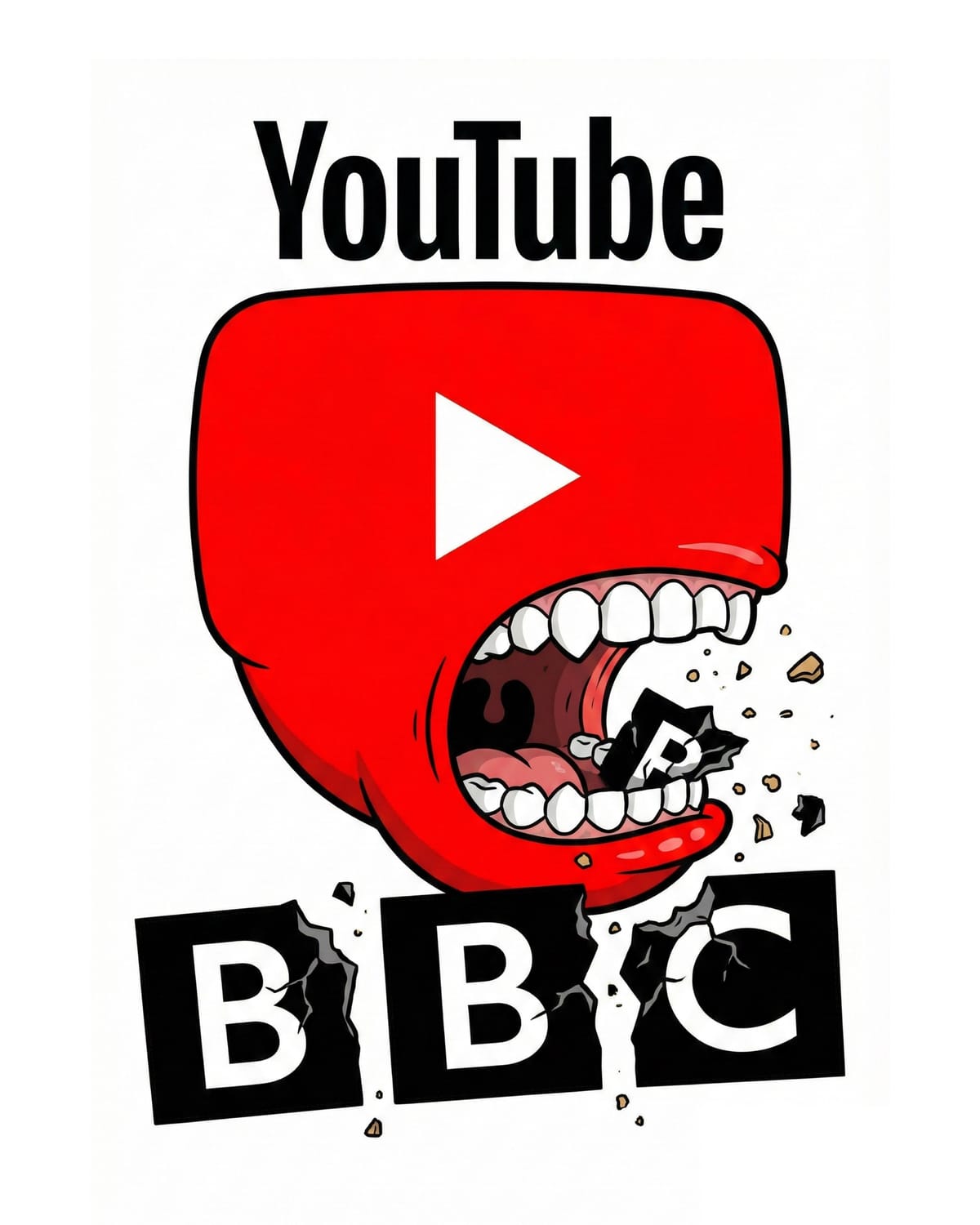
The BBC plans to announce a content partnership with YouTube that marks the most significant distribution strategy shift in the British public broadcaster's history, creating programs that will premiere on Google's platform before appearing on its own iPlayer and Sounds services.
The deal emerges as YouTube surpasses the BBC in reach for the first time. YouTube reached 51.9 million UK viewers in December, according to Barb Audiences, narrowly surpassing the BBC's 50.8 million. The measurement captures viewers who watched for at least three consecutive minutes across televisions, smartphones, and laptops, reflecting a fundamental redistribution of media consumption that has decimated traditional publisher business models over the past two years.
According to the Financial Times, the BBC will begin making bespoke shows for YouTube that will subsequently be featured on the broadcaster's iPlayer and Sounds platforms. The decision to produce shows premiering on YouTube represents a major departure for the publicly funded corporation, which has emphasized its own iPlayer streaming platform alongside traditional channels such as BBC One and BBC Two.
The broadcaster will generate revenue from advertising against the new programmes when shown outside the UK, bolstering income from the licence fee that provides the majority of funding for the corporation, according to the FT. In the UK, the BBC does not raise money through advertising for its public service broadcasting content, even on third-party platforms. Financial terms of the arrangement were not disclosed.
People close to the talks told the FT that shows made for YouTube would focus toward younger audiences who increasingly rely on YouTube as their primary source of television content. Programming is expected to include content typically made by BBC Three, children's programmes, and sports-focused material. News formats will also be developed to be shown over YouTube "as part of an effort to help counter the amount of misinformation and disinformation spread by fake news over social media," one person familiar with the situation told the newspaper.
The partnership arrives amid an existential crisis for traditional media organizations navigating the collapse of search-driven traffic and the rise of algorithm-controlled recommendation feeds. News publishers have lost half their Google Search traffic in two years, with Web Search declining from 51% to 27% of Google referrals between 2023 and the fourth quarter of 2025 while Discover climbed to 68%.
Media leaders expect an additional 43% traffic decline over the next three years as artificial intelligence transforms how audiences consume news, according to a Reuters Institute survey of 280 industry executives released January 12. Publishers are shifting priorities toward YouTube, which recorded a net score of +74 among executives planning to invest more effort in the platform compared to +52 in the 2025 survey.
The BBC's move reflects recognition that video distribution offers better resistance to AI disruption than text-based content. YouTube paid $70 billion to creators, media companies, and music partners over the past three years through its Partner Program, which now includes 3 million monetized channels.
According to the Guardian, the deal could mean shows made for YouTube are subsequently placed on BBC iPlayer and Sounds platforms, which have been growing fast. The broadcaster has come under pressure from politicians and the regulator Ofcom to put more content on YouTube, which has been growing rapidly as people use it for watching television, content creators, short-form video, and podcasts.
Public service broadcasters including the BBC have been demanding that, in return, YouTube gives their content more guaranteed prominence on the platform. It is not yet known whether YouTube has agreed to provide such prominence as part of the deal, according to the Guardian.
The timing coincides with YouTube's advertising dominance, which generated approximately $36.1 billion in 2024. Yet this represents less than 25% of the global television advertising market estimated at roughly $180 billion, according to analysis shared by media analyst Ian Whittaker on January 6. YouTube's advertising revenue growth rate declined from 45.9% in 2021 to just 12.5% year-to-date in 2025, marking a dramatic slowdown from pandemic-era expansion.
YouTube Shorts achieved revenue parity with traditional long-form video on a per-watch-hour basis in the United States during the third quarter of 2025. "In the U.S., Shorts now earn more revenue per watch hour than traditional in-stream on YouTube," stated Sundar Pichai, CEO of Alphabet and Google, during the October 29 earnings presentation.
The strategic imperative driving YouTube's positioning as "television" stems from accessing the massive pool of traditional television advertising dollars as the platform's growth rate continues its multi-year deceleration, according to Whittaker's analysis. YouTube advertising revenues grew from $31.5 billion in 2023 to $36.1 billion in 2024, maintaining double-digit percentage increases despite the platform's maturation.
The BBC has previously used YouTube, which is owned by Alphabet, mostly for trailers and clips to promote its shows in the UK. The broadcaster already monetizes some content through YouTube outside the UK market, but creating programs specifically for YouTube premiere represents a fundamental shift in production strategy and resource allocation.
A debate has been going on for months within the BBC about the extent it should put its content on YouTube, according to the Guardian. Some have been wary of placing too much there, concerned that many viewers do not realize they are watching a BBC show when they view it on the platform. There have also been concerns that it simply entrenches the huge power that US tech companies have over media consumption.
YouTube made about $36 billion in revenue in 2024, according to the Guardian. Patricia Hidalgo, the director of children and education at the BBC, has made the case for putting more children's programming on YouTube. However, she said the platform diverted children in the UK onto US-based content rather than "nourishing" British programming that helps cement their cultural identity.
Under that measure tracking viewers who watched content for at least three consecutive minutes, YouTube had a reach of 51.9 million UK viewers in December, more than a million more than the BBC, according to the Guardian. However, the BBC remains millions ahead of YouTube in terms of how many viewers tuned in for 15 minutes or more. While YouTube viewing on televisions has grown rapidly, the BBC remains significantly ahead on that measure as well.
The partnership raises questions about the licence fee and demonstrates the speed of change in media consumption, according to industry expert Stephen Price quoted by the Guardian. "Partly, there's a sense of inevitability about this, accelerated perhaps by the arrival of smart TVs meaning it became available to view YouTube on the main TV in living rooms – sort of mainstreamed it," he said.
"I wonder what it means for the license fee, as well. YouTube won't pay a licence fee, obviously, but they'll gain a great deal. So what is the licence fee now for?" Price added. "This relates to overseas viewers, but there are plenty of commercial advertisers around the world who are on YouTube – and now they find the BBC, paid for by the British public, is muscling in."
The move follows a pattern of traditional broadcasters seeking distribution partnerships with dominant platforms. Streaming technology companies have launched platforms to distribute single-source feeds across multiple platforms automatically as content owners navigate disparate technical processes.
In the UK, ITV and Comcast's Sky are expected to argue that the strength of platforms such as YouTube is why competition authorities should give their proposed £1.6 billion merger the green light, according to the FT. BBC executives have already said that they will need to build partnerships with other public-sector broadcasters to compete with global streamers, from sharing back-office services to floating more extreme ideas such as the merger of BBC channels and Channel 4.
The agreement is expected to cover both the domestic public service broadcasting arm as well as formalizing existing relationships with its commercially focused BBC Studios, according to the FT. A limited amount of older series may also be available to be shown on YouTube, people familiar with the situation added, but this was not the focus of the deal.
The deal comes as the BBC is fighting a $10 billion defamation lawsuit from President Donald Trump over allegedly misleadingly editing his speech from January 6, 2021, the day rioters stormed the US Capitol building, according to the FT. The BBC apologized for the edit and the affair led to the resignations of its two most senior bosses. Nevertheless, it has pledged to defend the case and is seeking to have the suit dismissed.
Connected television officially surpassed combined broadcast and cable television viewing for the first time in May 2025, reaching 44.8% of total television consumption according to Nielsen data. YouTube became the first streaming platform to exceed 10% of total TV usage in July 2024, reaching 10.4% of viewing time.
The transformation of media consumption patterns extends beyond audience measurement. Google Discover has become the dominant traffic source for news and media websites, with two-thirds of Google traffic to 2,000 global news and media websites now coming via Discover rather than search. The shift accelerated after Google's AI Overviews rollout to more than 100 countries in late October 2024.
Publishers who blocked AI crawlers experienced worse outcomes than those who didn't, according to research published December 31, 2025, by Rutgers Business School and The Wharton School. Blocking large language model crawlers led to a persistent post-blocking decline of 23.1% in monthly visits according to SimilarWeb traffic data, contradicting conventional assumptions about how publishers should respond to AI-powered platforms.
Who: The BBC, Britain's publicly funded broadcaster, is partnering with YouTube, owned by Google parent company Alphabet. The deal involves the BBC's domestic public service broadcasting arm and its commercial BBC Studios division.
What: The BBC will create bespoke programs that will premiere on YouTube before appearing on the broadcaster's own iPlayer and Sounds platforms. The programming will focus on younger audiences and include content from BBC Three, children's shows, sports material, and news formats. The BBC will generate advertising revenue from the programs when shown outside the UK.
When: The deal was reported by the Financial Times on January 16, 2026, with the announcement expected as early as next week. The partnership comes as YouTube reached 51.9 million UK viewers in December, surpassing the BBC's 50.8 million for the first time.
Where: The programming will be distributed on YouTube globally, with advertising revenue generated from viewership outside the UK. The content will subsequently appear on BBC iPlayer and Sounds. The partnership affects the UK broadcasting market where YouTube has overtaken the BBC in reach metrics.
Why: The BBC faces declining audience share as younger viewers increasingly rely on YouTube as their primary source of television content. Traditional publishers have lost half their Google Search traffic in two years, forcing media organizations to distribute content on platforms where audiences have migrated. The partnership allows the BBC to reach younger demographics while generating additional revenue through international advertising, though it raises questions about the future of the licence fee model and the broadcaster's independence from US technology platforms.