CloudX opens mobile app inventory to omnichannel DSPs without SDK integration
CloudX today enables omnichannel programmatic buyers to compete alongside SDK bidders in mobile app auctions without additional publisher integrations.


CloudX today enables omnichannel programmatic buyers to compete alongside SDK bidders in mobile app auctions without additional publisher integrations.
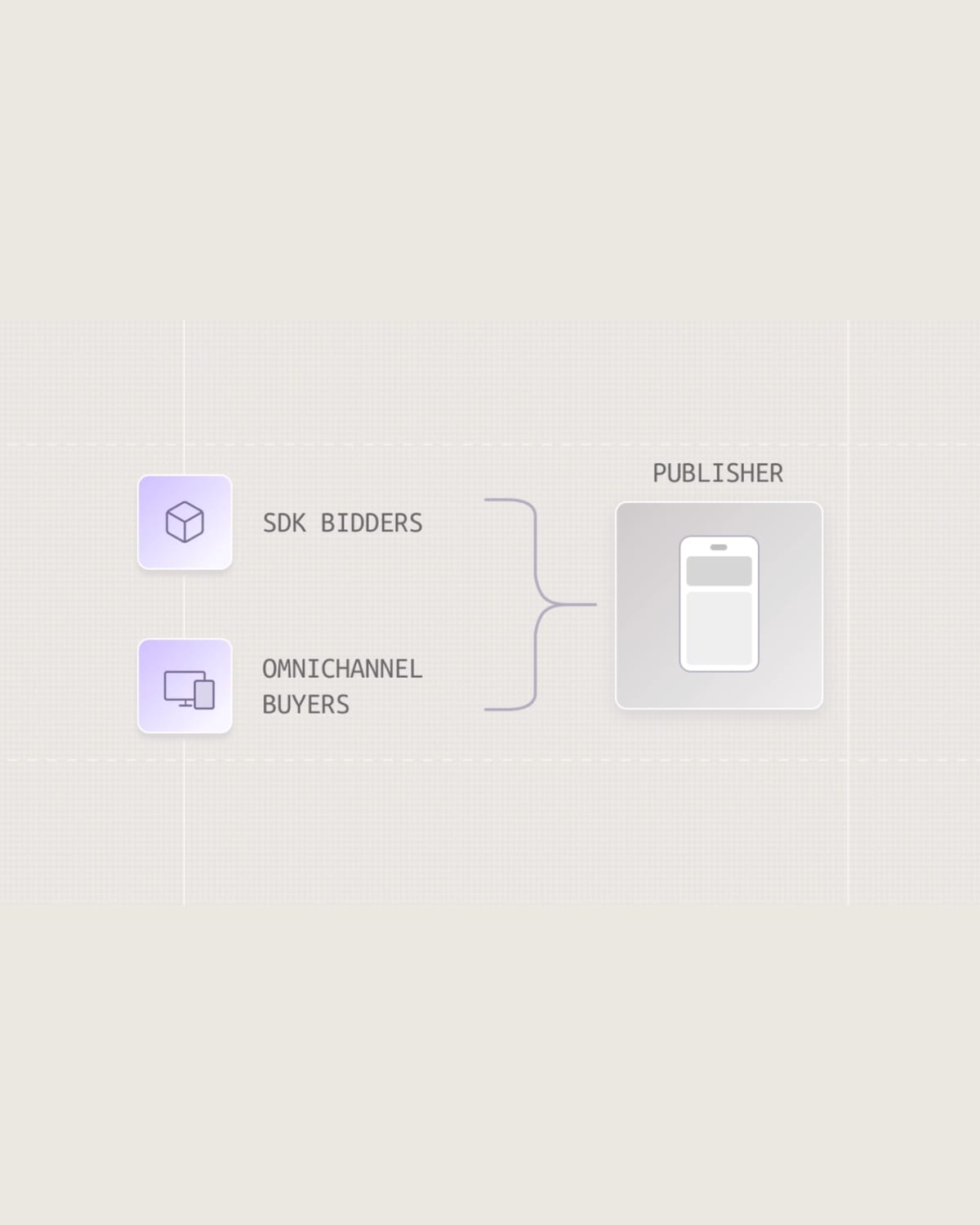
Mobile advertising supply-side platform CloudX today announced it will allow omnichannel programmatic buyers to access in-app inventory directly without requiring SDK integration. The move enables demand-side platforms built primarily for web and connected television to compete in mobile app auctions alongside SDK-based bidders under identical fee structures and auction mechanics.
According to CloudX co-founder and Business Lead Dan Sack, publishers can now activate these buyers without any additional technical work beyond their existing CloudX integration. The platform bundles its own rendering SDK as part of the standard implementation, eliminating the separate integration step that historically kept many programmatic buyers out of mobile app markets.
"Publishers can now activate these buyers directly, without integrating additional SDKs—same take rate as SDK demand partners, same transparent auction, same TEE-verified mechanics," Sack stated in the announcement published on January 27, 2026.
Industry analyst Ari Paparo characterized the development as removing structural barriers in programmatic advertising. "DSPs can now bid on in-app supply without one of the big SSP/ad nets in the way," Paparo wrote on X following the announcement.
The technical implementation addresses constraints that have shaped mobile advertising for over a decade. Publishers typically integrate multiple SDKs from different ad networks to maximize competition for their inventory. Each SDK represents a separate codebase that must be maintained, updated, and tested. Supply path optimization emerged partly as a response to the complexity this creates.
Omnichannel programmatic buyers - primarily demand-side platforms built for display, video, and streaming television inventory across web environments - generally lack the publisher SDK footprint that mobile-first networks established through years of developer relationships. When these buyers attempt to access mobile app inventory, they typically route through exchanges that charge substantially higher fees than SDK bidders pay.
According to Sack's analysis, this fee differential prices omnichannel buyers out of many mobile auctions before bidding begins. Industry research suggests 42-49% of advertising spending fails to reach publishers due to intermediary fees and technical inefficiencies across programmatic supply chains.
CloudX's approach eliminates the intermediary layer by providing direct auction access to omnichannel buyers while bundling the rendering SDK publishers need. The platform's documentation indicates the rendering SDK underwent "battle-testing" before becoming part of the standard integration package.
The unified fee structure represents a departure from typical mobile advertising economics. SDK-based demand partners and omnichannel programmatic buyers pay CloudX the same take rate for winning auctions, removing the pricing disadvantage that previously made many mobile impressions economically unviable for omnichannel buyers.
CloudX maintains auction mechanics in what the company characterizes as a Trusted Execution Environment (TEE), a hardware-based security feature that creates isolated computing environments. TEE implementations prevent even platform operators from modifying auction logic or accessing sensitive bidding data during execution.
This architectural choice addresses transparency concerns that have intensified throughout 2025. Prebid.org disabled cross-exchange transaction ID functionality in August 2025, eliminating advertisers' ability to identify duplicate bid requests across different supply-side platforms. The change prompted substantial industry controversy, with The Trade Desk launching OpenAds in October as a transparency-focused alternative.
CloudX's TEE-verified auction mechanics aim to address similar concerns by making auction outcomes cryptographically verifiable. Publishers and buyers can confirm that winning bids actually won based on auction rules rather than preferential treatment or hidden fees.
The platform provides publishers with control over when and how they share contextual information with buyers. This capability reflects growing publisher concerns about data leakage in programmatic environments, where bid requests can expose user-level information to dozens of potential buyers even if none win the auction.
The announcement frames the expanded buyer access as part of a broader demand diversity strategy. Sack's analysis distinguishes between performance buyers optimizing for app installs and return on ad spend versus brand buyers optimizing for reach and awareness across channels.
"Performance buyers optimizing for installs and ROAS. Brand buyers optimizing for reach and awareness. In a diverse auction, some impressions make sense to sell to performance demand, some to brand demand," according to the announcement.
Mobile-first SDK networks brought sophisticated user-level bidding and optimization specifically designed for app environments. These networks established themselves through direct relationships with app developers and typically focus on performance marketing objectives including app installs, in-app purchases, and subscription conversions.
Omnichannel programmatic buyers built infrastructure primarily for display advertising, video, and streaming television across web properties. These platforms maintain relationships with major advertising agencies and brand marketers, accessing budgets that historically flowed to traditional media channels before programmatic automation.
The distinction matters for publishers seeking to maximize yield across different impression types and user contexts. Google's research demonstrates that optimal auction design increasingly accounts for long-term user experience alongside immediate revenue, suggesting different advertiser types serve different strategic purposes for publishers.
CloudX characterizes the approach as enabling publishers to "find the right buyer at the right price for the right user at the right time" rather than defaulting to whichever demand source happens to bid highest on any given impression.
The mobile advertising ecosystem developed around SDK integration as the primary distribution mechanism. App developers integrate SDKs from multiple ad networks, creating competition for inventory through unified auction environments like Google's Open Bidding (previously AdMob Open Bidding) and header bidding implementations adapted for mobile.
Building SDK footprint requires substantial time investment. Publishers must decide to integrate a particular SDK, implement the technical integration, test thoroughly to avoid crashes or performance degradation, and maintain the integration across OS updates and SDK version changes. Network effects compound the challenge - publishers prioritize SDKs from networks that already have broad adoption.
According to Sack, the largest omnichannel programmatic buyers "built the infrastructure that powers digital advertising globally" with "deep relationships with the world's largest ad agencies, heavy investment in web and CTV." These platforms want access to in-app inventory but lack the multi-year SDK footprint that mobile-first networks established.
"They have demand that wants to flow into in-app inventory, but they've been largely boxed out," Sack stated in the announcement.
When omnichannel buyers route through exchanges to reach mobile inventory, they pay significantly higher fees than SDK bidders. The fee differential creates a structural disadvantage before auction mechanics even factor into outcomes. Microsoft's sunset of its Xandr DSP eliminated one of the few transparent platforms where fee visibility enabled buyers to understand these cost structures.
Industry observers have noted that supply path optimization gained prominence partly as advertisers sought more efficient routes to inventory. Consolidating spend through fewer intermediaries reduces cumulative fees while potentially improving data match rates, which typically experience 40-70% degradation when passing through multiple platforms.
For app publishers, the CloudX approach potentially unlocks incremental revenue without operational overhead. Publishers already integrated with CloudX can activate omnichannel buyer access without separate integration work, testing cycles, or ongoing maintenance for additional SDKs.
The economic proposition depends on whether omnichannel buyers actually increase competition meaningfully. If these buyers simply displace existing SDK demand at similar prices, publishers gain no incremental value. If omnichannel buyers bring genuinely new demand - different budgets targeting different objectives - the additional competition should drive up clearing prices for relevant impressions.
Sack framed the opportunity as "incremental demand that's complementary to what SDK networks provide—different buyers, different budgets, different use cases. Incremental demand, incremental value, revenue that can be reinvested in growth or taken as profit."
The claim hinges on market segmentation working as CloudX describes. Brand budgets for reach and awareness campaigns theoretically differ from performance budgets for app install campaigns. Whether these budget pools remain genuinely distinct in practice depends on factors including buyer sophistication, cross-channel measurement capabilities, and optimization algorithms that might discover in-app inventory performs well for objectives traditionally associated with brand campaigns.
CloudX's TEE-verified auction mechanics aim to provide transparency around these dynamics. Publishers can observe whether adding omnichannel buyer access actually increases competition and revenue or simply fragments existing demand across more buyers without improving outcomes.
CloudX developed its own rendering SDK rather than relying on publishers to maintain separate integrations for omnichannel buyer creative assets. The rendering SDK handles displaying advertisements that arrive through omnichannel buyer demand, managing tasks including creative format compatibility, viewability measurement, and interaction tracking.
According to the announcement, the rendering SDK underwent testing before becoming part of CloudX's standard integration package. This battle-testing presumably addressed concerns including rendering performance, creative format compatibility across different buyer specifications, and measurement accuracy for viewability and engagement metrics.
The bundled approach reduces publisher technical burden compared to alternatives where each new demand source requires separate integration work. Publishers manage one SDK relationship with CloudX rather than multiple SDK relationships with different demand sources.
For buyers, the rendering SDK potentially improves creative delivery compared to routing through exchanges where creative specifications and rendering capabilities vary across publisher implementations. Consistent rendering infrastructure across all CloudX publishers reduces creative delivery failures and measurement discrepancies.
The approach mirrors patterns in connected television advertising, where platforms increasingly bundle server-side components with publisher-side SDKs to streamline technical integration while maintaining auction transparency.
CloudX offers AI-powered integration agents that automate SDK implementation tasks. The platform documentation describes a process where developers interact with Claude Code agents that inspect project structure, configure dependencies, handle platform-specific requirements, and generate integration code.
"With the CloudX Integration Agent, publishers can: Integrate in under 15 minutes - From setup to serving ads, faster than ever. Rely on AI-powered automation - Agents detect your app's environment and configure everything on the fly," according to CloudX documentation published November 13, 2025.
The AI integration approach addresses friction in the SDK adoption process. Traditional SDK integration requires reading documentation, understanding platform-specific conventions, managing dependency conflicts, configuring initialization parameters, and debugging integration issues. These steps take hours or days even for experienced developers.
CloudX's agents automate boilerplate work while maintaining developer control over when and where advertisements appear in apps. The agents generate code in languages including Kotlin for Android, Swift for iOS, and Dart for Flutter, matching the project's existing architecture and coding conventions.
The integration agent approach reflects broader industry trends toward AI automation in advertising technology. Industry analyst Ari Paparo has suggested that AI agents could fundamentally disrupt demand-side platforms by automating campaign setup, targeting, and optimization functions currently handled by complex software systems.
CloudX positions its integration agents as improving SDK adoption rates by reducing technical barriers. Faster integration means publishers can test new demand sources more easily, potentially increasing willingness to experiment with platforms that offer differentiated demand rather than defaulting to established networks.
The CloudX SDK implements privacy compliance by reading standard IAB consent strings from device storage. Consent Management Platforms including Google's User Messaging Platform, OneTrust, and Sourcepoint typically write these consent signals to SharedPreferences on Android or UserDefaults on iOS.
The SDK automatically detects user location and reads relevant consent signals. For users in European Union countries, the SDK checks TCF v2.0 consent for purposes 1-4 and vendor consent for CloudX (Vendor ID 1510). For users in United States jurisdictions with applicable privacy laws, the SDK checks for opt-out signals under CCPA frameworks. For users in other regions, no restrictions apply by default.
When consent is denied or users opt out, the SDK removes personally identifiable information from ad requests. Advertising ID (GAID on Android, IDFA on iOS) clears, geographic coordinates are excluded, user key-values are not sent, and hashed user identifiers are omitted. This approach maintains ad serving capability while respecting user privacy choices.
The implementation prioritizes the Global Privacy Platform specification over legacy TCF and US Privacy strings when both exist. GPP represents the modern consent standard that consolidates privacy signaling across jurisdictions, replacing fragmented legacy approaches.
CloudX's privacy implementation reflects requirements that now define mobile advertising architecture. Meta's SKAdNetwork 4.0 activation for iOS demonstrates how platform privacy frameworks increasingly constrain measurement and attribution capabilities that powered mobile advertising growth.
The SDK documentation emphasizes that CloudX cannot determine whether specific use cases constitute fair use under copyright law, noting that the platform acts as infrastructure rather than providing legal interpretation. This framing distances CloudX from content moderation or legal compliance decisions that remain publisher responsibilities.
CloudX announced the omnichannel buyer expansion amid substantial programmatic advertising infrastructure changes throughout 2025. Prebid's transaction ID modification in August eliminated advertiser transparency tools, The Trade Desk launched OpenAds in October to maintain auction visibility, and the Media Rating Council released draft auction transparency standards in September.
These developments reflect intensifying debates about programmatic supply chain efficiency. Industry research indicates more than 50% of advertising spending fails to reach publishers, instead being consumed by intermediary fees. Congress introduced legislation in March 2025 aimed at addressing conflicts of interest where single companies operate across multiple supply chain layers simultaneously.
CloudX positions its omnichannel buyer access as reducing intermediary layers rather than adding complexity. By providing direct auction access through bundled infrastructure, the platform eliminates exchange fees that would otherwise separate omnichannel buyers from mobile inventory.
Whether the approach gains adoption depends partly on competitive dynamics among supply-side platforms. If other platforms develop similar capabilities, direct omnichannel buyer access could become table stakes rather than a CloudX differentiator. If CloudX establishes first-mover advantages through publisher relationships and buyer integrations, the platform could establish itself as the primary mobile access point for omnichannel programmatic demand.
The $30 million Series A funding CloudX raised provides resources to execute the strategy. The company must convince publishers that omnichannel demand provides incremental value rather than fragmenting existing budgets, while simultaneously convincing omnichannel buyers that mobile app inventory warrants investment in CloudX integration.
The CloudX announcement reflects structural questions facing programmatic advertising. Should specialized companies own distinct supply chain layers - publishers working with SSPs, SSPs connecting to DSPs, DSPs serving advertisers - or should vertical integration collapse these layers under fewer platforms?
Microsoft's exit from the DSP business suggests that operating transparent, fee-visible platforms may be economically challenging when competitors extract value through opacity. AppNexus built a reputation for transparency by revealing it charged sellers an average of 8.5% and enabling buyers to see publisher-to-buyer fee visibility. Microsoft sunset the platform despite these transparency features.
CloudX's model attempts a middle path - maintaining supply-side infrastructure while enabling buyer access under consistent fee structures regardless of buyer type. The TEE-verified auctions aim to prevent the opacity problems that plagued traditional programmatic supply chains while avoiding full vertical integration that might reduce competition.
For advertisers, the development potentially improves mobile campaign economics by reducing fees and improving transparency. Omnichannel buyers gain access to inventory that was previously economically inefficient to purchase. Publishers potentially capture demand that couldn't efficiently reach them through traditional mobile supply chains.
The alternative scenario involves omnichannel buyers determining that mobile app inventory doesn't warrant investment even with reduced friction. If brand advertisers optimize primarily for web and connected television placements, mobile app access may remain underutilized regardless of technical enablement.
Supply-side platforms typically provide fraud detection and brand safety capabilities beyond basic auction infrastructure. Established SSPs including PubMatic, Magnite, and Google Ad Manager integrate multiple layers of verification to protect advertiser spend and publisher reputation.
PubMatic's partnerships emphasize enterprise-grade transparency and brand safety controls aligned with global publisher standards. The platform's infrastructure processes high-volume auction decisions while maintaining brand safety integrations that extend programmatic advertising principles into emerging environments. PubMatic's AgenticOS launch in January 2026 maintained these verification capabilities while introducing autonomous advertising execution features.
Magnite's publisher guidance requires documentation of brand safety and fraud prevention tools including GOEdge, Confiant, Human Security, or DoubleVerify. Publishers working with Magnite prepare quality details including ads.txt and sellers.json files for transparency and compliance, plus evidence of fraud prevention infrastructure.
Google Ad Manager introduced AI tools in November 2025 that surface potentially unwanted advertisements for review, building on existing Protections framework and AI tools targeting fraud prevention and scam detection. The platform enables publishers to maintain brand safety standards through both automated and manual creative review workflows.
Industry research demonstrates the scale of invalid traffic challenges. Investigation findings released in March 2025 revealed at least 40% of web traffic consists of fake users or computerized bots, with leading verification systems from DoubleVerify, Integral Ad Science, and Human Security routinely failing to block ads shown to automated traffic.
Google deployed Gemini AI in August 2025 to combat ad fraud, achieving 40% reduction in mobile invalid traffic through multimodal large language models. The pilot program demonstrated effectiveness between December 2023 and October 2024 specifically against deceptive or disruptive advertisements including hidden ads and unexpected pop-ups.
The Media Rating Council updated invalid traffic standards in April 2022, formalizing requirements for machine learning and human intervention in detection practices. The standards addressed up-front filtration requirements, mobile in-app specifications, over-the-top considerations, and logged-in environment guidance.
Brand safety concerns intensified throughout 2025 as AI-generated content proliferated. Industry survey findings from December 2025 showed 84% of respondents agreed accelerating social video platform consumption would continue driving programmatic video ad spend, while 83% cited brand safety as a growing concern with increasing digital video advertising volume.
CloudX's announcement materials emphasize TEE-verified auction mechanics and unified fee structures rather than fraud detection or brand safety capabilities. The platform documentation covers SDK integration, privacy compliance mechanisms, and rendering infrastructure without detailing invalid traffic filtration or brand suitability controls.
This positioning differs from established SSPs that market fraud detection and brand safety as core platform features. Whether CloudX provides these capabilities through proprietary systems, third-party integrations, or expects publishers to handle verification separately remains unknown.
Publishers evaluating CloudX would need to determine how the platform addresses invalid traffic detection, brand safety verification, and viewability measurement - capabilities that industry standards and advertiser expectations typically require from supply-side platforms. The TEE-verified auction approach provides transparency around winning bids and fee structures but doesn't address whether impressions come from legitimate users or appear in brand-safe environments.
The absence of detailed fraud detection and brand safety documentation in CloudX materials may indicate the platform focuses specifically on auction infrastructure while expecting publishers or buyers to implement verification through separate relationships. Alternatively, these capabilities may exist but weren't emphasized in the omnichannel buyer access announcement.
Supply-side platforms typically assume financial risk by guaranteeing publisher payments regardless of whether advertisers actually pay. This payment guarantee represents a fundamental SSP service that protects publishers from advertiser default risk while the SSP manages collections from demand partners.
Industry transparency reports introduced in March 2024 reveal billing complexity across programmatic supply chains. Google Ad Manager, AdMob, and AdSense provide publishers with daily CSV files containing granular pricing data, though discrepancies exist due to rounding, currency conversions, billing adjustments, and delayed event signals. Unadjusted invalid traffic figures may appear in billing data due to daily generation processes.
Research indicates approximately 49% of advertising dollars never reach publishers due to intermediary fees according to studies by the Incorporated Society of British Advertisers. The "unknown delta" represents money unaccounted for in supply chains, with demand-side platform spend typically 15% higher than what supply-side platforms record as gross revenue. This gap creates reconciliation challenges and potential payment disputes.
Revenue sharing models faced scrutiny when Sovrn eliminated SSP revenue sharing in October 2024, enabling publishers to retain more revenue through flat monthly software fees based on impression volume rather than percentage-based models. Traditional revenue sharing arrangements typically see publishers receive only 36 cents of every media dollar spent through demand-side platforms.
Payment timing varies across SSPs. Google Ad Manager and major platforms typically operate on net-60 or net-90 payment terms, meaning publishers receive payment 60-90 days after advertisers are billed. This creates cash flow implications for publishers while SSPs maintain float on outstanding balances. Publishers working with multiple SSPs must manage different payment schedules, reconciliation processes, and dispute resolution procedures.
Collections risk concentrates at the SSP layer. When omnichannel programmatic buyers participate in auctions without SDK integration, the SSP still guarantees publisher payment even if buyers dispute charges or fail to pay. Supply path complexity increased throughout 2025 as publishers implemented bid throttling and supply path controls, making attribution and billing reconciliation more challenging.
CloudX's announcement materials don't address payment guarantees, billing infrastructure, or collections mechanisms. Publishers evaluating the platform would need clarity on several payment-related questions: Does CloudX guarantee publisher payments if omnichannel buyers dispute charges? What payment terms does CloudX offer publishers? How does CloudX handle reconciliation when buyers claim invalid traffic or viewability issues? What recourse do publishers have in payment disputes?
The unified fee structure CloudX describes - charging omnichannel buyers and SDK bidders identical take rates - simplifies pricing transparency but doesn't address payment risk allocation. Traditional SDK-based networks often have established payment guarantee arrangements with publishers built over years of operational history. Whether omnichannel buyers connecting through CloudX receive identical payment treatment or face different credit requirements remains unspecified.
Financial risk management becomes particularly important as CloudX expands beyond established SDK-based demand partners to omnichannel buyers that may lack direct publisher relationships. Credit assessment, payment guarantees, and dispute resolution infrastructure typically represent significant operational investments for SSPs beyond the auction technology itself.
Who: CloudX, a mobile advertising supply-side platform backed by $30 million in Series A funding, announced the expansion alongside co-founder and Business Lead Dan Sack. The announcement affects app publishers, omnichannel programmatic buyers, SDK-based ad networks, and advertisers across performance and brand marketing segments.
What: CloudX enabled direct auction access for omnichannel programmatic buyers to compete alongside SDK bidders in mobile app advertising without requiring publishers to integrate additional SDKs. The platform bundles its own rendering SDK with standard CloudX integration, maintains unified fee structures across buyer types, and operates auctions in Trusted Execution Environments to ensure transparency. Publishers control contextual data sharing while buyers gain mobile inventory access without traditional exchange intermediaries.
When: CloudX published the announcement on January 27, 2026, following the company's November 13, 2025 launch of AI-powered integration agents that reduce SDK implementation time to approximately 15 minutes.
Where: The implementation affects mobile app advertising inventory accessible through CloudX's supply-side platform. Publishers already integrated with CloudX can activate omnichannel buyer access without additional technical work. Omnichannel programmatic buyers access the inventory through CloudX's API infrastructure rather than traditional SDK integration.
Why: The expansion addresses structural barriers that prevented omnichannel programmatic buyers from efficiently accessing mobile app inventory. Without SDK footprint across publishers, these buyers historically routed through exchanges paying significantly higher fees than SDK bidders, creating pricing disadvantages before auctions began. CloudX eliminates this fee differential while providing publishers with incremental demand from different advertiser segments and budgets. The approach aims to improve supply chain efficiency by reducing intermediary layers that consume 42-49% of advertising spending according to industry research.