Criteo opens GO to all: SMBs can now launch AI ad campaigns in 5 clicks
Criteo expands GO platform with full self-service access for SMBs and growth brands, enabling cross-channel AI ad campaigns in as few as five clicks as of March 31, 2026.


Criteo expands GO platform with full self-service access for SMBs and growth brands, enabling cross-channel AI ad campaigns in as few as five clicks as of March 31, 2026.
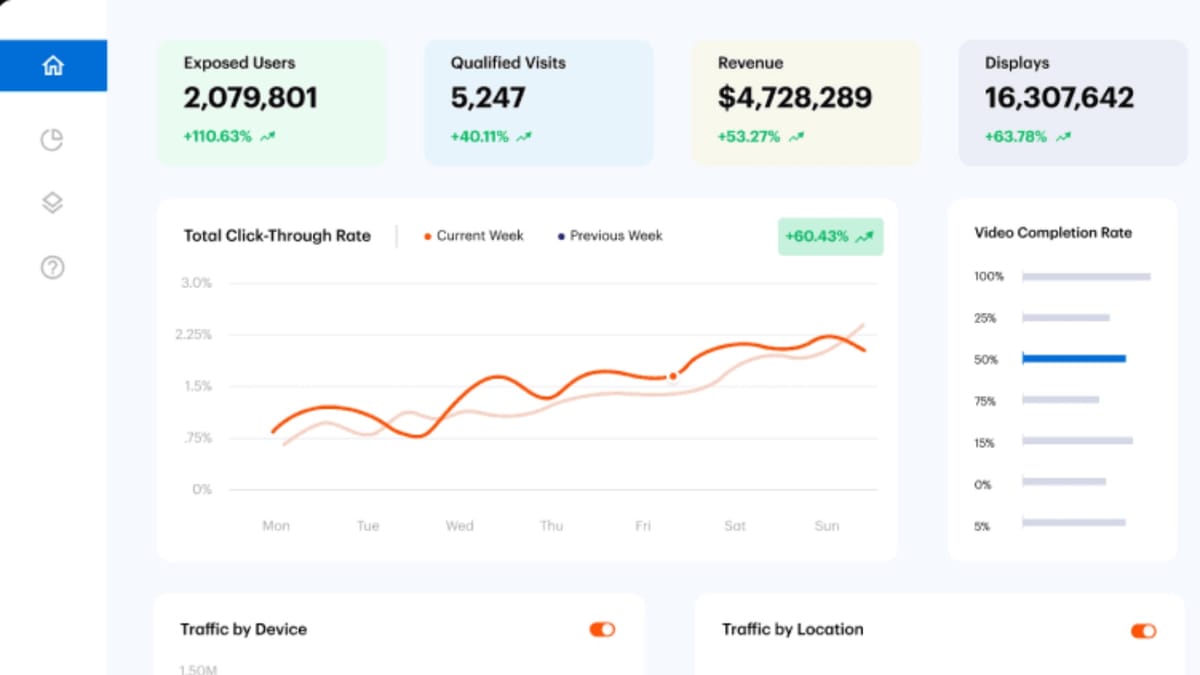
Criteo yesterday announced the full self-service expansion of its GO platform, opening AI-powered, cross-channel performance advertising to small and mid-sized businesses and growth-stage commerce brands without requiring managed service agreements. The announcement, made on March 31, 2026, marks what the company describes internally as a "Day One" moment after more than two decades in the advertising technology industry.
The move formalises a strategic shift that has been building inside Criteo for several quarters - from a largely managed-service model toward a scalable, technology-first platform. For the marketing community, it signals that one of the industry's established commerce data platforms is now directly competing for the long tail of digital advertisers previously served by platforms such as Google Ads and Meta, but with a specific focus on cross-channel, full-funnel commerce performance.
The GO platform allows an advertiser to independently create an account, enter billing details, and launch a live campaign in as few as five clicks. According to the March 31 press release, the platform unifies display, video, native, and socialformats within a single campaign environment. Budget allocation is handled automatically, with the system optimising spend in real time across those channels to achieve the best outcome.
The underlying data layer is substantial. According to Criteo, GO draws on signals from 740 million daily shoppers, $1 trillion in annual transactions, and 5 billion product SKUs. These figures represent the breadth of Criteo's commerce intelligence network, accumulated over more than two decades of operating retargeting and retail media infrastructure across thousands of retail partners globally. That data scale - shared across the company's broader Commerce Media Platform - is central to how GO determines which consumers to target and how aggressively to bid across placements.
Built-in generative AI creative tools are included within the self-service experience. The platform produces and adapts ad formats - including video - automatically, adjusting messaging to maintain consistency and performance as campaigns run across channels. This removes a common barrier for smaller advertisers who lack dedicated creative teams but need to maintain brand presence across multiple surfaces simultaneously.
A newly introduced Onboarding Agent goes further. According to the press release, the agent forecasts results and automatically configures key campaign parameters during setup. Criteo describes the Onboarding Agent as reflecting its broader vision of an AI-powered ecosystem where campaigns are not merely automated at the execution level, but intelligently guided from launch through to scale. It is available from today.
Campaigns run through GO that include social activation deliver more than 20% higher return on ad spend compared to configurations that exclude social placements, according to Criteo's internal data cited in the announcement. The company states that this performance improvement has contributed to increased advertiser investment and lower churn among GO users. Criteo characterises GO as a "durable growth driver" for the business, a framing that takes on additional significance given the revenue headwinds the company faces in 2026 from the restructuring of its two largest retail media client relationships - a situation tracked by PPC Land since early 2025.
Eric Prum, Co-Founder and Co-CEO at Very Great - a digitally native consumer products company behind Wild One, W&P, and Courant - offered a perspective on what the platform offers: "Criteo GO's AI-powered capabilities allow us to move from idea to execution quickly, helping us stay agile, make smarter decisions, and drive meaningful cross-channel, full-funnel results without adding complexity."
Criteo GO's self-service capabilities are now available in the United States and the United Kingdom, with plans to expand to additional markets later in 2026. No further geographic timeline has been disclosed in the announcement.
To lead the commercial rollout of GO globally, Criteo has appointed Courtney MacConnell as Vice President of Commercialization for GO. MacConnell joins from Google, where she was most recently Head of Shopping. According to the press release, she brings direct operating experience scaling Google's Performance Max solution - the automated, cross-channel campaign type that Google has systematically expanded over recent years - and a track record of delivering AI-powered commerce outcomes for brands.
MacConnell will work alongside Christopher Towl, who has been appointed Vice President of GO Product. Together they will lead what Criteo describes as the next phase of GO's growth and evolution globally.
Todd Parsons, Chief Product Officer and President of Performance Media at Criteo, said: "Performance marketing is being redesigned in real time and marketers can no longer afford to operate in channel silos. With GO's new self-service capabilities, we're opening our platform to a broader set of advertisers, giving growing brands access to AI-powered, cross-channel, full-funnel performance capabilities at scale, while unlocking a meaningful, multi-year growth opportunity for Criteo."
Ed Dinichert, Chief Customer Officer at Criteo, characterised the launch in a LinkedIn post on the day of the announcement: "After 20 years, Criteo is launching its full deliberate Self-Service product - which feels like a true DAY ONE."
The GO expansion does not arrive in isolation. It sits within a deliberate, multi-year repositioning of Criteo away from high-touch managed service arrangements and toward a more scalable technology platform. PPC Land reported in May 2025 that Criteo's largest retail media client had decided to discontinue managed services, creating a $25 million negative revenue impact in 2025 concentrated in Q4, and an anticipated $75 million impact across the first ten months of 2026. At the time, CEO Michael Komasinski described the company as "shifting from transformation to scale with continuous innovation and disciplined execution."
Full year 2025 results reported by PPC Land in February 2026 confirmed Q4 2025 revenue of $541 million, a 2% decline year-over-year, with contribution ex-TAC falling 1% to $330 million. For 2026, Criteo guided for contribution ex-TAC that is flat to up 2% at constant currency, with the company expecting Q1 2026 to represent the lowest point of the year. Contribution ex-TAC between $245 million and $250 million is projected for Q1, down 9% to 11% at constant currency, including an approximately $27 million headwind directly related to those two clients.
Against this backdrop, the full opening of GO to self-service advertisers represents an attempt to build volume from a broader, previously inaccessible market segment - smaller advertisers who would not have met the threshold for Criteo's managed service offerings but who can now activate independently. The five-click onboarding architecture is explicitly designed with that audience in mind.
For smaller advertisers, the self-service performance advertising market has long been dominated by Google and Meta, with their respective automated campaign formats - Performance Max and Advantage+ - pulling the majority of SMB digital ad budgets. Criteo's GO platform enters this market with a distinct proposition: commerce data drawn from outside the walled gardens of those two platforms, enabling reach across the open web, social channels, video, and display from a single campaign interface.
Criteo's commerce data position - built over twenty years across thousands of retail partners - has been deployed in an expanding range of contexts, from connected TV activation in partnership with WPP Media to an agentic commerce recommendation service for AI shopping assistants, announced on February 5, 2026, which demonstrated up to 60% improvement in recommendation relevancy in internal testing. The same underlying data infrastructure now powers the targeting logic inside GO campaigns.
What distinguishes the current moment is the addition of social to GO's cross-channel bundle, with the 20%-plus ROAS uplift figure tied specifically to campaigns that include social placements. For SMB advertisers evaluating GO, the implication is that isolating media buys to single channels - as many smaller advertisers do by default - carries a measurable cost in campaign efficiency.
The fragmentation of consumer touchpoints across platforms and devices is a structural feature of the current advertising market, not a passing condition. Legacy tools that confine advertisers within closed ecosystems limit both reach and transparency. Criteo's position - operating outside and across those ecosystems - is either a constraint or an advantage depending on the specific advertiser's needs and the data it can bring to bear.
The Onboarding Agent announced today is the latest in a line of agentic capabilities Criteo has introduced over recent months. In February 2026, Criteo launched an Agentic Commerce Recommendation Service designed to supply product recommendations to AI shopping assistants through a Model Context Protocol integration. That service, which processes Criteo's transaction signals rather than relying on product descriptions alone, achieved a 60% improvement in recommendation relevancy during internal January 2026 testing compared to semantic-matching approaches.
The OpenAI ChatGPT advertising pilot partnership, disclosed on March 2, 2026, sits alongside GO in Criteo's push to demonstrate that its commerce data infrastructure can activate value across a widening range of advertising surfaces. Criteo was named the first advertising technology company to integrate with OpenAI's advertising pilot, connecting its approximately 17,000 existing advertiser clients to ChatGPT's Free and Go subscription tiers in the United States.
The common thread - GO's Onboarding Agent, the Commerce Recommendation Service, the ChatGPT pilot - is the use of Criteo's commerce data to automate decisions that would otherwise require human input. For an SMB advertiser with limited internal marketing resource, automation at the campaign setup and optimisation layer is not an optional extra. It is the prerequisite for accessing performance advertising at all.
The significance of today's announcement for marketing professionals extends beyond Criteo's specific product roadmap. Several structural dynamics converge here.
First, the trend toward self-service in ad technology has been building across the industry for years. Criteo's earlier self-service retail media platform, launched in 2020, addressed advertisers buying retail media inventory across multiple retailers. The current GO expansion addresses the broader SMB performance advertising market. Those are distinct problems, but the underlying direction is consistent: reduce friction, lower the minimum viable advertiser size, and build scale through platform adoption rather than service delivery.
Second, the appointment of Courtney MacConnell is a notable signal. Bringing in someone who led the scaling of Performance Max at Google - the product that systematically absorbed budgets from traditional Search and Shopping campaigns over several years - indicates that Criteo is approaching the GO expansion as a serious, long-duration commercial effort rather than a product experiment.
Third, the financial context matters. Criteo enters 2026 with meaningful headwinds in its retail media segment, well-documented across PPC Land's coverage of the company's quarterly results. GO's self-service expansion represents the most explicit bet the company has placed on performance media growth as an offset to those headwinds. The multi-year growth opportunity framing used by Parsons in the press release is consistent with that reading.
For agencies and independent marketing professionals advising SMB clients, GO represents a new option that bundles cross-channel reach with significant commerce data depth. Whether the five-click onboarding translates into durable campaign performance - and whether Criteo can sustain advertiser relationships without the managed service layer that historically supported its enterprise clients - will become clearer in the quarters ahead.
Who: Criteo (NASDAQ: CRTO), the global commerce intelligence platform founded in France and currently trading on Nasdaq, announced the expansion of its GO platform. The announcement was made by Todd Parsons, Chief Product Officer and President of Performance Media, alongside Ed Dinichert, Chief Customer Officer. Newly appointed VP of Commercialization Courtney MacConnell - formerly Head of Shopping at Google - joins Christopher Towl as VP of GO Product to lead the platform's global scaling.
What: Criteo expanded GO with full self-service access, enabling small and mid-sized businesses and growth-stage commerce brands to independently create accounts, enter billing details, and launch campaigns in as few as five clicks. The platform unifies display, video, native, and social campaigns in a single environment, with automatic budget optimisation drawing on 740 million daily shoppers, $1 trillion in annual transactions, and 5 billion product SKUs. A new AI-powered Onboarding Agent forecasts results and automatically configures parameters during setup. Campaigns including social activation delivered more than 20% higher ROAS compared to non-social configurations in existing GO data.
When: The full self-service expansion was announced on March 31, 2026. The GO Onboarding Agent is available from today. Expansion to markets beyond the U.S. and U.K. is planned for later in 2026.
Where: Criteo GO's self-service capabilities are live in the United States and the United Kingdom at launch.
Why: Criteo is facing a $75 million revenue headwind in 2026 from the restructuring of its two largest retail media client relationships, which are transitioning away from managed services. The GO self-service expansion is designed to access a wider base of smaller advertisers - a segment that previously fell outside Criteo's managed-service threshold - and to build a scalable, technology-driven growth engine. The move also reflects a broader industry shift in which automated, self-service performance platforms have become the dominant acquisition channel for SMB advertising budgets.