
Google quietly hands AI assistants the keys to 40 million docs
Google last week launched Developer Knowledge API and MCP server, giving AI tools direct access to Firebase, Android, Cloud, and Maps documentation through programmatic interfaces.

Google last week launched Developer Knowledge API and MCP server, giving AI tools direct access to Firebase, Android, Cloud, and Maps documentation through programmatic interfaces.
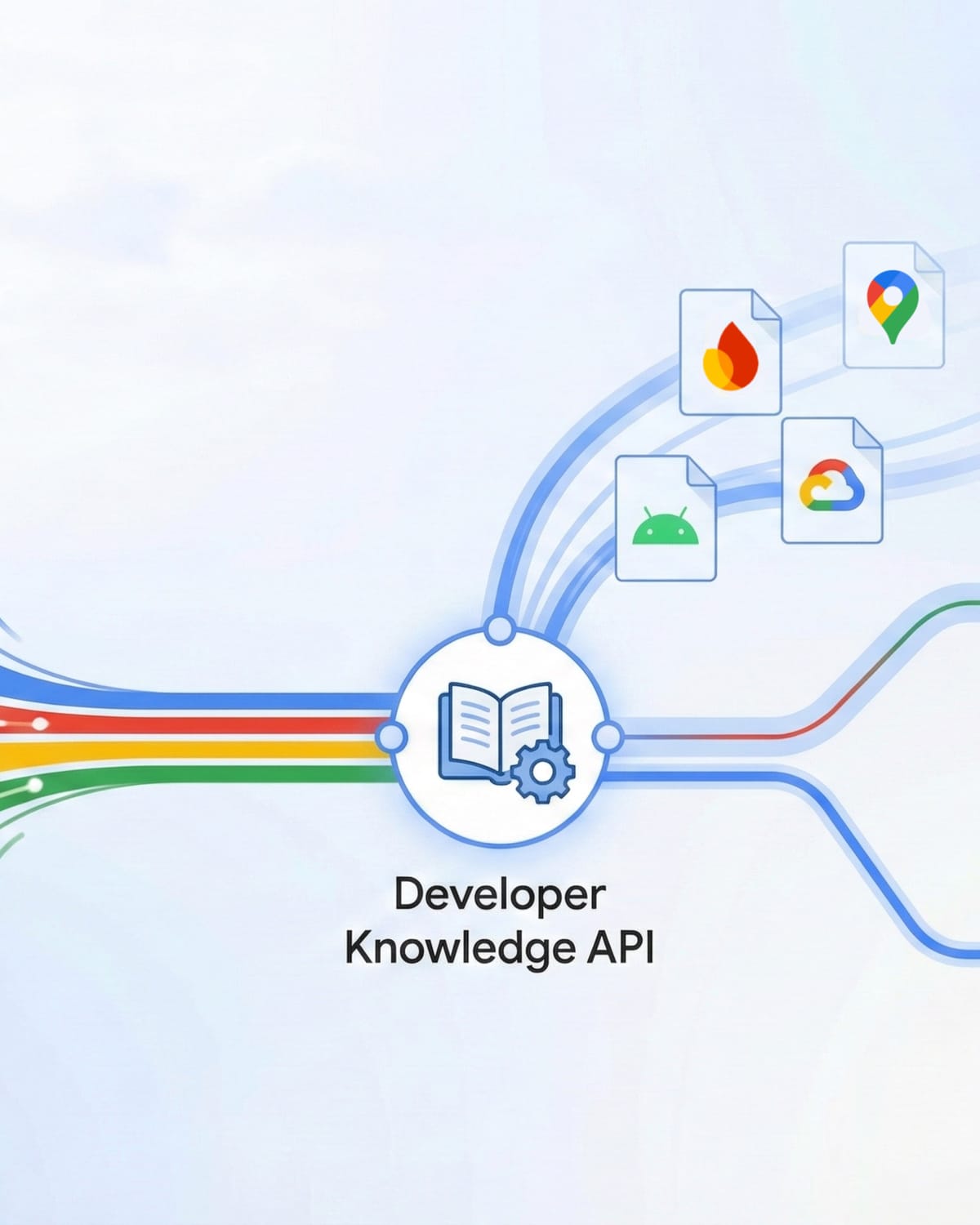
Google last week announced the public preview of its Developer Knowledge API and Model Context Protocol server, establishing a programmatic gateway to the company's complete technical documentation corpus spanning Firebase, Android, Google Cloud, Maps, and additional developer products. The February 4 announcement, published on the Google Developers Blog, marks a significant infrastructure development enabling AI-powered development tools to access authoritative documentation through machine-readable interfaces rather than relying on potentially outdated training data.
According to Jess Kuras, Technical Writer at Google, the launch addresses "a critical challenge" facing AI-powered developer tools: ensuring access to accurate, current documentation. "Large Language Models are only as good as the context they are given," Kuras stated in the announcement. The API provides developers with canonical documentation access through two primary functions - SearchDocumentChunks to find relevant content based on queries, and GetDocument or BatchGetDocuments to retrieve complete page content.
The Developer Knowledge API operates as an experimental release intended for testing and feedback. Documentation updates re-index within 24 hours during the public preview period, ensuring AI assistants receive current information reflecting recent platform changes. This refresh cadence addresses a fundamental limitation where AI tools reshape how developers code - the widespread adoption of conversational AI for programming assistance, documented at 84% among developers in Stack Overflow's 2025 survey, created demand for reliable documentation access beyond static training data.
The searchable corpus includes public documentation from firebase.google.com, developer.android.com, docs.cloud.google.com, and related properties. According to the Corpus reference documentation, content scope excludes GitHub repositories, open source project sites, blog posts, and YouTube videos, focusing exclusively on official developer documentation pages.
The API divides documentation into smaller text chunks optimized for AI-powered search and retrieval. When developers search through the SearchDocumentChunks method, the system returns relevant snippets alongside parent references that enable full page content retrieval. This chunking architecture addresses token consumption concerns that arise when retrieving complete documentation pages, particularly for lengthy technical guides that could quickly consume AI application context windows.
The BatchGetDocuments method enables retrieval of up to 100 documents by name in a single API call. This batch functionality provides efficiency advantages over multiple individual GetDocument requests, though the documentation cautions that retrieving document content - especially through batch operations - consumes substantial tokens. "Some Google developer documentation pages are quite large, fetching multiple documents can quickly lead to higher costs, slower model response times, and context window overflow," according to the guidance on managing token usage.
The Model Context Protocol server implementation provides immediate integration capabilities for popular AI development tools. The remote MCP server requires developers to create a Developer Knowledge API key through Google Cloud projects, enable the server via gcloud CLI commands, and configure their AI applications with appropriate authentication headers.
Configuration examples in the documentation demonstrate setup for Antigravity, requiring users to add server details including the URL https://developerknowledge.googleapis.com/mcp and X-Goog-Api-Key headers to mcp_config.json files. The MCP server provides three tools to AI applications: search_documents for finding relevant pages and snippets, get_document for retrieving full content using parent references from search results, and batch_get_documents for fetching multiple documents simultaneously.
Natural language queries transform documentation access patterns. Sample prompts demonstrated in the documentation include "What's the best way to implement push notifications using Firebase Cloud Messaging in an Android app?" and "Why is my Google Maps API key showing a 'For development purposes only' watermark?" The system processes conversational requests and returns structured data grounded in official documentation rather than probabilistic language model outputs.
The MCP implementation builds on a broader ecosystem of protocol adoption across Google's advertising and analytics platforms. Google released an open-source MCP server for its Ads API on October 7, 2025, enabling read-only reporting and diagnostics through natural language queries. Google Analytics launched its MCP server on July 22, 2025, providing conversational access to analytics data through eight core tools for account management and reporting.
A Developer Knowledge API key serves as the primary authentication mechanism. Developers generate keys through the Google Cloud Console's Credentials page, selecting "Create credentials" and choosing "API key" from available options. The documentation emphasizes API key restriction through the "Restrict key" setting, limiting key usage to the Developer Knowledge API specifically from the Select APIs list.
No specific IAM roles are required to enable or use the API. After enabling the Developer Knowledge API in the Google APIs library, developers check project selection accuracy before clicking "Enable" to activate API access. The key creation dialog displays the newly generated key string, which developers must secure and reference when configuring AI applications or making direct REST calls.
For MCP server deployments, the gcloud CLI facilitates server enablement through the command gcloud beta services mcp enable developerknowledge.googleapis.com --project=PROJECT_ID. This command prompts developers to enable the Developer Knowledge service if not already activated for their Google Cloud project. As a security practice, the documentation recommends enabling MCP servers only for services required for specific AI application functionality.
Quota usage monitoring occurs through the Google Cloud Console's IAM & Admin > Quotas & System Limits page. Developers select "Service" and filter for "Developer Knowledge API" to view and manage consumption against quota allocations. This visibility enables capacity planning and prevents unexpected service interruptions from quota exhaustion.
Direct REST API calls provide an alternative to MCP server implementations. The SearchDocumentChunks endpoint accepts query parameters and returns document chunks with parent references. According to the technical documentation, developers can refine search results using pageSize parameters to limit results per page and pageToken parameters to retrieve subsequent result pages.
Example curl commands demonstrate basic API usage. Searching for documents matching "BigQuery" requires a GET request to https://developerknowledge.googleapis.com/v1alpha/documents:searchDocumentChunks?query=BigQuery&key=$DEVELOPERKNOWLEDGE_API_KEY. The response includes chunks of content from matching documents and parent references enabling full document retrieval through subsequent API calls.
Retrieving complete document content requires the documents.get method with specific document names. The request format follows the pattern https://developerknowledge.googleapis.com/v1alpha/documents:get?name=documents/DOCUMENT_ID&key=$DEVELOPERKNOWLEDGE_API_KEY. The response returns the full Document resource including the markdown_content field containing complete page content in Markdown format.
The BatchGetDocuments endpoint accepts multiple document names through repeated names parameters. A request retrieving two documents uses the format https://developerknowledge.googleapis.com/v1alpha/documents:batchGet?names=documents/DOCUMENT_ID_1&names=documents/DOCUMENT_ID_2&key=$DEVELOPERKNOWLEDGE_API_KEY. The response contains a list of requested Document resources, enabling efficient bulk retrieval operations.
Markdown quality represents one documented limitation. The system generates Markdown from source HTML, potentially introducing formatting discrepancies or conversion issues. Content scope restrictions limit searchable material to public pages listed in the Corpus reference documentation, excluding GitHub repositories, OSS sites, blogs, and YouTube content that might contain relevant technical information.
English-only results constrain international developer communities. The server exclusively supports English-language results, preventing developers working in other languages from accessing localized documentation through the API. Network dependency requires functional internet connections and properly configured Developer Knowledge API keys for all operations.
For organizations using Model Armor security solutions, the documentation addresses potential permission denied errors. Because the Developer Knowledge MCP server returns only public documentation from trusted Google sources, the guidance recommends setting Prompt Injection and Jailbreak filters to HIGH_AND_ABOVE confidence levels to reduce false positives. Organizations without tools accessing private or sensitive data can consider disabling PIJB filters entirely.
The Developer Knowledge API launch coincides with fundamental shifts in how developers access technical information. Stack Overflow traffic collapsed following ChatGPT's November 2022 launch, with data visualization published January 4, 2026, revealing the full extent of the decline. OpenAI's GPT models achieved 81.4% adoption among developers surveyed in Stack Overflow's 2025 Developer Survey, while Claude Sonnet reached 42.8% adoption and Gemini Flash achieved 35.3%.
The standardization around Model Context Protocol reflects broader enterprise adoption patterns. Google Cloud's comprehensive agentic AI framework guideline, released in November 2025, established standards for production-grade autonomous AI systems. The framework projects the agentic AI market could reach approximately $1 trillion by 2035-2040, with over 90% of enterprises planning integration within three years.
Microsoft launched its Clarity MCP server on June 4, 2025, enabling natural language analytics queries through AI assistants. Gracenote announced its Video MCP Server on September 3, 2025, connecting large language models to entertainment databases covering 40 million titles across 260 streaming catalogs. This proliferation of MCP implementations demonstrates industry momentum toward standardized AI-to-data-source connections.
The timing aligns with Google's broader API modernization efforts that have transformed developer experiences across advertising and analytics platforms. Google Ads API version 19 sunsets on February 11, 2026, forcing developers to complete migrations to newer versions. The company shifted to monthly API releases starting January 2026, increasing major releases from three to four annually while introducing monthly minor versions containing non-breaking feature additions.
Development teams implementing the Developer Knowledge API face several technical requirements. Python configuration through pipx installation enables MCP server deployment, while Node.js 16+ serves as the foundation for certain implementation patterns. OAuth 2.0 authentication flows require client ID credentials generated through the Google API Console, with proper consent screen configuration for user-facing authentication scenarios.
Client library availability varies across programming languages. The documentation emphasizes that while client libraries are not strictly required for REST API access, Google recommends using official client libraries for preferred programming languages to simplify API interaction patterns. These libraries abstract authentication handling, request formatting, and response parsing into higher-level interfaces.
Project architecture decisions influence implementation approaches. Organizations with existing infrastructure may prefer direct REST API integration for maximum flexibility and control. Teams leveraging AI development platforms compatible with Model Context Protocol might find the MCP server approach offers faster deployment with reduced custom integration work.
Token consumption management requires strategic prompt design. The guidance advises crafting specific prompts targeting only needed information rather than broad requests forcing AI agents to ingest massive data volumes. Queries like "Compare all Firebase products" could trigger extensive document retrieval, leading to high costs and degraded model response times from context window saturation.
The preview release focuses on high-quality unstructured Markdown content. According to the announcement, Google plans to add support for structured content as the platform moves toward general availability. Planned enhancements include specific code sample objects and API reference entities that enable more granular access to technical examples and endpoint documentation.
Corpus expansion will incorporate additional Google developer documentation properties. The company intends to reduce re-indexing latency below the current 24-hour refresh cycle, enabling faster propagation of documentation updates to AI systems querying the API. This acceleration becomes increasingly important as platform release velocities increase and developers require immediate access to newly published features.
Integration with Google's developer ecosystem presents opportunities for unified workflows. The Developer Knowledge API combined with MCP servers for Google Ads and Google Analytics could enable AI assistants to seamlessly navigate between documentation, advertising campaign management, and analytics exploration within single conversational sessions.
For marketing technology vendors building AI-powered advertising tools, the Developer Knowledge API provides authoritative documentation access for implementing Google's advertising and analytics platforms. Vendors developing automation solutions, campaign management interfaces, or analytics dashboards can integrate documentation search capabilities directly into their products, enabling contextual help systems that surface relevant guides based on user actions.
Agency developers building custom tooling gain access to comprehensive documentation through conversational interfaces. Rather than maintaining bookmarked documentation links or searching through multiple product documentation sites, agency teams can query AI assistants for implementation guidance, troubleshooting steps, and best practices while working on client campaigns.
The standardization around Model Context Protocol reduces integration overhead for marketing technology platforms. Organizations already implementing MCP support for Google Analytics or Google Ads data access can extend their AI assistant capabilities to include documentation search with minimal additional development work, creating unified interfaces where users access both data and implementation guidance through consistent conversational patterns.
Documentation quality assurance becomes critical as AI systems increasingly mediate developer access to technical information. The 24-hour re-indexing cadence during public preview ensures AI responses reflect recent documentation updates, preventing situations where developers receive guidance based on outdated or deprecated approaches. This freshness guarantee addresses concerns about AI hallucination and accuracy that have plagued earlier implementations relying solely on training data.
Developers must secure API keys as sensitive credentials. The documentation emphasizes storing keys safely and implementing proper secret management practices. Exposed API keys enable unauthorized access to Developer Knowledge API quota, potentially causing service disruptions or unexpected costs from malicious usage.
Organizations subject to compliance requirements should evaluate data flow patterns. While the Developer Knowledge API returns only public documentation, the queries themselves may reveal implementation intentions or technical challenges that organizations consider sensitive. Network traffic inspection, logging practices, and query audit trails warrant consideration in regulated environments.
Model Armor compatibility requires configuration adjustments. Organizations implementing Prompt Injection and Jailbreak protection filters may encounter 403 PERMISSION_DENIED errors for certain queries. The recommendation to adjust PIJB filters to HIGH_AND_ABOVE confidence levels balances security requirements with functionality, though organizations must evaluate this tradeoff based on their specific security posture and risk tolerance.
The experimental designation carries implications for production deployments. Features may change, API contracts might evolve, and functionality could be modified based on feedback received during the public preview period. Organizations building production systems depending on the Developer Knowledge API should implement appropriate abstraction layers that isolate core application logic from API-specific implementation details.
Developers can begin using the Developer Knowledge API today. The process starts with creating a Google Cloud project if one doesn't exist already, using either Google Cloud or Firebase instructions. Enabling the API requires navigating to the Developer Knowledge API page in the Google APIs library, confirming correct project selection, and clicking "Enable" without requiring specific IAM role assignments.
API key generation occurs through the Credentials page in the Google Cloud Console for the project with the enabled API. Selecting "Create credentials" and choosing "API key" generates a new key displayed in the API key created dialog. Clicking "Edit API key" enables key naming, API restriction selection, and Developer Knowledge API enablement from the Select APIs list before clicking "Save" to finalize configuration.
MCP server enablement requires downloading and installing the gcloud CLI, then executing gcloud beta services mcp enable developerknowledge.googleapis.com --project=PROJECT_ID with the appropriate Google Cloud project identifier. If prompted to enable the Developer Knowledge service, developers confirm activation before the MCP server becomes available for AI application configuration.
AI application configuration varies by platform. Antigravity users navigate to the Agent pane menu, select "MCP Servers" and "Manage MCP Servers," then click "View raw config" to edit mcp_config.json files. Adding the server URL and API key headers, then clicking "Refresh" completes the setup. Other AI assistants follow similar patterns detailed in platform-specific documentation.
Verification testing involves entering prompts like "How do I list Cloud Storage buckets?" in configured AI applications. Tool calls to search_documents or other Developer Knowledge MCP server tools confirm proper installation and connectivity. Successful responses demonstrate that the AI assistant can access Google's developer documentation programmatically.
Who: Google's Developer Knowledge team, with Technical Writer Jess Kuras announcing the release, launched tools targeting developers, AI application builders, and organizations creating AI-powered development environments requiring authoritative documentation access.
What: The Developer Knowledge API and Model Context Protocol server provide programmatic access to Google's public developer documentation spanning Firebase, Android, Google Cloud, Maps, and related properties through machine-readable interfaces. The API offers SearchDocumentChunks for finding relevant content, GetDocument for retrieving single documents, and BatchGetDocuments for fetching up to 100 documents simultaneously. The MCP server implements search_documents, get_document, and batch_get_documents tools enabling AI assistants to query documentation through natural language conversational interfaces.
When: Google announced the public preview on February 4, 2026, with documentation indexed to reflect updates within 24 hours. The experimental release enables immediate testing and feedback while planned general availability will introduce structured content including code sample objects and API reference entities.
Where: The API operates through the https://developerknowledge.googleapis.com service endpoint accessible globally to developers with Google Cloud projects and Developer Knowledge API keys. The MCP server connects to AI development tools including Antigravity, Gemini CLI, Gemini Code Assist, Firebase Studio, and Claude Code through standardized protocol implementations.
Why: The launch addresses critical challenges facing AI-powered development tools that previously relied on potentially outdated training data or fragile web scraping approaches. With 84% of developers using AI tools according to Stack Overflow's 2025 Developer Survey and Stack Overflow traffic collapsing following ChatGPT's launch, demand increased for reliable, current documentation access. The 24-hour re-indexing ensures AI assistants receive accurate information reflecting recent platform changes, enabling implementation guidance, troubleshooting assistance, and comparative analysis grounded in authoritative documentation rather than probabilistic language model outputs.