Microsoft shows marketers how AI search actually picks brands to recommend
Microsoft updates AI marketer's guide with technical explanations of how large language models surface brands through paid placements and organic visibility strategies.


Microsoft updates AI marketer's guide with technical explanations of how large language models surface brands through paid placements and organic visibility strategies.
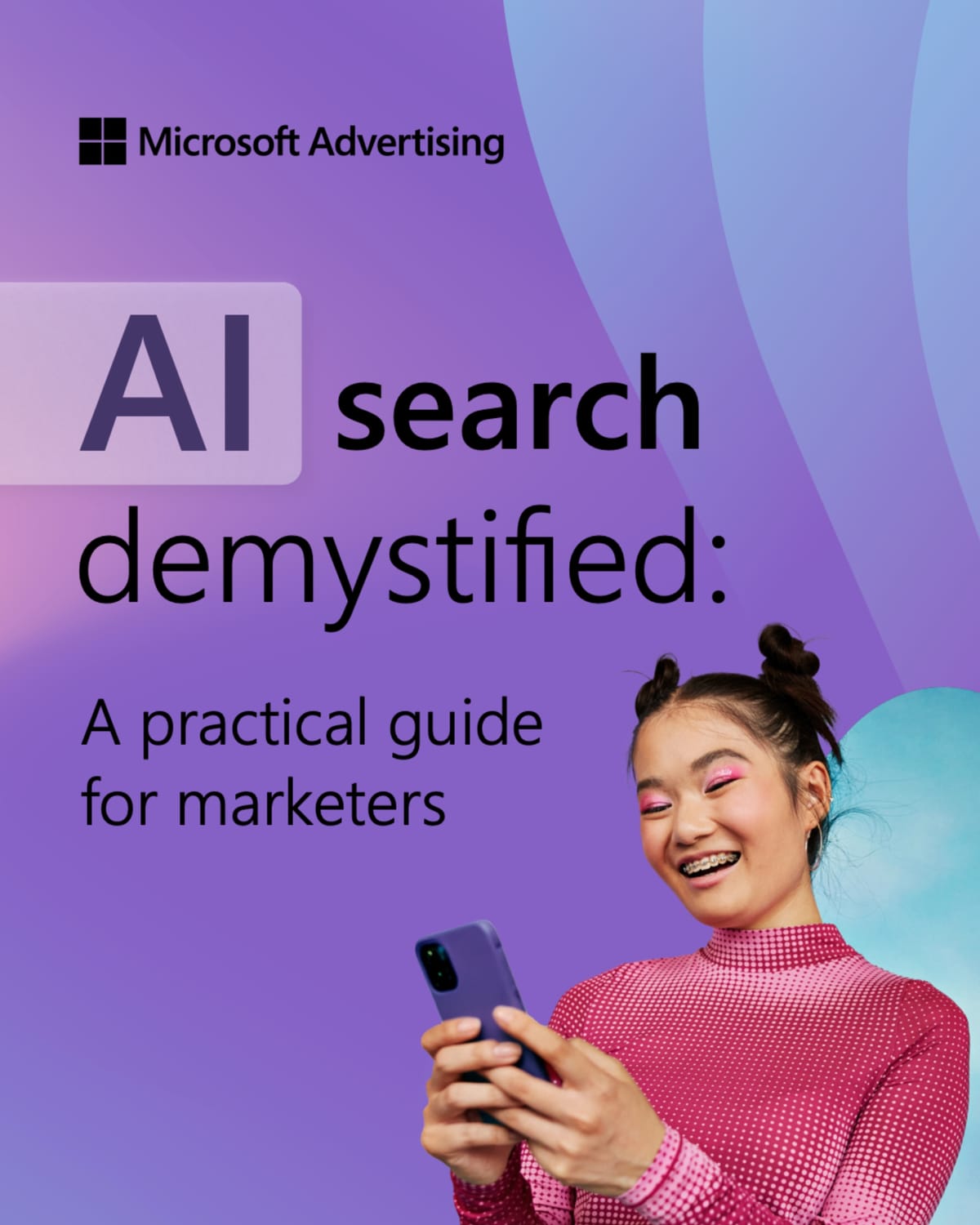
Microsoft Advertising this week released an updated edition of its AI marketer's guide, providing marketers with a comprehensive blueprint for navigating artificial intelligence-powered search environments where traditional keyword optimization no longer determines brand visibility. The announcement, made February 11, 2026, reflects feedback from industry events, client discussions, and partner conversations throughout early 2026 where marketers consistently requested clarity on maintaining visibility and effectiveness in rapidly changing AI landscapes.
The guide - titled "Understanding AI search: A guide for modern marketers" - represents an evolution from the company's previous publication "A Marketer's Guide to Chatbots and Agents: From Generative AI to ROI." Paul Longo, General Manager of AI in Ads at Microsoft Advertising, authored the updated playbook that addresses how AI assistants now operate with greater capability, enhanced context awareness, and increased ability to answer questions before users click any links.
According to the announcement, the shift from keywords to conversations continues accelerating at a pace unlike anything the industry has witnessed. Discovery patterns have fundamentally changed. Questions marketers pose now reflect both urgency and opportunity as AI-powered platforms reshape how queries are asked, answers are delivered, and brands appear throughout the process.
The updated guide dedicates substantial content to explaining large language models, the underlying technology powering modern generative AI tools. Understanding how these systems function becomes essential for comprehending Microsoft's visibility recommendations. The influx of generative AI tools and their accessibility stems largely from LLM capabilities, according to the document.
Microsoft explains how LLMs learn, what tasks they excel at performing, and how Retrieval Augmented Generation makes them more accurate and trustworthy. RAG represents a technical approach that grounds AI responses in verified information rather than relying solely on training data - a methodology that Microsoft positioned as foundational infrastructure powering nearly every major AI assistant in the market.
The technical explanations mark a departure from previous marketing guides that avoided deep dives into underlying AI architecture. Microsoft's approach reflects industry recognition that marketers must understand fundamental AI mechanics to optimize for these systems effectively.
Microsoft outlines two primary pathways for brands to appear in AI search experiences: paid placements and organic visibility. Some AI search platforms include advertising opportunities through sponsored answers or multimedia advertisements. Microsoft's advertising business crossed $20 billion in annual revenue as these AI-powered experiences gained traction across Bing and Edge browsers, demonstrating commercial viability of AI-integrated advertising formats.
When surfacing brands organically, AI systems assemble responses through a grounded process that unfolds across three distinct stages, according to the guide:
Baseline understanding involves trained knowledge that large language models acquired during their development. This represents the foundation AI systems draw upon when generating initial responses.
Grounded refinement incorporates retrieved web content that AI systems access to verify claims, update information, and enhance response accuracy beyond training data limitations.
Precision signals utilize structured, first-party data that provides definitive information about products, services, pricing, and availability directly from authoritative sources.
Each stage plays a distinct role in determining whether brands merit inclusion in AI-generated responses. The progression from broad trained knowledge through web retrieval to structured data reflects increasing precision and authority that AI systems require for confident brand recommendations.
The guide addresses whether Generative Engine Optimization represents an entirely new discipline or simply an extension of traditional Search Engine Optimization. Microsoft's answer acknowledges both perspectives hold validity.
Traditional SEO remains essential for visibility in AI search environments. Sites must rank well to be discovered, evaluated, and recommended by AI systems. However, GEO introduces requirements that extend beyond conventional SEO practices. The distinction between AEO and GEO centers on their respective optimization targets, according to Microsoft's January 2026 retailer playbook.
In the world of GEO, clarity encompasses not just word choice but how content is phrased, formatted, and punctuated for AI systems to recognize accurately. AI interpretation differs from human reading comprehension. Systems break content into chunks for analysis rather than evaluating entire pages as cohesive documents.
Microsoft illustrates these differences through concrete examples. Traditional SEO might describe a product as "waterproof rain jacket." Answer Engine Optimization expands this to "lightweight, packable waterproof rain jacket with stuff pocket, ventilated seams and reflective piping." GEO adds authoritative signals: "best-rated waterproof jacket by Outdoor magazine, no-hassle returns allowed for 180 days, three year warranty, 4.8 star rating."
The terminology itself has generated substantial industry discussion. SparkToro co-founder Rand Fishkin published criticism of search marketing acronym proliferation in May 2025, advocating against replacing SEO with alternatives including GEO, AIO, and LLMEO. Google's John Mueller issued warnings in August 2025 suggesting aggressive promotion of AI search optimization acronyms may indicate spam tactics.
Despite terminology debates, major platforms acknowledge the technical reality underlying GEO concepts. Content optimization for AI systems requires approaches distinct from traditional search engine optimization, regardless of the acronym used to describe these practices.
The updated guide incorporates contributions from industry experts actively shaping how brands adapt to AI-driven discovery patterns. Microsoft positions these perspectives as essential for creating what Longo describes as "a treasure trove of knowledge in this fascinating space."
Contributors include:
Aleyda Solis, International SEO Consultant and Founder of Orainti, who brings expertise in cross-border search optimization and technical SEO implementation across diverse markets.
Britney Muller, AI Consultant at Orange Labs, whose background spans technical SEO and machine learning applications in search technology.
Crystal Carter, Head of AI Search and SEO Communications at Wix, who specializes in translating complex AI search mechanics into actionable strategies for marketing professionals.
Lily Ray, Vice President of SEO Strategy & Research at Amsive, recognized for detailed analysis of search algorithm updates and their implications for organic visibility.
Michael King, Founder of iPullRank, who combines technical SEO with data science approaches to search optimization.
Myriam Jessier, SEO & Technical Brand Visibility Consultant at Pragm, focusing on European search markets and multilingual optimization strategies.
Pedro Bojikian, Senior Director of Product Marketing for Microsoft AI, providing internal platform perspective on how AI capabilities integrate with advertising products.
The breadth of contributors reflects Microsoft's positioning that successful AI search optimization requires synthesizing perspectives from technical SEO, AI research, platform development, and strategic marketing disciplines rather than relying on single-discipline expertise.
Microsoft acknowledges the landscape will continue changing. The company commits to evolving its guidance as AI search capabilities advance, sharing observations and providing practical, actionable insights marketers can implement immediately to achieve meaningful progress.
The focus throughout the updated guide emphasizes helping marketers understand how visibility is earned in AI-driven environments and how to influence it deliberately. This represents a shift from reactive adaptation toward proactive strategy as AI search adoption accelerates.
The timing of Microsoft's guide arrives as search advertising revenue growth slowed to 10% in the company's most recent quarter, marking the slowest quarterly growth rate for the search advertising segment since fiscal year 2024. Despite revenue deceleration, Microsoft continues investing heavily in AI-powered advertising infrastructure.
Performance metrics demonstrate significant improvements in advertising effectiveness when Copilot participates in user journeys. Microsoft reports doubled click-through rates compared to traditional search advertising placements, with a 53% increase in purchases when Copilot involvement occurs during customer journeys.
The updated guide addresses fundamental questions about how brands maintain visibility as consumer behavior shifts toward conversational AI interfaces. Mediaocean research published in November 2025 revealed 54% of marketers plan to increase investment in AI media compared to 47% planning to boost search advertising spend - marking the first time a nascent advertising channel has surpassed search in planned investment growth.
The shift reflects growing marketer interest in advertising on conversational AI platforms, despite the fact that most of these platforms have not yet formally launched advertising products. ChatGPT announced advertising tests starting in January 2026 for its 700 million weekly active users, ending months of speculation about OpenAI's monetization strategy.
Microsoft's guide provides marketers with technical frameworks for understanding how AI systems evaluate content quality, determine citation worthiness, and select brands for recommendation. The emphasis on structured data, comprehensive product information, and authoritative signals reflects broader industry movement toward optimizing for machine readability rather than human readability alone.
Marketers implementing AI search optimization strategies must balance traditional SEO foundations with emerging GEO requirements. Microsoft's exact match keyword priority in auction mechanics demonstrates that traditional search principles remain relevant even as AI-powered features transform user experiences.
The practical applications extend beyond search optimization. Performance Max campaigns incorporating AI-driven optimization demonstrate how automation capabilities interact with human strategic direction. Microsoft maintains that combining Performance Max with traditional search campaigns can deliver 32% decreases in cost-per-acquisition and threefold increases in return on ad spend on average.
Content strategy requires reconceptualization for AI environments. Marketing consultant frameworks categorizing modern search optimization into Answer Engine Optimization, Generative Engine Optimization, AI Integration Optimization, and Search Experience Optimization reflect industry recognition that single-dimensional SEO approaches no longer suffice.
The guide's publication timing coincides with Microsoft's development of grounding technology and introduction of Bing Webmaster Tools capabilities that provide publishers with visibility into how AI systems cite their content. These parallel developments indicate Microsoft's comprehensive approach to educating marketers while simultaneously building infrastructure for tracking AI search performance.
Microsoft makes the updated AI marketer's guide available for download through its advertising platform website. The document represents the company's latest effort to provide transparency around AI search mechanics and practical guidance for marketing professionals navigating this transformation.
The guide arrives as competitors including Google and Amazon deploy their own AI agent capabilities for automated campaign management. Amazon announced Ads Agent in November 2025, processing natural language instructions to execute complex advertising workflows across Amazon Marketing Cloud and Multimedia Solutions with Amazon DSP.
Marketing technology vendors similarly launched AI-powered capabilities throughout 2025. Meltwater introduced GenAI Lens in July 2025 for monitoring brand representation across ChatGPT, Claude, Gemini, and other AI platforms. Adobe released AI agents targeting B2B sales and marketing workflows in October 2025.
The proliferation of AI capabilities across advertising platforms reflects McKinsey data indicating $1.1 billion in equity investment flowed into agentic AI in 2024, with job postings related to this technology increasing 985% from 2023 to 2024. The consulting firm's Technology Trends Outlook 2025 identifies agentic AI as artificial intelligence systems capable of autonomous planning and execution.
Microsoft's updated guide positions the company as an educational resource for marketers confronting these rapid changes. Whether the approach proves more effective than competitors' technical documentation remains to be determined through market adoption and advertiser results. The guide's emphasis on practical implementation over theoretical concepts suggests Microsoft recognizes marketers require actionable frameworks rather than abstract AI discussions.
Who: Microsoft Advertising, through General Manager Paul Longo and contributions from industry experts including Aleyda Solis, Britney Muller, Crystal Carter, Lily Ray, Michael King, Myriam Jessier, and Pedro Bojikian.
What: Release of an updated edition of the AI marketer's guide titled "Understanding AI search: A guide for modern marketers" that explains how large language models work, how AI search surfaces brands through paid placements and organic visibility, and the differences between traditional SEO and Generative Engine Optimization. The guide introduces a three-stage brand surfacing process involving baseline understanding through trained knowledge, grounded refinement via retrieved web content, and precision signals from structured first-party data.
When: February 11, 2026, representing an evolution from the company's previous publication "A Marketer's Guide to Chatbots and Agents: From Generative AI to ROI" and reflecting feedback from industry events, client discussions, and partner conversations throughout early 2026.
Where: Available for download through Microsoft Advertising's platform website, targeting marketing professionals globally who manage campaigns across Bing search engine, Edge browser, and Copilot AI experiences.
Why: Marketers consistently requested clarity on maintaining visibility and effectiveness in rapidly changing AI landscapes where traditional keyword optimization no longer determines brand visibility. The guide addresses how AI assistants now operate with greater capability, enhanced context awareness, and increased ability to answer questions before users click any links, fundamentally changing discovery patterns and requiring new optimization approaches that balance traditional SEO foundations with emerging GEO requirements.