
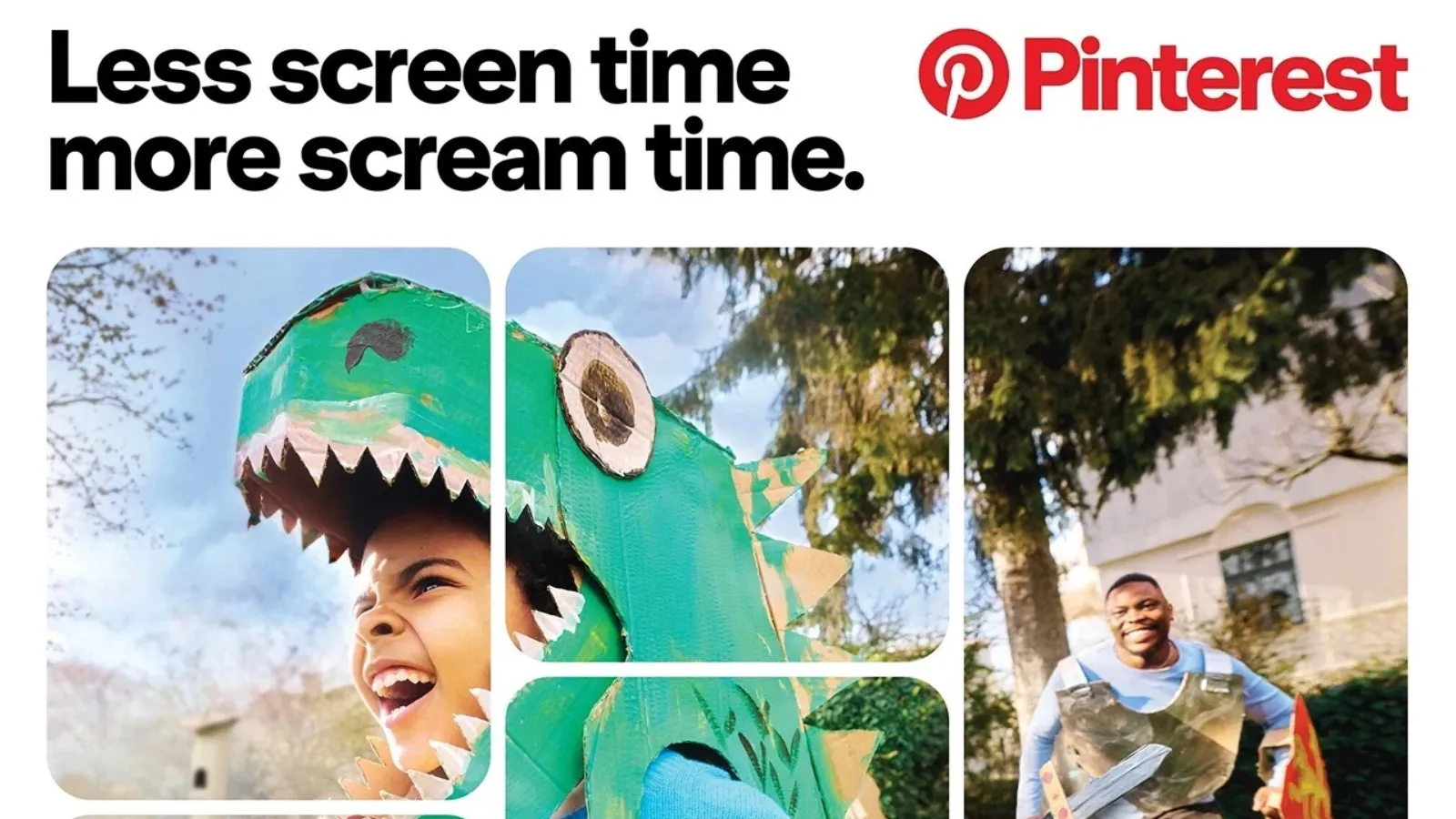

Pinterest launched its most ambitious paid media campaign on May 1, 2026, framing the platform's fundamental design philosophy as a direct contrast to what its chief marketing officer described as platforms "engineered to keep you scrolling through other people's lives." The campaign, titled as a global brand effort, spans television, connected TV, out-of-home, digital, social channels, and cinema placements - a media mix that signals the scale of investment Pinterest is prepared to make as it works to attract advertisers seeking audiences with documented purchasing intent.
The campaign and what it argues
The core message is simple, almost confrontational. According to the Pinterest Newsroom announcement published on May 1, 2026, the campaign "calls out the cost of being constantly online and offers a different path forward." That framing matters beyond the creative itself. It is a deliberate positioning move against the broader social media category at a moment when platform trust and teen wellbeing have become live regulatory and reputational issues for the industry.
Claudine Cheever, Chief Marketing Officer at Pinterest, stated the argument directly in the announcement. "Most platforms are engineered to keep you scrolling through other people's lives. Pinterest is engineered to get you off the app and into yours," Cheever said. "That's a fundamentally different value proposition, and this campaign is our boldest statement of that yet. We're not just launching creative, we're making a case for what the internet should actually be."
The statistical backdrop that Pinterest cites to justify that argument is grounded in teen usage data. According to the announcement, nearly half of U.S. teens now say they spend too much time on social media, with many saying it has a negative effect on people their age. That number is notable because it comes from users, not external critics - a self-reported dissatisfaction that the platform is attempting to turn into a differentiator.
The anthem film and creative approach
The campaign launches with a 60-second anthem film titled "How did they do it?", produced entirely in-house by Pinterest's House of Creative. According to the announcement, the film features old home movies and photos submitted by Pinterest employees from their personal family archives. The choice to use employee-submitted material rather than commissioned footage is structurally significant: it is an attempt to root the campaign's nostalgic argument in real documentation rather than staged imagery.
The film debuted in April 2026, one month before the global campaign launch on May 1, 2026. That staggered release allowed the anthem to circulate before the broader paid media activation began. The strategy follows a pattern used by brands building narrative momentum ahead of a heavier media buy - letting the film accumulate organic attention before paid placements amplify reach.
Additional films, creative materials, and out-of-home assets are set to roll out throughout 2026. The campaign was developed in partnership with media agency Mediahub. Placements include TV, connected TV, out-of-home, digital, and social channels, described in the announcement as Pinterest's most ambitious paid media campaign to date. In cinema, Pinterest secured an exclusive "Silence your Phones" courtesy message position at major premieres - a placement that puts the brand name in front of audiences at a moment of undivided attention.
Out-of-home execution and the Pin grid
In major cities across the United States and the United Kingdom, Pinterest is running an out-of-home campaign built around the platform's iconic Pin grid visual format. According to the announcement, the grid reveals how each saved Pin translates to something lived offline rather than observed passively online. That conceptual link between the product's core mechanic - saving images to boards - and the campaign's broader argument about offline life represents an attempt to make the advertising execution coherent with what the platform actually does.
The headlines running across the outdoor creative include "It's about life, not likes," "Less URL. More IRL.," "Live vicariously through you," and "A better feed that feeds the soul." Each tagline is constructed around the same structural idea: that time spent on Pinterest results in something tangible, while time spent on other platforms produces only passive consumption. Whether that argument lands with consumers will depend heavily on whether the platform's actual usage patterns support it.
Context: 619 million users and a platform betting on intent
The scale of the campaign is inseparable from the commercial context. Pinterest reached 619 million monthly active usersas of early 2026, handling more than 80 billion searches per month, half of which the company describes as commercial in nature. Those numbers matter to advertisers because they indicate the presence of purchasing intent rather than passive browsing - a claim Pinterest has been building its advertiser proposition around for several years.
Revenue tells a complementary story. Pinterest reached 600 million users and $1.049 billion in quarterly revenue in Q3 2025, up 17% year-over-year, with particular strength in international markets - Europe up 41% and rest of world up 66% in the same period. That growth trajectory gives the company the financial foundation to run a campaign of this scale while still investing in advertising product development.
The platform's positioning as a "positive" environment has been central to its pitch to advertisers for years. A YouGov study cited in Pinterest's 2025 Men's Trend Report found that over 75% of young men expressed concern about social media's impact on their health, while 65% of men globally said they want to express their authentic selves online. The new brand campaign scales that argument to the platform's widest possible audience.
Advertising products that follow the same logic
The brand campaign is running alongside an expanding suite of advertising tools that also reflect the platform's intent-first thesis. In March 2026, Pinterest launched Promote a Pin, a self-serve feature allowing creators and small businesses to boost content without prior advertising knowledge, using the platform's Taste Graph AI system to handle targeting automatically. The Taste Graph is trained on billions of images, videos, and text to power recommendation systems across the platform.
Before that, in September 2025, Pinterest introduced Top of Search ads, which appear directly within the top ten search results. Internal testing showed those ads achieved a click-through rate 29% higher than standard campaigns, with a 32% higher likelihood of attracting users who had not previously engaged with a brand. Wayfair participated in early testing and reported a 237% increase in click-through rate over two weeks compared to standard campaign performance.
The platform has also been expanding programmatic access. Pinterest extended its authorized seller relationships through Index Exchange and Criteo in January 2025, broadening the range of demand-side platforms through which advertisers can reach Pinterest inventory. The pattern - expanding access while simultaneously raising brand awareness - reflects a dual-track growth strategy.
December 2025 brought two further developments. Pinterest reached a definitive agreement to acquire tvScientific, a connected TV advertising platform specializing in performance measurement, in a deal expected to close in the first half of 2026. And Mozilla-owned Anonym announced a measurement partnership with Pinterest, enabling advertisers to run conversion lift studies without transferring first-party data to the platform - the same architecture Anonym had applied previously to Snap, TikTok, and later Reddit.
What the media mix signals to the advertising market
The decision to anchor the campaign in television, connected TV, and cinema - rather than spending primarily on social and digital placements - carries its own message to the advertising community. Pinterest is demonstrating that it is willing to allocate budgets to channels it does not own, including CTV, where it is still building infrastructure through the tvScientific acquisition. The agency partnership with Mediahub for the paid media execution places the buy in the hands of an independent agency rather than managing it in-house, a structure that gives the campaign access to cross-platform buying expertise.
For marketers considering Pinterest as an advertising channel, the campaign raises practical questions about how the platform's positioning translates into campaign performance across different funnel stages. Pinterest's own data shows Performance Plus campaigns driving 24% higher conversion lifts compared to manual optimization approaches, and shopping ads growing from 9% of international revenue in September 2023 to 30% by Q3 2025. Those numbers suggest the conversion argument is gaining traction among advertisers, not just among users.
The out-of-home placements in the US and UK also reflect a geographic priority. Pinterest's domestic advertising business has historically been the stronger contributor to revenue, though international markets have grown faster on a percentage basis. Concentrating the most visible elements of the campaign in those two markets reflects where the advertiser base is most developed and where brand messaging is likely to generate the greatest commercial return.
The tariff context and what it means for the campaign timing
The campaign launches against a challenging moment for Pinterest's advertising business. A federal securities class action filed in March 2026 alleged that Pinterest executives misled investors about the platform's ability to withstand tariff-related pressure on its advertising revenue. The lawsuit, covering a class period from February 7, 2025, to February 12, 2026, centres on the claim that revenue from major retail partners - a "substantial portion" of Pinterest's total advertising income - deteriorated as large U.S. retailers pulled back spend in response to tariff-driven margin pressure.
Pinterest generates substantially all of its revenue from advertising, and a substantial portion of that revenue comes from a small number of advertisers in retail and consumer packaged goods categories. That concentration creates vulnerability when those categories reduce spending. A brand campaign that argues for Pinterest's unique value as an intent-rich platform - distinct from social media competitors - serves simultaneously as a consumer message and as a signal to advertisers that the platform is investing in long-term differentiation, not pulling back.
Whether the campaign resolves the underlying advertiser concentration risk is a separate question. Brand awareness activity does not directly address revenue shortfalls from specific advertiser categories. But it does establish a narrative framework - inspiration leading to action, offline living as the ultimate product - that could support a broader diversification of the advertiser base over time, moving beyond the retail and CPG concentration that the lawsuit identifies as a structural vulnerability.
Timeline
- February 23, 2024 - Pinterest launched "The P is for Performance" advertiser campaign, a B2B effort targeting advertisers with action-film creative. PPC Land coverage
- January 28, 2025 - Pinterest expanded programmatic access through partnerships with Index Exchange and Criteo, broadening DSP access to Pinterest inventory. PPC Land coverage
- July 8, 2025 - Pinterest released its first Men's Trend Report, citing YouGov data that 75% of young men are concerned about social media's impact on their health. PPC Land coverage
- September 25, 2025 - Pinterest announced Top of Search ads in beta, achieving 29% higher click-through rates than standard campaigns during testing. PPC Land coverage
- October 16, 2025 - Pinterest introduced user controls for generative AI content across beauty, art, fashion, and home decor categories. PPC Land coverage
- November 4, 2025 - Pinterest reported Q3 2025 results: 600 million monthly active users and $1.049 billion revenue, up 17% year-over-year. PPC Land coverage
- November 17, 2025 - Pinterest and Retail Week survey found 52% of UK consumers struggle to describe products they want, underpinning the platform's visual search strategy. PPC Land coverage
- December 9, 2025 - Pinterest published its Pinterest Predicts 2026 report identifying 21 emerging consumer trends based on global search data. PPC Land coverage
- December 11, 2025 - Pinterest reached a definitive agreement to acquire tvScientific, a CTV performance advertising platform, with the deal expected to close in the first half of 2026. PPC Land coverage
- January 15, 2026 - Pinterest published its 2026 Marketing Moments Guide covering seasonal campaign planning data for advertisers. PPC Land coverage
- March 24, 2026 - Pinterest launched Promote a Pin, a self-serve feature for creators and small businesses to boost content without advertising experience. PPC Land coverage
- March 30, 2026 - A federal securities class action was filed against Pinterest, CEO William Ready, and CFO Julia Brau Donnelly, alleging concealment of tariff-driven ad revenue declines. PPC Land coverage
- April 2026 - The 60-second anthem film "How did they do it?" debuted ahead of the global campaign launch.
- May 1, 2026 - Pinterest launched its global brand campaign, described as the platform's most ambitious paid media campaign to date, developed with Mediahub and spanning TV, CTV, OOH, digital, social, and cinema placements in the US and UK.
Summary
Who: Pinterest, the visual discovery platform with 619 million monthly active users, with campaign execution led by Chief Marketing Officer Claudine Cheever and developed with media agency Mediahub.
What: A global brand campaign anchored by a 60-second in-house anthem film titled "How did they do it?", supported by TV, connected TV, out-of-home, digital, social, and cinema placements, including exclusive "Silence your Phones" courtesy messages at major cinema premieres. The out-of-home creative in the US and UK uses Pinterest's Pin grid format with taglines including "It's about life, not likes" and "Less URL. More IRL."
When: The campaign launched on May 1, 2026. The anthem film debuted in April 2026 ahead of the global launch. Additional creative assets are scheduled to roll out throughout 2026.
Where: The campaign has high-impact placements across TV, CTV, OOH, digital, and social channels globally, with out-of-home activations concentrated in major cities in the United States and the United Kingdom.
Why: Pinterest is making an explicit argument that its platform is structurally different from social media competitors - designed to move users from digital inspiration to offline action rather than maximising time spent on the platform. The campaign supports a commercial agenda of growing the advertiser base and diversifying beyond retail and CPG concentration at a moment when tariff-related pressures on those categories have created documented revenue headwinds for the platform.


Discussion