
Smartly signs LOI to buy INCRMNTAL, adding always-on incrementality
Smartly signed a letter of intent on March 16, 2026, to acquire INCRMNTAL, an AI-powered incrementality platform that measures marketing impact without user-level data.

Smartly signed a letter of intent on March 16, 2026, to acquire INCRMNTAL, an AI-powered incrementality platform that measures marketing impact without user-level data.
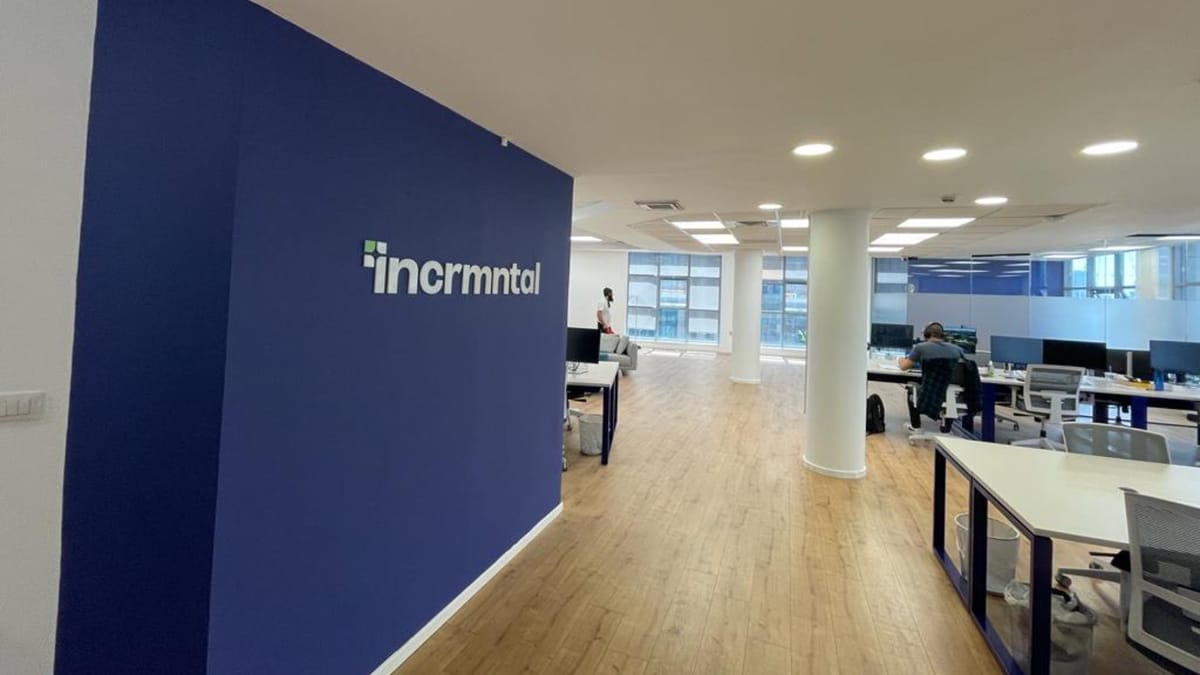
Smartly signed a letter of intent to acquire INCRMNTAL, a Tel Aviv-based marketing measurement company that uses AI and causal inference to quantify the incremental value of advertising spend without relying on user-level data or tracking. The announcement, dated March 16, 2026, was made from New York and marks the most direct expansion of Smartly's measurement capabilities since the company began its push into artificial intelligence-led advertising orchestration.
The deal has not yet closed. A letter of intent - sometimes referred to as an LOI - is a non-binding document that signals an intention to proceed toward a formal acquisition agreement, subject to due diligence, negotiation, and customary closing conditions. Financial terms were not disclosed in the announcement.
Smartly describes itself as an AI-powered advertising technology company that unifies creative and media workflows for brands managing campaigns across social, commerce, and connected television. According to the company, it supports more than 800 brands and manages over $7 billion in advertising spend globally. Smartly holds strategic partnerships with Amazon, Google, Meta, Pinterest, Reddit, Snap, Spotify, and TikTok, and is ranked as the leader in The Forrester Wave: Creative Advertising Technologies. PwC-validated results cited in Smartly's materials include a 5.5x return on ad spend and 42 minutes saved every hour of campaign management.
INCRMNTAL was founded in 2020 - and lists 2021 as its founding year on LinkedIn - by Maor Sadra and Moti Tal, both described as industry veterans. The company employs between 11 and 50 people and is headquartered in Tel Aviv. Its LinkedIn page carries around 4,000 followers and lists the company as certified under ISO/IEC 27001:2022, an internationally recognized standard for information security management. Customers named in company materials include Hopper, eToro, Binance, Autoscout24, Huuuge Games, and SEGA. Roku also cited INCRMNTAL as a measurement partner in its Q4 2025 earnings disclosures published on PPC Land, listing it alongside iSpot and AppsFlyer as part of Roku's measurement and performance capability scaling.
The INCRMNTAL platform is built around always-on incrementality measurement - a design choice that distinguishes it from traditional experimental approaches. Standard incrementality testing, as practiced by platforms such as Google and Meta, typically requires advertisers to create holdout groups, pause portions of their media activity, or run controlled experiments that interrupt normal campaign operations. Google reduced the minimum budget required for its own incrementality testing to $5,000 in May 2025, using Bayesian statistical methodology to make experiments more accessible. But even at that threshold, the approach still involves experimental design and audience exclusion.
INCRMNTAL takes a different path. According to the company's materials, its AI-powered methodology analyzes natural fluctuations in campaign activity rather than forcing marketers to exclude audiences, pause campaigns, or design formal experiments. The platform uses reinforcement learning and causal AI to isolate incremental signal from organic variation in spend and performance data. This means it can, in theory, run continuously alongside live campaigns without disrupting them.
The platform is described as privacy-centric by design. It does not require user-level data to operate and does not receive or process sensitive personal information about individual users. This positions it alongside a growing category of measurement tools that have gained traction as third-party tracking has become harder to rely on - including marketing mix modeling platforms like Google's open-source Meridian and proprietary models like the one introduced by Prescient AI in July 2025.
INCRMNTAL measures impact across a wide range of media channels: mobile, web, TV and CTV, influencer marketing, out-of-home and digital out-of-home, audio, and podcasts. That breadth is notably wider than many point solutions, which tend to focus on a specific channel or environment. The company positions its solution as complementary to, rather than a replacement for, marketing mix modeling (MMM) and multi-touch attribution (MTA) - the two most established measurement methodologies in the industry.
The context for this acquisition is a measurement environment that has become considerably more difficult over the past several years. Privacy regulations across Europe and the United States have constrained the availability of user-level tracking. Apple's App Tracking Transparency framework, introduced in 2021, removed a major source of deterministic signal from mobile advertising. The deprecation of third-party cookies, though delayed repeatedly, has pushed marketers toward probabilistic and aggregate approaches.
The results have not always been satisfactory. Research from TransUnion and EMARKETER released in October 2025 found that 54.1% of marketing professionals reported no change in measurement confidence year-over-year, while 14.3% said confidence had actually declined. When asked about their most pressing measurement challenges, 67.4% of respondents identified proving incremental ROI to justify spend - the single highest priority, ahead of cross-channel attribution accuracy at 55.1%.
Those numbers illustrate a structural gap. Marketers are being asked to demonstrate the real business effect of each dollar spent, but the tools available to them have historically made that difficult. Last-touch attribution - the practice of assigning full credit for a conversion to the last advertising touchpoint before purchase - has been widely criticized as a distorting methodology. An agency CEO even launched a public apology campaign in November 2025 for having reported inflated ROAS figures derived from exactly this kind of attribution. As that article noted, research from Kochava had shown that marketing mix modeling revealed 35% higher incremental impact for TikTok campaigns compared to last-touch attribution reporting.
Industry bodies have responded. The IAB and IAB Europe published frameworks on incrementality in commerce media in September and November 2025, defining incrementality as the causal impact of marketing - the additional business outcomes directly driven by a campaign compared to what would have occurred without marketing activity. The frameworks distinguish incrementality from attribution and return on ad spend calculations, which show outcomes rather than causality. That definitional clarity matters because it places incrementality in a category of its own: one focused on causation, not correlation.
According to the announcement, the planned integration will translate INCRMNTAL's incrementality signals directly into Smartly's planning and optimization workflows. The intent, as described, is to connect measurement output to media decision-making in real time - so that budget allocation decisions across social, commerce, and CTV channels can be informed by incrementality data rather than solely by attribution reports.
Laura Desmond, CEO of Smartly, said in the announcement: "Marketing leaders today are demanding better measurement for performance and accountability. Incrementality is becoming increasingly important in a world where traditional approaches are challenged to move at the speed of AI and the changing consumer journey. With INCRMNTAL, Smartly enables marketers to connect what's happening in their business outcomes in real time with how they optimize media, creative, and campaigns, so they can see performance as it happens and take immediate action."
That framing - connecting measurement to action rather than treating them as sequential steps - is significant. Most measurement platforms produce outputs that advertisers then interpret and act on manually, often with a delay of days or weeks. Integrating incrementality signals into live optimization creates a shorter feedback loop, though the technical details of how that integration will function within Smartly's existing platform were not specified in the announcement.
The INCRMNTAL acquisition attempt fits into a broader pattern of activity at Smartly over the past twelve months. The company opened a Mexico City hub in March 2026 for product, engineering, and commercial teams, joining a network of 17 regional offices. In March 2026, it announced an integration with Amazon DSP extending AI-powered creative optimization to Prime Video, Fire TV, and third-party publisher inventory. Before that, in November 2025, the company introduced two AI-powered creative intelligence products - Creative Predictive Potential and Creative Insights - using computer vision and eye-tracking models to evaluate attention patterns before campaigns launch.
In October 2025, Smartly appointed three senior executives simultaneously: Maxwell Tang as Chief Product Officer, Melissa Yang as SVP of Ecosystems and AI Applications, and Julie Green as SVP of Global Customer Success. Those hires drew from Etsy, TikTok, Netflix, Amazon, and Meta. A September 2025 integration with Spotify Ads Manager extended the platform into audio, completing a channel footprint that now spans social, commerce, audio, and connected television.
The advertising spend figure Smartly manages has grown alongside this activity. Earlier announcements cited $6 billion; the current figure in today's announcement is over $7 billion. The managed spend trajectory reflects both client retention and the addition of new brands, though the company has not broken down growth by channel or geography in its public statements.
Acquisitions of measurement companies by advertising technology platforms are not new, but they have accelerated as the industry has grappled with the limits of attribution. Measurement is increasingly being treated as infrastructure embedded within campaign management rather than a separate analytical layer accessed after the fact.
Marketing measurement confidence has stalled despite data growth. Nearly 27% of respondents in the TransUnion and EMARKETER study expressed dissatisfaction with their current measurement technology stack. The most popular methodology in use remained platform-provided attribution at 65.8%, but marketers supplemented it with incrementality testing (52.0%) and marketing mix modeling (49.5%). Investment plans pointed in the same direction: 46.9% of respondents planned to increase spending on MMM over the next 12 months.
For advertising technology companies, owning a measurement layer creates product stickiness. If incrementality signals flow directly into budget optimization within a platform, the measurement tool becomes difficult to separate from the campaign management workflow. That integration logic may be as commercially important as any technical measurement advantage.
The French digital advertising trade group Alliance Digitale published a 57-page white paper in January 2026 recommending that marketers combine attribution and contribution approaches - including MMM, incrementality testing, and unified marketing measurement. The guidance reflects a growing consensus: no single methodology provides a complete picture, and the platforms that can house multiple approaches in one environment gain a structural advantage.
Whether the Smartly-INCRMNTAL combination delivers on that promise depends on how deeply the integration is executed and whether the always-on methodology holds up at scale across the diverse channel mix Smartly's 800-plus brands operate in.
Who: Smartly, a New York-based AI-powered advertising technology company managing over $7 billion in global ad spend for 800-plus brands, and INCRMNTAL, a Tel Aviv-based AI incrementality measurement platform founded by Maor Sadra and Moti Tal and employing 11 to 50 people.
What: Smartly signed a letter of intent to acquire INCRMNTAL. The deal, if completed, will integrate INCRMNTAL's always-on incrementality measurement - which uses causal AI and reinforcement learning to quantify the real business impact of advertising without user-level data - directly into Smartly's platform for planning and real-time optimization across social, commerce, and CTV channels.
When: The letter of intent was signed on March 16, 2026. The transaction has not yet closed, and financial terms were not disclosed.
Where: Smartly is headquartered in Helsinki and operates from New York as a commercial hub. INCRMNTAL is headquartered in Tel Aviv, Israel. The announcement was issued from New York.
Why: Measurement has become one of the central challenges in digital advertising as privacy regulations and tracking restrictions have eroded the reliability of user-level attribution. Incrementality - measuring the causal effect of advertising relative to what would have happened without it - is increasingly seen as a more defensible methodology. Smartly is seeking to embed that capability inside its campaign management platform so that measurement signals can inform real-time budget decisions, rather than being reviewed separately after campaigns have run.