
VIOOH and JCDecaux bring 32% of Ireland's digital OOH to programmatic
VIOOH and JCDecaux Ireland today announced a programmatic DOOH partnership giving buyers access to 288 screens, 311 million monthly impressions and 32% of the Irish market.

VIOOH and JCDecaux Ireland today announced a programmatic DOOH partnership giving buyers access to 288 screens, 311 million monthly impressions and 32% of the Irish market.
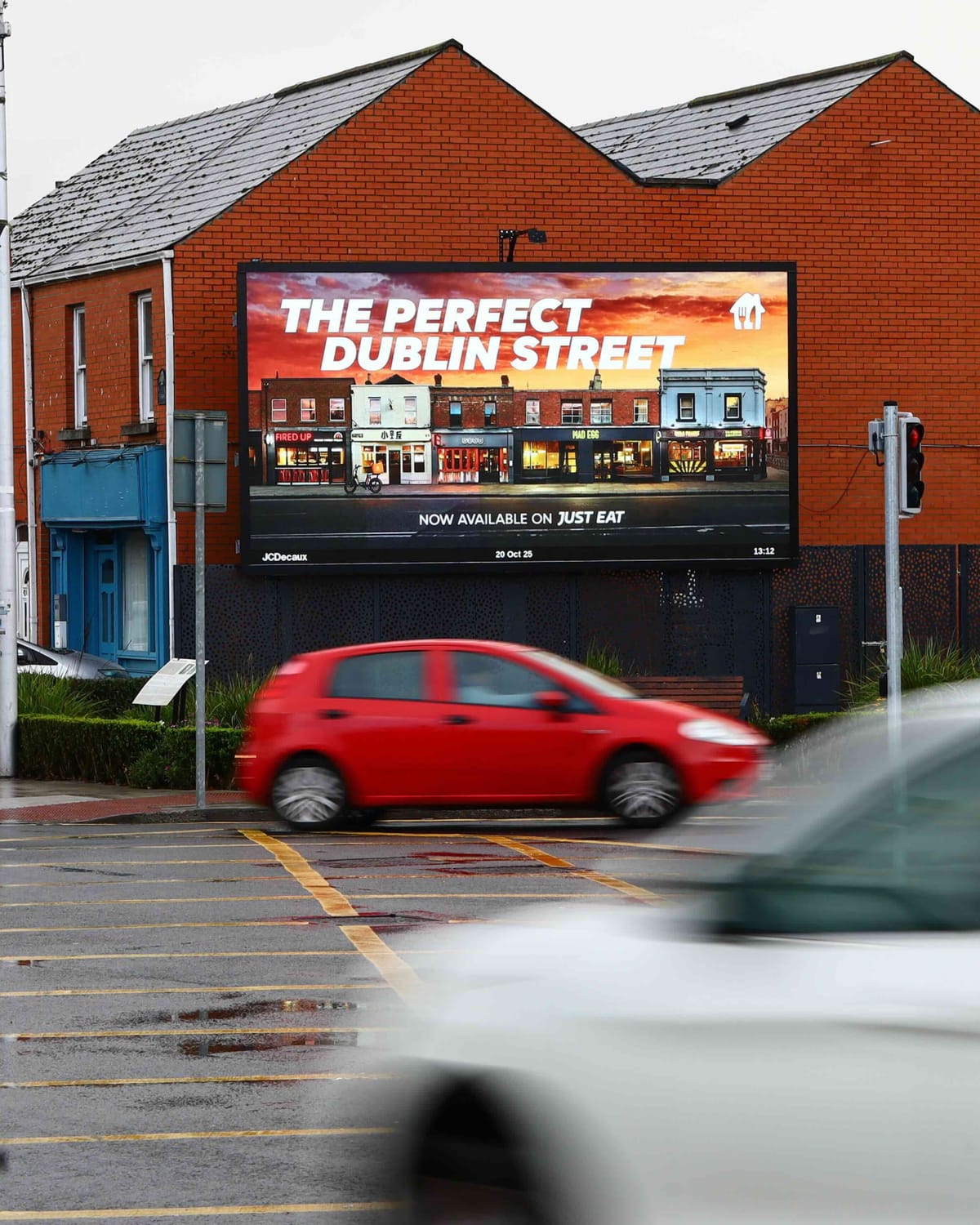
VIOOH today announced a strategic partnership with JCDecaux Ireland, opening 32% of the Irish digital out-of-home market to programmatic buyers for the first time. The deal, announced on 24 February 2026, connects 288 digital screens across the Republic of Ireland and Northern Ireland to VIOOH's global supply-side platform, generating 311 million monthly viewable impressions in aggregate.
The scale of the agreement is notable. A single partnership now places nearly a third of Ireland's entire digital out-of-home inventory within reach of automated buying systems - a threshold that would have been considered ambitious even two years ago. The Irish market has not previously appeared prominently in VIOOH's documented global expansion, making this its first major publicly confirmed integration on the island of Ireland.
The 311 million monthly impressions are distributed across three distinct environment categories, each serving different audience contexts and campaign objectives.
Roadside formats account for the largest share, delivering 191.6 million monthly impressions. This segment spans Digipanels, Digipoles, Billboards, and the Digi48 and Digi96 large-format units - screen types positioned along arterial roads and high-traffic corridors where dwell time is measured in seconds and reach depends on frequency across daily commuter patterns.
Mall and shopping centre placements contribute 91.3 million monthly impressions through iVision and MVision screens. These formats operate inside enclosed retail environments where audience attention characteristics differ significantly from roadside exposure: consumers are stationary, often in a browsing mindset, and more likely to act on proximity-based messaging. The extended exposure window in a mall concourse versus a roadside billboard represents a fundamentally different advertising context, though both are now accessible through the same programmatic infrastructure.
Retail environments, including Tesco stores, add a further 28.1 million monthly impressions. The inclusion of supermarket locations introduces a point-of-purchase dimension: advertisers can reach consumers in the final stages of a purchasing decision. National coverage combined with city centre locations means this segment serves both broad reach and precise targeting objectives simultaneously.
Geographic coverage extends across Dublin, Cork, Limerick, Galway, Waterford, Belfast and Derry. The inclusion of both Belfast and Derry places Northern Ireland within scope alongside the Republic, creating a genuinely all-island programmatic offering. For advertisers planning campaigns that span the island rather than treating the two jurisdictions separately, this removes a logistical barrier that previously required separate negotiations with media owners in different regulatory environments.
Buyers access JCDecaux Ireland's inventory through the VIOOH Trading Manager platform, which connects to more than 50 demand-side platforms globally. According to VIOOH's published data, the platform currently trades programmatically in 35 markets. This means an agency executing a European or global DOOH campaign can incorporate Irish inventory using the same workflows, bidding infrastructure and reporting systems it applies to markets including the United Kingdom, Germany, Poland and Brazil - without establishing a separate direct sales relationship with JCDecaux Ireland.
The technical mechanics follow standard programmatic DOOH protocols. Advertisers bid on available impressions in real-time, with campaign delivery optimised against audience and performance signals as the campaign runs. Targeting options include environment type, geography, time of day, and audience data integrations available through connected demand-side platforms. Campaigns can be adjusted mid-flight rather than locked into static media plans weeks in advance.
"JCDecaux Ireland's diverse network gives advertisers exceptional flexibility to reach audiences across multiple environments, from high-traffic roadside locations to engaged shoppers in retail settings," said Gavin Wilson, Global Chief Commercial Officer at VIOOH. "With nearly a third of Ireland's DOOH market now accessible programmatically through the VIOOH Trading Manager platform, brands can build sophisticated cross-environment campaigns with the targeting precision and real-time optimisation that programmatic delivers."
Pat Mannion, Commercial Director at JCDecaux Ireland, framed the agreement as a shift in how buyers access the company's premium inventory. "This partnership with VIOOH represents an important evolution in how advertisers can access our premium DOOH inventory," Mannion said. "VIOOH's programmatic platform opens our network to a global marketplace of buyers, bringing advanced targeting capabilities and campaign flexibility to our roadside, retail and shopping environments. Advertisers can now plan and execute campaigns across Ireland with greater efficiency and precision than ever before."
The Ireland announcement fits a pattern of accelerating geographic and inventory-type expansion that VIOOH has pursued throughout 2024 and 2025. The company launched programmatic access to London Lites' 49 screens in October 2025, representing 23% of London's roadside digital out-of-home market and generating 74.5 million monthly impressions - a scale notably smaller than the Irish deal announced today. Polish media owner Jet Line's MORE network of 600-plus screens across eight cities joined the platform in January 2026, adding Central European inventory under the same programmatic infrastructure.
Further afield, VIOOH's partnership with RZK Digital in Brazil in November 2025 introduced urban transit terminal inventory - a different format class compared to the roadside and retail environments in Ireland. The Vengo partnership announced in August 2025 brought over 65,000 US screens generating 13 billion monthly impressions to the platform, representing 9% of the US digital out-of-home market. In January 2026, VIOOH integrated more than 60,000 streaming television screens in bars, gyms and hospitality venues across the United States through a partnership with Atmosphere TV, extending the platform beyond traditional outdoor formats entirely.
The pace of these integrations points to a supply-side platform strategy centred on market share accumulation ahead of a possible consolidation phase in programmatic DOOH infrastructure. Each new partnership adds unique inventory types and geographies to the addressable universe for any buyer already connected to VIOOH's platform - increasing the platform's value to existing demand-side platform partners without requiring them to establish new technology connections.
JCDecaux itself has been moving aggressively toward programmatic monetisation across its global estate. According to JCDecaux's 2024 annual results published in March 2025, programmatic advertising revenues grew by 45.6% in 2024, reaching €145.9 million and representing 9.5% of the group's total digital revenue. The VIOOH supply-side platform was connected to 46 demand-side platforms across 24 countries at the time of that reporting.
JCDecaux India launched programmatic capabilities at Kempegowda International Airport Bengaluru through VIOOH in August 2025, with 64 screens and 41 million monthly impressions. JCDecaux Middle East deployed programmatic infrastructure at Dubai International Airport in February 2025, covering 378 screens across departures and arrivals. A global programmatic airport advertising offer, launched in February 2024, provides access to over 70 million monthly passengers and 2 billion impressions across 3,000 JCDecaux airport screens worldwide.
The Ireland partnership extends this pattern to a market-wide scale rather than a single venue or network. Rather than integrating one airport's screens, this deal encompasses roadside, retail and mall formats across an entire country, providing coverage across both major urban centres and regional environments simultaneously.
VIOOH was originally launched by JCDecaux in 2018, initially trading in the UK and US, with JCDecaux holding a 93.5% ownership stake alongside data specialist Veltys at 6.5%. The Ireland deal therefore also represents a JCDecaux entity feeding premium national inventory into a supply-side platform that JCDecaux itself controls - a vertically integrated arrangement that has become the structural template for JCDecaux's programmatic strategy globally.
For media planners and programmatic buyers, the practical implication is straightforward: Irish DOOH inventory is now accessible through existing programmatic workflows without additional direct integrations. A brand executing a multi-market European digital campaign can incorporate Dublin roadside, Belfast retail and Galway mall locations within a single programmatic buying interface.
The 311 million monthly impressions across 288 screens represent significant scale for a market of Ireland's size. For comparison, JCDecaux's Q3 2025 results showed programmatic revenue grew 12.3%, accounting for 10.8% of digital out-of-home revenue group-wide - suggesting that while programmatic growth is substantial, direct sales continue to dominate. The Irish market's entry into VIOOH's marketplace positions it for a similar trajectory.
VIOOH's environmental reporting published in November 2025 indicates the platform generates 0.041 grams CO2e per ad impression - more than 20 times more carbon efficient than programmatic display advertising at 0.84g CO2e per impression. For advertisers incorporating sustainability metrics into media planning, this characteristic applies to Irish inventory as it does across VIOOH's other markets.
The cross-border dimension of the partnership - spanning both the Republic of Ireland and Northern Ireland across a single programmatic integration - may also prove practically relevant for advertisers that previously separated these markets in their planning. A single campaign can now achieve national Irish coverage programmatically, something that required separate direct negotiations on both sides of the border before this agreement.
Who: VIOOH, a global supply-side platform for programmatic digital out-of-home advertising launched in 2018 and majority-owned by JCDecaux, and JCDecaux Ireland, the leading outdoor advertising company in the Irish market.
What: A strategic partnership making 288 digital screens across the Republic of Ireland and Northern Ireland available through VIOOH's programmatic marketplace, generating 311 million monthly viewable impressions across roadside (191.6 million), mall and shopping centre (91.3 million) and retail (28.1 million) environments - representing 32% of Ireland's digital out-of-home market.
When: Announced on 24 February 2026, from London.
Where: Screens span Dublin, Cork, Limerick, Galway, Waterford, Belfast and Derry, covering both the Republic of Ireland and Northern Ireland. Access is managed globally through VIOOH's Trading Manager platform, connected to more than 50 demand-side platforms worldwide.
Why: The partnership enables programmatic buyers to incorporate Irish DOOH inventory into multi-market automated campaigns without establishing separate direct sales relationships. For JCDecaux Ireland, it opens a global marketplace of buyers to its existing network. For VIOOH, it continues a documented strategy of aggregating national and regional DOOH inventory across markets to increase the value of its global supply-side platform to connected demand-side platform partners.