
Google increases local pack ads by 733% in three months
Google's local pack ads surged from less than 3% to 22% of tracked mobile keywords between November 2025 and January 2026, marking unprecedented change in search results.

Google's local pack ads surged from less than 3% to 22% of tracked mobile keywords between November 2025 and January 2026, marking unprecedented change in search results.
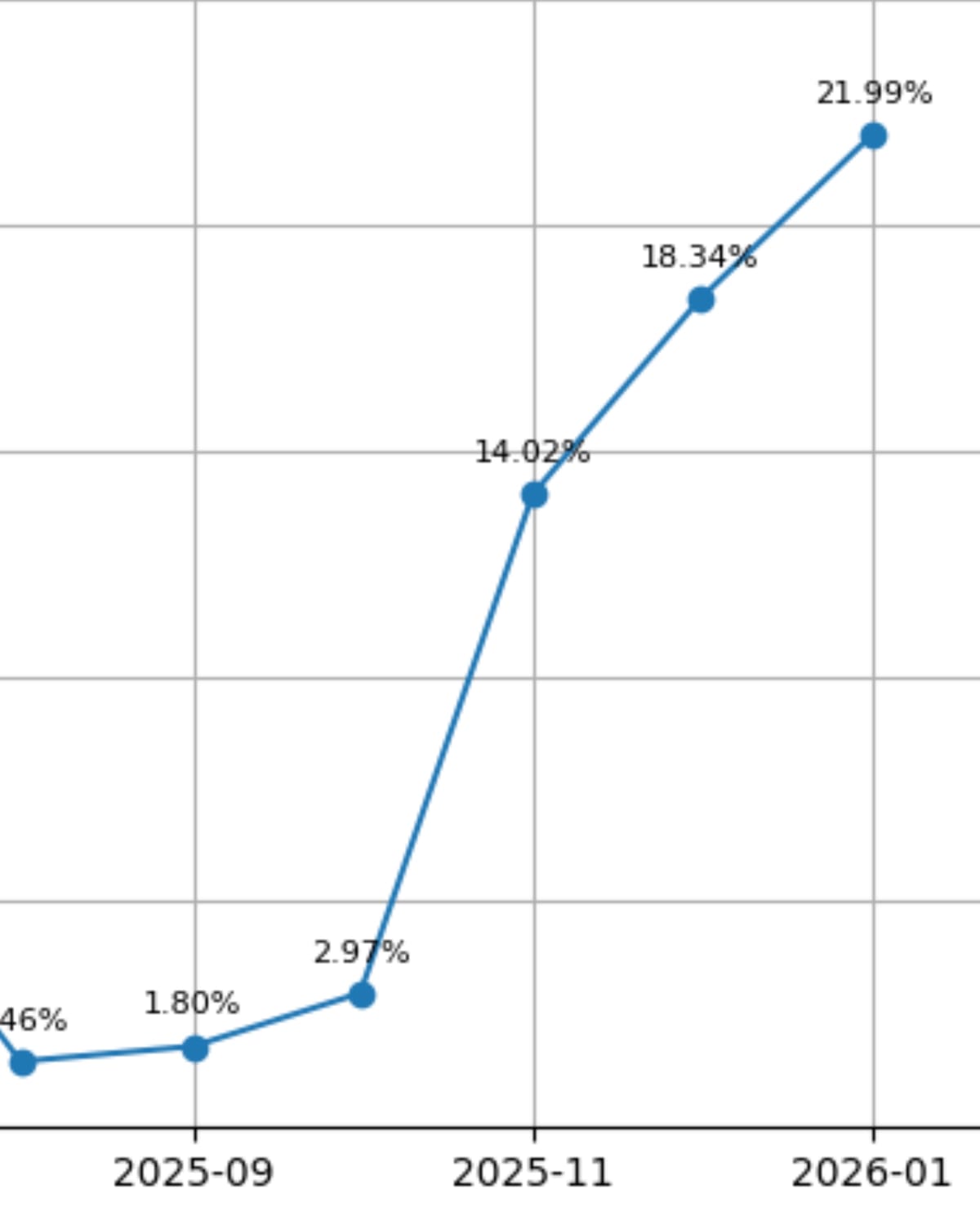
Google expanded paid advertising placement within its local search results at a rate that caught digital marketers by surprise. Data from Places Scout, a local search tracking platform, shows local pack advertisements now appear on approximately 22% of tracked keywords, compared to less than 3% in early November 2025.
Joy Hawkins, a local search consultant, documented the acceleration in a post on social media platform X. "Just had Places Scout re-run the data to see how this looks in January so far (we're tracking across 1200 mobile ranking reports)," Hawkins wrote on February 2, 2026. "The increase isn't slowing down yet."
The measurement encompasses 1,200 mobile ranking reports monitored by Places Scout's tracking system. Hawkins noted the pattern showed consistent month-over-month growth throughout the period, with January data indicating continued expansion rather than stabilization.
Local pack ads function as sponsored listings positioned at the top of Google's local search results. When users search for nearby businesses or services, these advertisements appear above organic local listings within the map pack - the prominent box displaying local business results with their locations on an integrated map.
According to Google's Help Center documentation, local search ads on Maps enable businesses with physical locations or service areas to reach users searching for relevant services. "Advertising on Google Maps is a powerful way to attract nearby customers," the documentation states. The system displays advertisements across multiple formats including promoted pins on the map interface, map search ads in results lists, and map suggest ads.
The tracking data reveals a dramatic acceleration pattern. November 2024 showed local pack ads on 0.96% of monitored keywords. December maintained similar levels at 0.46%. The rate remained relatively stable through most of 2025, fluctuating between 0.27% and 2.91% until October 2025.
Starting in November 2025, the trajectory shifted dramatically. The percentage jumped to 6.48%, then climbed to 14.02% in December 2025. By January 2026, the figure reached 21.99% - representing a 733% increase from the early November baseline in just three months.
The Places Scout chart tracking the phenomenon shows an almost vertical ascent beginning in late 2025. The growth pattern suggests a deliberate platform strategy rather than gradual experimentation, though Google has not issued public statements about the advertising placement expansion.
Implementation relies on location assets within Google Ads accounts. Advertisers must enable location assets, configure location targeting parameters, and establish location-specific bid adjustments to participate in local pack ad auctions. The system increases bids for users located near advertiser business locations, according to Google's advertising documentation.
Keyword optimization plays a critical role in local pack ad performance. Google recommends advertisers use keywords relating to their location and what users search for locally. The platform runs separate auctions for different ad locations, meaning advertisers can appear in multiple positions within search results simultaneously.
The expansion affects how businesses manage their local online presence. Google has systematically consolidated local business features throughout 2025, merging booking systems for Business Profiles and Local Services Ads to create unified customer engagement infrastructure.
Platform modifications extended to review management systems as well. Google shifted Local Service Ads reviews to Business Profiles management on July 11, 2025, requiring all review collection and monitoring activities to occur through centralized Business Profile systems rather than separate advertising account interfaces.
The local pack ad format displays three primary click types. Users can click to expand ads from search results lists, generating "get location detail" interactions. Direction requests produce "get direction" clicks. Mobile devices enable "clicks-to-call" functionality, connecting users directly to business phone numbers.
Advertisers track performance through Google Ads segmentation features. The platform provides click-type segmentation showing how users interact with each advertisement format. Conversion metrics including shop visits and online visits enable measurement of local advertising effectiveness through conversion tracking systems.
According to Google's documentation, shop visit conversions require specific eligibility criteria. The measurement capability depends on sufficient location data, minimum impression volumes, and verified location asset configurations linking Google Ads accounts to Business Profile listings.
The rapid expansion raises questions about organic local result visibility. As paid listings consume more space within local pack displays, businesses without advertising budgets face reduced prominence in search results. The phenomenon mirrors broader changes to sponsored content presentation that consolidated advertisement labels in September 2025.
Barry Schwartz of Search Engine Roundtable noted the modification affects commercial queries across product categories, service industries, and local business searches. The visual integration of paid listings within local results creates potential confusion about which placements represent organic versus paid content.
Google's advertising strategy increasingly emphasizes automation and placement expansion. The company introduced account-level placement exclusions on January 14, 2026, enabling advertisers to block unwanted websites, apps, and channels from centralized settings applying across campaign types including Performance Max and Demand Gen.
Performance Max campaigns already distribute advertisements across Search, Display, YouTube, Gmail, Maps, and Discover properties through automated optimization algorithms. The local pack ad expansion extends paid placement opportunities into previously organic-dominated local search territory.
Technical requirements establish barriers to entry for local pack advertising. Businesses must maintain verified Business Profile listings with accurate location information, enable location assets within Google Ads accounts, and configure proper targeting parameters. Phone number verification requirements expanded in late 2025, restricting numbers associated with fraudulent activity from call-only ads, call assets, and location assets.
Google tightened Business Profile service area guidelines on June 24, 2025, explicitly prohibiting businesses from adding countries or states as service areas. The restrictions require businesses to specify service areas by city, postal code, or regional designations within approximately two hours driving time from their base location.
The advertising platform modifications coincide with broader local business infrastructure changes. Google discontinued its Business Profile Q&A feature in December 2025, replacing community-contributed questions and answers with an AI-powered button that generates automated responses to customer inquiries.
Mobile devices represent the primary environment for local pack ad exposure. The Places Scout tracking data specifically monitors mobile ranking reports, reflecting Google's mobile-first indexing approach and recognition that local searches predominantly occur on smartphones during moments of immediate commercial intent.
Location-based advertising leverages GPS technology and smartphone proliferation to deliver hyper-relevant experiences. The approach enables dynamic creative adaptation incorporating information like user distance from locations, address details, and current operating hours directly within advertisement copy.
Industry observers noted that the three-month acceleration period represents unusually rapid deployment for a major advertising placement expansion. Google typically phases new ad formats gradually, testing performance impacts and user experience metrics before broad rollout.
The local pack ad surge occurred during a period of significant advertising product launches. Google unveiled its Power Pack strategy on September 16, 2025, combining AI Max for Search, Performance Max, and Demand Gen campaigns to optimize automated advertising across multiple channels.
Think Week 2025 in September introduced comprehensive advertising platform updates including AI-powered advisors, text guidelines for campaign control, and Commerce Media suite for retailer-brand partnerships. The announcements reflected Google's strategy to enhance automation while maintaining advertiser control mechanisms.
Revenue implications suggest significant financial motivations. Local searches represent high commercial intent queries where users actively seek nearby products or services. Converting these searches into paid placements generates incremental advertising revenue from queries that previously produced only organic results.
Digital marketing professionals managing local business campaigns must now account for paid competition in local pack placements. The shift affects budget allocation decisions, with advertisers facing choices between investing in local pack ads, traditional search advertising, or organic local search optimization efforts.
The expansion pattern mirrors Google's steady increase in AI Overview advertising placement, which expanded to 11 countries on December 19, 2025. Text and Shopping ads from Search, Shopping, and Performance Max campaigns now qualify for placement within or adjacent to AI-generated responses without separate campaign configuration.
Platform transparency remains limited regarding specific local pack ad auction mechanics. Google does not provide separate reporting showing when advertisements appeared within local packs versus other Search placements. The company categorizes local pack ads alongside other premium positions without granular segmentation.
Competitive dynamics shift for local service providers. Small businesses competing in local markets now face paid advertising requirements to maintain visibility that previously came through organic optimization. Service industries including home repairs, restaurants, professional services, and retail locations see direct impact from the placement expansion.
Google enhanced Local Services Ads with automated photo selection features in August 2024, using algorithms to choose images based on perceived engagement likelihood. The system selects photos from advertisers' LSA profiles to include in advertisements, with quality and quantity of uploaded images affecting ad rankings.
Location asset functionality underwent technical refinements throughout 2023 and 2024. Google tightened location asset requirements in December 2023, prohibiting closed locations, unrecognized locations, and mismatched location information from appearing in advertising.
The Places Scout tracking methodology monitors keyword rankings across mobile devices, providing statistically significant samples for identifying platform-wide trends. The 1,200 ranking reports represent diverse geographic markets, business categories, and competitive environments.
Hawkins' social media documentation prompted widespread discussion among local search professionals. Marketing specialists confirmed observing similar patterns in client accounts, with some reporting even higher percentages of local pack ads for specific high-value service categories.
The timing suggests potential connection to holiday season advertising demand, though the pattern persisted into January rather than declining after traditional peak shopping periods. The sustained growth trajectory indicates structural platform changes rather than temporary seasonal fluctuations.
Business categories particularly affected by the expansion include professional services, home services, automotive services, healthcare providers, and retail establishments with physical locations. These industries rely heavily on local search visibility to connect with nearby customers during high-intent search moments.
Google's messaging platform expansion in September 2025 added Facebook Messenger and Zalo as conversation platforms within Google Ads. The integration enables advertisers to initiate customer conversations across multiple messaging services, supporting local businesses in maintaining customer communication channels beyond traditional phone calls.
Performance Max campaigns received substantial attention throughout 2025. Google completed Performance Max brand guidelines rollout for all UI campaigns on July 14, 2025, requiring business name and logo assets to be managed at campaign level rather than asset group level. The modification provided advertisers with greater control over brand representation in automated campaigns.
API version 22 released on October 15, 2025, introduced targetless bidding options for App campaigns alongside generative AI capabilities and enhanced automation settings. Campaign and ad group level attachment of negative keywords shared sets extended to MULTI_CHANNEL campaigns including App campaigns and LOCAL campaigns.
Creative production capabilities expanded through Asset Studio, which became globally available in August 2025. The platform enables advertisers to generate images through text prompts, create lifestyle product visuals, and perform comprehensive image editing without external design software.
The local pack ad expansion presents measurement challenges for advertisers attempting to isolate local pack performance from other Search campaign metrics. Without specific segmentation showing local pack impressions and clicks separately, advertisers must infer performance through aggregate campaign data and location-based conversion tracking.
Geographic targeting precision determines local pack ad eligibility. Advertisers configure location targeting at campaign level, specifying geographic areas where advertisements should serve. The system uses user location signals including GPS data, WiFi networks, and IP addresses to determine eligibility for location-based advertisements.
Bid adjustments by location enable advertisers to increase or decrease bids based on user proximity to business locations. The functionality supports strategies prioritizing nearby customers over distant searchers, reflecting higher conversion likelihood for geographically proximate users.
Google's December 2025 core algorithm update created additional challenges for businesses relying on organic visibility. The update devastated Discover traffic for news publishers during peak holiday season, with some reporting 70-85% declines in daily visitor counts. Combined with expanded paid placement, organic visibility faces mounting pressure from multiple directions.
The local pack ad phenomenon illustrates Google's ongoing monetization strategy for search result real estate. The company balances user experience considerations against revenue optimization, testing boundaries for paid placement density within various result types.
Marketing professionals now incorporate local pack advertising into comprehensive local search strategies. Budget allocation decisions increasingly account for paid placement requirements alongside traditional SEO efforts focused on organic local result rankings. The shift affects how agencies structure client campaigns and set performance expectations.
Service area business models face particular complexity with the local pack ad expansion. Companies serving customers across broad geographic regions must balance location targeting specificity against coverage requirements, determining optimal bid strategies for various distance ranges from business locations.
The competitive landscape within local pack ads introduces auction dynamics to local search results. Advertisers bid against competitors for limited advertisement positions, with Ad Rank calculations determining which businesses appear in sponsored slots. Quality Score, bid amount, and expected impact from extensions influence final placement decisions.
The January 2026 data point of 21.99% suggests potential stabilization after rapid growth. Whether the percentage continues climbing toward even higher levels or plateaus near current rates remains uncertain. Hawkins' observation that "the increase isn't slowing down yet" implies continued monitoring for additional acceleration.
Industry analysts speculated about potential ceiling effects. At extremely high percentages, local pack ads might cannibalize each other or degrade user experience sufficiently to prompt Google to moderate expansion. However, the company has not indicated specific targets or limitations for local pack ad density.
The expansion pattern raises questions about long-term organic local search viability. Small businesses without advertising budgets may find achieving visibility increasingly difficult as paid placements consume premium positions within local results. The phenomenon mirrors broader concerns about pay-to-play dynamics in digital platforms.
Google's advertising transparency initiatives expanded throughout 2025. Full placement reporting for Search Partner Network became available on August 20, 2025, addressing decades of advertiser requests for visibility into where ads actually appeared across third-party search properties.
Former Google insider revelations in October 2025 highlighted how recommended practices evolved as the platform's automation capabilities advanced. Practices once promoted by Google sales representatives became ineffective as machine learning optimization and automated bidding matured.
The local pack ad surge demonstrates how platform changes can rapidly alter competitive dynamics for entire business categories. Marketing professionals must continuously adapt strategies to maintain visibility as search engines modify result page composition and advertising placement opportunities.
Business owners managing their own marketing efforts face increased complexity navigating paid and organic local search requirements. The technical implementation demands, verification prerequisites, and ongoing optimization needs create barriers for small businesses lacking dedicated marketing resources or agency support.
The tracking data does not reveal specific business categories experiencing the highest local pack ad density. Commercial intent queries likely show higher percentages than informational searches, reflecting advertiser interest in converting high-value local customers during active purchase consideration.
Geographic market differences may affect local pack ad prevalence. Markets with higher advertising competition probably display sponsored listings more frequently than areas with fewer participating advertisers. Urban markets typically show denser paid placement than rural regions due to advertiser concentration.
The phenomenon underscores the importance of comprehensive local search strategies incorporating both paid and organic tactics. Businesses relying exclusively on organic local results face mounting challenges as paid placements expand within primary visibility zones.
Google's documentation emphasizes that advertisers cannot serve ads exclusively within Google Maps or local pack placements. The location asset configuration enables ads to appear across multiple formats and placements rather than isolating specific result types. This limitation affects advertisers seeking to target only local pack inventory while excluding other Search placements.
The measurement methodology using 1,200 mobile ranking reports provides substantial data foundation for identifying platform-wide trends. The sample size enables statistical confidence while tracking month-over-month changes across diverse markets and business categories.
Hawkins' decision to request Places Scout rerun the analysis demonstrates the unexpected nature of the acceleration. Initial observations prompted verification efforts to confirm the pattern represented genuine platform changes rather than measurement anomalies or temporary fluctuations.
The social media documentation generated significant engagement within local search marketing communities. Professionals managing local business campaigns expressed surprise at the acceleration rate while sharing observations from their own client accounts and tracking systems.
The expansion continues Google's multi-year strategy expanding advertising inventory across previously organic result types. From AI Overview ads to Shopping integrations to local pack placements, the company systematically converts organic visibility into potential paid advertising opportunities.
For local businesses, the changes necessitate strategic decisions about advertising participation versus relying on organic optimization alone. The investment requirements for paid visibility compete with other marketing expenditures including website development, content creation, and traditional advertising channels.
The rapid three-month acceleration distinguishes this expansion from typical gradual rollout patterns. Most major advertising product launches involve extended testing periods with gradual expansion across markets and advertiser accounts. The local pack ad surge suggests aggressive implementation timeline driven by specific strategic or financial objectives.
Marketing technology vendors tracking local search performance must account for the changing competitive landscape. Ranking tools, visibility monitors, and competitive analysis platforms need methodologies distinguishing paid versus organic positions as local pack ads consume increasing percentages of available placements.
The February 2026 timing positions local businesses entering spring and summer seasons facing fundamentally altered local search dynamics. Service industries experiencing seasonal demand fluctuations must incorporate paid placement strategies into annual marketing planning and budget allocation processes.
The data visualization shared by Hawkins showed the dramatic vertical trajectory beginning in late 2025. The chart format effectively communicated the acceleration magnitude, enabling rapid comprehension of the platform shift among marketing professionals reviewing the information.
Google's advertising platform increasingly emphasizes automation, AI-driven optimization, and expanded inventory across result types. The local pack ad expansion fits within this broader strategic direction, applying similar monetization approaches to local search that the company deployed across other result formats.
For the digital advertising industry, the local pack phenomenon represents another milestone in the ongoing evolution of search result composition. The balance between organic and paid placements continues shifting toward paid opportunities as platforms optimize revenue generation from user attention and commercial intent queries.
Who: Google implemented the changes affecting local businesses, advertisers using location assets, and users searching for nearby services. Joy Hawkins, a local search consultant, documented the pattern using data from Places Scout, a local search tracking platform monitoring 1,200 mobile ranking reports.
What: Google expanded paid advertising placement within local pack search results from less than 3% of tracked keywords in early November 2025 to approximately 22% by January 2026. The 733% increase occurred over three months, marking unprecedented acceleration in local search advertising density. Local pack ads appear as sponsored listings at the top of local search results displaying nearby businesses with map integration.
When: The dramatic acceleration began in November 2025 when placement jumped to 6.48% from previous months averaging under 3%. December 2025 showed 14.02% placement, with January 2026 reaching 21.99%. Hawkins documented the current state on February 2, 2026, noting the increase shows no signs of slowing.
Where: The expansion affects Google's local pack results displayed on mobile devices when users search for nearby businesses or services. The advertisements appear across Google Search and Maps properties, utilizing location assets configured within Google Ads accounts. The tracking data monitors mobile ranking reports across diverse geographic markets and business categories.
Why: Google implemented the expansion to monetize local search inventory that previously generated only organic results. The change provides local businesses with paid advertising options to reach nearby customers during high-intent search moments. The rapid implementation suggests strategic revenue optimization targeting commercial local queries where users actively seek products or services. The expansion follows Google's broader pattern of introducing paid placements across previously organic result types throughout 2025.